
Stainless Steel Knife Spine Design: A Practical Detail for Custom B2B Flatware
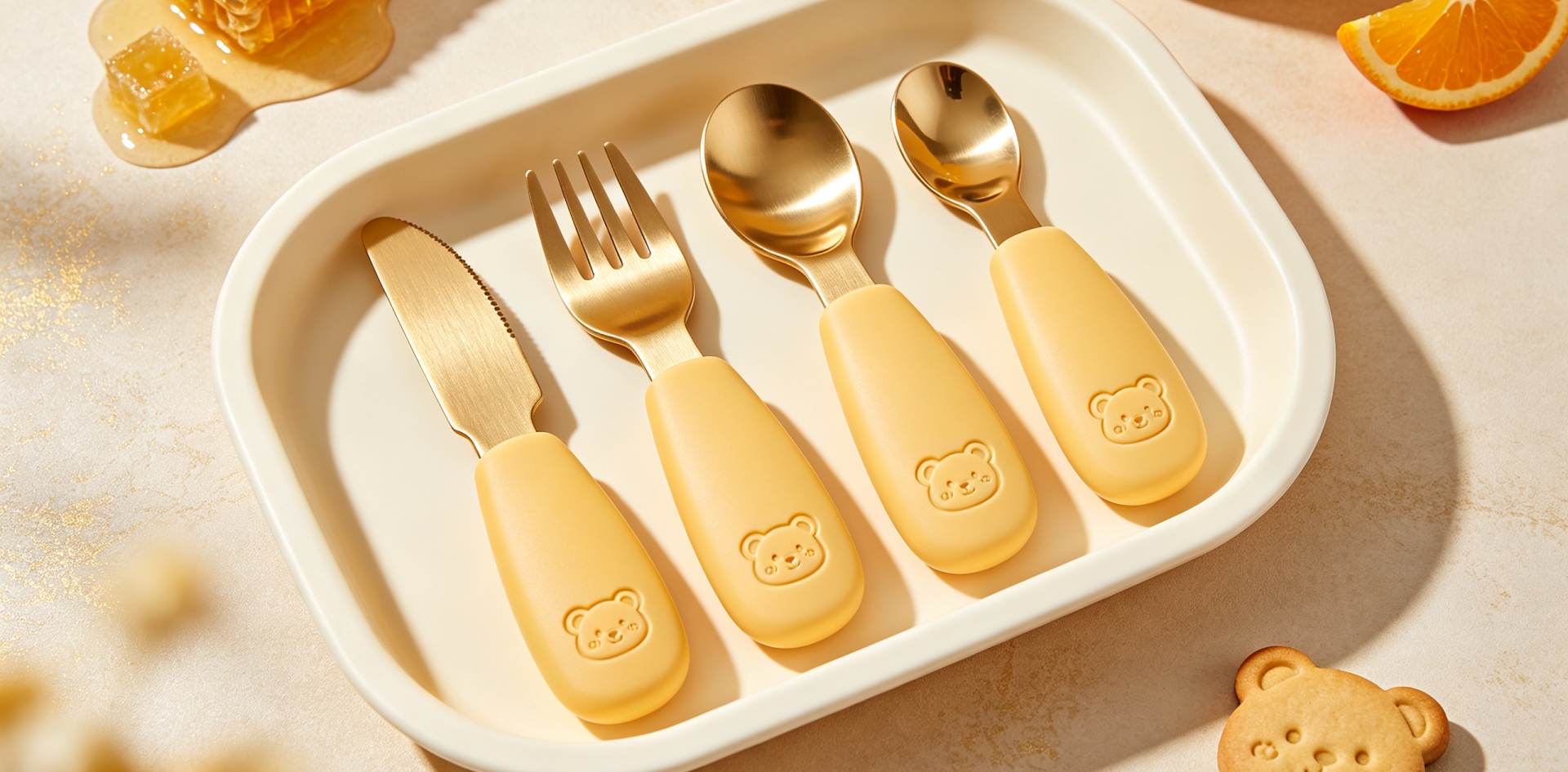
Stainless Steel Knife Spine Design: A Practical Detail for Custom B2B Flatware
When a stainless steel table knife is developed for a commercial flatware collection, the cutting edge naturally receives a great deal of attention. Buyers may discuss blade length, thickness, tip shape and finishing, while the upper edge of the blade is often treated simply as part of the outline.
This upper edge, commonly known as the blade spine, can nevertheless have an important role in the overall design.
The spine contributes to the visual character of the knife, the apparent thickness of the blade and the transition between the blade and tip. For an OEM or private label project, it can also become a useful design element when creating a distinctive table knife.
Understanding this detail can help B2B buyers communicate a more complete specification when working with a stainless steel cutlery manufacturer.
What Is the Knife Spine?
The knife spine is the upper edge of the blade, opposite the cutting edge.
On a simple table knife, the spine may appear almost straight. On other designs, it can have a slight curve, a gradual change in height or a more defined transition toward the tip.
Although the spine is not the cutting edge, its geometry influences the overall blade silhouette.
This makes it particularly relevant when a buyer wants to develop a custom knife rather than select an existing catalogue model.
Why the Spine Matters in Custom Flatware
The blade is one of the most recognizable parts of a table knife. Its silhouette can often be identified immediately when the knife is placed on a table or displayed in packaging.
The spine forms part of this silhouette.
A straight spine can create a clean and contemporary appearance. A gently curved spine can make the blade appear softer and more flowing. A more structured profile can create a stronger visual character.
For a B2B brand, these differences can help establish a specific design language without requiring complicated decoration.
The Relationship Between Spine and Blade Width
Blade width is normally discussed as a dimensional specification, but the spine determines where that width begins and how the blade gradually changes toward the tip.
For example, a blade may maintain a relatively broad upper section before narrowing toward the front. Another design may begin narrowing earlier.
Both knives can have similar overall dimensions while creating different visual impressions.
For a custom project, the relationship between blade width and spine profile should therefore be considered together.
This is particularly important when a brand has a reference sample and wants to develop a similar but proprietary design.
Spine and Tip Transition
The spine eventually meets the front section of the blade, so its relationship with the knife tip needs to be carefully considered.
If the spine remains relatively high before dropping quickly toward the tip, the blade can appear more substantial. A longer and more gradual transition can create a more streamlined appearance.
The correct solution depends on the intended design.
For B2B projects, it is useful to review the spine and tip as one continuous part of the blade rather than defining them independently.
A technical drawing showing the complete blade silhouette can help the manufacturer understand the intended relationship.
How the Spine Influences Visual Weight
Even when the actual material quantity changes only slightly, the spine can influence how heavy or light a knife appears.
A relatively high blade profile can create a stronger visual presence. A lower or more tapered profile may produce a lighter appearance.
This becomes particularly noticeable when knives are displayed alongside forks and spoons.
A complete flatware collection should normally have a coherent visual balance. The knife may naturally have a different blade structure from the fork and spoon, but its overall presence should still fit the collection.
For a private label brand, these relationships can be part of the product identity.
Straight, Curved and Tapered Spine Profiles
There are several ways to approach a custom knife spine.
A straight profile is simple and direct. It can work well with minimalist flatware designs and can provide a clean visual line.
A gently curved profile can introduce a softer appearance. The curve does not need to be dramatic; even a subtle change can affect the overall silhouette.
A tapered profile can create a more dynamic transition toward the tip.
The appropriate choice depends on the rest of the knife design. The handle, blade length, blade width and tip should all be considered before the final spine geometry is confirmed.
The Spine and Handle Relationship
The knife spine should also connect visually with the handle.
The transition from the blade into the handle is an important area of the product. If the blade has a strong visual structure but the handle uses a very different design language, the complete knife may feel disconnected.
For a custom collection, the manufacturer can review these areas together.
This is particularly useful when a buyer has created a unique handle but wants to develop a new blade around it. The spine can be adjusted to create a smoother visual relationship between the two sections.
Manufacturing Considerations
A custom spine profile needs to be practical for stainless steel production.
The blade blank must be formed and processed according to the specified geometry. If the spine includes a significant curve or a distinctive transition, the manufacturer needs to consider how that shape can be reproduced consistently.
This is especially important for larger B2B orders.
A design that looks attractive on one prototype must also be suitable for repeatable production. The final specification should therefore balance the desired visual effect with manufacturing stability.
For OEM and ODM projects, early communication between the buyer and factory can help identify any areas that may need refinement before bulk production.
Why Technical Drawings Matter
A product photograph can show the general appearance of a knife, but it does not always communicate the exact spine geometry.
For a custom stainless steel table knife, a technical drawing can define the overall blade length, maximum width and key transitions. A clear side or top view can also help show how the spine changes along the blade.
If the buyer is working from a reference product, supplying a physical sample can provide additional information.
The combination of a drawing and reference sample can make it easier for the manufacturer to understand which characteristics are essential to the design.
Spine Design for a Complete Flatware Collection
When a brand develops a complete collection, the knife spine should be considered alongside the visual characteristics of the fork and spoon.
The knife may have a distinctive upper blade line, while the fork and spoon may express the same design language through their own shapes and proportions.
This does not mean that every piece needs identical curves.
Instead, the collection can share certain visual principles. Similar transitions, comparable visual weight and coordinated handle structures can make the products feel like one family.
For brands planning multiple SKUs, establishing these principles early can also make future product development more straightforward.
Using a Reference Knife for OEM Development
Many B2B customers begin a custom project with an existing knife as a reference.
The reference may have a preferred blade shape but not the desired handle. Alternatively, the buyer may like the handle but want a different blade profile.
In this situation, the manufacturer can use the reference as a starting point while developing the requested changes.
The spine can be retained, modified or completely redesigned depending on the project requirements.
This approach gives brands more flexibility than simply choosing one standard product from a catalogue.
From Sample Review to Production Specification
During sample development, the knife can be reviewed from several angles.
The buyer can examine the relationship between the spine, blade width, tip and handle. If the blade appears too heavy, too narrow or visually unbalanced, adjustments can be discussed before approval.
Once the sample is confirmed, the agreed geometry can be incorporated into the production specification.
This provides the factory with a clear reference for the bulk order and gives the buyer a defined standard against which the finished product can be evaluated.
For B2B manufacturing, this connection between design and production is essential.
Custom Knife Spines as Part of Product Differentiation
Product differentiation does not always require elaborate decoration.
Sometimes a distinctive silhouette is enough to give a stainless steel table knife a recognizable character.
The spine is one of the areas where this can be achieved. A subtle change in the upper blade line can create a different impression while keeping the product practical for everyday use.
For private label and OEM brands, such details can be valuable because they allow a product to move beyond a generic catalogue appearance.
The important point is to ensure that the design remains compatible with the intended production quantity and target market.
Supporting Custom Stainless Steel Knife Projects
A successful B2B knife project is built from many connected decisions.
Material, blade dimensions, handle construction, surface treatment, tip shape and spine profile all contribute to the final product.
The spine may not be the first specification a buyer thinks about, but it can be an effective part of the overall design process.
Homefelt supports B2B customers with stainless steel knives, forks, spoons and complete flatware collections for wholesale, OEM, ODM and private label programs. Customers can provide drawings, reference samples or initial concepts for evaluation and quotation.
If you are developing a custom stainless steel table knife, defining the blade spine early can help establish a clearer silhouette and a more complete product specification.
By considering the spine together with the blade, tip and handle, buyers can develop a design that is visually distinctive while remaining suitable for repeatable commercial production.
Request a Custom Stainless Steel Table Knife Quotation
Send Your Custom Knife Specifications
Stainless Steel Cutlery Alignment: A Practical Detail for Custom B2B Designs
Stainless Steel Knife Tip Design: A Practical Detail for Custom B2B Flatware
Related Article



