
Stainless Steel Knife Spine Thickness for B2B Cutlery
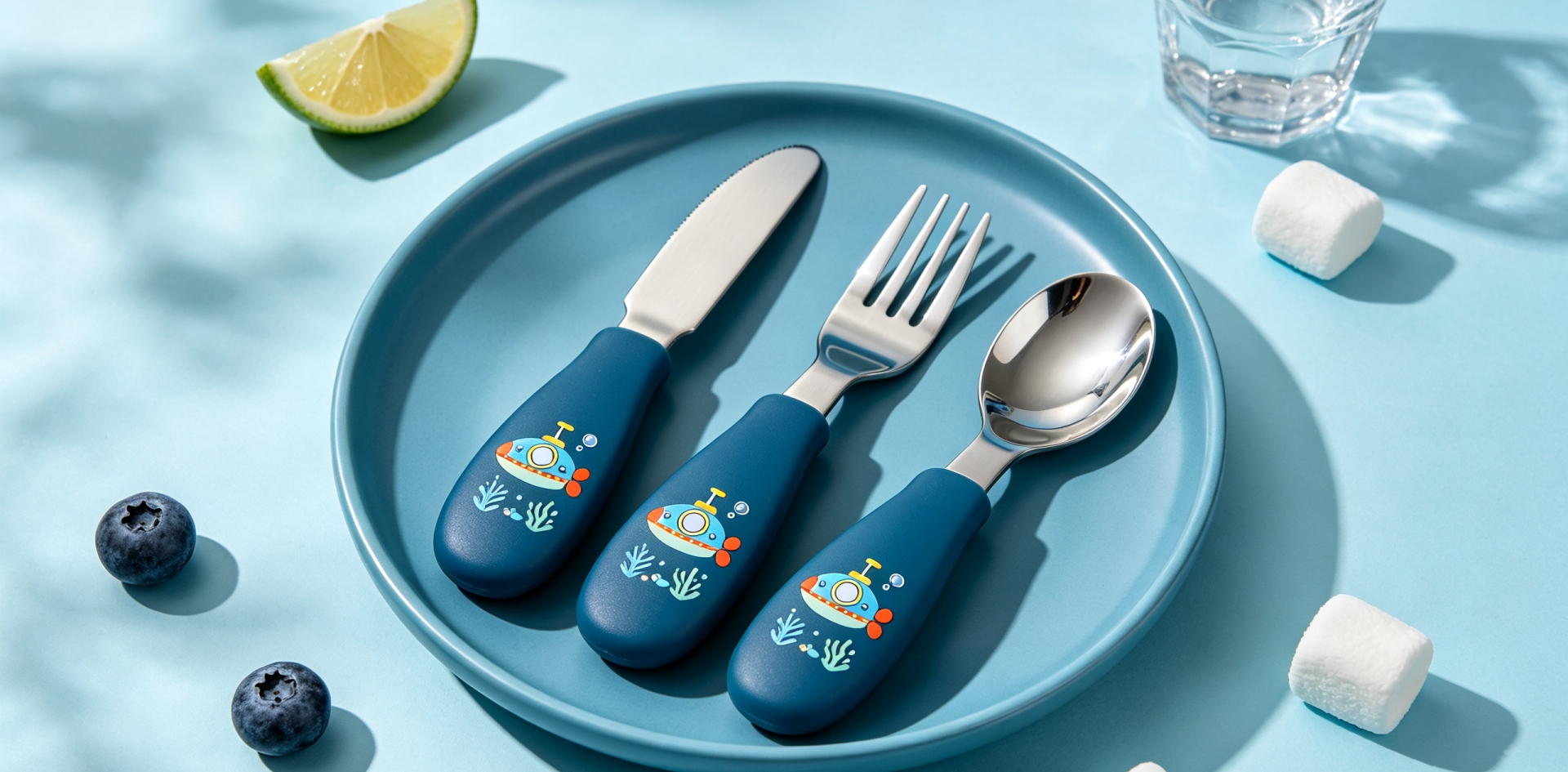
Stainless Steel Knife Spine Thickness for B2B Cutlery
When developing a stainless steel table knife, buyers often focus on the handle, blade length, cutting edge and overall appearance. Another structural detail that can influence the character of the knife is the thickness of the blade spine.
The spine is the upper, non-cutting edge of the knife blade. Its thickness forms part of the blade structure and contributes to the visual proportion of the knife.
For B2B buyers developing custom stainless steel cutlery, spine thickness can be considered together with blade geometry, handle design, material and finishing requirements.
It is a relatively small specification, but it can make a noticeable difference when a knife is viewed as part of a complete flatware collection.
What Is Knife Spine Thickness?
Knife spine thickness refers to the thickness measured through the upper section of the blade, opposite the cutting edge.
The spine and cutting edge do not necessarily have the same thickness. A table knife may use a specific blade profile in which the material gradually changes across the blade.
The final geometry depends on the product design and manufacturing requirements.
A heavier-looking knife may use a more substantial spine, while a refined contemporary design may use a slimmer visual profile.
For OEM and ODM projects, this characteristic can therefore be included in the product specification when the blade profile is important to the overall design.
Why Spine Thickness Matters in Stainless Steel Table Knives
The spine is one of the areas that contributes to the visual mass of a knife.
When the knife is placed beside a fork and spoon, the relationship between the blade and handle becomes part of the collection's overall proportion.
A thicker spine can give the blade a more substantial appearance.
A slimmer profile can create a lighter and more streamlined visual impression.
Neither approach is automatically suitable for every project.
The appropriate specification depends on the product's intended appearance, function, material and target market.
For B2B buyers, the important point is to select the blade profile deliberately rather than relying on a generic factory specification.
Spine Thickness and Blade Proportion
A table knife is a three-dimensional product.
Its overall appearance depends on the relationship between blade length, blade width, spine thickness, cutting-edge geometry and handle dimensions.
Changing one dimension can influence the visual balance of the entire piece.
For example, a relatively long blade with a very substantial spine may create a different impression from a shorter blade with the same spine dimension.
Similarly, a broad handle may require a different blade proportion from a narrow handle.
This is why custom knife development is most effective when the blade and handle are evaluated as one complete product.
The Relationship Between Spine and Cutting Edge
The spine and cutting edge represent two different sides of the blade.
The cutting edge is designed for contact with food, while the spine contributes to the upper structure and overall blade profile.
The transition between these areas is part of the blade geometry.
A properly developed profile should create a coherent visual relationship between the upper and lower sections of the blade.
For a custom stainless steel table knife, the buyer may specify the general blade profile while the manufacturer evaluates how the dimensions can be produced consistently.
This is particularly relevant for private label products where the knife silhouette forms an important part of the brand's visual identity.
Spine Thickness and Knife Appearance
Surface finishing can make blade geometry easier to see.
On a polished stainless steel knife, light reflects across the blade and can emphasize differences in width and thickness.
A thicker spine may produce a stronger visual line along the upper edge.
A slimmer spine may create a more delicate appearance.
If the knife uses a satin or other controlled finish, the visual effect can be different again.
Therefore, spine thickness should not be evaluated as an isolated number.
The material, surface finish and blade shape all contribute to how the finished specification appears.
Designing a Knife for a Complete Flatware Collection
A table knife rarely exists by itself in a commercial cutlery collection.
It is normally sold together with forks, spoons or a larger set.
This makes proportion particularly important.
A knife with a substantial blade profile may need a handle with enough visual weight to create a balanced appearance.
The fork and spoon should also relate to the same design language.
For OEM and ODM buyers, this collection-level approach can help prevent individual pieces from looking as though they came from unrelated designs.
The goal is a coordinated set in which each piece has its own functional structure while maintaining a consistent visual character.
How Spine Thickness Can Support Different Design Directions
Different B2B customers may have very different expectations for a table knife.
A traditional collection may prefer a stronger and more substantial blade appearance.
A modern retail collection may use a slimmer silhouette.
A hospitality-oriented product may emphasize practical proportions and a solid commercial appearance.
A premium private label range may focus more heavily on refined transitions and visual balance.
Spine thickness can form part of these design decisions.
It should be selected together with the rest of the blade geometry rather than treated as a standalone feature.
For custom development, the factory can work from drawings, physical samples or reference products to understand the intended design direction.
Using Drawings and Samples
A drawing can provide a clear starting point for specifying a custom knife.
It may show the overall length, blade width, handle dimensions and important cross-sections.
For projects where the blade profile is visually important, a physical sample can provide additional information that a two-dimensional drawing cannot fully communicate.
The buyer can evaluate the knife in the hand and compare it with the matching fork and spoon.
If the spine looks too heavy or too light relative to the rest of the collection, the specification can be adjusted before mass production.
This development stage is especially valuable for private label brands introducing a new cutlery range.
Controlling Spine Thickness in Bulk Production
Once the knife design has been approved, the next challenge is maintaining the specified geometry across the production quantity.
A custom knife may be manufactured in thousands or tens of thousands of pieces.
Small variations that are difficult to notice on an individual sample can become more visible when many knives are placed together.
For B2B production, the approved specification therefore needs to be translated into practical manufacturing and inspection requirements.
The manufacturer can use the agreed dimensions and reference sample to establish the expected product standard.
This provides a clearer basis for quality checks during bulk production.
Spine Thickness and Product Positioning
Product positioning can influence how much attention a buyer gives to blade structure.
For a value-oriented collection, the priority may be efficient production and a reliable commercial profile.
For a premium collection, the visual relationship between the spine, blade and handle may be more important.
A factory serving multiple B2B markets needs to understand that these requirements are not identical.
Custom manufacturing allows the product to be developed around the intended market instead of forcing every customer into one standard design.
For distributors, this flexibility can also help create different product ranges for different customer groups.
Avoiding Unnecessary Over-Specification
While detailed specifications can be useful, not every project needs an extremely complex technical document.
The purpose of specifying spine thickness is to create a clear and reproducible product requirement.
If the exact measurement is critical, it can be included directly in the drawing or specification.
If the main requirement is visual proportion, a reference sample and clear design description may be sufficient.
The best approach depends on the project.
A professional stainless steel cutlery manufacturer can help determine which specifications need to be controlled closely and which can remain flexible within a practical production range.
This keeps the product brief useful without making it unnecessarily complicated.
Spine Thickness in OEM and ODM Manufacturing
OEM buyers often approach the factory with an established product design.
In this situation, spine thickness may already be defined in the customer's drawing or existing sample.
The manufacturer's role is to understand the requirement and reproduce the agreed design consistently.
ODM customers may begin with a broader concept.
They may know the desired overall appearance but have not yet finalized every blade dimension.
In this case, the factory can discuss different blade profiles and their relationship with the overall knife design.
This makes spine thickness part of the product development conversation rather than simply a production number.
Homefelt Factory for Custom Stainless Steel Table Knives
Homefelt factory provides stainless steel knives, forks, spoons and complete flatware sets for B2B customers.
The factory supports OEM, ODM, private label, wholesale and large-volume production.
For custom table knives, buyers can discuss blade design, handle proportions, material, finishing, packaging and transportation requirements as part of one coordinated project.
Homefelt can create a customized service package according to the customer's product concept and commercial requirements.
This is useful for brands that need more than a standard table knife and want the finished product to match a specific collection.
The development process can begin with a drawing, reference sample or product concept and then move toward sample approval and bulk production.
Considering the Blade as a Complete Structure
Spine thickness is only one part of table knife development.
The blade length, width, taper, cutting edge, tip, handle and transition areas all interact with one another.
Changing one area without considering the others can alter the overall appearance.
For this reason, the most practical approach is to review the complete knife profile.
A buyer can identify which characteristics are essential to the brand and which can remain within normal manufacturing flexibility.
This makes the product easier to develop and easier to reproduce.
It also gives the factory a clearer understanding of what matters most to the customer.
Why Small Blade Specifications Matter for B2B Buyers
In a mass-produced product, small dimensions become important because they are repeated many times.
A difference in one knife may be difficult to notice.
A difference across a large quantity can influence how the collection looks when displayed, packaged or used together.
This is why detailed product development can be valuable for B2B cutlery projects.
The purpose is not to make the specification unnecessarily complicated.
Instead, it is to identify the details that contribute to the finished product and make sure those details are understood before production begins.
From Product Concept to Bulk Order
A successful custom table knife project connects design decisions with practical manufacturing.
The buyer defines the intended appearance and commercial requirements.
The factory reviews the product concept, develops the sample and confirms the production specifications.
Once the sample is approved, the same reference can guide bulk manufacturing and future replenishment.
This creates continuity between the first development stage and later orders.
For private label brands and distributors, that continuity can be especially valuable when a successful product remains in the catalog for several years.
A stainless steel table knife may appear straightforward, but its final character comes from the relationship between many individual dimensions.
Blade spine thickness is one of the details that can influence the knife's visual weight and overall proportion.
By discussing it together with the complete blade and handle design, B2B buyers can establish a clearer product reference and develop stainless steel cutlery that fits their intended collection.
Custom Stainless Steel Table Knives for OEM & ODM Projects
Private Label Stainless Steel Flatware Manufacturing
Custom Knife, Fork and Spoon Collections
Wholesale Stainless Steel Cutlery for B2B Buyers
Homefelt Factory Custom Cutlery Service
OEM Stainless Steel Cutlery Manufacturing
Stainless Steel Fork Tine Cross-Section for B2B Cutlery
Stainless Steel Fork Tine Taper for B2B Cutlery
Related Article



