
Stainless Steel Spoon Bowl Curvature for OEM and Bulk Production
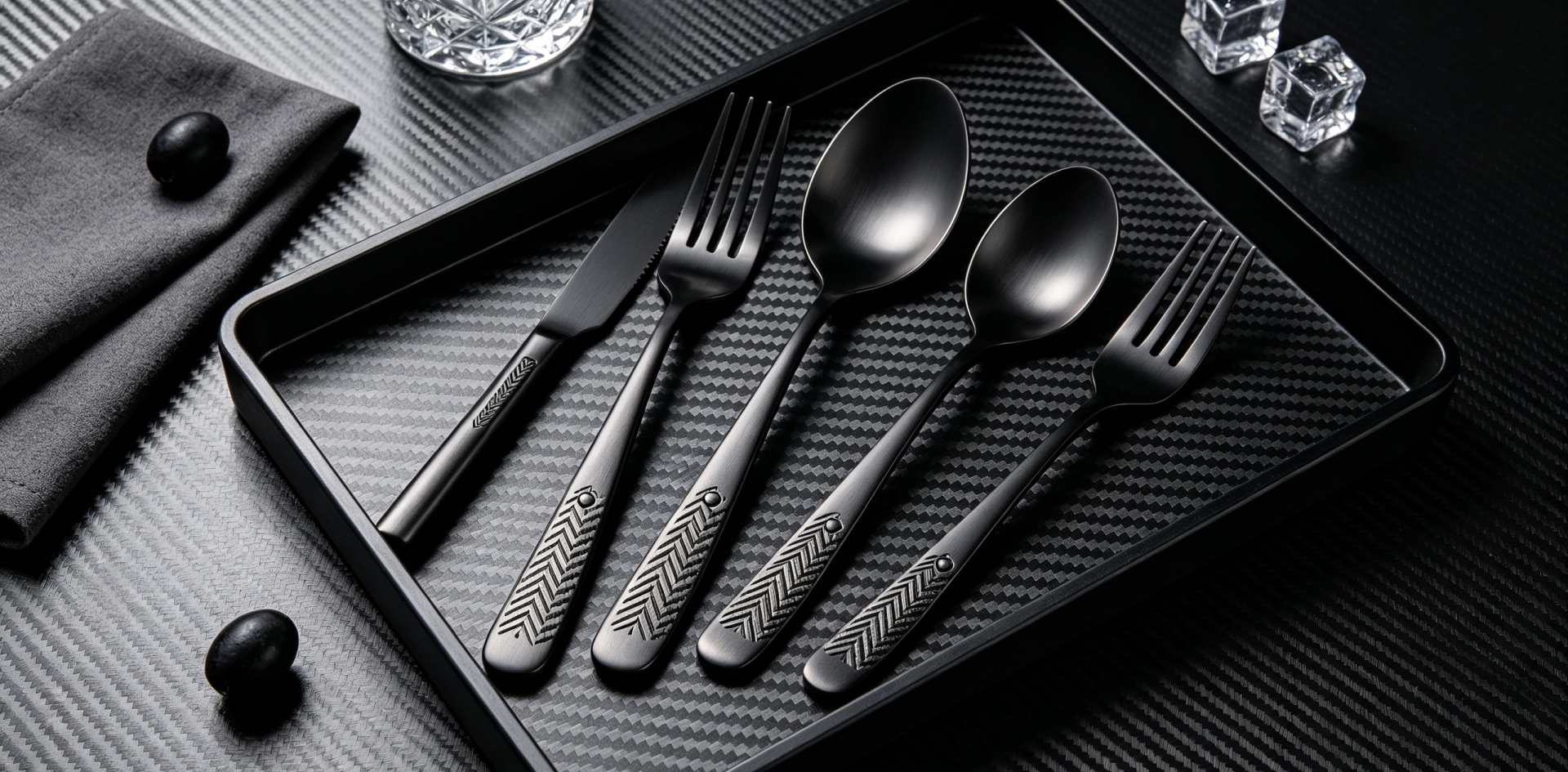
Stainless Steel Spoon Bowl Curvature for OEM and Bulk Production
When buyers develop stainless steel spoons for wholesale, hospitality, retail or private label collections, bowl curvature is an important product detail that should be defined before bulk production. It influences the visual shape of the spoon, the transition from the bowl to the surrounding edge, and the overall character of a cutlery collection.
For an OEM or ODM project, the bowl should not be treated as a simple stamped surface. Its curvature needs to work together with the spoon's overall dimensions, handle design and manufacturing process. A well-controlled specification helps the factory reproduce the approved appearance across large quantities.
Understanding Stainless Steel Spoon Bowl Curvature
Spoon bowl curvature describes how the bowl surface gradually forms from its outer area toward the central portion. Different curvature profiles can create noticeably different appearances even when two spoons have similar overall dimensions.
A relatively gentle curvature can give a spoon a broad and contemporary appearance, while a more pronounced profile can create a deeper visual form. For B2B buyers, the important point is not simply choosing a shape that looks attractive in a sample. The selected curvature should also be suitable for stable production.
During product development, buyers can evaluate several points:
-
The smoothness of the bowl's curved surface
-
The transition between the central and outer areas
-
The consistency of the profile from one sample to another
-
The relationship between bowl curvature and the spoon's overall shape
-
Whether the design remains visually consistent after forming and finishing
These details become particularly important when a spoon is produced as part of a complete stainless steel flatware collection.
How Curvature Supports OEM Product Development
OEM customers often start with a drawing, reference sample or design concept. A professional manufacturer can convert that concept into production specifications while considering forming requirements and repeatability.
For example, a buyer may want a spoon with a modern, relatively open bowl appearance for a hospitality collection. Another customer may prefer a more traditionally formed bowl for a classic tableware range. These requirements can be discussed during development rather than relying only on general descriptions such as “deep” or “shallow.”
For repeat orders, the approved sample and technical specifications become an important reference. This allows the factory to maintain the same product character when additional quantities are produced later.
Curvature also needs to be considered across related SKUs. If a customer develops teaspoons, tablespoons and other spoon formats under one private label, maintaining a consistent design language can make the entire collection look more professionally coordinated.
Parameters Buyers Should Confirm
For commercial stainless steel spoon projects, the bowl curvature can be evaluated together with several other product parameters.
The first is the overall bowl profile. The factory should understand where the curvature begins and how it develops toward the center.
The second is the transition between different areas of the bowl. Abrupt changes can produce a different visual effect from a continuously flowing profile.
The third is consistency between production pieces. A design may look excellent on one approved sample but still require production controls to maintain the same appearance across a large quantity.
The fourth is coordination with the spoon handle. The bowl should visually belong to the same product rather than appearing disconnected from the handle design.
For OEM and ODM orders, these points can be documented in drawings, samples or product specifications before mass production begins.
Homefelt Factory Experience in Stainless Steel Cutlery
Homefelt factory focuses on stainless steel cutlery including spoons, forks, knives and complete flatware sets for B2B customers. With long-term experience in stainless steel cutlery production, the factory supports customers from product development through manufacturing and delivery.
Its manufacturing background includes experience with international customers and established brand projects. The factory has also passed BSCI, SEDEX 4P, BRC and ISO9001-related audits and holds other relevant certification and testing documentation according to project requirements.
For buyers, this means product development can be discussed from both a design and production perspective. The objective is not simply to make one attractive sample, but to establish a specification that can be reproduced reliably in commercial quantities.
From Product Concept to Bulk Production
A typical OEM project can begin with a customer's existing spoon, drawing or new concept. Homefelt can review the required product structure, dimensions, finish and production requirements before confirming the manufacturing route.
The service can also be organized as a one-stop solution according to the customer's situation. Product design, stainless steel cutlery manufacturing, packaging and transportation can be coordinated within the same project.
For private label customers, this approach is useful when several spoon, fork and knife items need to be developed as one collection. For wholesalers and distributors, it can also simplify communication when the project involves large quantities and repeat production.
The final specification should clearly reflect the customer's approved product rather than relying on generic factory standards. This gives both sides a more practical reference for future orders.
Why Product Consistency Matters in Bulk Orders
In small quantities, minor differences between individual spoons may be difficult to notice. In a large commercial order, however, the same difference can become much more visible when hundreds or thousands of pieces are placed together.
For this reason, bowl curvature should be considered as part of the complete product specification. Samples can establish the intended appearance, while production controls help maintain consistency during mass manufacturing.
This is especially valuable for customers selling under their own brand. A consistent spoon profile strengthens the visual identity of the collection and makes future replenishment easier to manage.
For distributors, restaurant suppliers and other B2B buyers, stable production also helps reduce unnecessary variation between different purchase batches.
A Practical Partner for OEM and Private Label Flatware
Choosing a stainless steel spoon manufacturer is not only about finding a factory capable of producing metal cutlery. The manufacturer should also understand how a product specification becomes a repeatable production result.
Homefelt factory provides OEM, ODM and private label manufacturing for stainless steel cutlery, with wholesale and bulk production capabilities. Customers can discuss their product requirements, target market and collection plans with the factory before confirming the final specifications.
The goal is to provide a tailored service package for each customer rather than applying exactly the same solution to every project. By coordinating product design, manufacturing, packaging and transportation, Homefelt aims to become a long-term China service partner and grow together with its customers.
Stainless Steel Cutlery Technical Drawing Review for OEM and Bulk Production
Stainless Steel Spoon Bowl Length for OEM and Bulk Production
Related Article



