Stainless Steel Spoon Bowl Length Ratio Control
Stainless Steel Spoon Bowl Length Ratio Control
The proportions of a stainless steel spoon bowl have a direct influence on its appearance, practical use, and consistency across a cutlery collection. Even when two spoons have similar overall dimensions, a difference in bowl length relative to width can make them look noticeably different. For importers, distributors, retailers, and private-label brands, controlling this proportion helps ensure that approved samples and mass-produced products meet the same expectations.
For Homefelt, proportion control is an important consideration when developing stainless steel spoons for wholesale programs and customized flatware collections. Defining the relationship between bowl length and width at the beginning of a project gives buyers and manufacturers a clearer reference for design approval, production inspection, and repeat orders.
Why Spoon Bowl Proportions Matter
Bowl length and width work together to establish the spoon's visual profile. A longer, narrower bowl may create a more elongated appearance, while a shorter, wider bowl can look fuller and more rounded. Neither shape is automatically better; the appropriate proportion depends on the intended design and application.
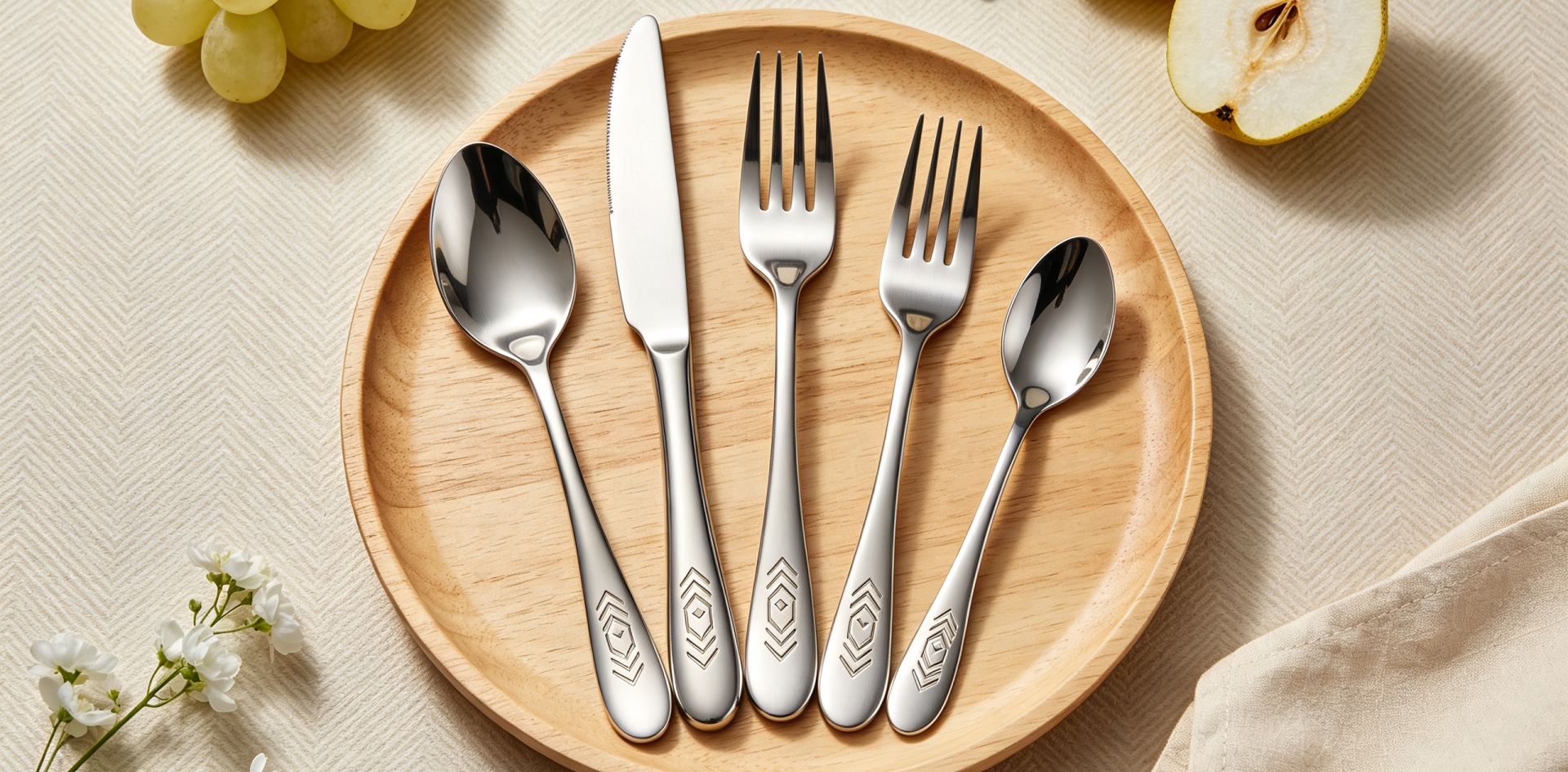
Proportion also affects how a spoon is perceived within a coordinated set. If teaspoons, dessert spoons, and larger spoons follow different design principles, the collection may look inconsistent even when each item meets its individual size specifications.
For B2B buyers, this issue is particularly relevant when ordering several spoon sizes under one product program. A consistent design language helps create a unified collection while allowing each size to retain its intended function.
How to Define the Length-to-Width Ratio
A simple way to describe bowl proportion is to compare the bowl's length with its maximum width.
The ratio can be calculated as:
Bowl length-to-width ratio = bowl length ÷ maximum bowl width
For example, a bowl measuring 50 mm in length and 35 mm at its widest point has a ratio of approximately 1.43. This figure is a design reference rather than a universal quality standard. The correct target depends on the approved drawing, product style, and functional requirements.
When establishing specifications, buyers and manufacturers should define several details together:
-
Bowl length: the distance from the front tip to the point where the bowl transitions into the handle.
-
Maximum bowl width: the widest dimension across the bowl.
-
Measurement reference: the precise points used to measure both dimensions.
-
Outline shape: whether the bowl has an oval, rounded, elongated, or more tapered profile.
-
Tolerance: the permitted dimensional variation for each measurement.
A ratio alone cannot describe the complete bowl shape. Two bowls may have the same length-to-width ratio but different tip contours, side profiles, or maximum-width positions. Drawings and approved samples remain essential for communicating the intended design.
Choosing the Right Proportion for Different Spoon Designs
The ideal bowl proportion depends on the product category and the design brief. Buyers should consider appearance and usability together instead of selecting dimensions solely from a catalog photograph.
For a compact spoon, a shorter bowl may support a balanced appearance when paired with a relatively short handle. For a dessert spoon, the design may require a different relationship between bowl size and handle length. A larger serving spoon may use a broader bowl to suit its intended role, but the final proportions still need to match the product's specific requirements.
When developing a new stainless steel spoon, evaluate the following points:
-
Overall spoon length in relation to bowl length.
-
Bowl width and its relationship to the handle width.
-
Bowl depth and the intended capacity.
-
Tip shape and the transition from the bowl sides toward the front.
-
Visual consistency with related forks, knives, and other spoons.
These measurements should be considered as a coordinated specification. Changing bowl length without reviewing width, depth, and handle proportions can alter the product's appearance and functional characteristics.
Controlling Proportion During Custom Production
In OEM and ODM projects, bowl proportions should be confirmed before bulk production begins. A product drawing should identify the critical dimensions and indicate which measurements require defined tolerances. The approved physical sample can then provide a practical reference for appearance and finishing.
During production, dimensional checks should use a consistent method. Measuring from different reference points can create misleading comparisons, especially when the bowl tip is rounded or the bowl-to-handle transition is gradual.
A useful control plan includes:
-
Confirming the nominal bowl length and maximum width on the technical drawing.
-
Defining measurement points and the permitted variation for each dimension.
-
Checking initial samples against the drawing and approved reference sample.
-
Inspecting representative production pieces using the same measurement method.
-
Recording deviations and confirming corrective action when measurements fall outside the agreed specification.
Manufacturers should also review tooling condition and forming consistency if dimensional variation becomes noticeable. A change in forming conditions may influence the bowl outline, so inspection should consider the actual shape rather than relying on a single numerical ratio.
Evaluating Samples Beyond the Numbers
Dimensional measurements are necessary, but they do not replace visual and practical evaluation. Buyers should compare the sample with the approved design under consistent viewing conditions and check whether the bowl appears symmetrical and proportionate to the handle.
It is also useful to compare several pieces side by side. Small differences may be difficult to notice when examining one spoon at a time, but become more apparent when products are arranged together. For a coordinated collection, compare the bowl proportions of each size and confirm that the differences between sizes look intentional.
If a project requires strict appearance standards, the buyer and manufacturer should agree in advance on which features are critical, how samples will be evaluated, and what documentation will be retained. This reduces the risk of subjective disagreements after a large order has been produced.
Materials, Finishing, and Documentation
Stainless steel grade, material thickness, forming characteristics, and surface finish should be specified separately from bowl proportions. These factors affect other product properties and should not be treated as interchangeable indicators of dimensional accuracy.
For example, a polished finish may make the bowl outline easier to notice under reflected light, while a brushed finish creates a different visual effect. Buyers should therefore review the actual finish and bowl geometry together when approving a sample.
For projects with material or product compliance requirements, request documentation relevant to the specified stainless steel grade and intended market. Homefelt can discuss applicable material specifications, inspection requirements, and available supporting documents according to the project scope. Certificates and test reports should be checked for their actual coverage rather than assumed to apply to every product automatically.
Supporting Consistent Bulk Orders with Homefelt
For importers and distributors, the value of a well-defined spoon specification extends beyond the first order. Clear bowl dimensions and proportion references can help maintain consistency when replenishing stock, adding related spoon sizes, or extending an existing flatware range.
Homefelt supports stainless steel cutlery projects involving OEM and ODM development, wholesale supply, private-label requirements, and bulk production. Buyers can discuss product dimensions, sample approval, packaging choices, and transportation arrangements as part of a coordinated service plan.
Before requesting a quotation, prepare the intended spoon size, target material, surface finish, approximate order quantity, packaging requirements, and any available drawing or reference sample. If the design is still under development, sharing the intended market and preferred appearance can help establish the initial specification.
To discuss a custom stainless steel spoon or request details for a bulk order, contact ingrid@homefelt.net. Providing clear dimensional references at the beginning helps both parties evaluate the design and move toward a more consistent production result.
You May Be Interested In
Stainless Steel Spoon Handle Bend Angle Control
Stainless Steel Spoon Bowl Width Tolerance Control
Related Article