
Stainless Steel Spoon Bowl Symmetry for Consistent B2B Production
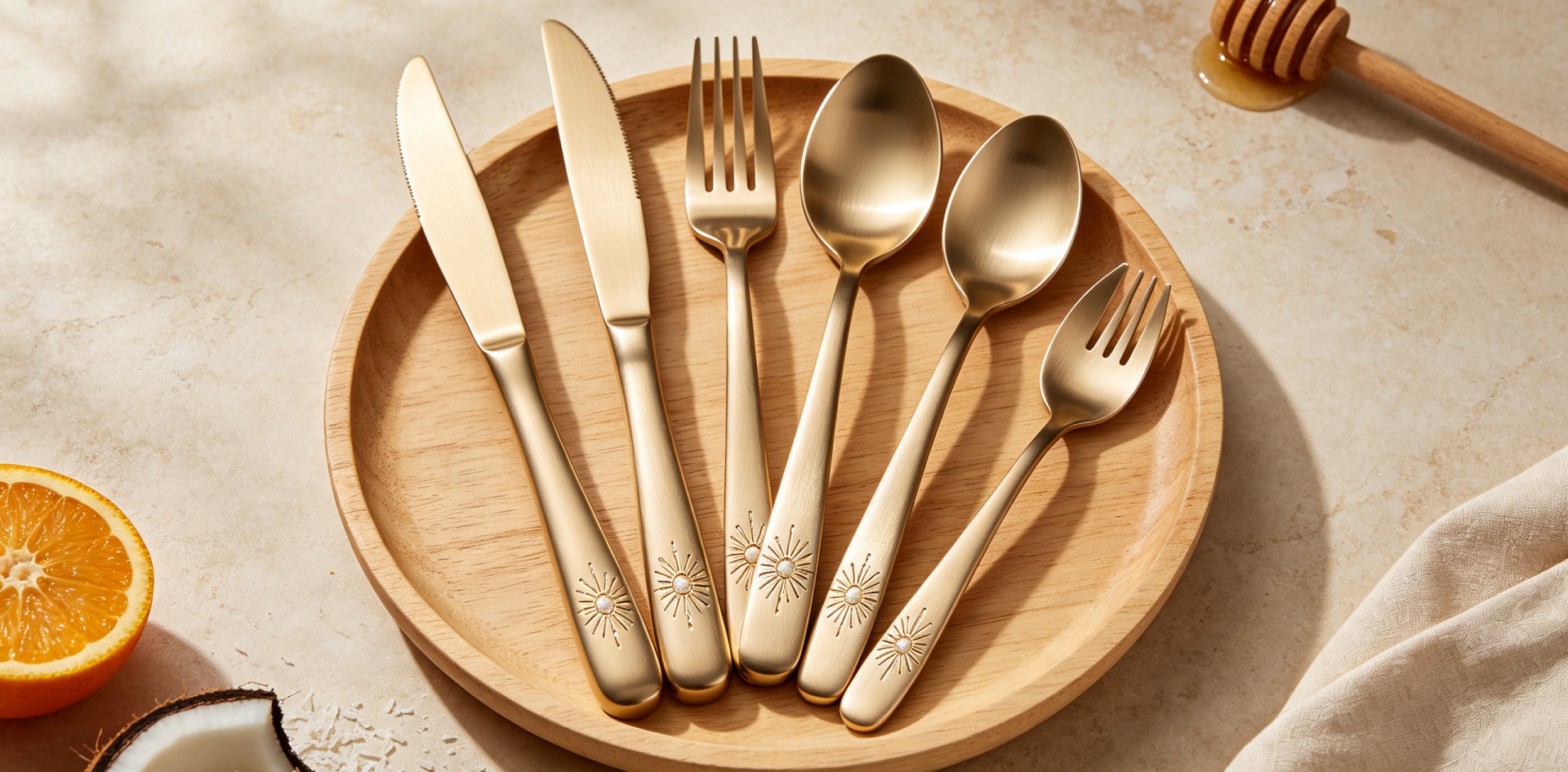
Stainless Steel Spoon Bowl Symmetry for Consistent B2B Production
When buyers develop stainless steel spoons for wholesale or private label projects, they often review material, dimensions, thickness, weight and handle design first. Another product detail that deserves attention is the symmetry of the spoon bowl.
The bowl is the most recognizable part of a spoon. Its width, depth, length and relationship between the left and right sides directly affect the visual balance of the finished product.
For B2B customers ordering large quantities, bowl symmetry is also related to production consistency. A well-defined reference helps manufacturers reproduce the same spoon design across samples, bulk orders and future repeat production.
What Spoon Bowl Symmetry Means
Spoon bowl symmetry refers to the balance of the bowl shape around its intended centerline.
A spoon does not need to have a perfectly geometric appearance like a machine component. Different stainless steel spoon designs can have rounded, oval, elongated or more distinctive bowl shapes.
The important requirement is that the actual product follows the approved design consistently.
For a custom spoon, buyers may define the overall bowl length, width, depth and transition into the handle. The manufacturer can then use these requirements together with an approved sample as a reference for production.
This gives both sides a clearer understanding of the expected product.
Why Bowl Symmetry Matters in Stainless Steel Spoons
The spoon bowl is highly visible when the product is placed on a table, displayed in a retail package or photographed for a product catalog.
If the bowl shape varies noticeably between pieces, the difference can become apparent when several spoons are placed side by side.
For wholesalers and distributors, this can affect the visual consistency of a product batch. For private label brands, it can also affect the consistency of a collection that customers may reorder over time.
Bowl symmetry therefore belongs to the practical product details that can be checked during sample approval and production inspection.
Bowl Shape and the Overall Spoon Proportion
Symmetry should be considered together with the overall proportion of the spoon.
A spoon with a wide bowl and short handle creates a different visual impression from a spoon with a narrow, elongated bowl and longer handle.
When developing a custom stainless steel spoon, buyers can evaluate:
-
Bowl length
-
Bowl width
-
Bowl depth
-
Centerline
-
Left-right balance
-
Bowl-to-handle proportion
-
Transition between bowl and handle
-
Overall product length
These characteristics work together. Changing one dimension can influence how the complete spoon looks.
For this reason, custom product development should consider the complete spoon rather than treating the bowl as an isolated component.
Bowl Symmetry During Sample Approval
A physical sample is particularly useful for evaluating spoon bowl symmetry.
Buyers can compare the sample from different viewing angles and place several pieces together where possible.
Looking at the spoon from directly above can help reveal differences in the left and right sides of the bowl. Viewing the product from the side can provide additional information about the overall bowl profile.
The purpose is not to make the inspection unnecessarily complicated. It is to confirm that the actual product matches the intended design before the bulk order is released.
For international B2B projects, this step can provide a useful reference for communication between the buyer and factory.
Why Several Samples Can Be More Useful Than One
One spoon can show whether a design works, but several spoons can show whether the design is being reproduced consistently.
When multiple samples of the same model are available, buyers can place them together and compare their bowl outlines.
Look for differences in overall width, centerline, shape and transition area.
This approach can be especially useful for new OEM or ODM projects because it helps identify whether a product requirement is sufficiently clear before mass production.
Once the final sample is approved, it can become the physical reference for future production.
Spoon Bowl Design for Different Product Types
Not every stainless steel spoon uses the same bowl shape.
A standard table spoon may require a different proportion from a dessert spoon, teaspoon or other specialized spoon.
A buyer developing several spoon models should therefore establish the requirements for each product individually.
For example, two spoons may have similar handles but different bowl dimensions. Another collection may use the same basic bowl concept with different overall sizes.
Each model can have its own specification and approved sample. This reduces the possibility of different product requirements being combined during production.
Bowl Symmetry and Cutlery Collection Design
A spoon is often purchased as part of a larger stainless steel cutlery collection.
The spoon bowl may have a different physical shape from the fork head and knife blade, but all three pieces can share common design characteristics.
Handle proportions, surface finish, decorative details and overall scale can create a coordinated collection.
For private label buyers, this is useful when building a recognizable product range. A spoon with consistent bowl proportions can contribute to the overall visual balance of the collection.
The objective is not to make the spoon look identical to the fork or knife. Each product should maintain its own functional structure while belonging to the same design family.
Defining Spoon Bowl Requirements for B2B Orders
A clear product specification can make communication easier when requesting quotations from stainless steel spoon manufacturers.
For a spoon project, buyers can provide information such as:
-
Product model
-
Stainless steel material
-
Overall length
-
Bowl length
-
Bowl width
-
Bowl depth
-
Product thickness
-
Product weight
-
Handle dimensions
-
Handle design
-
Surface finish
-
Logo requirements
-
Packaging requirements
-
Approved sample reference
For more complex custom designs, a technical drawing or reference sample can provide additional information.
The level of detail can be adjusted according to the product and project requirements.
Bowl Consistency in Bulk Production
A bulk order may contain thousands of identical spoons. Maintaining a consistent bowl shape across this quantity requires the production team to work from a defined reference.
During inspection, multiple pieces from the production batch can be compared with the approved sample.
The inspection can focus on overall shape, dimensions and visible symmetry rather than relying on a single piece.
This becomes particularly relevant for buyers who plan repeat orders. A consistent reference helps maintain the same product characteristics across different purchasing cycles.
For long-term B2B supply, repeatability is often just as important as the appearance of the initial sample.
Why This Detail Matters for Private Label Buyers
Private label products are normally developed around a specific market position and brand identity.
A buyer may invest time in selecting the exact spoon proportions, handle shape and surface finish. If the bowl changes noticeably during later production, the final product may no longer match the original approved design.
This is why product specifications and sample references are useful.
A manufacturer supporting private label projects should be able to understand the buyer's product requirements and translate them into a repeatable production standard.
Homefelt factory supports stainless steel spoon customization for OEM, ODM and private label projects, as well as wholesale and large-volume production.
Developing Custom Stainless Steel Spoons With Homefelt
Homefelt factory focuses on stainless steel cutlery, including spoons, forks, knives and complete cutlery sets.
For a custom spoon project, buyers can provide a drawing, reference product, photograph or basic concept. The requirements can then be discussed in terms of material, dimensions, bowl shape, handle design, finish, branding and packaging.
With 40 years of experience in the stainless steel cutlery business, Homefelt supports B2B customers from product development and sampling through wholesale and bulk production.
The factory has also worked with well-known brands and maintains experience with international B2B product requirements.
For buyers developing a new collection, the aim is to establish a practical product specification that can be used as a reference for sampling, production and future orders.
What Buyers Can Check Before Confirming Production
Before confirming a bulk stainless steel spoon order, buyers can compare the approved sample with the final product specification.
Review the overall bowl outline and left-right balance. Check the bowl dimensions and its relationship with the handle. Compare several pieces where possible rather than evaluating only one spoon.
If the order contains several spoon models, make sure each model has a separate reference.
These simple checks can make product communication more precise and provide a clearer basis for production inspection.
A Small Detail With Long-Term Value
Spoon bowl symmetry may appear to be a minor product characteristic, but it becomes more visible when large quantities of the same model are displayed or used together.
For B2B buyers, the key is not to impose one universal bowl shape on every spoon. Instead, each custom product should have a clearly defined design that the manufacturer can reproduce consistently.
An approved sample, practical specifications and batch-level inspection can help connect product development with long-term supply.
This approach is useful for wholesalers, distributors, hospitality suppliers and private label brands that need stable stainless steel cutlery quality across multiple orders.
Conclusion
The spoon bowl is one of the most important visual elements of stainless steel cutlery. Its symmetry, proportions and relationship with the handle can influence how consistent the product appears from one piece to another.
For custom B2B projects, buyers can define the bowl dimensions and shape through product specifications and an approved sample. Comparing several pieces during sampling can also help identify differences before mass production begins.
When the same stainless steel spoon is reordered, maintaining the original reference becomes important for consistent product quality.
If you are developing custom stainless steel spoons, matching cutlery sets or a private label flatware collection, contact Homefelt factory at ingrid@homefelt.net to discuss your specifications, OEM/ODM requirements and bulk production plans.
You May Be Interested In
Stainless Steel Spoon Bowl Depth Specification for B2B Orders
Stainless Steel Fork Tine Spacing Consistency for B2B Cutlery
Related Article



