Stainless Steel Spoon Branding: Logo Placement for Private Label Products
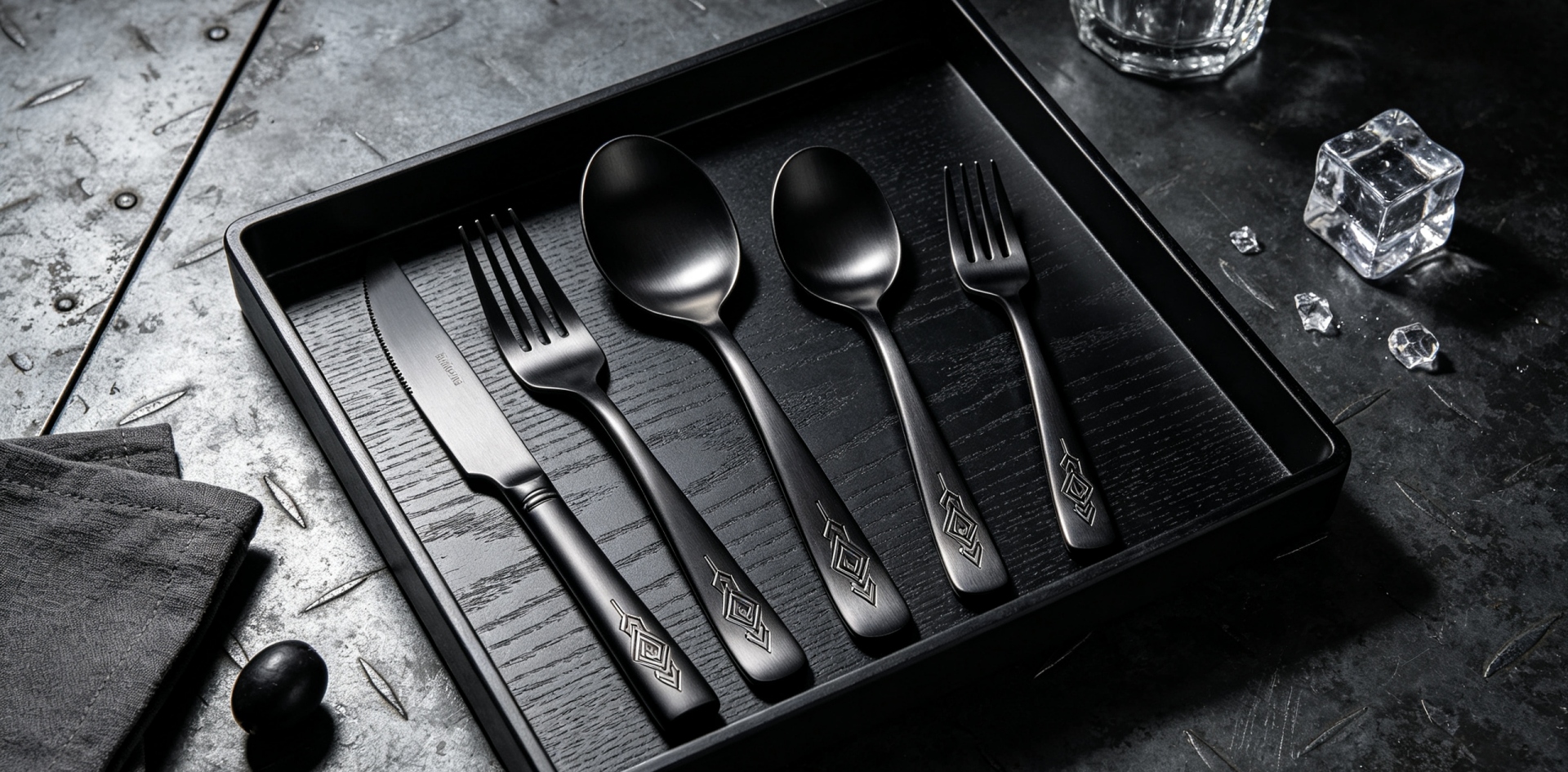
Stainless Steel Spoon Branding: Logo Placement for Private Label Products
For private label brands, a stainless steel spoon can be more than a functional tableware item. Thoughtful branding helps connect the product with the company behind it, making a cutlery collection easier to recognize across retail shelves, catalogs and customer orders.
For importers, retailers and distributors, the challenge is to add brand identity without compromising the spoon's usability or overall appearance. Logo size, placement, visibility and coordination with packaging all influence the finished product.
Homefelt supports B2B stainless steel cutlery projects, including customized products for customers developing their own tableware brands.
Why Branding Matters for Stainless Steel Spoons
A recognizable brand can help a product range stand out in a competitive market. For buyers building a private label collection, consistent branding also connects individual spoons with matching forks, knives and other cutlery pieces.
Branding can support several commercial objectives:
-
Improve product recognition
-
Create a consistent appearance across a collection
-
Connect individual pieces with the retail brand
-
Support premium or lifestyle product positioning
-
Make customized products distinct from generic alternatives
The best approach depends on the product's intended market. A minimalist retail collection may need a subtle logo, while a brand with a strong visual identity may prefer a more visible mark.
Choose the Right Logo Placement
Logo placement should be considered during product development rather than added as an afterthought.
On a stainless steel spoon, possible placement areas may include the handle or another suitable surface, depending on the design and manufacturing method.
When comparing options, buyers should consider visibility, available space, the shape of the spoon and how the product will normally be held.
Handle Placement
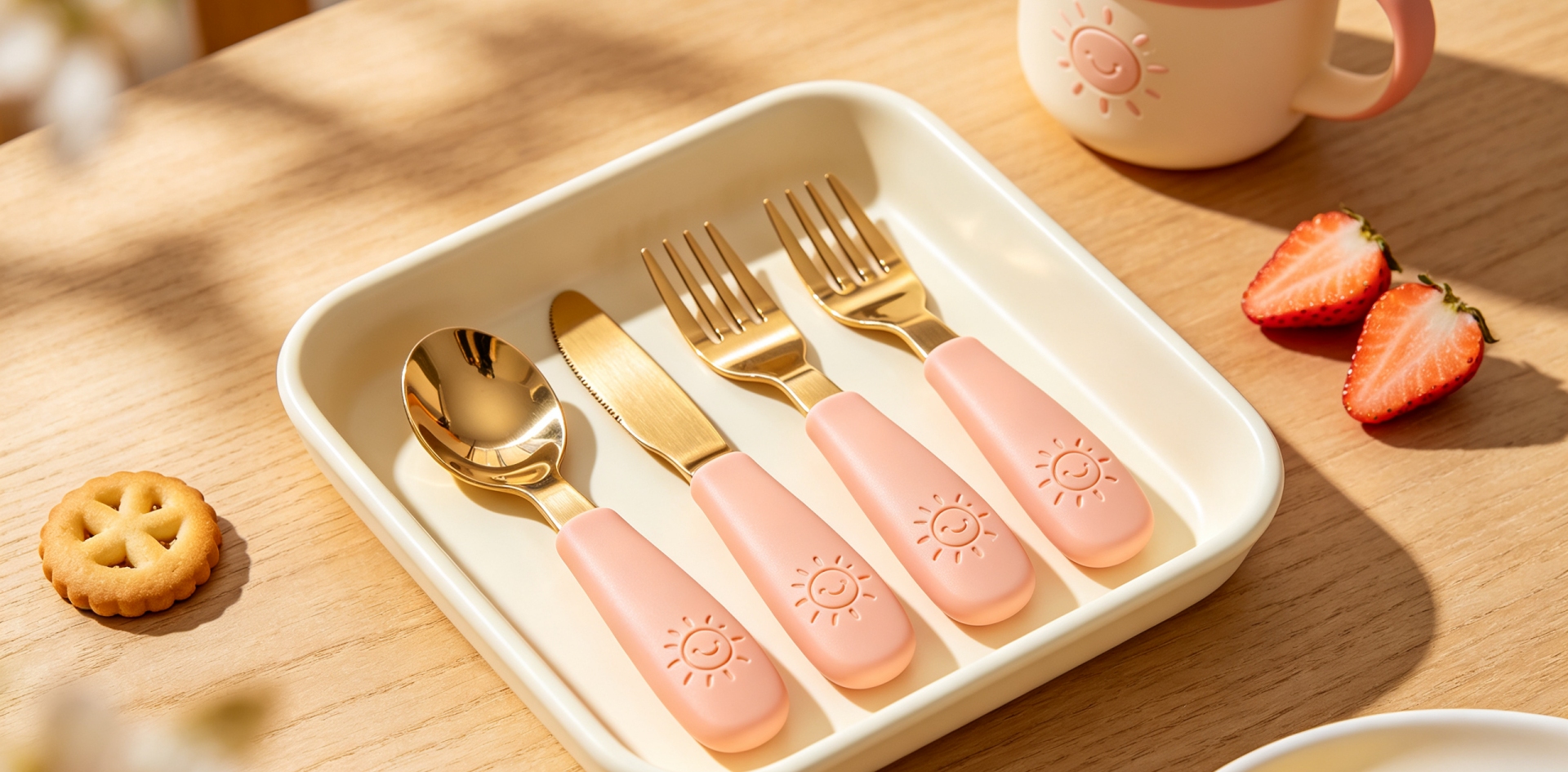
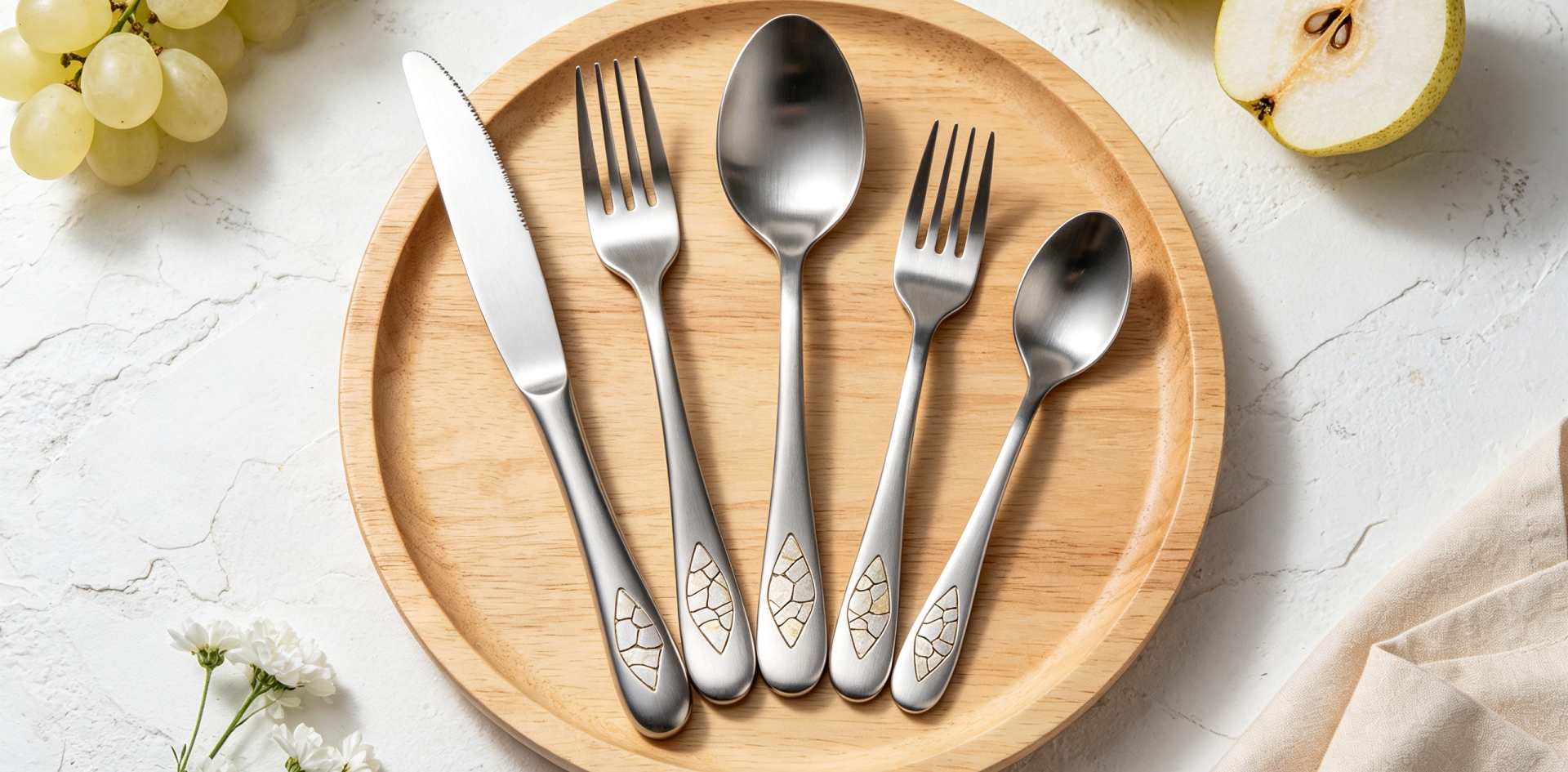
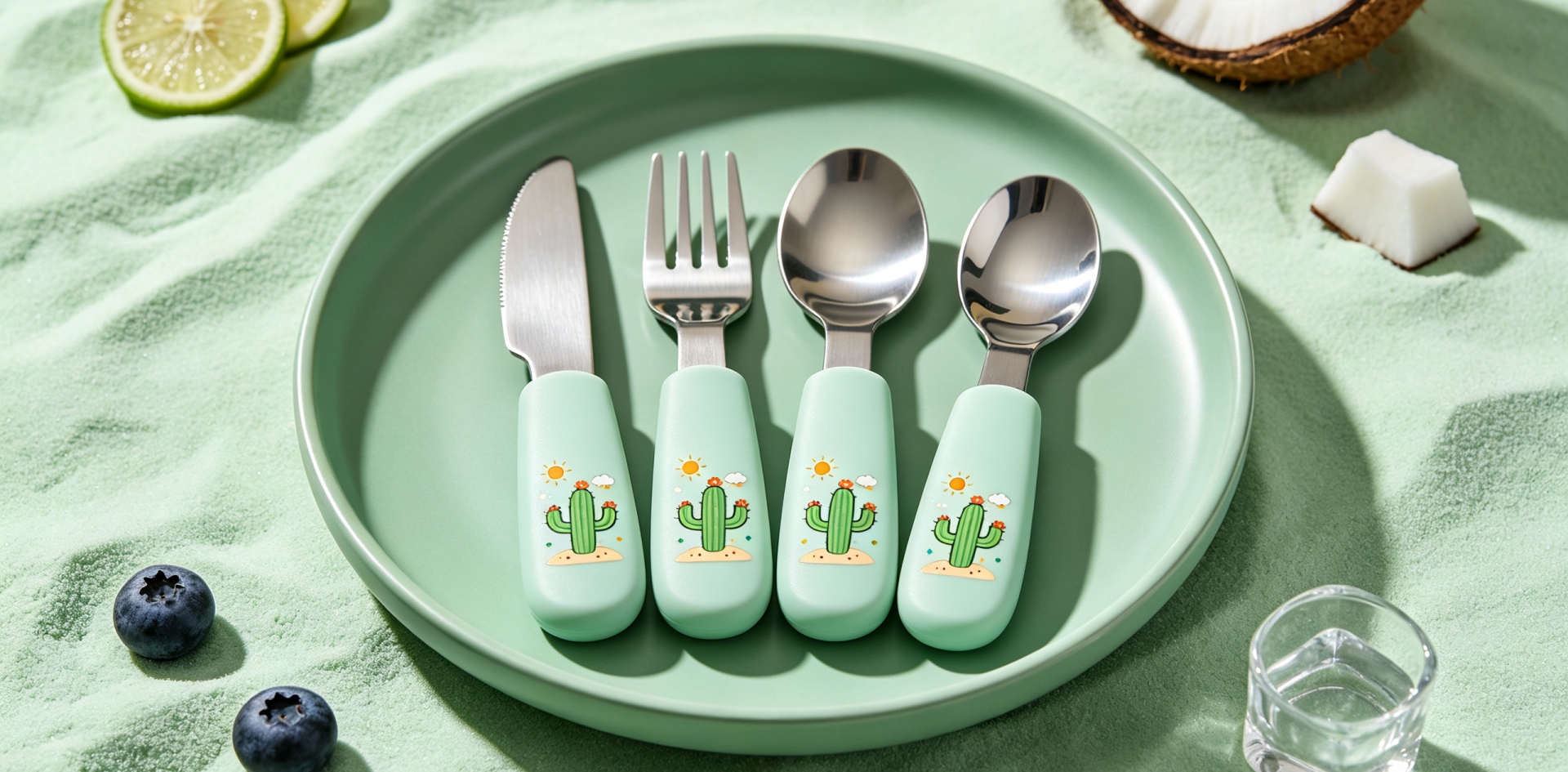
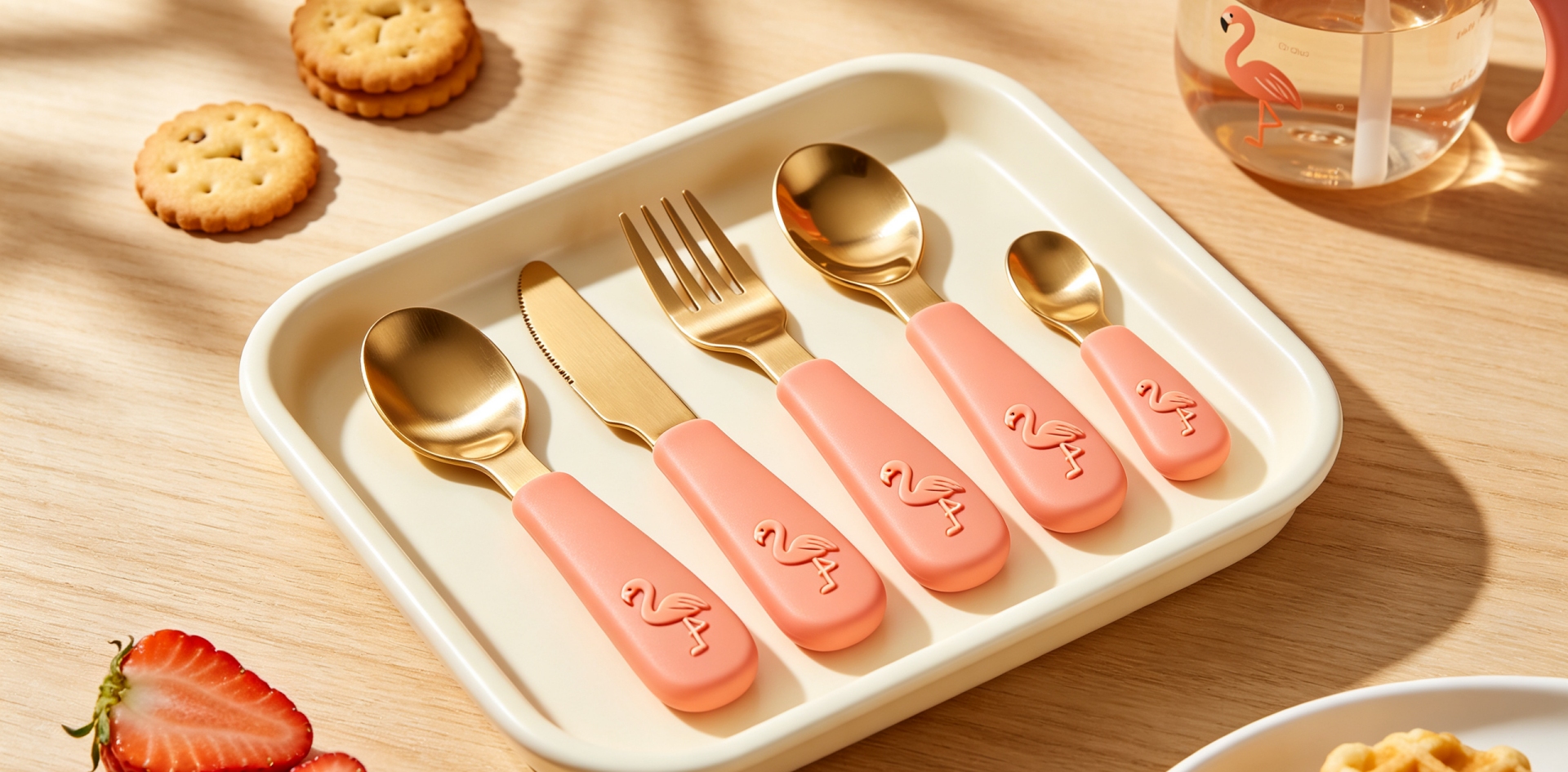
The handle is often a practical area to evaluate for branding because it provides a relatively narrow, defined surface.
A logo positioned on the handle may be visible when the spoon is displayed or arranged with matching cutlery. The available space, handle curvature and surface finish will influence the result.
Discreet Branding
Some brands prefer a small logo that does not dominate the design.
This approach can work well for contemporary tableware collections where simple shapes and understated details are part of the product identity.
More Visible Branding
Other projects may require a more noticeable mark, particularly when brand recognition is a major selling point.
In these cases, buyers should compare the logo's scale with the overall proportions of the spoon. An oversized mark can make a small product look visually crowded.
The final placement should be confirmed against an actual sample or an approved design reference.
Common Branding Methods
Different logo techniques produce different visual effects. The appropriate method depends on the spoon's material, surface finish, design and intended use.
Laser Marking
Laser marking can create a precise, controlled logo on a suitable stainless steel surface. It is often considered when the brand requires a clean and relatively subtle mark.
The final appearance depends on the surface, equipment settings and logo artwork. Buyers should review a sample before approving the method for a full order.
Engraving
Engraving creates a mark in the metal surface. Depending on the technique and design, it may produce a more tactile or defined appearance.
Logo detail, available space and handle geometry should be considered during development.
Other Decorative Methods
Some projects may use other suitable marking or decorative processes, depending on the product and manufacturing requirements.
Not every method is appropriate for every spoon design. Buyers should confirm the available options with the manufacturer rather than assuming a particular technique can be applied to any surface.
Prepare Artwork Before Production
Good branding starts with clear artwork.
A logo that looks attractive on a computer screen may not reproduce well on a small metal handle. Very fine lines, tiny lettering and complex symbols can lose clarity when reduced.
Before requesting a quotation, buyers should prepare:
-
A high-quality logo file
-
The preferred logo size
-
The proposed placement
-
Any required spacing or orientation
-
The intended marking method, if known
-
Reference images where available
Vector artwork is often useful for production discussions because it can be scaled without the same loss of clarity associated with low-resolution images.
If the buyer is unsure about the ideal size or placement, the manufacturer can review the proposed artwork and discuss practical options.
Match Branding With the Spoon Design
Branding should complement the spoon rather than compete with it.
A narrow handle may offer limited room for a large logo. A curved or textured handle may require additional attention to positioning. A highly reflective finish can also affect how a mark appears under different lighting conditions.
During sample review, buyers should assess the logo together with the complete product.
Important points include:
-
Logo clarity
-
Position and alignment
-
Scale relative to the handle
-
Visual balance
-
Surface appearance around the mark
-
Consistency with the selected finish
-
Coordination with matching cutlery
The goal is to create a result that looks intentional and appropriate for the brand.
Build a Consistent Brand Across the Collection
A private label project may include several spoon types as well as matching forks and knives.
If every product uses a different logo size or placement, the collection may look inconsistent. Buyers should establish simple branding rules before extending the design across multiple products.
These rules can define:
-
Logo artwork
-
Preferred placement
-
Relative logo size
-
Orientation
-
Marking method
-
Visual relationship with the product finish
The same rules can then be applied to related cutlery items where the design permits.
For brands with several product collections, a consistent approach can help maintain recognition while allowing each collection to retain its own style.
Coordinate Product Branding With Packaging
The product and its packaging work together to present the brand.
A discreet logo on the spoon may be paired with more prominent branding on the retail box. A gift set may use coordinated graphics, product descriptions and a layout that presents the entire collection as one product.
For B2B buyers, packaging decisions should be made alongside the branding plan.
Consider the following elements:
-
Brand logo and colors
-
Product name
-
Number and type of cutlery pieces
-
Retail presentation
-
Product arrangement
-
Packaging dimensions
-
Label and barcode requirements, where applicable
The packaging does not need to duplicate every detail on the spoon. Instead, it should support the same brand identity and communicate the product clearly.
Branding for Different Sales Channels
The most appropriate branding approach may differ according to how the product will be sold.
Retail Products
Retail brands may need a recognizable product appearance that works with packaging, shelf displays and online product photography.
Corporate Gifts
Gift-oriented cutlery sets may benefit from a carefully coordinated presentation, with the logo integrated into both the product and the packaging where appropriate.
Distributor Collections
Distributors developing their own ranges may prefer consistent branding across multiple products to make the collection easier to identify and reorder.
Hospitality Supply
Hospitality customers may prefer discreet branding that fits the establishment's style without distracting from the dining experience.
Defining the sales channel early helps the buyer choose a suitable branding approach.
What B2B Buyers Should Confirm Before Ordering
Before approving a branded stainless steel spoon, confirm the details that will affect the finished product.
The purchase specification should identify the spoon design, material, finish, logo artwork, placement, marking method and packaging requirements.
Buyers should also request a sample or approved visual reference showing how the logo will appear on the actual product.
If the project includes several spoon sizes or matching cutlery pieces, confirm which items require branding and whether the same logo treatment is suitable for each one.
These steps reduce the risk of misunderstandings between the buyer, designer and manufacturer.
How Homefelt Supports Private Label Branding
Homefelt works with B2B customers on stainless steel cutlery products and customized tableware projects.
For a private label spoon project, buyers can discuss their product concept, target market, preferred branding style and packaging requirements. The project can then be evaluated according to the chosen design and production needs.
Homefelt's one-stop service approach can also coordinate product development, packaging and transportation requirements, helping customers manage related project details through a more organized process.
To discuss a branded stainless steel spoon, buyers can send their logo artwork, reference images, estimated order quantity and packaging preferences to ingrid@homefelt.net.
Conclusion
Stainless steel spoon branding requires coordination between logo design, placement, marking method, product proportions and packaging. A well-planned approach helps private label brands create a recognizable collection while preserving the spoon's visual balance and practical function.
For importers, retailers and distributors, the most effective process is to define the brand requirements early, review the logo on a real product sample and apply consistent rules across matching cutlery.
With clear specifications and an experienced manufacturing partner, a standard stainless steel spoon can become part of a distinctive branded product range.
You May Be Interested In
Stainless Steel Spoon Sample Approval: A Guide for B2B Buyers
Stainless Steel Spoon Replacement Planning for Long-Term B2B Supply
Related Article