
Stainless Steel Spoon Curvature for B2B Custom Designs
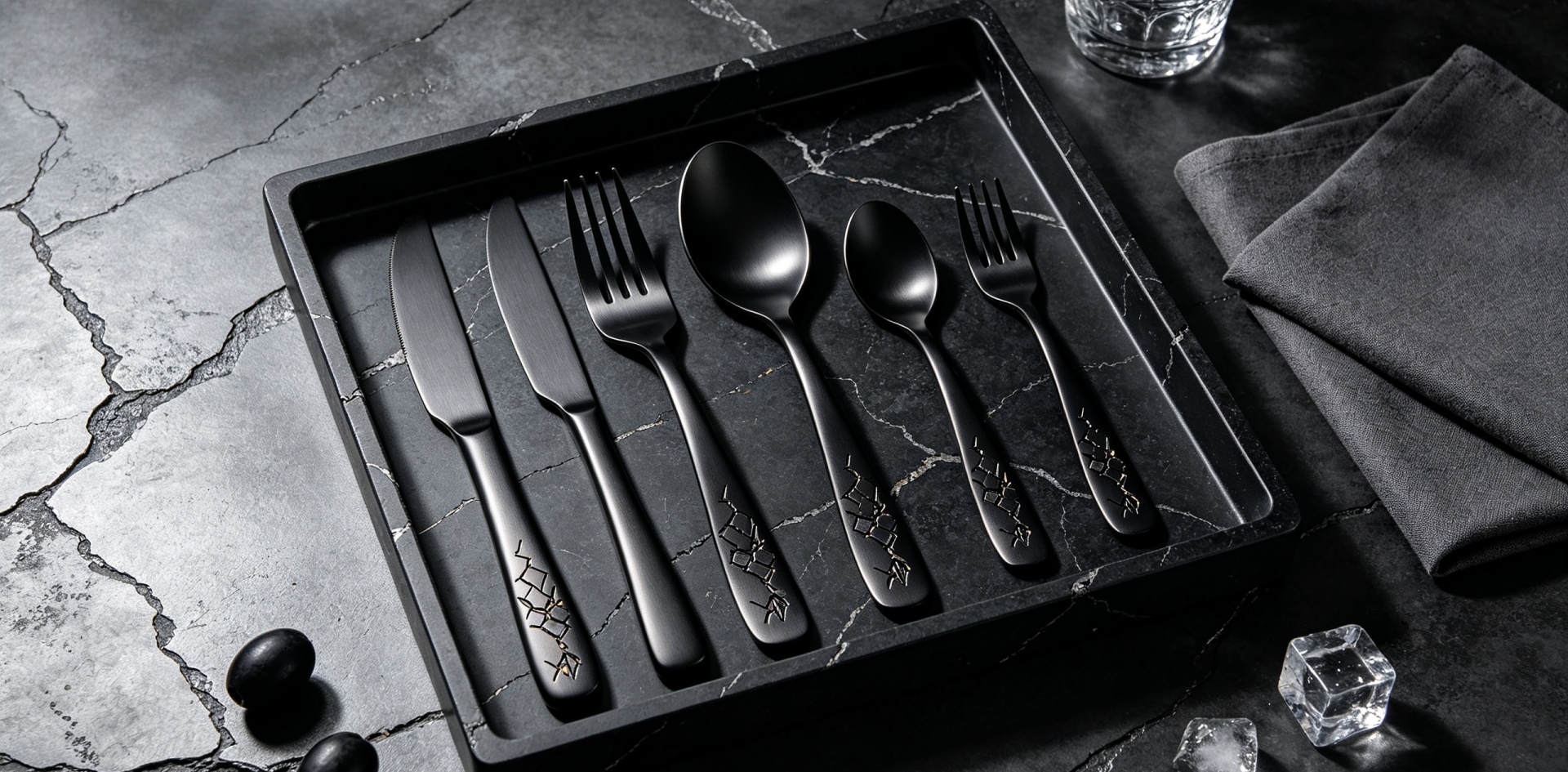
Stainless Steel Spoon Curvature for B2B Custom Designs
When developing a stainless steel spoon, buyers often focus on visible dimensions such as length, width and depth. These specifications are important, but they do not fully describe the shape of the spoon bowl.
The curvature of the bowl is another important design element.
A spoon bowl is a three-dimensional surface rather than a flat shape. The way the surface curves from the center toward the rim can influence the appearance, proportions and overall character of the finished spoon. For B2B brands developing custom stainless steel cutlery, understanding this detail can make communication with a manufacturer much more precise.
The right curvature can also help connect the spoon with the design language of a larger knife, fork and spoon collection.
What Does Spoon Bowl Curvature Mean?
Spoon bowl curvature describes how the stainless steel surface forms the three-dimensional shape of the bowl.
Two spoons can have almost identical length and width but still look different because their curved surfaces are different.
One design may have a relatively smooth and shallow transition from the center to the rim. Another may have a more pronounced curved profile. These differences can change the visual impression of the spoon even when the basic dimensions remain similar.
For a custom product, the curvature should therefore be considered as part of the overall shape rather than as an isolated technical measurement.
Why Curvature Matters in Custom Spoon Development
A spoon is a functional product, but its shape also contributes to the character of a flatware collection.
A softer bowl profile can create a different visual impression from a more structured or pronounced form. The relationship between the bowl and the handle can also affect how balanced the entire spoon appears.
For B2B buyers, these details can become particularly important when developing a private label collection. The objective is often not simply to manufacture a spoon that meets basic dimensions, but to reproduce a specific product concept consistently.
This is why photographs, reference samples and drawings can be useful during the development stage.
A manufacturer needs to understand not only how long or wide the spoon should be, but also how the surface is intended to flow across the bowl.
Curvature and the Spoon Rim
The bowl curvature and rim cannot be considered completely separately.
As the surface approaches the edge of the bowl, the transition needs to remain consistent with the intended design. A spoon with a controlled curved profile can have a different visual character from one with a more pronounced edge transition.
The rim itself may be relatively soft and flowing or may have a more defined appearance depending on the design.
For a commercial collection, consistency between these details helps create a finished product that looks intentional.
During sample approval, buyers can examine the spoon from different angles to see how the curved surface interacts with the rim, handle and overall silhouette.
Creating a Consistent Three-Dimensional Shape
One challenge in custom spoon manufacturing is that a three-dimensional form needs to remain consistent during mass production.
A sample may establish the desired appearance, but the same shape must then be reproduced across a much larger quantity.
This makes manufacturing control important.
The forming process, tooling and production conditions all need to be appropriate for the selected design. The final spoon should maintain the intended bowl profile while also meeting the dimensional requirements of the order.
For B2B buyers, this is one reason to discuss the bowl shape with the manufacturer before approving a large production run.
A design that is visually attractive in a single sample should also be practical for repeatable production.
Curvature and the Overall Spoon Proportion
The bowl is only one part of the spoon. Its relationship with the handle also affects the overall appearance.
A relatively compact bowl combined with a long, narrow handle creates a different visual balance from a wider bowl paired with a heavier handle.
The curvature needs to work within that overall proportion.
When developing a custom spoon, the manufacturer can review the bowl, neck and handle together. This helps prevent a situation where each individual specification looks correct but the complete product feels visually disconnected.
For brands developing several spoon sizes, this becomes even more useful.
A smaller spoon and a larger spoon do not need to be identical in shape. However, they can share common design principles so that customers recognize them as part of the same collection.
Curvature Across Different Spoon Types
Different spoon applications may require different bowl shapes.
A teaspoon, dessert spoon and table spoon naturally have different proportions. Their bowl dimensions may change according to the intended product, while the overall design language remains consistent.
For a custom flatware program, the same design concept can therefore be adapted across multiple spoon sizes.
The important point is to distinguish between what should remain consistent and what should change.
The handle design, decorative details and overall visual character may remain connected, while the bowl geometry can be adjusted according to the specific product.
This approach can help brands build a broader stainless steel spoon range without making every product look identical.
How Samples Help Confirm Bowl Curvature
For three-dimensional products, a physical sample is often more useful than a written description alone.
A buyer can hold the spoon, view the bowl from different angles and compare it with other pieces in the collection.
During sample review, attention can be given to the overall bowl shape, surface continuity, rim transition, handle connection and visual relationship with the rest of the cutlery.
If adjustments are required, the changes can be discussed before the product moves into bulk manufacturing.
For OEM and ODM projects, this process allows the factory and customer to establish a shared understanding of the intended product.
Homefelt Factory for Custom Stainless Steel Spoon Projects
Homefelt factory provides stainless steel spoon and complete cutlery manufacturing services for B2B customers.
Customers can develop individual spoons or coordinate them with custom knives and forks as part of a complete flatware collection. The factory can work with existing drawings, reference samples, product images or early-stage concepts.
For a customer with a clear specification, the focus may be on accurate manufacturing and bulk production. For a customer who has an initial idea but needs help developing the product, the project can include design discussion and sample development.
This flexible approach allows the service to match the customer's actual situation.
Homefelt can also coordinate related requirements such as surface finishing, packaging and transportation, creating a more integrated service for customers who prefer to manage their cutlery project through one manufacturing partner.
From Spoon Design to Bulk Production
A custom spoon project usually begins with an idea or specification, but the final objective for a B2B buyer is a reliable commercial product.
That means the design needs to work through every stage of the process.
The bowl curvature needs to be achievable in production. The relationship between the bowl and handle needs to remain consistent. The selected finish needs to complement the shape. Packaging needs to protect the finished products during transportation.
When these elements are considered together, the development process becomes more practical.
For brands, wholesalers and distributors, this integrated approach can also make it easier to expand the product range later.
A successful spoon design can become the starting point for additional sizes or coordinated knife and fork models.
Communicating Curvature to a Factory
Buyers do not always need to provide complicated technical terminology when discussing a spoon design.
A clear reference sample, product photograph or drawing can already provide valuable information.
If the customer has specific requirements for the bowl profile, it is useful to mention them together with the basic dimensions. If a similar product already exists in the market, a reference sample can help communicate the desired visual direction.
The manufacturer can then discuss which details need to be confirmed through sampling.
This is especially useful for private label projects where the final appearance needs to match the brand's intended product positioning.
A clear discussion at the beginning can reduce unnecessary changes later in the development process.
Building a Complete Cutlery Collection
A spoon with a well-defined bowl shape can become an important part of a coordinated cutlery range.
When the spoon is developed together with a matching knife and fork, the three pieces can share common principles in handle proportions, finishing and overall visual style.
For B2B brands, this creates more flexibility when building a collection for wholesale, retail or professional customers.
Homefelt factory can support these projects with OEM, ODM and private label stainless steel cutlery manufacturing, from initial product development through bulk production, packaging and transportation.
The service can be adjusted according to the customer's project size and level of preparation.
Whether you already have a finished drawing or are still developing the concept, sharing the available information with the factory is a practical first step.
A spoon may look simple, but its three-dimensional form contains many design decisions. Bowl curvature is one of the details that can influence how the finished product looks and how successfully it fits into a larger collection.
For B2B buyers, defining this detail early can help create a more consistent product and a smoother path from sample development to bulk production.
Custom Stainless Steel Spoon Manufacturing for B2B Buyers
OEM & ODM Stainless Steel Flatware Solutions
Private Label Stainless Steel Cutlery Manufacturing
Stainless Steel Knife Handle Transition for B2B Brands
Stainless Steel Fork Tine Alignment for B2B Cutlery
Related Article



