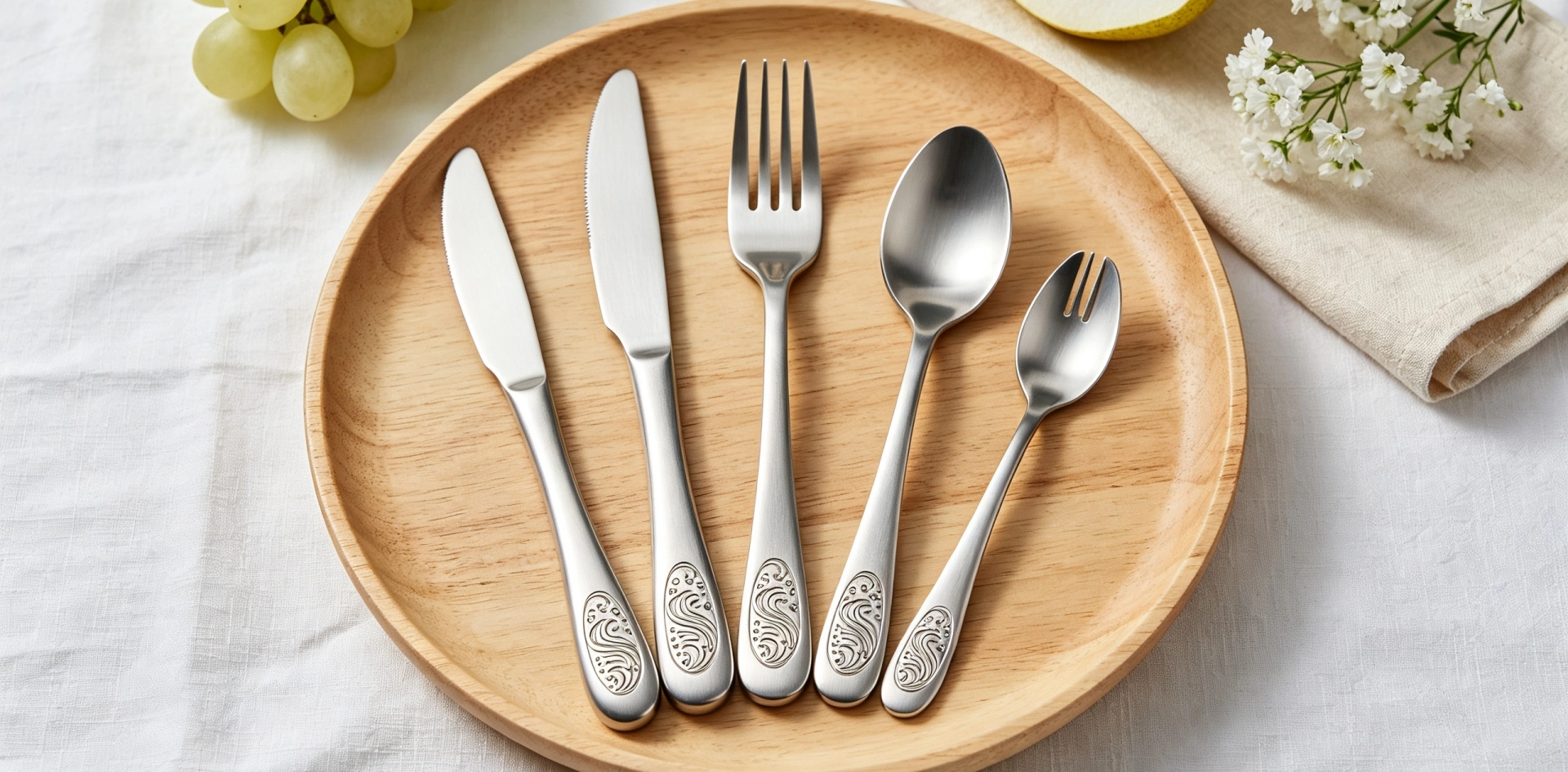
Stainless Steel Spoon Ergonomic Design: Handle Shape, Balance and Comfort
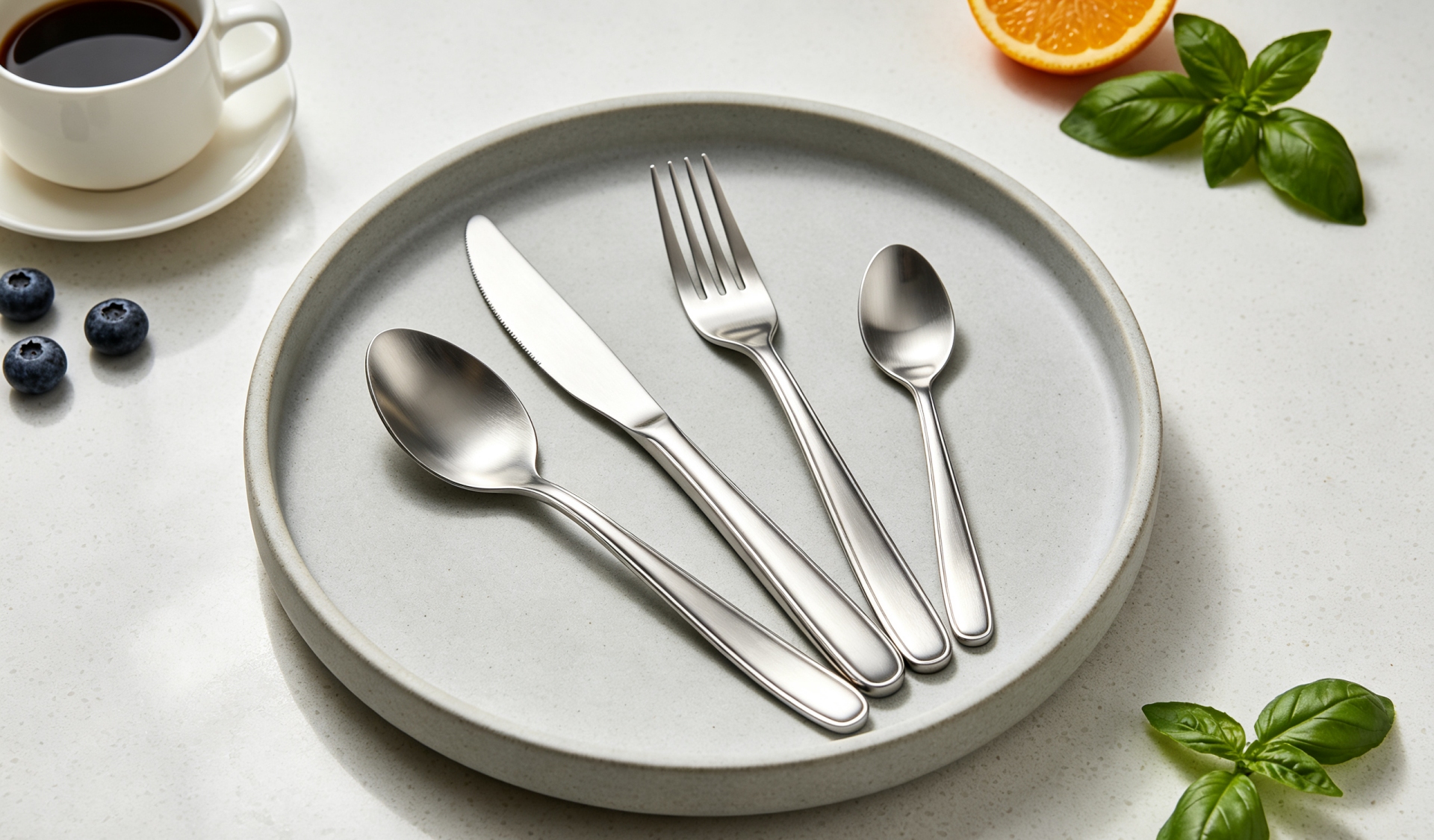
Stainless Steel Spoon Ergonomic Design: Handle Shape, Balance and Comfort
A stainless steel spoon may appear to be a simple piece of tableware, but its design directly affects how it feels and performs in everyday use.
For B2B buyers, ergonomic design can be particularly important when developing products for restaurants, hotels, retail brands, hospitality suppliers and private label collections. A spoon needs to look attractive, but it should also feel natural in the hand and work comfortably during repeated use.
Handle shape, dimensions, weight distribution, bowl design and surface finish all contribute to the overall user experience.
What Makes a Stainless Steel Spoon Ergonomic?
Ergonomic design focuses on how the product interacts with the person using it.
For a stainless steel spoon, relevant factors include:
-
Handle length
-
Handle width
-
Handle thickness
-
Handle profile
-
Weight
-
Balance
-
Bowl shape
-
Surface texture
-
Edge treatment
These elements should be considered as one complete product rather than individually.
Why Handle Design Matters
The handle is the primary contact area between the user and the spoon.
A well-designed handle can provide a comfortable grip without requiring excessive pressure from the fingers.
The shape should also complement the spoon's overall proportions.
For B2B product development, handle design can become an important part of both functionality and brand identity.
Handle Length
Handle length affects the way the spoon is held and the relationship between the hand and bowl.
A longer handle can provide a different grip position and visual appearance from a shorter design.
The appropriate length depends on:
-
Spoon type
-
Bowl size
-
Intended user
-
Dining application
-
Overall product proportions
The final dimension should be evaluated through physical samples.
Handle Width
Handle width affects how the spoon sits in the hand.
A narrow handle may create a lighter visual appearance, while a wider handle can provide a more substantial grip.
However, excessive width may reduce comfort.
The ideal width should be determined together with handle thickness and profile.
Handle Thickness
Thickness contributes to the perceived weight and hand feel of the spoon.
A thin handle can support a lightweight design, while a thicker handle may create a stronger premium impression.
The correct choice depends on the product concept.
For commercial products, buyers should evaluate actual samples rather than selecting thickness based only on a specification sheet.
Handle Profile
The cross-sectional profile of a handle can influence comfort.
Possible profiles include:
-
Flat
-
Rounded
-
Slightly curved
-
Tapered
-
Sculpted
The profile should provide a stable grip while maintaining the visual character of the collection.
Handle Curvature
A gently curved handle can influence the way the spoon sits in the user's hand.
Curvature should be coordinated with the bowl and overall length.
For custom products, even a small change in curvature can affect the final hand feel.
This makes prototype testing especially useful during development.
Rounded Edges
Edges that contact the user's fingers should be properly finished.
A well-controlled edge treatment can improve comfort and reduce the perception of harshness when the spoon is held repeatedly.
Edge quality should be checked during product inspection.
Spoon Balance
Balance is an important part of ergonomic performance.
A spoon should feel stable when held rather than feeling excessively weighted toward either the bowl or handle.
Balance depends on:
-
Bowl size
-
Handle length
-
Material thickness
-
Handle shape
-
Weight distribution
Changing one of these elements can affect the entire product.
Bowl Design and Comfort
Although the handle receives most of the attention in ergonomic discussions, bowl design also matters.
The bowl should work naturally with the intended food application.
Relevant factors include:
-
Bowl width
-
Bowl depth
-
Curvature
-
Edge shape
-
Overall size
The bowl and handle should be developed as a coordinated design.
Spoon Size and Application
Different applications can require different spoon proportions.
For example, a teaspoon, dessert spoon and dining spoon may have different dimensions and intended uses.
B2B buyers should first identify the product's intended function before deciding on ergonomic specifications.
Everyday Dining
For everyday tableware, buyers may prioritize:
-
Comfortable grip
-
Moderate weight
-
Easy handling
-
Practical dimensions
-
Simple cleaning
The design should be suitable for repeated daily use.
Restaurant Applications
Restaurant spoons may be handled frequently throughout the day.
A practical design should therefore balance:
-
Comfort
-
Durability
-
Appearance
-
Cleaning requirements
-
Replacement cost
For restaurant groups, consistent product specifications can also simplify purchasing and replacement.
Hotel Applications
Hotels may use large quantities of flatware across restaurants, banquets and other foodservice areas.
A comfortable spoon can contribute to the overall dining experience.
At the same time, the design should coordinate with the hotel's broader tableware collection.
Retail Product Design
Retail customers may evaluate a spoon visually before using it.
Therefore, ergonomic design and visual design should work together.
A successful retail product can combine:
-
Attractive handle proportions
-
Comfortable grip
-
Appropriate weight
-
Consistent finish
-
Coordinated packaging
The product should communicate its intended quality before the customer uses it.
Private Label Ergonomic Design
Private label brands can use handle design as a way to create a distinctive product identity.
Customization may include:
-
Handle outline
-
Decorative details
-
Logo placement
-
Handle curvature
-
Surface finish
A unique appearance should not compromise practical handling.
Custom Handle Development
When developing a custom handle, the buyer can provide:
-
Drawings
-
CAD files
-
Reference products
-
Sketches
-
Target dimensions
-
Preferred weight
The manufacturer can then evaluate the design for production feasibility.
Prototype Evaluation
A prototype should be evaluated in actual use rather than only viewed on a computer screen.
B2B buyers can assess:
-
Grip comfort
-
Balance
-
Weight
-
Handle profile
-
Bowl position
-
Overall proportions
If the product does not feel right, adjustments can be made before final tooling or mass production.
Comparing Different Handle Designs
When choosing between several concepts, buyers can compare the products under the same conditions.
For example:
| Design Factor | Option A | Option B | Option C |
|---|---|---|---|
| Handle length | |||
| Handle width | |||
| Handle thickness | |||
| Product weight | |||
| Balance | |||
| Grip comfort | |||
| Visual style | |||
| Manufacturing complexity |
This makes subjective design discussions easier to organize.
Ergonomics and Product Weight
Weight is closely connected with hand feel.
A heavier spoon can feel substantial, but excessive weight may not be appropriate for every user or application.
A lighter spoon can be easier to handle but may provide a different perception of quality.
The target should therefore be based on the intended market and use environment.
Ergonomics and Surface Finish
Surface finish can influence the tactile experience.
Mirror polished, satin, brushed and matte surfaces each create a different interaction with the handle.
For custom products, buyers should evaluate the selected finish together with the handle shape.
Ergonomics and Manufacturing
A visually attractive handle must also be manufacturable.
The manufacturer should evaluate:
-
Material thickness
-
Forming requirements
-
Handle geometry
-
Tooling
-
Polishing access
-
Surface finishing
Complex shapes may require additional development and tooling.
Early technical discussion can help avoid unnecessary redesign.
Quality Control for Ergonomic Features
Ergonomic characteristics should be included in product inspection where they are part of the approved specification.
Quality checks can include:
-
Handle dimensions
-
Handle symmetry
-
Edge quality
-
Overall length
-
Product weight
-
Bowl alignment
-
Surface consistency
The approved sample should remain available as the reference.
Ergonomic Design for Complete Flatware Collections
A spoon should not be considered independently when it belongs to a larger collection.
The handle design can be coordinated across:
-
Spoons
-
Forks
-
Knives
-
Serving utensils
Consistent proportions help create a recognizable product family.
Working With an Experienced Stainless Steel Manufacturer
Homefelt has more than 30 years of stainless steel manufacturing experience and produces stainless steel cutlery together with kitchen and dining products, BBQ tools, pet bowls and children's tableware.
For international B2B customers, Homefelt supports standard and customized stainless steel spoon development, including OEM and private label projects.
Buyers can provide drawings, reference samples or product concepts for evaluation.
The handle, dimensions, material, finish and production requirements can then be developed into an approved sample before bulk manufacturing.
A Practical Ergonomic Design Process
B2B buyers can follow these steps:
-
Define the intended application
-
Identify the target user
-
Determine the spoon type
-
Establish basic dimensions
-
Develop the handle concept
-
Select the material
-
Determine target weight
-
Review balance
-
Select the surface finish
-
Produce a prototype
-
Test grip and handling
-
Make design adjustments
-
Confirm manufacturing feasibility
-
Approve the final sample
-
Establish quality specifications
-
Begin bulk production
Questions to Ask a Stainless Steel Spoon Manufacturer
Before finalizing an ergonomic design, buyers can ask:
-
Can the handle dimensions be customized?
-
Can the manufacturer work from drawings?
-
Can a physical prototype be produced?
-
How does the selected thickness affect handle feel?
-
Can the target weight be controlled?
-
Can the handle shape be reproduced consistently?
-
What tooling is required?
-
Can the design be extended to a complete flatware collection?
-
How are handle dimensions inspected?
-
Can the approved prototype be retained as the production reference?
Common Ergonomic Design Mistakes
Focusing Only on Appearance
A beautiful handle may not necessarily provide comfortable handling.
Making the Handle Too Heavy
Additional material can change the balance and increase the product weight.
Ignoring Bowl Proportions
The handle and bowl should work together as one design.
Skipping Physical Testing
Digital drawings cannot fully communicate the experience of holding the finished spoon.
Designing Each Product Separately
A coordinated collection usually benefits from consistent handle proportions.
Conclusion
Stainless steel spoon ergonomic design involves much more than creating an attractive handle.
Handle length, width, thickness, profile, curvature, weight distribution, bowl shape and surface finish all contribute to how the product feels in actual use.
For B2B buyers, the most effective approach is to define the intended application, develop the product around measurable requirements and evaluate a physical prototype before final production.
Homefelt has more than 30 years of stainless steel manufacturing experience and works with international B2B customers on standard, customized, OEM and private label stainless steel products.
A carefully developed ergonomic spoon can combine practical comfort with a distinctive product identity, making it suitable for restaurants, hotels, retail collections and long-term private label programs.
You May Be Interested In
Stainless Steel Spoon Handle Customization: Developing a Distinctive Product Profile
Stainless Steel Spoon Product Development: From Concept and Drawing to Production
Stainless Steel Spoon Prototype Sampling: What B2B Buyers Should Evaluate
Stainless Steel Spoon Balance Testing: How Weight Distribution Affects Handling
Stainless Steel Spoon Handle Finishes: Combining Tactile Feel With Visual Design
Stainless Steel Spoon Collection Design: Creating Matching Spoons, Forks and Knives


Related Article