Stainless Steel Spoon Handle Bend Angle Control

Stainless Steel Spoon Handle Bend Angle Control
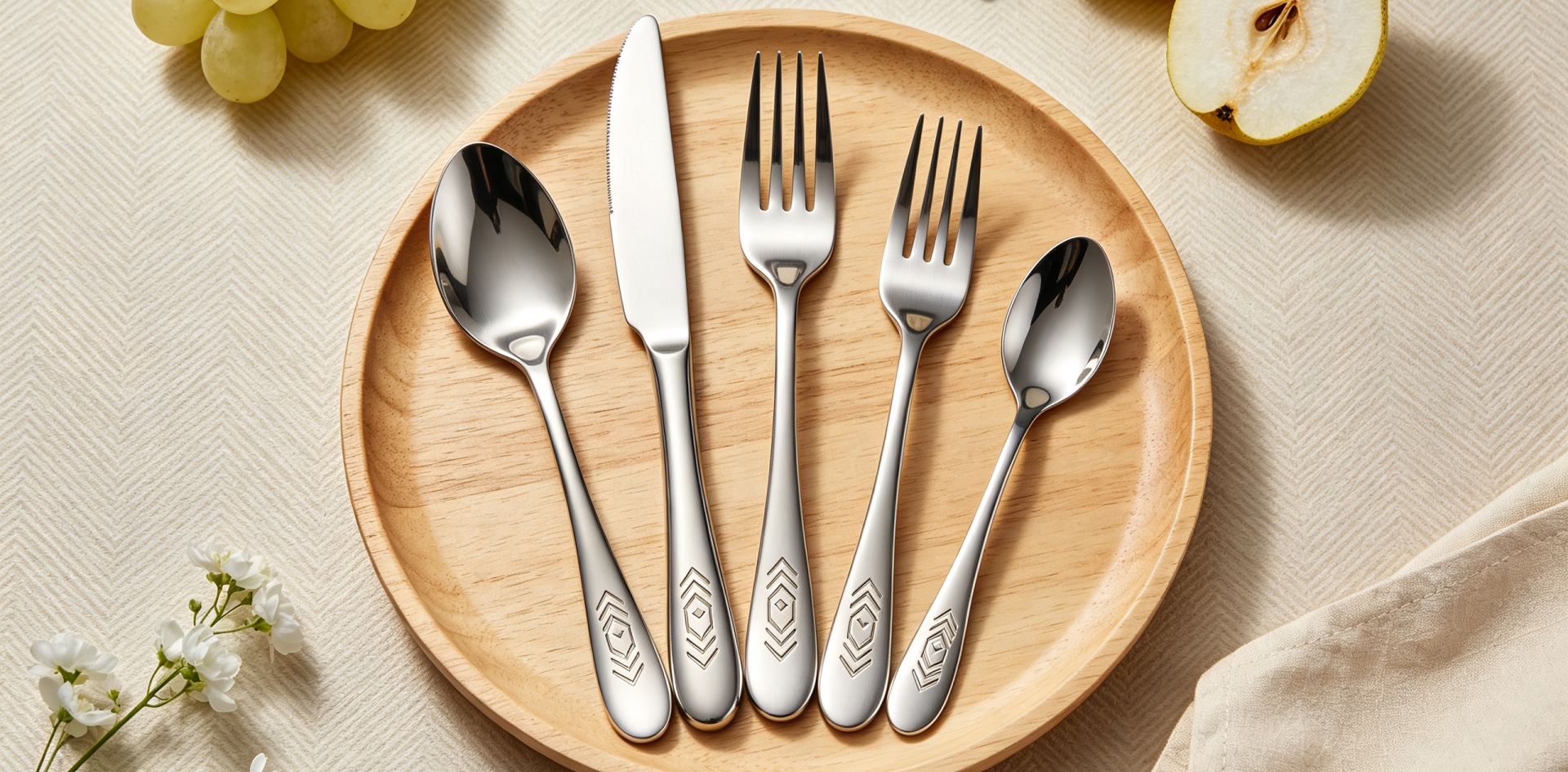
The bend angle of a stainless steel spoon handle can influence its appearance, alignment, and practical use. While some spoon designs have a nearly straight handle, others incorporate a deliberate curve or angled section to create a distinctive profile. For importers, distributors, and private-label brands, defining this geometry clearly helps ensure that the approved sample and bulk production pieces remain consistent.
When developing a custom stainless steel spoon, buyers should look beyond overall length and handle width. The direction and degree of a bend can change how the spoon sits on a table, how the handle aligns with the bowl, and how the product looks alongside other pieces in a cutlery collection. A clear specification makes these details easier to evaluate before a large order is released.
Why Handle Bend Angle Matters
A handle bend is a design feature, not automatically a defect. Depending on the product design, a controlled curve may create a particular visual effect or help establish the intended relationship between the handle and bowl.
Problems arise when the actual angle differs from the approved design. A spoon may appear uneven when placed beside another piece, or the handle may seem to lean in a direction that was not intended. If the same variation occurs across a large production batch, the inconsistency can become more noticeable when products are displayed or packed together.
For B2B buyers, the key is to distinguish between an intentional design angle and an unintended deformation. Both can produce a visible bend, but only the former belongs to the approved product specification.
Define the Bend Before Production
The term “handle bend angle” can describe different geometric features. Without a common reference, a buyer and manufacturer may measure different angles and reach different conclusions.
A useful technical drawing should identify the following details:
-
Reference plane: the surface or plane from which the angle is evaluated.
-
Reference line: the centerline or specified straight section of the handle.
-
Bend location: the point or region where the handle changes direction.
-
Nominal angle: the intended angle or geometric relationship.
-
Permitted tolerance: the acceptable variation around the target.
-
Overall profile: the relationship between the handle, bowl, and complete spoon.
For a handle with a gradual curve rather than a distinct bend, a single angle may not fully describe the shape. In that case, the drawing should show the curve, relevant dimensions, or profile template needed to reproduce the design.
The measurement method must match the geometry being controlled. An angle measured from a handle centerline is not necessarily equivalent to an angle measured from a local edge or a section near the bowl.
How Bend Angle Affects the Complete Spoon
The handle should not be assessed in isolation. Its geometry interacts with the bowl shape, overall length, thickness, and visual centerline.
A handle that bends too far in one direction may make the spoon look asymmetrical even when the bowl dimensions are within specification. Conversely, a deliberately curved handle can appear balanced when its angle, width transition, and bowl position have been designed together.
During product development, buyers should review:
-
The handle's direction relative to the bowl centerline.
-
The location and length of any angled or curved section.
-
The transition between straight and curved portions.
-
The spoon's appearance when viewed from above and from the side.
-
The consistency of the profile across matching spoon sizes.
These checks are particularly useful when a collection includes several spoon types with related handle designs. Each size may require a different geometry, but the family should still look intentional and coordinated.
Establishing Practical Inspection Criteria
A clear inspection plan begins with an approved drawing and physical reference sample. The drawing provides measurable requirements, while the sample helps communicate the intended overall appearance.
For a spoon with a defined bend, inspection may involve a suitable angle-measuring fixture, a profile template, or a dimensional measurement system appropriate to the design. For a gradual curve, a profile comparison may be more informative than measuring one isolated angle.
The buyer and manufacturer should agree on the method before production inspection begins. They should also confirm the measurement location, reference orientation, and acceptable tolerance. This avoids situations in which two parties obtain different results because they use different reference points.
A practical control sequence includes:
-
Checking the first samples against the technical drawing.
-
Comparing the handle profile with the approved reference sample.
-
Measuring the specified angle or profile at a consistent location.
-
Examining representative production pieces for visible variation.
-
Recording out-of-tolerance findings and reviewing corrective action.
Inspection frequency should reflect the order size, design complexity, production history, and buyer's quality requirements. A highly distinctive handle may need more focused monitoring than a simple straight design.
Distinguishing Design Geometry from Deformation
Not every bent handle is evidence of poor manufacturing. Some designs intentionally incorporate a curve, while others require the handle to remain substantially straight. The acceptance criteria must reflect the product that was actually approved.
Unintended deformation can occur during handling, stacking, packing, or transportation. If a spoon meets its dimensional requirements before packing but arrives with a changed profile, the investigation should include the packing arrangement and the protection provided during transit.
For this reason, sample evaluation should cover both the product itself and the way it is packed. Where the design is vulnerable to bending, buyers can discuss suitable separation, support, and carton arrangements with the manufacturer.
If a deviation is discovered, compare the affected pieces with retained reference samples and documented measurements. This helps determine whether the issue relates to the original design interpretation, forming consistency, handling, or transportation.
Coordinating Handle Angles Across a Cutlery Range
For a coordinated flatware collection, handle geometry should be reviewed across the complete product range. A spoon, fork, and knife may share a visual design language, but their individual shapes can create different reference points and inspection requirements.
Buyers should identify which features must match across products and which may vary by item. For example, the direction of a decorative curve might need to remain consistent, while the exact angle or bend location may differ according to each product's dimensions.
When adding a new spoon size to an established collection, use the original drawings and approved samples as references. Do not assume that simply scaling the overall dimensions will reproduce the same visual balance.
Documentation and Custom Manufacturing Support
Reliable specifications make it easier to communicate expectations between purchasing teams, product designers, quality inspectors, and production staff. For a custom order, keep the approved drawing, sample confirmation, measurement method, and any agreed inspection records together so they can be consulted during repeat orders.
Homefelt supports stainless steel spoon and flatware projects through OEM and ODM development, private-label customization, wholesale supply, and bulk production. Depending on the project, buyers can coordinate product design, packaging, and transportation requirements with one supplier.
Homefelt has experience in the stainless steel cutlery business and maintains business certifications and audit credentials relevant to its operations. Buyers who require specific documentation should confirm the applicable certificate scope, product requirements, and inspection records for their project.
When requesting a quotation, provide the spoon design, material specification, finish, target quantity, packaging requirements, and any available technical drawing or reference sample. If the handle includes a special bend, indicate its intended location and appearance so the geometry can be reviewed before mass production.
For assistance with custom specifications or wholesale stainless steel spoon orders, contact ingrid@homefelt.net. Clear bend-angle requirements at the development stage help reduce ambiguity and support more consistent results across bulk production.
You May Be Interested In
Stainless Steel Spoon Tip Contour Consistency
Stainless Steel Spoon Bowl Length Ratio Control
Related Article