
Stainless Steel Spoon Handle Centerline: A Practical Detail for B2B Custom Designs
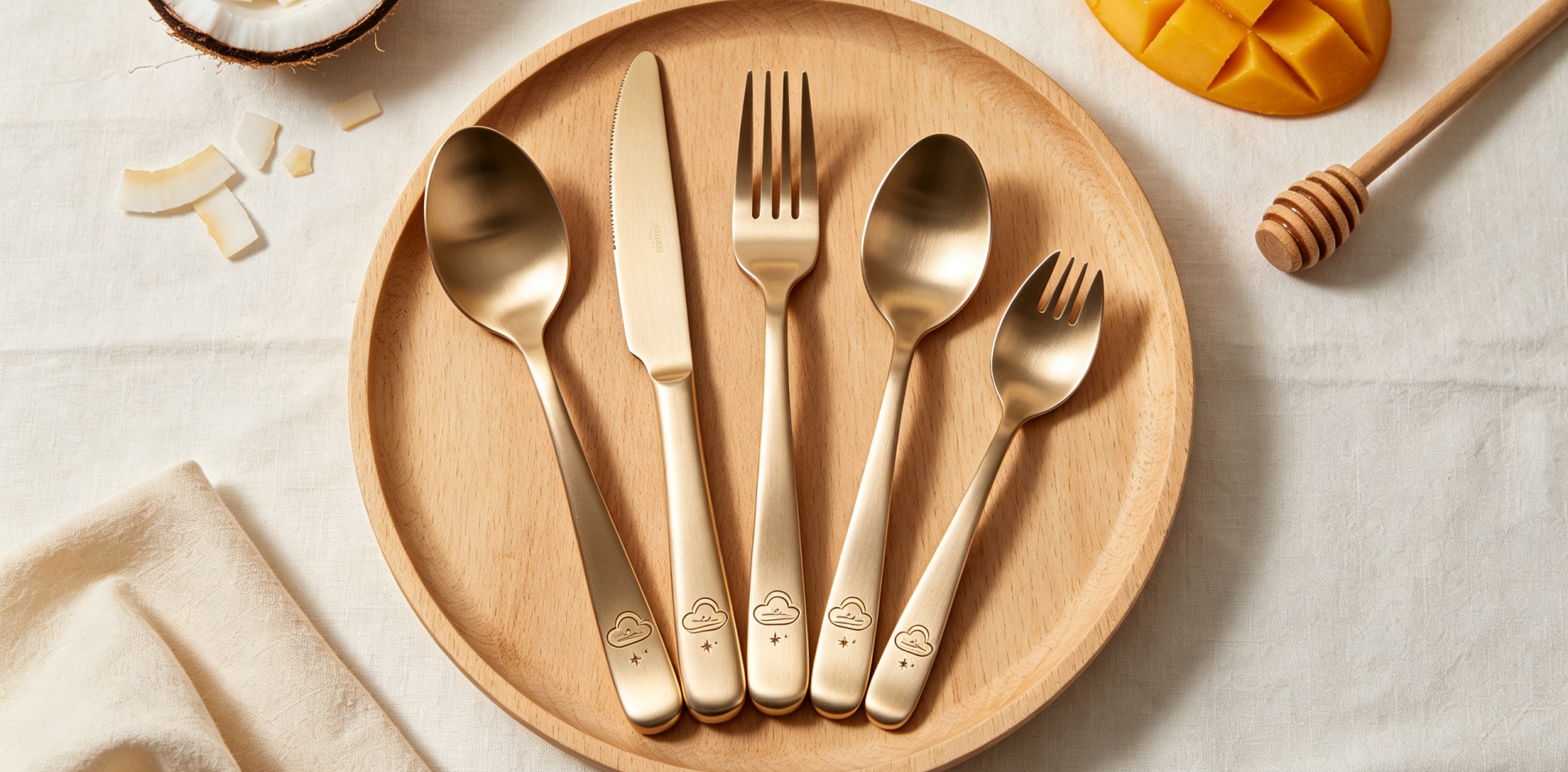
Stainless Steel Spoon Handle Centerline: A Practical Detail for B2B Custom Designs
When developing a custom stainless steel spoon, buyers often focus on the bowl shape, handle length, handle width, overall dimensions, material, and surface finish. Another detail that can influence the finished appearance is the relationship between the handle centerline and the spoon bowl.
The centerline helps define how the handle visually continues from the functional part of the spoon. If the relationship is well controlled, the spoon can have a balanced and intentional appearance. If the alignment changes, even slightly, the overall visual impression can be different.
For B2B buyers developing OEM, ODM, wholesale, or private label flatware, centerline alignment can therefore be a useful part of the product specification.
What Is the Spoon Handle Centerline?
The centerline is an imaginary reference line running through the central direction of the spoon.
For a conventional spoon, the handle and bowl are generally developed around a common longitudinal axis. This creates a continuous relationship between the functional bowl and the handle.
In a custom design, however, the centerline can interact with the shape of the bowl, the transition area, and the handle profile in different ways.
A spoon may have a relatively straight visual axis, or the design may intentionally create a particular transition.
The important point for B2B production is that the intended relationship should be clearly understood before the product enters mass manufacturing.
Why Centerline Alignment Matters
The spoon is a visually continuous product.
When the handle appears to flow naturally from the bowl, the product can look balanced and well proportioned.
If the handle and bowl relationship is not aligned with the intended design, the spoon may appear visually uneven even when the individual dimensions are technically close to the required measurements.
This becomes more noticeable when several spoons are placed together or when the spoon is displayed alongside a matching fork and knife.
For private label brands, consistency in this area can contribute to the overall appearance of the collection.
Centerline and Spoon Bowl Design
The spoon bowl provides the main functional area of the product.
Its width, length, depth, and shape all influence the way the handle connects to it.
When the bowl is wider or narrower, the transition toward the handle may need to be considered carefully.
A custom spoon therefore should not be designed by specifying the handle independently from the bowl.
For OEM projects, the relationship between these areas can be defined through a technical drawing or reference sample.
This gives the manufacturer a clearer understanding of how the complete spoon should look.
Centerline and Overall Spoon Proportion
The centerline also provides a useful reference when reviewing the overall proportions of a spoon.
The bowl, neck, handle, and end section should work together around the intended visual axis.
If the handle is shifted relative to the bowl, the product can have a different visual balance.
In some designs, an intentional offset may be part of the concept. In other designs, the buyer may require a more traditional centered appearance.
The manufacturer's role is to understand which approach the customer wants and translate it into a repeatable production specification.
Custom Spoon Development for OEM Buyers
B2B buyers may begin a custom spoon project with different types of information.
A brand may provide a detailed engineering drawing.
A wholesaler may provide a physical sample.
Another customer may provide a product photograph and explain the desired changes.
The centerline relationship can be evaluated from these references.
If the buyer has a specific alignment requirement, it can be included in the drawing.
If the customer is working from a physical reference, the manufacturer can examine the relationship between the bowl and handle and discuss how the design can be reproduced or modified.
This allows the project to move from a visual idea toward a measurable specification.
ODM Development and Design Adaptation
ODM projects may begin with an existing manufacturing concept that needs to be adapted for a particular brand.
The buyer may want to change the bowl dimensions, handle proportions, surface finish, or other design details while retaining the general character of the product.
The handle centerline can be reviewed during this process.
If the bowl is changed significantly, the transition toward the handle may also need to be reconsidered.
This helps ensure that the final product remains visually balanced after the requested modifications.
Matching the Spoon With the Fork and Knife
A complete flatware collection is usually judged as a group.
The spoon may be placed beside a fork and knife, and customers will naturally compare their overall proportions.
Although each utensil has a different functional structure, the products can share common visual principles.
For example, the centerline of the spoon can be considered together with the main longitudinal direction of the fork and knife.
This does not mean that all three pieces need identical geometry.
Instead, the objective is to create a coordinated collection in which the products appear to belong to the same design family.
For private label brands, this can be particularly important when launching a new flatware range.
Sample Approval Before Bulk Production
A physical sample is useful when evaluating centerline relationships.
The buyer can place the spoon on a flat surface and visually inspect the relationship between the bowl and handle.
The spoon can also be placed beside the matching fork and knife.
This makes it easier to identify whether the overall visual axis matches the intended design.
If adjustments are required, the dimensions or forming specifications can be reviewed before the product is released for bulk production.
For custom B2B projects, this step can help prevent a small design difference from becoming a larger production issue later.
Centerline Consistency in Mass Production
Once a spoon has been approved, the design needs to be reproduced consistently across the production quantity.
The approved centerline relationship becomes part of the product's manufacturing reference.
Together with the other specifications, it helps define what the finished spoon should look like.
This is especially relevant for large orders.
When thousands of spoons are manufactured, the approved design needs to remain consistent from one production batch to another.
A clear specification provides a common reference for the manufacturing and quality control teams.
Supporting Repeat Orders
B2B cutlery customers often reorder products after the first shipment.
A wholesaler may replenish inventory, while a private label brand may continue selling the same spoon as part of a long-term collection.
For repeat orders, the approved design needs to remain identifiable.
The centerline relationship can be documented together with the other product specifications so that the same product can be reproduced later.
This is one reason why detailed product development is useful even for apparently small design features.
Private Label Spoon Manufacturing
Private label brands often want their products to have a consistent visual identity.
That identity can be created through a combination of dimensions and design details rather than relying on decorative elements alone.
The relationship between the spoon bowl and handle is one of those details.
When the bowl shape, handle proportions, transition, surface finish, and centerline are developed together, the finished spoon can have a more deliberate appearance.
If the same design principles are applied to the matching knife and fork, the complete collection can maintain a consistent visual direction.
Homefelt for Custom Stainless Steel Spoon Manufacturing
Homefelt specializes in stainless steel knives, forks, spoons, cutlery sets, and flatware for B2B customers.
With more than 40 years of experience in the stainless steel cutlery business, the factory supports OEM, ODM, private label, wholesale, and bulk manufacturing projects.
Customers can provide technical drawings, reference samples, product photographs, or basic design requirements when developing a custom spoon.
Details such as the relationship between the spoon bowl and handle can be reviewed together with the overall dimensions, material, surface finish, and other product specifications.
For customers developing a complete collection, the spoon can also be evaluated alongside the matching knife and fork.
This gives B2B buyers a practical way to develop a coordinated stainless steel flatware range that can move from design and sampling into bulk production.
For wholesalers and private label brands, establishing the product specification clearly at the beginning can also make future quotations and repeat orders easier to manage.
From Design Concept to Bulk Order
A custom stainless steel spoon is the result of many small decisions working together.
The bowl, handle, transition, dimensions, material, finish, and overall alignment all contribute to the finished product.
A clear development process allows the buyer and manufacturer to confirm these details before mass production.
Once the sample is approved, the final specification can become the reference for the bulk order and future replenishment.
If you are developing a custom stainless steel spoon, a complete cutlery collection, or a private label flatware program, you can send your drawing, reference sample, or product requirements to begin a quotation and product development discussion.
Request a Custom Stainless Steel Spoon Quotation
Develop an OEM Stainless Steel Spoon
Start a Private Label Spoon Manufacturing Project
Request Wholesale Stainless Steel Spoon Pricing
Develop a Matching Stainless Steel Knife, Fork and Spoon Collection
Stainless Steel Knife Handle Curvature: A Practical Detail for B2B Custom Designs
Stainless Steel Cutlery Opening Profile: A Practical Detail for B2B Custom Designs
Related Article



