
Stainless Steel Spoon Handle End Shape Design
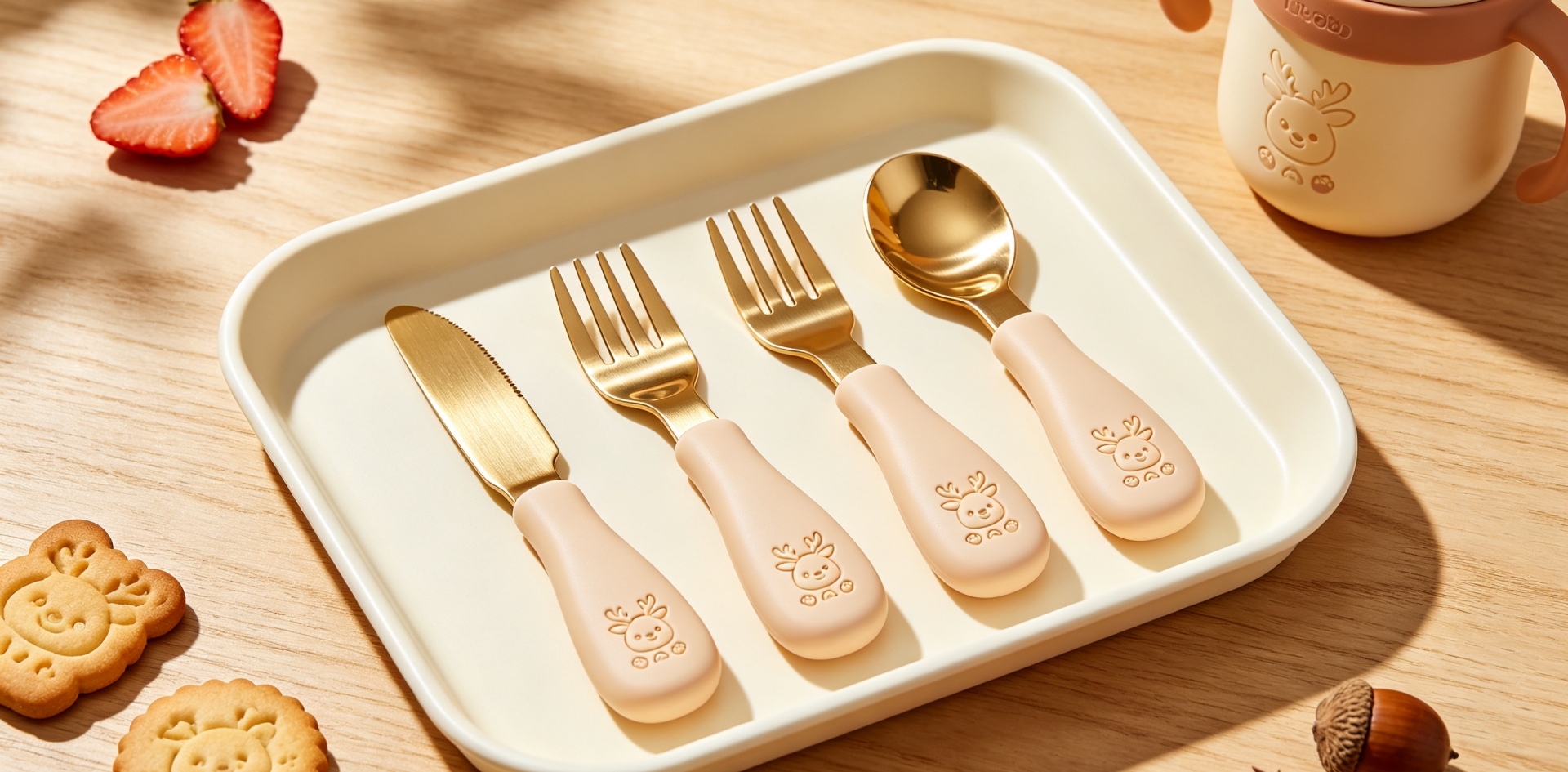
Stainless Steel Spoon Handle End Shape Design
The end of a stainless steel spoon handle is a small design feature that can influence the appearance, finishing requirements, packaging fit, and consistency of an entire cutlery collection. For importers, distributors, retailers, and private label brands, choosing the right handle termination helps establish a recognizable product style while keeping the design suitable for repeat manufacturing.
A handle may end in a rounded tip, a softly squared profile, a tapered point, or a decorative shape. Each option creates a different visual impression and can require different forming, polishing, and inspection considerations. When a spoon is developed for wholesale distribution, these details should be confirmed before the final sample is approved.
Homefelt factory supports stainless steel spoon and flatware customization, OEM/ODM development, private label production, and bulk orders. Understanding handle end geometry early can help buyers communicate design requirements more clearly and reduce avoidable changes during mass production.
Common Stainless Steel Spoon Handle End Shapes
Handle-end design should complement the overall spoon rather than function as an isolated decorative detail. The most suitable shape depends on the collection's visual style, target market, production method, and intended price positioning.
Rounded ends use a curved outline to create a softer appearance. They are common in simple contemporary designs and can help avoid an overly sharp visual termination. The radius and symmetry still need to be controlled during production.
Squared or rectangular ends create a more geometric look. Small differences in corner shape can noticeably affect the final appearance, so drawings should show whether the corners are square, lightly rounded, or more heavily softened.
Tapered ends gradually narrow toward the tip. This approach can create a slender appearance, but the transition must remain consistent across samples and production batches.
Decorative ends may feature a widened tip, sculpted outline, raised pattern, or other distinctive detail. Such designs can help differentiate a private label collection, although complex shapes may require additional tooling or finishing checks.
For buyers comparing samples, it is useful to evaluate the handle end together with the handle width, thickness, length, and overall silhouette.
Which Design Details Should Buyers Specify?
A general instruction such as “rounded handle end” may not provide enough information for accurate reproduction. Different designers and production teams may interpret the same phrase differently.
A more useful specification identifies the actual geometry and the relevant dimensions. Depending on the design, buyers can define:
-
Overall handle length, measured from the handle tip to the agreed reference point.
-
Maximum handle width and width near the end.
-
Tip outline, such as rounded, squared, tapered, or decorative.
-
Corner radius or other defined curvature where necessary.
-
Handle thickness near the termination.
-
Left-to-right symmetry when viewed from above.
-
Surface finish and acceptable visual variation.
Not every design requires every measurement. A simple spoon may only need a dimensioned drawing and an approved reference sample, while a distinctive private label design may need a more detailed technical specification.
Drawings should use clear dimensions and views. A top view defines the outline, while a side view can clarify thickness and any changes in profile. For complex decorative tips, a close-up drawing can make the intended shape easier to reproduce.
How Handle-End Geometry Affects Manufacturing
The handle tip is formed as part of the complete handle geometry. Its final appearance can be influenced by the original blank outline, forming operations, edge treatment, and polishing.
For example, a rounded tip must retain a consistent curve. A tapered end must preserve its intended width progression. A squared end should not develop visibly uneven corners, while a decorative termination must retain enough detail to match the approved design.
The level of difficulty depends on the shape, material thickness, tooling, and finishing method. A design with a very narrow tip or a complex outline may need additional sample evaluation before the factory confirms its production approach.
Buyers should also consider whether the chosen end shape is compatible with the rest of the handle. A wide, rounded tip may look unbalanced on an extremely narrow handle, while a long taper may appear inconsistent with a short, substantial design. Evaluating the full silhouette is more reliable than approving the tip in isolation.
Surface Finishing Around the Handle Tip
The handle end is a visible area, so uneven finishing can affect the perceived quality of the finished spoon. Inspection should consider the outline as well as the surface.
Depending on the specified finish, inspectors may look for inconsistent polishing marks, visible burrs, uneven corner treatment, unwanted dents, or differences in reflectivity. These checks should follow the product's agreed acceptance criteria.
Over-polishing can also change the intended geometry. If too much material is removed from a narrow tip or decorative edge, the finished outline may become smaller or less defined than the approved sample.
For this reason, the inspection process should consider both appearance and dimensional consistency. A smooth surface alone does not confirm that the handle shape has been reproduced correctly.
Checking Consistency Across Bulk Orders
When a spoon design is approved for mass production, handle-end geometry should remain consistent across the production lot. Buyers can establish a practical inspection approach based on order size and design complexity.
A typical review may include:
-
Comparing production samples with the approved reference sample.
-
Checking handle length and end width against the drawing.
-
Reviewing tip symmetry and outline consistency.
-
Examining the finish around corners and curved areas.
-
Recording defects and confirming whether corrective action is required.
For repeat orders, the approved drawing and sample should be identified by product code and revision. This is especially important when a collection includes several spoon sizes with similar but not identical handle shapes.
If the design changes, the revised version should be documented clearly. Otherwise, different versions may be mixed during sampling, production, or purchasing, making it difficult to determine which shape the order is supposed to follow.
Designing Handle Ends for Coordinated Cutlery Sets
A spoon handle tip often forms part of a broader design language shared by forks and knives. Matching the outline, corner treatment, and decorative style can help a collection appear coordinated.
However, identical dimensions are not always appropriate across different utensils. A teaspoon, tablespoon, dinner fork, and table knife may have different overall proportions. The goal is to preserve recognizable design features while adapting the geometry to each item.
For OEM and private label projects, buyers can provide a complete range drawing or reference products for review. The factory can then assess whether the proposed handle-end shape can be applied consistently across the collection and identify any item-specific adjustments that may be needed.
Homefelt offers customization support for stainless steel cutlery, including product design coordination, packaging planning, and transportation arrangements tailored to each customer's requirements. Final specifications should be confirmed before bulk production begins.
Documents and Quality Records for Custom Spoon Projects
A clear documentation package makes handle-end requirements easier to communicate between the buyer, product development team, and factory.
Useful records may include a dimensioned drawing, approved sample identification, product code, finish specification, inspection criteria, and production inspection results. If a buyer requires material documentation, test reports, or factory certification records, the requested documents should be confirmed for relevance to the product and manufacturing scope.
These records provide a practical basis for reviewing sample approval and production consistency without relying only on verbal descriptions or product photographs.
What to Include in a Handle-End Design Inquiry
When requesting a quotation for a custom stainless steel spoon, buyers should provide the expected order quantity, spoon dimensions, material preference, handle-end reference, surface finish, logo requirements, and packaging format.
A drawing or clear close-up photograph is particularly useful when the handle tip has a distinctive shape. If no final drawing is available, buyers can describe the preferred appearance and ask the factory to review the design before sample development.
Homefelt factory supports wholesale stainless steel spoons, OEM/ODM manufacturing, private label customization, and large-volume cutlery production. To discuss a new handle design or request a quotation, email ingrid@homefelt.net with your reference images, target specifications, and order requirements.
You May Be Interested In
Stainless Steel Spoon Surface Roughness and Consistency
Stainless Steel Spoon Balance Point and Weight Distribution
Related Article



