
Stainless Steel Spoon Handle Design: Comfort, Balance and B2B Product Development
Stainless Steel Spoon Handle Design: Comfort, Balance and B2B Product Development
A stainless steel spoon is a simple everyday product, but its handle can make a significant difference to the overall user experience. Shape, width, thickness, curvature and weight distribution all influence how the spoon feels in the hand.
For importers, retailers and private label brands, handle design is also an opportunity to create a recognizable product identity. A well-designed handle can help a spoon stand out from standard tableware while remaining practical for everyday use.
For a stainless steel cutlery manufacturer such as Homefelt, successful product development begins with understanding how the spoon will be used and what the target market expects.
Why Handle Design Matters
The handle is the main point of contact between the user and the spoon. Even when two products use the same material and finish, differences in handle geometry can make them feel quite different.
A handle that is too narrow may feel less substantial to some users. A very wide handle can change the grip and visual proportions. Excessive decoration may also affect how comfortably the spoon sits in the hand.
When evaluating a design, buyers should consider four main factors:
-
Grip comfort
-
Handle proportions
-
Weight distribution
-
Visual consistency with the spoon bowl
These elements should work together. A visually attractive handle is most successful when its shape also supports the intended use.
Choosing the Right Handle Shape
Stainless steel spoon handles can be developed in many styles, from simple straight profiles to curved, tapered or decorative designs.
Straight Handles
Straight handles create a clean and versatile appearance. They can suit everyday cutlery, modern retail collections and products designed to coordinate with different table settings.
Their simple geometry can also make it easier to maintain a consistent design across spoons, forks and knives.
Tapered Handles
A tapered handle changes width along its length. Depending on the proportions, this can create a lighter visual effect or draw attention toward the end of the handle.
For private label brands, tapering can help distinguish a collection without requiring an overly complicated design.
Curved Handles
A curved profile introduces a more distinctive visual character. The degree of curvature should be considered carefully so that the handle remains practical and works naturally with the bowl.
Decorative Handles
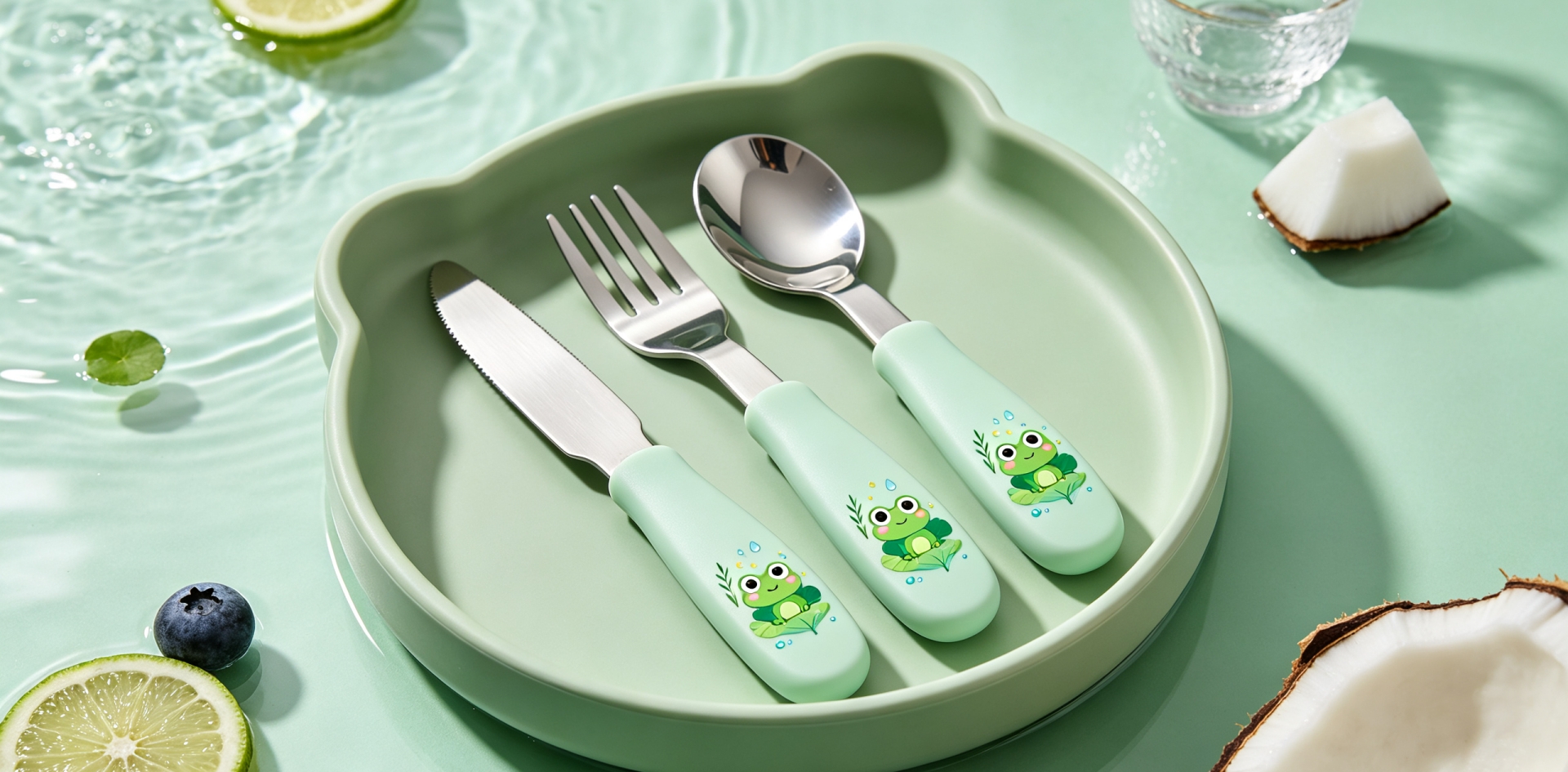
Embossed patterns, grooves and other decorative details can support traditional, premium or themed tableware collections.
However, decoration should be appropriate for the brand and target customer. Too many design elements can make a collection look inconsistent or overly complex.
Handle Width and Thickness
Width and thickness affect both appearance and perceived substance.
A slim handle may complement a lightweight, minimalist design. A broader profile can create a stronger visual presence and may suit certain premium collections.
For B2B projects, buyers should review these dimensions together with the spoon's total length and bowl proportions.
Important specifications may include:
-
Handle length
-
Handle width at key points
-
Handle thickness
-
Edge profile
-
Curvature
-
Connection between handle and bowl
These measurements should be confirmed in millimeters on a technical drawing or through an approved sample.
There is no single ideal handle dimension for every spoon. The appropriate design depends on the product category, intended user and overall style.
Balance Between the Handle and Bowl
A spoon should feel like one coordinated product rather than two separate parts.
If the handle looks too large for the bowl, the design may feel visually unbalanced. If the handle is extremely slim compared with a broad bowl, the proportions may also seem unusual.
Weight distribution influences the overall impression as well. The relationship between the bowl, handle and total weight should be evaluated during sample approval.
For product developers, it is useful to assess the spoon in several ways:
-
View the complete spoon from above.
-
Compare the handle width with the bowl width.
-
Review the side profile and curvature.
-
Hold the spoon naturally to assess comfort.
-
Compare it with the matching fork and knife.
This process helps identify design adjustments before the specification is finalized.
Handle Design for Different Customer Groups
Different markets may respond to different handle styles.
Everyday retail products often benefit from versatile designs that work with a broad range of table settings.
Premium tableware brands may prioritize distinctive silhouettes, carefully controlled proportions and coordinated finishes.
Hospitality suppliers may prefer practical designs that fit established dining collections and can be replenished consistently.
Gift and lifestyle brands may place greater emphasis on decorative details and visual differentiation.
For importers and distributors, the most effective approach is to select a design that reflects the needs of the intended customer rather than choosing a style simply because it looks fashionable.
Creating a Consistent Cutlery Collection
A handle design can become a recognizable feature across a complete cutlery range.
For example, a collection may include table spoons, dessert spoons, tea spoons, forks and knives. The dimensions will differ, but the products can share similar handle contours, decorative details and surface finishes.
This creates a unified appearance across the range.
When developing a collection, buyers should confirm:
-
Whether the same handle concept works across different pieces
-
Whether proportions need to change by product type
-
Whether decorative details remain consistent
-
Whether the complete set suits the intended market
-
Whether future products can follow the same design direction
A coordinated collection can be easier to present to retailers and distributors than a group of unrelated products.
Custom Handle Development for OEM and ODM Projects
B2B buyers may already have a clear design, or they may only have a general idea of the desired product.
An OEM project may begin with an established drawing or reference sample. An ODM project may involve more development work to turn an initial concept into a finished product.
Useful starting materials include:
-
Product reference photographs
-
Technical drawings
-
Existing samples
-
Brand design references
-
Preferred dimensions
-
Target retail positioning
The manufacturer can use these details to discuss the proposed handle profile and the relationship between the handle and bowl.
For more complex designs, buyers should confirm which elements are essential to the concept and which can be adjusted to improve practicality or manufacturing feasibility.
Sample Approval and Design Refinement
A drawing provides dimensions, but a physical sample allows buyers to experience the product directly.
During review, pay attention to the way the handle feels, the relationship between its width and thickness, and the overall balance of the spoon.
If the handle is intended to form part of a larger collection, review the sample alongside the matching cutlery pieces.
Any agreed changes should be incorporated into the final product specification so that the approved design becomes a clear reference for subsequent production.
How Homefelt Supports Custom Cutlery Projects
Homefelt manufactures stainless steel cutlery for international B2B customers, including importers, distributors, retailers and private label brands.
For a customized spoon project, buyers can discuss handle design, bowl proportions, product specifications and the intended market. Homefelt supports OEM and ODM projects, wholesale orders and large-volume production.
The service can also extend beyond the product itself. Depending on the project, customers can discuss product design, packaging and transportation as part of a coordinated, one-stop service arrangement.
This approach is particularly useful for buyers who want to develop a distinctive product collection without managing every part of the process separately.
A Practical Handle Design Checklist
Before approving a stainless steel spoon handle, buyers should confirm the following:
-
Does the handle shape match the target market?
-
Are the width and thickness appropriate for the intended design?
-
Does the handle work visually with the spoon bowl?
-
Is the overall balance comfortable?
-
Are decorative details consistent with the brand identity?
-
Can the design be coordinated with matching forks and knives?
-
Are key dimensions documented clearly?
-
Has the physical sample been reviewed and approved?
These checks help buyers make decisions based on both design and practical use.
Conclusion
Stainless steel spoon handle design combines appearance, comfort, balance and brand identity. Small changes in shape or proportions can create a noticeably different product, making handle development an important consideration for B2B tableware projects.
For importers and private label brands, a clear design direction and an approved sample provide a useful foundation for building a consistent product range.
Homefelt supports customized stainless steel cutlery development for customers seeking OEM, ODM and large-volume manufacturing services. If you are developing a new spoon handle or a coordinated cutlery collection, contact Homefelt to discuss your concept, product requirements and a service plan tailored to your business.
You May Be Interested In
Stainless Steel Spoon Weight: Balancing Comfort, Quality and Market Positioning
Stainless Steel Spoon Bowl Depth and Shape: A Guide for B2B Buyers
Related Article



