Stainless Steel Spoon Handle Lateral Curvature Control
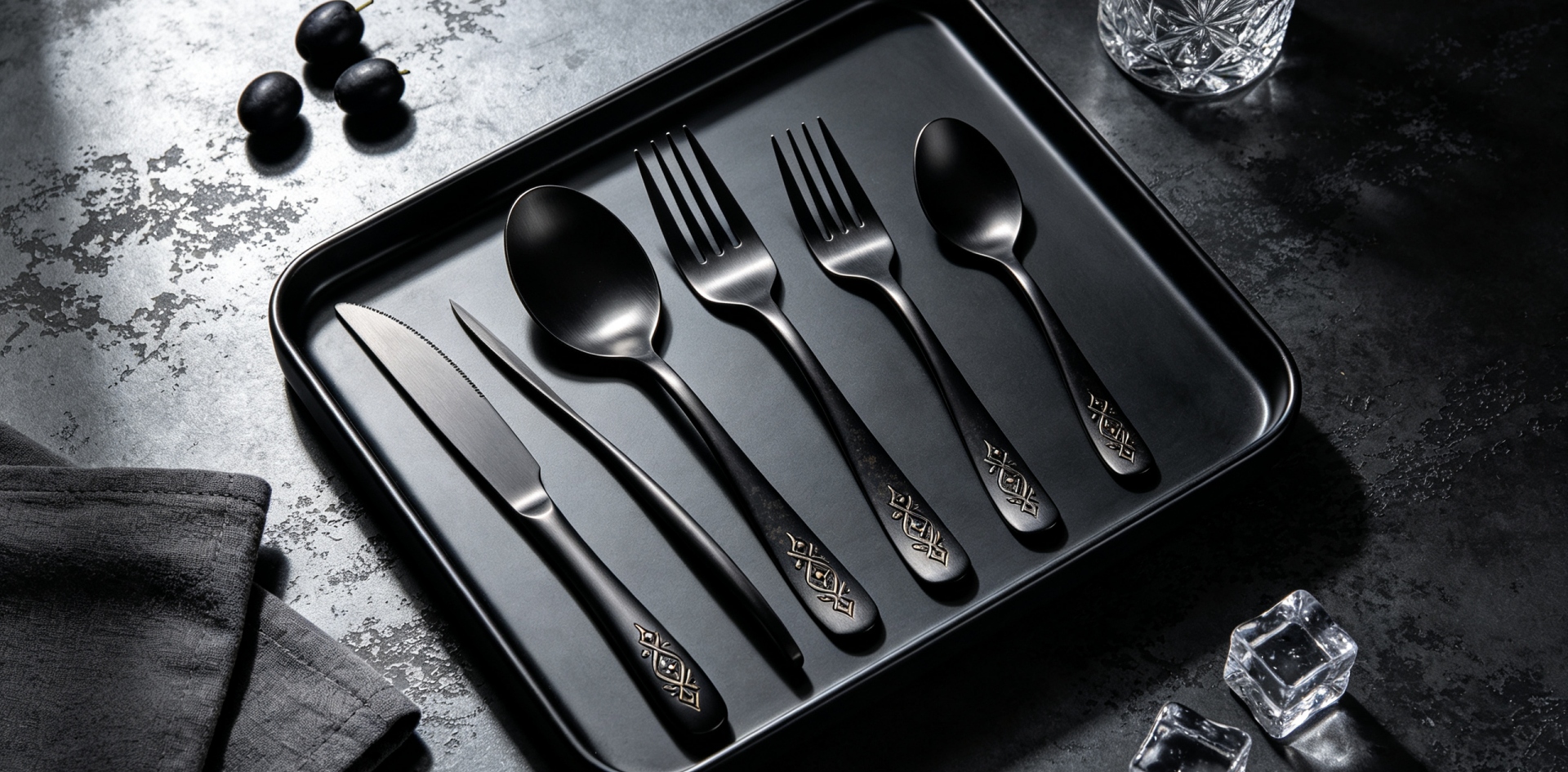
Stainless Steel Spoon Handle Lateral Curvature Control
The side profile of a stainless steel spoon handle can be just as important as its width, thickness, and overall length. Some handles are designed to remain nearly straight, while others incorporate a gentle curve that gives the product a distinctive appearance. If this lateral curvature varies between samples or production batches, the finished spoons may no longer match the intended design.
For importers, distributors, and private-label brands, clearly defining handle curvature helps prevent misunderstandings during product development and bulk manufacturing. It also provides a practical reference for inspecting samples, evaluating production consistency, and maintaining the appearance of a coordinated cutlery collection.
Homefelt supports B2B stainless steel cutlery projects involving custom product development, OEM and ODM services, wholesale supply, and bulk production. For spoons with shaped handles, the intended side profile should be established before the production sample is approved.
What Is Lateral Curvature in a Spoon Handle?
Lateral curvature describes how the handle bends sideways when viewed from a defined orientation. It is different from the cross-sectional shape of the handle and from a vertical curve that changes the handle's height.
A spoon may have a straight handle when viewed from above but a curved profile when viewed from the side. Another design may have a slight sideways sweep that is visible along the handle's length. These features are intentional when they are part of the approved product design.
The first step is therefore to define the viewing direction. Without a consistent reference orientation, a buyer and manufacturer may describe different geometric features using the same term.
For a handle with a deliberate lateral curve, the drawing should show the intended path, key reference points, and any dimensions needed to reproduce the profile. For a handle intended to be straight, the specification should define the acceptable deviation from the reference axis.
Why Handle Curvature Matters to Buyers
The handle helps establish the overall visual balance of a spoon. A small sideways curve can change how the handle aligns with the bowl and how the product looks when placed next to other utensils.
When curvature is intentional, it may be an important design feature. When it is unintended, the same visible change can make a spoon appear misaligned or inconsistent with its approved sample.
This distinction matters for several B2B applications:
-
Retail collections that require a consistent appearance across multiple pieces.
-
Private-label products with distinctive handle profiles.
-
Coordinated spoon, fork, and knife ranges.
-
Repeat orders that must match previously approved stock.
-
Bulk orders where visual differences become more noticeable when pieces are displayed together.
Buyers should not assume that every handle must be perfectly straight. The correct requirement depends on the design, and acceptance should be based on the approved geometry rather than a universal expectation.
Defining the Side Profile in a Technical Drawing
A phrase such as “slightly curved handle” may communicate the general style but does not necessarily define the actual shape. A drawing or approved sample should establish the profile clearly enough for production and inspection.
Depending on the design, the specification may include:
-
Overall handle length.
-
Reference centerline or intended profile path.
-
Position where the curve begins and ends.
-
Maximum lateral offset from the reference axis.
-
Curve direction and whether the profile is symmetrical.
-
Permitted deviation from the approved shape.
For a simple, gradual curve, a few defined dimensions may be sufficient. A more complex profile may require several reference points, a curve drawing, or a digital design file.
The drawing should also distinguish the intended handle curve from the alignment between the handle and bowl. A handle can follow its own specified curve while still being incorrectly positioned relative to the bowl. These features should be checked separately when both are critical.
How Curvature Influences the Complete Spoon
Handle curvature should be evaluated together with the bowl geometry and overall spoon dimensions. A curve that looks balanced on a longer handle may appear excessive on a shorter design.
The transition between the handle and bowl is particularly important. If the handle sweeps sideways but the bowl remains centered, the design needs a clear relationship between the two sections. Otherwise, the finished product may look as though the handle and bowl belong to different designs.
During sample evaluation, buyers should review:
-
The handle profile from the specified viewing direction.
-
The position of the handle relative to the bowl centerline.
-
The location and smoothness of the curved section.
-
The overall visual balance of the spoon.
-
The consistency of related spoon sizes within the same collection.
These checks help separate intentional styling from unintended deformation and provide a more complete basis for sample approval.
Practical Inspection Methods
The inspection method should match the complexity of the handle design. A nearly straight handle may be checked against a reference line or suitable fixture. A curved handle may require a profile template, dimensional measurement, or comparison with the approved drawing.
A repeatable inspection process includes:
-
Positioning the spoon in the agreed reference orientation.
-
Identifying the specified centerline or profile reference.
-
Measuring the lateral offset at defined points where required.
-
Comparing the actual curve with the approved drawing or template.
-
Checking the handle-to-bowl relationship.
-
Recording deviations against the agreed acceptance criteria.
Consistency in positioning is essential. If the spoon is rotated or placed differently during measurement, the apparent curvature can change even when the product itself has not changed.
Visual inspection is useful for identifying obvious differences, but it may not be enough when the project defines measurable limits. Conversely, a single numerical measurement may fail to capture an irregular curve along the full handle. The inspection plan should use the method best suited to the feature being controlled.
Potential Causes of Curvature Variation
Unintended curvature can arise from forming variation, tooling alignment, material behavior, or deformation during handling. These are possible contributing factors rather than automatic explanations for every defect.
If many pieces show the same unexpected curve, the drawing and production setup should be reviewed to determine whether the intended profile was interpreted correctly. If only a few pieces differ, localized handling or deformation may warrant investigation.
A useful review compares the affected spoons with the approved sample and checks the same reference points on each piece. This helps establish whether the issue is a general design interpretation problem or a variation limited to specific products.
The goal is not simply to identify visibly different spoons. It is to understand the deviation well enough to decide whether a specification clarification, process adjustment, or handling change is appropriate.
Maintaining Consistency Across Multiple Spoon Sizes
A cutlery collection may include teaspoons, dessert spoons, tablespoons, and serving spoons. Their handle lengths and proportions can differ, so the exact curve should not automatically be copied from one size to another.
Instead, the product range should follow a consistent design principle. A gentle lateral sweep may become more pronounced or less pronounced depending on the dimensions and intended appearance of each item, but these differences should be defined during development.
For repeat orders, buyers should retain the approved drawings and physical samples for each size. This is particularly useful when adding a new item to an existing range or when several production batches are ordered over time.
If matching forks and knives use a similar handle design, their profiles should be reviewed separately using the appropriate drawings. Similar styling does not mean every utensil shares identical geometric requirements.
Documentation and Bulk Order Control
Clear records help purchasing, product development, and inspection teams work from the same requirements. For a custom spoon, retain the technical drawing, approved sample reference, material specification, finish details, and agreed inspection criteria.
Before bulk production, confirm which profile features are critical and how deviations will be evaluated. For large orders, the buyer and manufacturer should also agree on the sampling approach and the process for reviewing nonconforming pieces.
Homefelt supports stainless steel spoon and flatware projects through OEM and ODM development, private-label customization, wholesale supply, and bulk production. Buyers can discuss product design, packaging, and transportation requirements as part of a coordinated service arrangement.
When requesting a quotation, provide the intended spoon size, material grade, surface finish, target quantity, packaging details, and any available technical drawing or reference sample. If lateral curvature is a defining feature, mark the viewing direction and reference axis clearly.
For projects requiring supporting documents, confirm which material information, certificates, or test reports are relevant to the specific product and destination market.
To discuss custom stainless steel spoon development or wholesale orders, contact ingrid@homefelt.net. A clearly defined handle profile makes sample evaluation more objective and supports consistent production across repeat orders.
You May Be Interested In
Stainless Steel Spoon Handle Tip Symmetry Control
Stainless Steel Spoon Bowl Surface Waviness Inspection
Related Article