Stainless Steel Spoon Handle Repeated Load Durability Testing
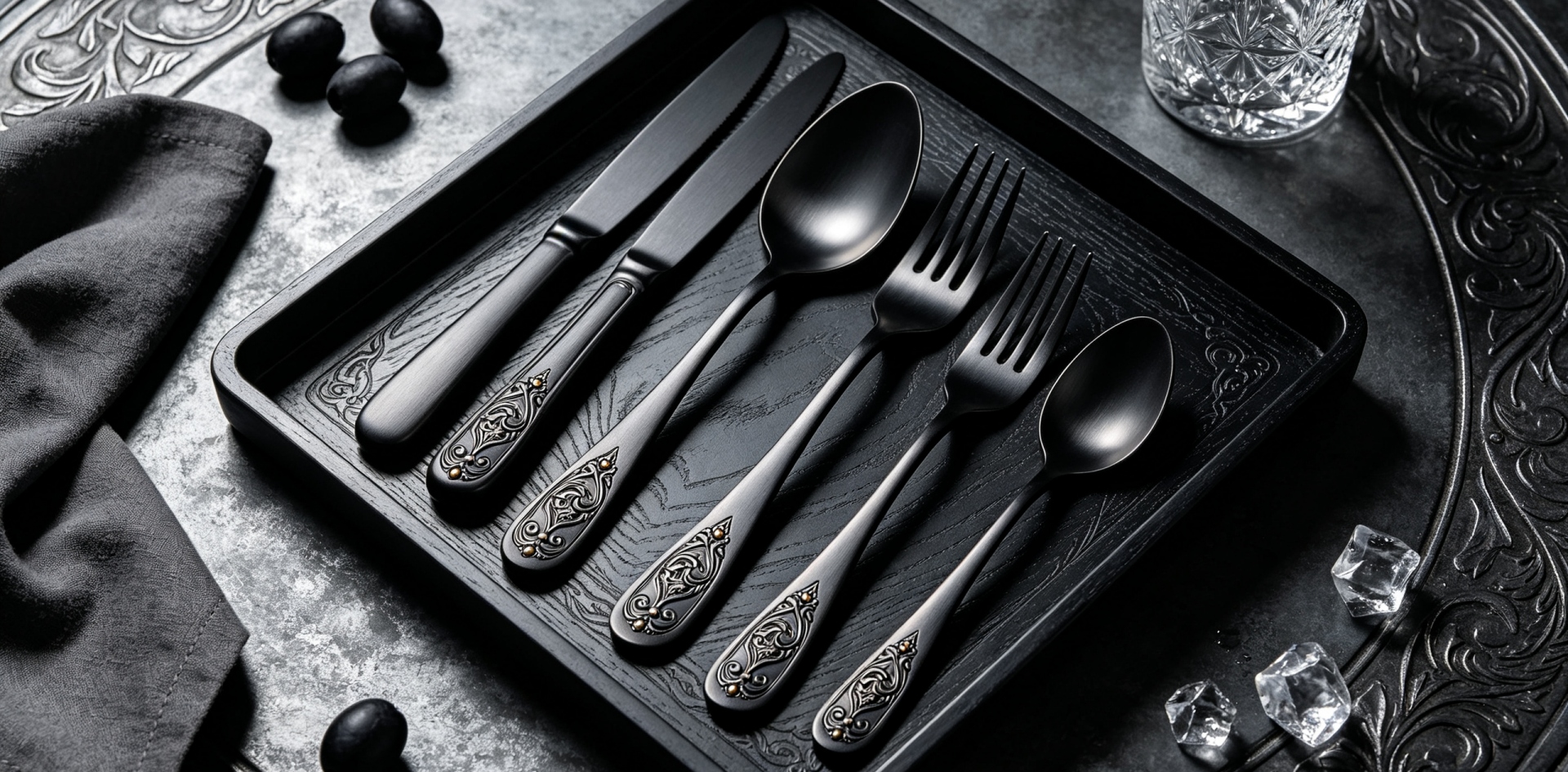
Stainless Steel Spoon Handle Repeated Load Durability Testing
Why Repeated Loading Deserves Attention
A stainless steel spoon handle may perform well during a single-use inspection but respond differently after repeated loading. Everyday use involves recurring movements such as scooping, lifting, serving, and transferring food. Although these actions may not produce obvious damage individually, repeated stress can reveal weaknesses in a design that are difficult to identify through visual inspection alone.
For importers, distributors, and private-label brands, repeated-load durability is worth considering when developing a new spoon design or sourcing a product for frequent use. The goal is not simply to make a handle as rigid as possible. It is to confirm that the selected design can maintain its intended shape and appearance under the conditions relevant to its application.
Homefelt supports B2B stainless steel cutlery projects in which design specifications, product performance, and production consistency need to be considered together. Establishing suitable durability requirements before bulk production gives buyers and manufacturers a clearer basis for evaluating samples and finished goods.
What Is Repeated-Load Durability?
Repeated-load durability describes how a product responds when a load or force is applied and removed multiple times. For a spoon handle, the loading may involve bending, depending on the way the utensil is used and the test method selected.
This differs from a single-load test. A single-load evaluation measures the response to a particular loading event, while repeated-load testing examines whether recurring stress causes progressive deformation, cracking, or other changes.
The outcome depends on several factors, including material properties, handle geometry, thickness, surface condition, and the magnitude and direction of the applied force. The number of cycles and the loading frequency also affect what a test can demonstrate.
There is no universal cycle count or load limit suitable for every stainless steel spoon. The required performance should be established according to the design, intended application, and any customer-specific requirements.
Four Design Factors That Affect Repeated-Load Performance
1. Material Selection
Stainless steel grade is one part of the performance picture. Different grades have different mechanical characteristics, and the finished product's response also depends on its forming history and final geometry.
Buyers should confirm the material specification for the selected spoon model. Where mechanical durability is an important requirement, supporting material documentation and a suitable finished-product evaluation may be needed.
2. Handle Thickness and Profile
Thickness affects the way a handle responds to force, but the relationship depends on the entire cross-section. A flat handle, a curved handle, and a handle with a raised decorative profile may distribute stress differently.
When reviewing a custom design, buyers should evaluate thickness alongside width, shape, and transitions between sections. Changing one dimension without reviewing the full profile may affect weight, appearance, cost, and performance.
3. Geometry and Local Transitions
Changes in handle width, curves, and decorative details can influence how stress is distributed. A narrow section may behave differently from a broader section, particularly when the loading direction places greater demand on that area.
This does not mean that every narrow or decorative handle is unsuitable. It means that designs with distinct transitions should be assessed according to their own geometry rather than relying only on results from a visually similar spoon.
4. Surface and Forming Quality
Surface defects or inconsistent forming can affect the finished product's condition. Marks, sharp damage, cracks, or other irregularities should be reviewed because they may be relevant to durability, appearance, or safe handling.
A visual inspection cannot prove repeated-load performance by itself. It is best used alongside dimensional checks and mechanical testing where those checks are part of the agreed product specification.
How to Plan a Repeated-Load Evaluation
A meaningful test requires a controlled procedure and a defined acceptance decision. Without consistent conditions, results from different samples may not be comparable.
Step 1: Define the Purpose of the Test
Determine whether the evaluation is intended to validate a new handle design, compare alternative prototypes, or verify consistency during production. Each purpose may require a different sampling plan and level of documentation.
For example, a design comparison may focus on the relative performance of two handle profiles, while production verification checks whether finished items remain consistent with the approved reference.
Step 2: Select Representative Samples
Use samples that reflect the intended finished product, including its material, thickness, forming, and surface treatment. Record the model and relevant specifications so the test result can be linked to the correct design.
If a product range includes substantially different handle shapes, evaluate each relevant design separately. Results should not be transferred automatically from one model to another.
Step 3: Establish the Loading Conditions
Define the support points, force direction, load level, and cycle count before testing begins. The method should also specify how the sample is secured and how deformation will be measured.
Where quantitative verification is required, appropriate equipment should be used and maintained according to the test procedure. The loading conditions should be selected for the intended purpose, not chosen simply because they produce a passing result.
Step 4: Inspect at Defined Intervals
Depending on the test plan, the sample may be inspected before testing, at selected intervals, and after the test is complete. The inspection should look for permanent deformation, cracks, changes in alignment, and visible surface damage.
If a failure occurs, record the point at which it was observed and the conditions at that stage. This information can help the manufacturer determine whether a design revision or process review is necessary.
Step 5: Measure the Final Condition
After unloading, compare the spoon with its original reference. Check whether the handle retains its intended shape and whether any remaining deformation exceeds the agreed limit.
A test report should identify the sample, procedure, loading conditions, observations, measured results, and acceptance decision. Where a customer requires a specific standard or internal protocol, the applicable method should be agreed upon in advance.
Establishing Acceptance Criteria for Wholesale Orders
Repeated-load testing is most useful when the results can be compared with clearly defined requirements. Buyers and manufacturers should agree on what constitutes acceptable performance before mass production begins.
Relevant criteria may include:
-
The approved drawing and reference sample.
-
Material grade and handle dimensions.
-
Loading direction and support arrangement.
-
Applied load, cycle count, and test conditions.
-
Permitted permanent deformation, if applicable.
-
Required visual condition after testing.
-
Sampling frequency and documentation requirements.
-
The process for reviewing failed samples and corrective actions.
Numerical limits should be established for the particular product and test method. A cycle count without a defined loading condition does not fully describe a test, and a passing result should not be interpreted as proof of unlimited service life.
It is also important to distinguish product design validation from routine production inspection. A development test can help establish whether a design meets the intended requirement. Routine inspection then checks that production continues to match the approved specification and agreed quality controls.
Using Test Results to Improve Product Decisions
Test results should guide practical decisions rather than be treated as a simple pass-or-fail record. If a handle does not meet the agreed requirement, the next step is to review the evidence and identify possible causes.
Depending on the findings, the team may reconsider material thickness, cross-sectional shape, local transitions, or forming consistency. Any design change should be reviewed for its effects on weight, appearance, cost, and manufacturability.
When a revision is made, the updated sample should be evaluated against the same relevant criteria. Keeping the method consistent helps buyers understand whether the change improved performance and whether the revised product remains suitable for the intended application.
For bulk orders, recording the approved version is equally important. A clear reference sample and specification reduce the risk of unapproved changes appearing in later production batches.
How Homefelt Supports Stainless Steel Spoon Projects
Homefelt works with B2B customers on stainless steel spoons and coordinated cutlery products, including OEM, ODM, and customized orders. Project discussions can cover material selection, handle dimensions, design requirements, packaging, and planned production quantities.
If repeated-load durability is part of a customer's specification, the required test method, acceptance criteria, and documentation should be confirmed during product development. Buyers can provide drawings, reference samples, target applications, and relevant internal requirements to help clarify the evaluation scope.
Homefelt also offers one-stop coordination for product design, customized packaging, and transportation planning based on customer needs. Applicable certifications and testing documents should be confirmed for the specific product and project rather than assumed to apply identically to every design.
Before placing a large order, buyers should confirm the approved sample, final specification, and inspection arrangements. This creates a shared reference for product development and helps maintain consistency during repeat production.
To discuss a customized stainless steel spoon, request a quotation, or review requirements for bulk cutlery production, contact Homefelt at ingrid@homefelt.net. Sharing the product details and expected order quantity will help the team understand your requirements and identify the next steps.
You May Be Interested In
Stainless Steel Spoon Handle Dimensional Stability in Bulk Production
Stainless Steel Spoon Handle Torsional Stability and Twist Control
Related Article