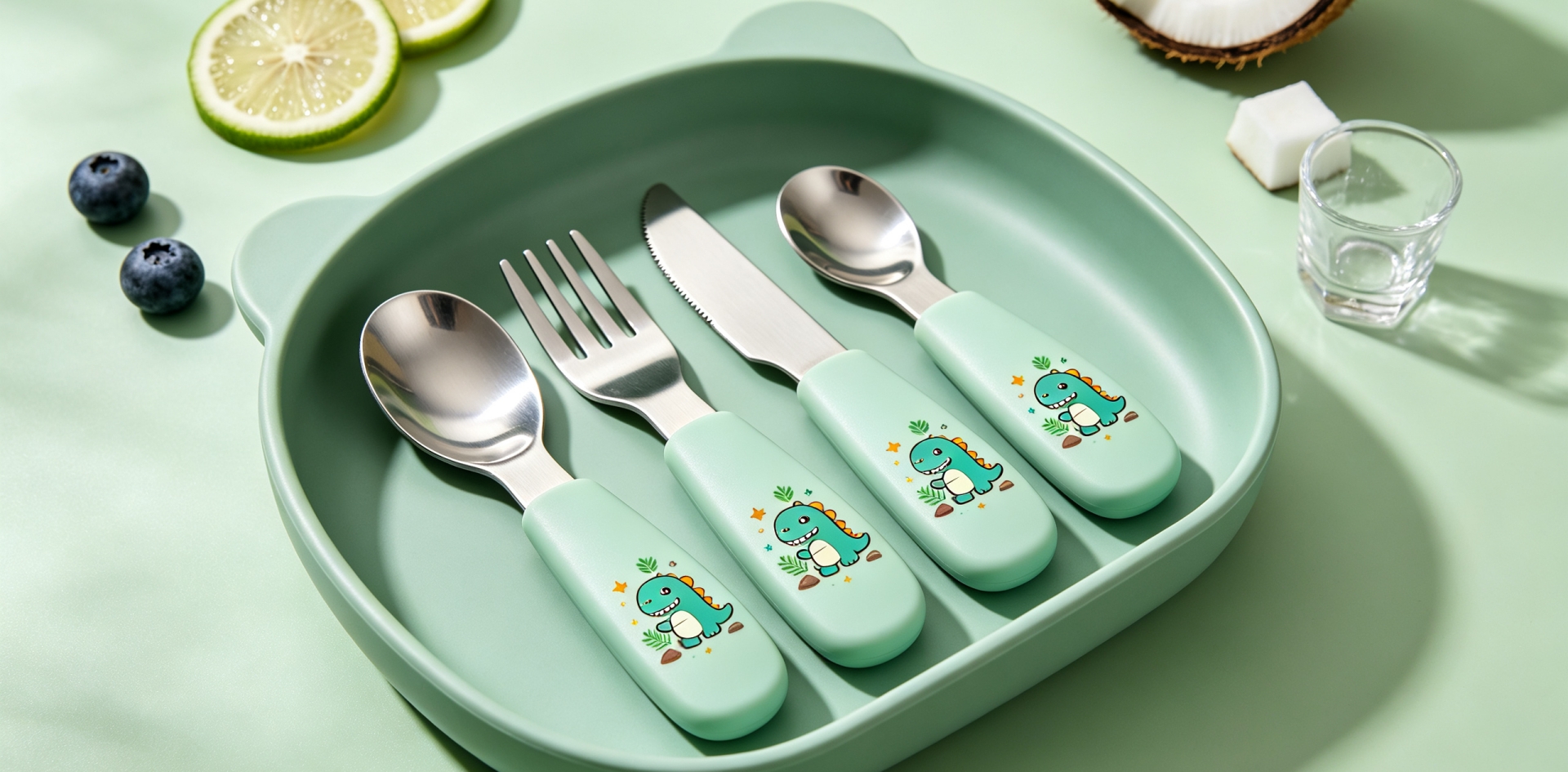
Stainless Steel Spoon Handle Stamping Depth Consistency

Stainless Steel Spoon Handle Stamping Depth Consistency
Decorative details can distinguish one stainless steel spoon design from another, particularly when a handle includes embossed patterns, recessed lines, a logo, or a textured motif. For B2B buyers, however, the appearance of these details depends on more than the artwork itself. The depth and consistency of the stamped impression also influence how clearly the design appears across a finished production batch.
When a spoon is produced in large quantities, inconsistent stamping depth can make identical items look noticeably different. Some handles may show sharp, well-defined details, while others appear too shallow, too pronounced, or uneven under normal lighting. Establishing clear requirements before production helps importers, distributors, and private-label brands reduce these differences.
What Is Stamping Depth on a Spoon Handle?
Stamping depth describes how far a stamped or embossed feature extends relative to the surrounding handle surface. Depending on the design, a pattern may be raised above the surface, recessed into it, or formed through a combination of raised and recessed details.
The required depth depends on the handle's material thickness, pattern geometry, tooling design, and intended appearance. A shallow decorative line may be sufficient for a subtle, understated finish. A more pronounced motif may be needed when the design relies on visible relief or tactile detail.
There is no universal depth that suits every stainless steel spoon. The correct specification should be based on the approved design, the handle's dimensions, and the forming method used by the manufacturer.
Buyers should also distinguish stamping depth from pattern width and spacing. These are separate characteristics. A pattern can have the correct width but insufficient depth, or the correct depth but inconsistent spacing. Defining each critical feature independently makes inspection more useful.
Why Stamping Consistency Matters in Bulk Orders
Maintaining a uniform appearance
When dozens or hundreds of spoons are displayed together, differences in embossed or recessed details become easier to see. Consistent impressions help a product range look intentional and professionally finished.
Preserving decorative clarity
If a stamped line is too shallow, the detail may disappear under certain lighting conditions. If it is too deep or sharply formed, the handle may look harsher than intended. The desired appearance should be established during sample approval rather than left to individual interpretation.
Supporting private-label product identity
A custom handle pattern can become a recognizable feature of a retailer's or brand owner's product range. If the pattern varies between production batches, the perceived consistency of the brand may suffer. This is particularly relevant when a buyer plans repeat orders over several months or years.
Avoiding unnecessary quality disputes
Terms such as “clear pattern” or “deep embossing” are open to interpretation. A reference sample, defined inspection conditions, and documented acceptance criteria help the buyer and factory assess the same feature in the same way.
Factors That Influence Stamping Depth
Stamping results depend on several interacting factors. A change to one part of the process may affect the appearance of the finished impression.
Material thickness and condition
The thickness and mechanical properties of the stainless steel influence how the handle responds to forming. A design intended for one material specification may not reproduce identically when the thickness or material condition changes.
For this reason, buyers should confirm the intended material grade and thickness alongside the handle design. If a product specification changes, the manufacturer should review whether the existing tooling and forming settings remain suitable.
Pattern geometry
Fine lines, small symbols, narrow borders, and broad decorative areas behave differently during forming. Closely spaced details may be more difficult to reproduce consistently than larger, simpler features.
A pattern should therefore be assessed at its actual production scale. Artwork that looks clear on a computer screen may require adjustment when translated into a physical stainless steel handle.
Tooling design and condition
The shape and condition of the stamping die influence the resulting impression. Wear, damage, or inconsistent tool alignment may gradually affect pattern definition. Routine checks help identify changes before they create widespread variation.
Forming settings and positioning
Inconsistent positioning can cause the same pattern to appear at different locations or with uneven definition. Differences in forming conditions may also influence the final relief. The appropriate control method depends on the equipment, design, and production process.
How Buyers Can Specify Stamping Depth
A useful specification should describe the required appearance in a way that can be checked consistently.
First, provide a technical drawing showing the decorative feature, its location, and its dimensions. Where depth is a critical characteristic, indicate the measurement reference and the required tolerance if a reliable measurement method is available.
Second, approve a physical sample. The sample should represent the intended material, handle thickness, finish, and pattern. A drawing alone may not fully communicate the desired visual effect of a decorative impression.
Third, identify the critical details. For example, a buyer may prioritize the clarity of a central motif, the continuity of a border, or the uniformity of a logo impression. These priorities help the factory focus inspection on the features that matter most.
Finally, agree on how the finished product will be assessed. A numerical depth measurement may be suitable for some patterns, while a controlled visual comparison may be more practical for others. Visual standards should be supported by defined lighting and viewing conditions where appearance is important.
Inspection Methods for Stamped Spoon Handles
A practical inspection process combines visual comparison with dimensional checks where appropriate.
1. Compare against the approved reference
Place the production spoon beside the approved sample and compare the depth, clarity, position, and overall appearance of the stamped detail. Use consistent viewing angles so that lighting does not create misleading differences.
2. Check the pattern across several points
A large decorative motif may not have uniform depth across its entire surface. Inspecting selected points can reveal whether the center, borders, and smaller details appear consistent with the specification.
3. Measure critical features when required
Where the design has a defined depth tolerance, suitable measuring equipment or a dedicated inspection method may be necessary. The method should be capable of evaluating the feature without damaging or deforming the spoon.
4. Review samples from different production stages
Inspecting samples at initial setup and during production can help identify changes over time. For larger orders, the buyer and manufacturer should agree on a sampling plan based on order size, product complexity, and quality expectations.
Inspection records should identify the product reference, batch, inspection method, and any observed variation. Photographs taken under consistent conditions can support communication, although photographs alone may not establish an exact depth measurement.
Common Problems and Corrective Actions
Pattern details look too shallow. Review the approved design, material specification, tooling condition, and forming settings. Confirm that the intended visual effect can be achieved consistently before changing production parameters.
Some areas appear deeper than others. Check whether the variation follows a particular part of the pattern or occurs across the entire handle. This distinction can help identify whether the issue relates to tooling geometry, positioning, or forming consistency.
The pattern looks different after polishing. Finishing can change the visual contrast and definition of a stamped detail. Evaluate the pattern after the specified finishing operations, not only immediately after forming.
The design is difficult to reproduce at production scale. Simplifying very fine details or adjusting line spacing may improve repeatability. Any redesign should be reviewed and approved before the bulk order proceeds.
The aim is not to maximize stamping depth. It is to reproduce the intended design reliably while maintaining the required handle shape, surface quality, and overall product appearance.
How Homefelt Supports Custom Spoon Development
Homefelt supports B2B buyers developing stainless steel spoons for wholesale distribution, private-label programs, and large-volume orders. For a handle with a stamped logo or decorative pattern, buyers can provide artwork, dimensional drawings, target material specifications, and a physical reference if available.
These details help clarify which features require the closest control and what the finished product should look like after forming and polishing. OEM and ODM support can help buyers assess design feasibility before committing to bulk production, while coordinated product design, packaging, and transportation services help align the wider order requirements.
Where certification or testing documentation is required, the relevant documents should be confirmed for the specific product and destination market. Buyers should also establish the inspection criteria and sample-approval procedure in advance, especially when a decorative feature is central to the product's identity.
To discuss a custom stamped-handle spoon, request a quotation, or review a proposed design, email ingrid@homefelt.net. Include the target quantity, pattern artwork, material requirements, and preferred finish so the project can be evaluated against its intended production needs.
You May Be Interested In
Stainless Steel Spoon Bowl Side Profile Symmetry Inspection
Stainless Steel Spoon Bowl Center Alignment and Axis Deviation
Related Article