Stainless Steel Spoon Handle Texture and Finish Control

Stainless Steel Spoon Handle Texture and Finish Control
The texture of a stainless steel spoon handle contributes to the product's visual identity and tactile character. A smooth polished handle creates a different impression from a brushed surface, a fine linear pattern, or a handle with a raised decorative texture. For importers, distributors, and private label brands, defining these details clearly helps ensure that production samples and bulk orders match the intended design.
Handle texture is not determined by the stainless steel grade alone. It depends on the surface treatment, decorative method, handle geometry, and finishing requirements. Even when two spoons have similar dimensions, differences in texture can make them appear to belong to different product ranges.
For B2B buyers developing custom flatware, the key is to define the required surface appearance and establish a repeatable way to inspect it. Homefelt factory supports stainless steel spoon customization, OEM/ODM manufacturing, private label development, wholesale supply, and large-volume cutlery production.
Common Types of Spoon Handle Texture
Handle texture can be functional, decorative, or a combination of both. The appropriate choice depends on the collection's design language, target market, production requirements, and intended price positioning.
A smooth polished handle offers a clean, reflective appearance. It works well for classic and contemporary collections, but visible scratches, uneven polishing, or differences in reflectivity may become noticeable under strong lighting.
A brushed handle has a more subdued appearance, often with directional lines. The direction and regularity of these lines are important because inconsistent brushing can make matching products look different when placed side by side.
A matte or satin texture reduces the strong reflections associated with a mirror finish. Buyers should define the intended appearance using a sample or finish reference rather than relying on the term “matte” alone.
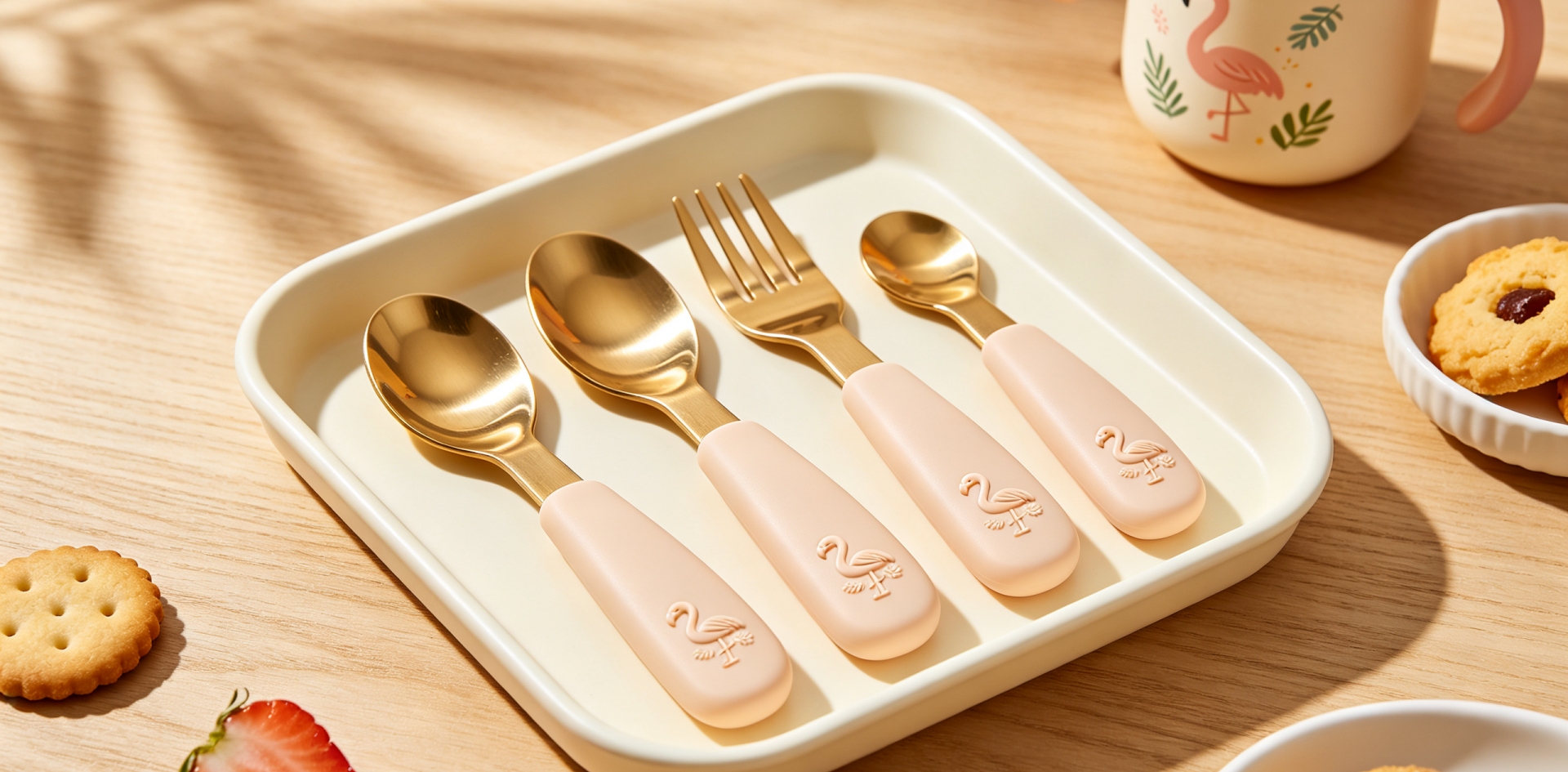
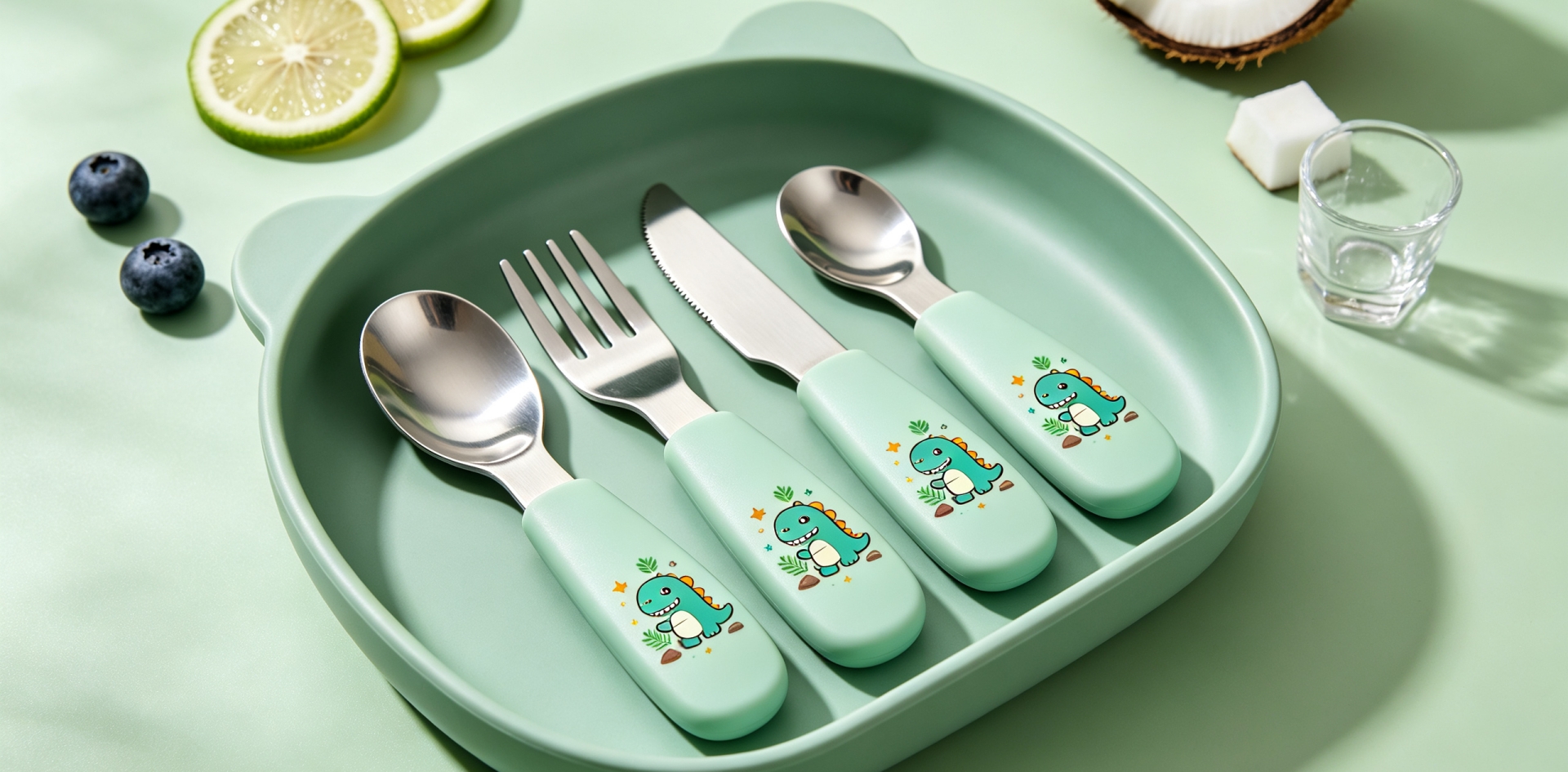
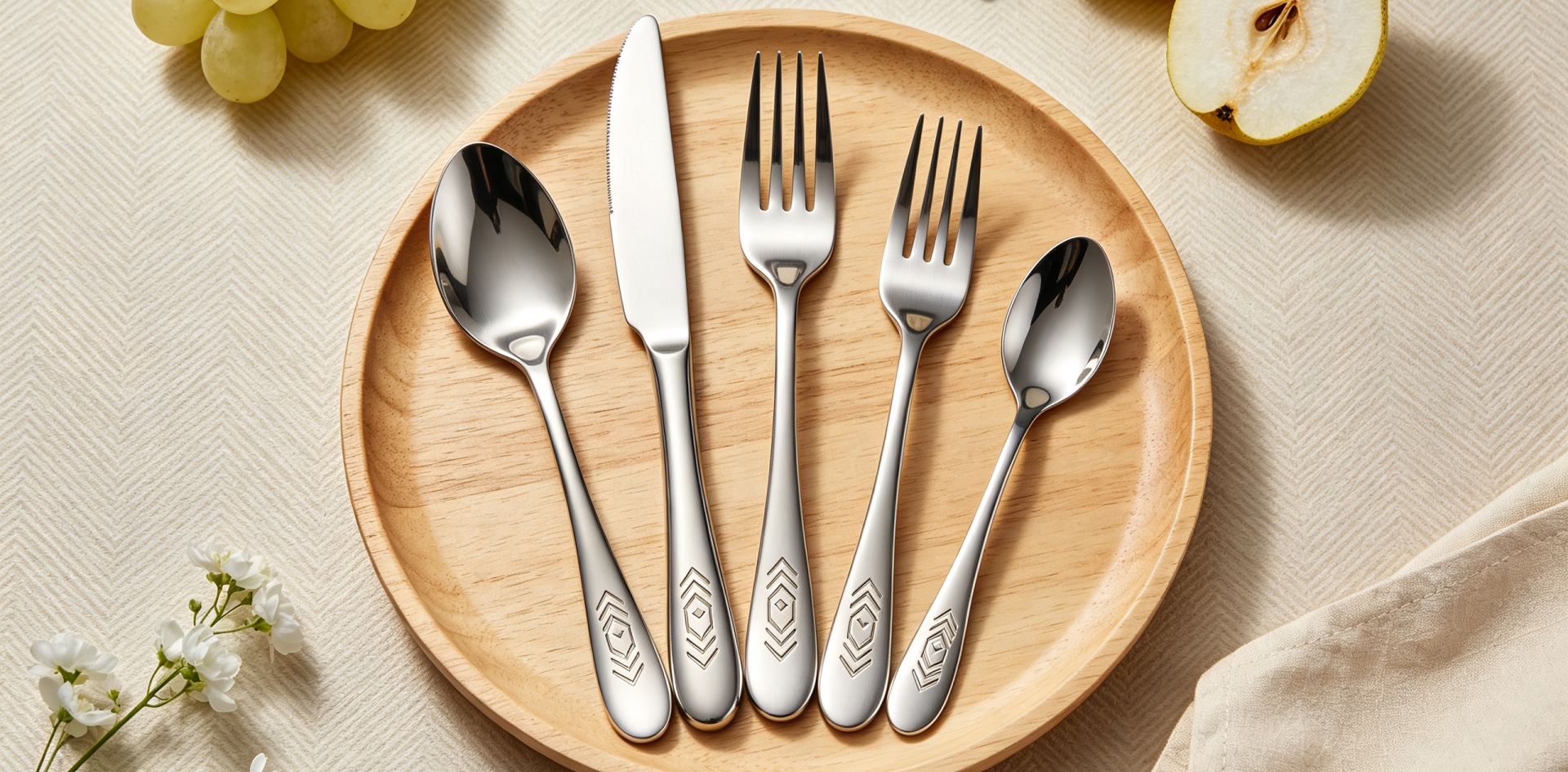
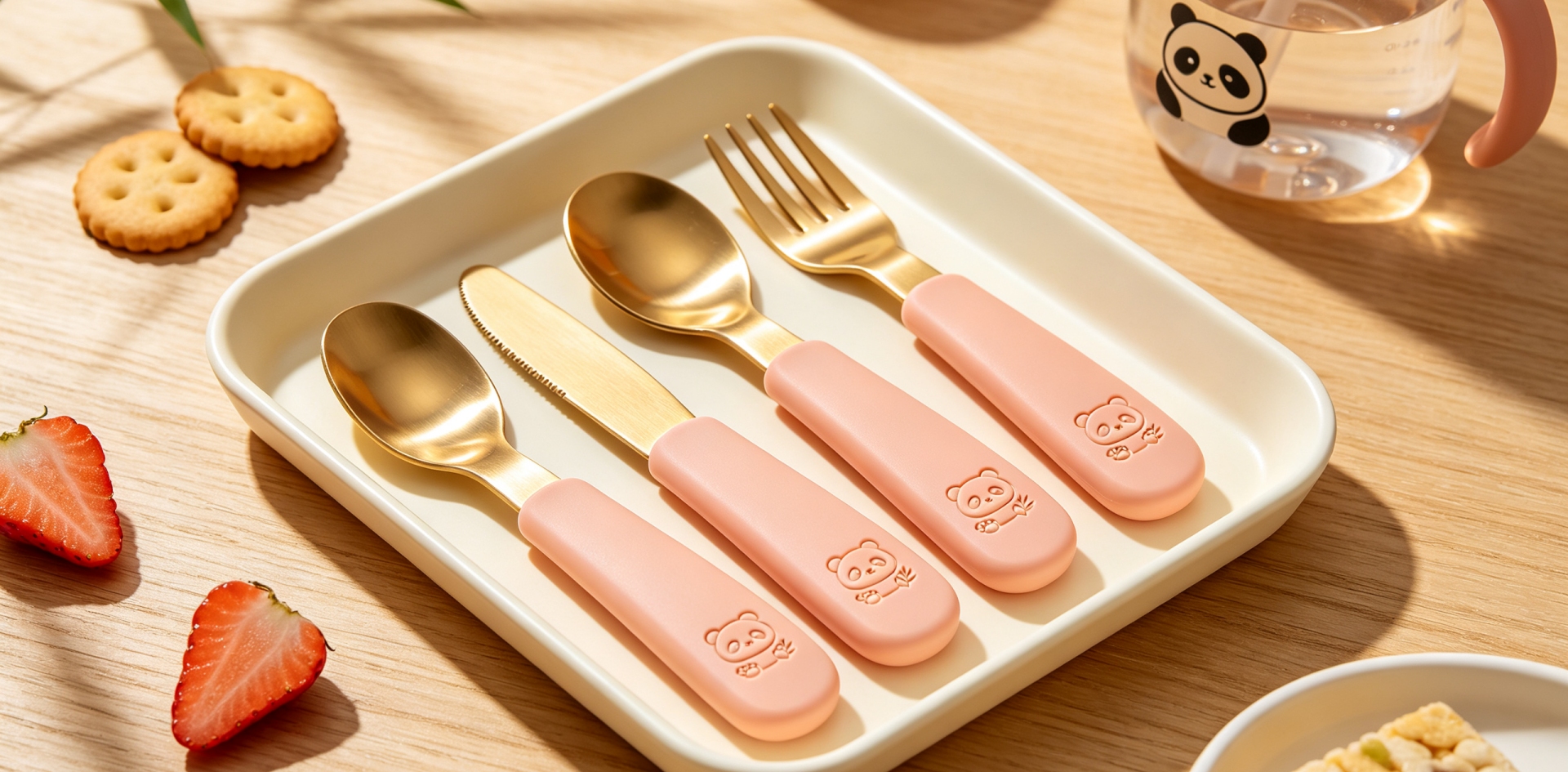
A patterned handle may include repeated lines, geometric details, embossed features, or other decorative elements. These designs require attention to pattern clarity, spacing, and consistency across the finished surface.
A mixed-finish handle combines two or more surface treatments, such as a polished border and a brushed center. This can create a distinctive appearance, although the transition between finishes needs to remain clean and consistent.
Texture and Tactile Feel Are Different Requirements
A handle can look textured without having a strongly noticeable tactile pattern. Similarly, a surface may feel different to the touch even when its visual appearance changes very little.
For purchasing teams, it is useful to distinguish between visual texture and tactile feel. Visual texture concerns the appearance of lines, patterns, reflectivity, and surface uniformity. Tactile feel concerns the perceived smoothness or roughness when the handle is held or touched.
If both characteristics matter, they should be evaluated separately during sample approval.
For example, a buyer may want a brushed handle with a uniform appearance but without an excessively rough feel. Another project may require a clearly defined decorative pattern that remains visible without creating unwanted sharp edges.
The intended result should be demonstrated through an approved sample. General descriptions such as “soft texture” or “premium finish” can support discussion, but they are not sufficiently precise as the only production criteria.
How Handle Geometry Affects Surface Texture
The same finishing method may produce different visual results on different handle shapes. A wide, flat handle provides a relatively straightforward area for evaluating directional brushing. A narrow, curved, or tapered handle may show more variation because the surface changes direction.
Decorative grooves, raised details, and recessed areas can also be more difficult to finish uniformly. Polishing access may vary across the handle, while excessive finishing may soften the edges of a pattern that was intended to remain clearly defined.
When developing a custom stainless steel spoon, buyers should review the texture together with the handle's width, thickness, taper, and decorative geometry. This helps identify whether the preferred finish can be reproduced consistently without compromising the design.
For mixed-finish products, the drawing should identify where each finish begins and ends. Clear boundaries help the production team understand which areas should be polished, brushed, or treated with another specified surface process.
Defining a Handle Finish in the Product Specification
A product specification should describe the intended finish in terms that can be checked during sample approval and production inspection.
Depending on the design, the specification may include:
-
Finish type, such as mirror, brushed, satin, or a defined decorative texture.
-
Direction of brushing or other directional surface features.
-
Areas that require different finishes.
-
Pattern dimensions and positioning, where applicable.
-
Acceptable visible scratches, marks, or uneven areas.
-
Reference sample identification.
-
Inspection lighting and viewing conditions, when required.
If numerical surface roughness is important, the specification should identify the relevant parameter, measurement locations, and test method. A roughness value alone does not fully define a visual finish, particularly when directional texture or decorative patterns are involved.
For many standard wholesale products, an approved sample and clear visual acceptance criteria may be sufficient. More detailed measurements are useful when the finish is a critical product feature or when several production batches must be compared against a strict standard.
Sample Approval for Custom Handle Textures
Sample approval allows buyers to evaluate the handle texture before committing to a large order. A physical sample is particularly valuable because photographs can make surfaces appear smoother, darker, brighter, or more uniform than they are in person.
A practical review should consider the following:
-
Compare the handle finish with the agreed reference sample.
-
Check whether the texture is consistent across the handle.
-
Inspect directional lines and decorative details for unwanted variation.
-
Review transitions between different surface finishes.
-
Check the handle edges and corners for visible finishing defects.
-
Evaluate the overall appearance under consistent lighting.
If the spoon is part of a larger cutlery collection, review the corresponding fork and knife handles as well. Shared design features should create a coordinated appearance, even when the individual utensils have different dimensions.
When adjustments are needed, buyers should identify the affected surface area and describe the required change. For example, specifying the direction of brushing or the boundary of a polished section is more useful than requesting a generally “better finish.”
Maintaining Texture Consistency in Bulk Production
An approved sample establishes the visual reference for production. To maintain consistency, the factory should use the same finish specification and reference when evaluating subsequent batches.
A practical quality plan may include first-piece inspection, periodic visual checks, review of decorative details, and measurements where these are part of the agreed requirements.
Inspectors should look for differences that matter to the specific design, such as uneven brushing direction, inconsistent reflectivity, visible scratches, blurred patterns, or irregular transitions between finishes.
The inspection frequency should reflect order quantity, product complexity, finish requirements, and the buyer's quality plan. A simple polished handle may require different checks from a handle with multiple decorative textures.
For repeat orders, the approved sample and finish specification should be linked to the product code and drawing revision. If the finish method or design changes, the revised result should be reviewed before it is treated as equivalent to the original product.
Surface Texture, Material, and Product Quality
Stainless steel grade and surface finish are separate elements of a spoon specification. Selecting a particular grade does not automatically guarantee a particular texture, polishing quality, or visual appearance.
Buyers should therefore specify material requirements separately from finishing requirements. Where applicable, material records and relevant product documentation can support supplier evaluation, while visual inspection and suitable measurements help confirm the finished surface.
If a project requires a specific surface roughness range, that requirement should be agreed with the factory before production. Measurement methods must suit the geometry and texture being evaluated, and the test locations should be consistent.
Factory certification documents and product-related inspection reports may also form part of a purchasing review, depending on the buyer's requirements. The scope of each document should be checked rather than assuming that general certification proves every product finish meets the requested standard.
Homefelt has experience in stainless steel cutlery manufacturing and can discuss surface specifications, sample approval, and quality documentation with B2B customers.
Planning Texture Requirements Across a Cutlery Range
A consistent handle finish can help connect multiple products within one collection. However, different utensil shapes may require adjustments to how the texture is applied.
For example, a brushed pattern that works well on a broad spoon handle may need a revised layout on a narrower teaspoon handle. A decorative feature may also require different proportions on a serving spoon while retaining the same overall design character.
Buyers should identify which elements must remain consistent across the range, including the finish type, texture direction, visual contrast, and decorative style. Item-specific drawings can then define the details for each SKU.
Homefelt factory offers OEM/ODM and private label cutlery development, including product design coordination, packaging planning, and transportation support tailored to customer requirements. Confirming texture specifications across the complete range before bulk production helps reduce differences between individual items.
What to Include in a Handle Texture Inquiry
When requesting a quotation, provide the spoon model, material preference, handle dimensions, desired finish, expected order quantity, logo requirements, and packaging format.
Reference samples and clear photographs can help communicate the preferred style. For complex finishes, a technical drawing should identify the areas to be treated and any critical dimensions or boundaries. Buyers should also state whether the finish will be approved visually or assessed against additional measurement criteria.
Homefelt supports custom stainless steel spoons, wholesale flatware, OEM/ODM manufacturing, private label projects, and large-volume production. Its one-stop service can cover product design, packaging, and transportation planning based on the customer's needs.
To discuss a new handle texture or request a bulk quotation, contact ingrid@homefelt.net with your reference images, finish requirements, target quantity, and product specifications.
You May Be Interested In
Stainless Steel Spoon Handle Straightness and Twist Control
Stainless Steel Spoon Bowl Wall Thickness Distribution
Related Article