Stainless Steel Spoon Lead Time: How B2B Buyers Can Plan Production and Delivery

Stainless Steel Spoon Lead Time: How B2B Buyers Can Plan Production and Delivery
Lead time is an important part of stainless steel spoon purchasing, especially for international B2B buyers managing inventory, retail launches, restaurant openings or seasonal demand.
A production schedule involves more than the time required to manufacture the finished spoons. Sampling, tooling, material preparation, production, finishing, inspection and packaging can all affect the final delivery timeline.
Understanding these stages allows buyers to plan orders more realistically and reduce unnecessary delays.
What Is Stainless Steel Spoon Lead Time?
Lead time is the period between a defined starting point in the purchasing process and the completion or delivery of the order.
For B2B stainless steel spoon projects, it may include:
-
Sample development
-
Tooling
-
Material preparation
-
Production
-
Finishing
-
Inspection
-
Packaging
-
Shipment preparation
The exact timeline depends on the product and order requirements.
Why Lead Time Varies
There is no universal production time for every stainless steel spoon.
Lead time can change according to:
-
Standard or custom design
-
Order quantity
-
Material availability
-
Tooling requirements
-
Surface finish
-
Logo customization
-
Packaging
-
Factory production schedule
-
Inspection requirements
A clear quotation should therefore specify the expected production timeline for the actual order.
Standard Stainless Steel Spoon Orders
Standard products are generally easier to schedule because the design and manufacturing process already exist.
Existing products may already have:
-
Production tooling
-
Product specifications
-
Quality references
-
Manufacturing procedures
-
Packaging options
This can reduce development work compared with a completely new product.
Customized Spoon Orders
Customized products usually require additional preparation.
A custom project may involve:
-
Design review
-
Technical evaluation
-
Tool development
-
Prototype production
-
Sample approval
-
Production preparation
-
Bulk manufacturing
The buyer should allow additional time when developing a new design.
Sample Lead Time
Samples are an important stage before bulk production.
A sample may be required to confirm:
-
Dimensions
-
Weight
-
Handle shape
-
Bowl design
-
Surface finish
-
Logo
-
Overall appearance
The sample schedule should be discussed separately from the bulk production schedule.
Tooling Lead Time
Custom stainless steel spoon designs may require new tooling.
Tooling time depends on the complexity of the design and the manufacturer's production process.
The buyer should confirm:
-
Whether new tooling is required
-
Tool development time
-
Sample timing
-
Tooling approval
-
Tool ownership
Tooling delays can affect the entire project, so this stage should be planned early.
Material Preparation
Material availability can also influence production timing.
The manufacturer may need to prepare the required stainless steel specification before production begins.
For a standard product, the material may already be integrated into the factory's purchasing system.
For unusual specifications, additional preparation may be necessary.
Bulk Production
Once the product specification and sample are approved, bulk manufacturing can begin.
Production time depends on:
-
Order quantity
-
Product complexity
-
Production capacity
-
Finishing requirements
-
Existing factory schedule
Larger orders generally require more production resources and should be planned accordingly.
Surface Finishing Time
Polishing, satin finishing, brushing and other surface treatments are part of the manufacturing process.
The selected finish can affect production planning, particularly for customized products.
A buyer should confirm whether the required finish is part of the standard production process or requires additional preparation.
Logo Production Time
Logo customization may involve additional processing.
The timeline can depend on:
-
Logo method
-
Logo size
-
Logo position
-
Quantity
-
Sample approval
The final logo artwork should be confirmed before production begins.
Packaging Preparation
Customized packaging can add another stage to the order schedule.
Private label buyers may require:
-
Retail boxes
-
Printed inserts
-
Labels
-
Special cartons
-
Product-specific packaging
Packaging artwork and approvals should be completed early to avoid delaying finished-product shipment.
Inspection Time
Quality inspection should be included in the overall order plan.
Depending on the project, inspection may occur:
-
During production
-
Before packaging
-
After packaging
-
Before shipment
Third-party inspection can require additional coordination and should be scheduled in advance.
Production Schedule and Factory Capacity
A factory may be handling several customer orders at the same time.
The production schedule can therefore affect the start date of a new order.
Buyers should confirm not only the expected manufacturing duration but also when production is scheduled to begin.
These are two different points in the order timeline.
Production Lead Time vs. Shipping Time
Production lead time and shipping time should not be treated as the same thing.
Production lead time covers the manufacturing process.
Shipping time begins after the goods are ready for dispatch and depends on the selected transportation method and destination.
For international orders, buyers should plan these stages separately.
Planning for International Orders
International B2B buyers should consider the complete timeline:
Product confirmation → Sampling → Tooling → Production → Inspection → Packaging → Shipment
Each stage can affect the next.
Planning the complete sequence helps buyers avoid unrealistic delivery expectations.
Seasonal Demand
Seasonal demand can influence factory schedules.
Buyers preparing for:
-
Holiday sales
-
Restaurant openings
-
Hotel projects
-
Promotional campaigns
-
Retail launches
should communicate their target dates as early as possible.
Early planning gives the manufacturer more opportunity to coordinate production capacity.
Lead Time for Large Orders
Large-volume orders require more careful scheduling.
The manufacturer may need to coordinate:
-
Material purchasing
-
Production capacity
-
Finishing
-
Quality inspection
-
Packaging
-
Loading
Buyers should avoid waiting until inventory is nearly exhausted before placing a large replenishment order.
Lead Time for Small Orders
Smaller orders can sometimes be easier to produce, but this does not automatically mean they will be completed immediately.
Factory scheduling, product availability and production priorities can still affect the timeline.
The actual schedule should be confirmed with the manufacturer.
Repeat Order Lead Time
Repeat orders can often be easier to plan when the product specification has already been established.
Existing records may include:
-
Product drawings
-
Approved samples
-
Material specifications
-
Finish references
-
Packaging information
This reduces the need to repeat development work.
Why Approved Samples Matter
An approved sample provides a clear production reference.
Without an approved reference, additional clarification may be required before manufacturing begins.
For customized projects, approving the sample promptly can therefore help maintain the planned schedule.
How Buyers Can Reduce Delays
Several practical steps can help.
Provide Complete Specifications
Send dimensions, material, finish, logo and packaging requirements together.
Approve Samples Quickly
Long approval cycles can delay the start of bulk production.
Confirm Packaging Early
Customized packaging should be developed alongside the product rather than at the end.
Communicate the Target Date
The supplier needs to understand when the goods are required.
Plan Inspection in Advance
If third-party inspection is required, include it in the production schedule from the beginning.
Creating a Project Timeline
A B2B buyer can create a simple timeline covering each stage.
| Project Stage | Planned Date | Actual Date | Status |
|---|---|---|---|
| Product specification | |||
| Sample request | |||
| Sample approval | |||
| Tooling | |||
| Bulk production | |||
| Inspection | |||
| Packaging | |||
| Shipment |
This helps both buyer and supplier identify potential delays early.
Lead Time and Inventory Planning
Lead time should be connected with inventory levels.
If the supplier requires several weeks to manufacture and ship the product, the buyer needs enough inventory to cover the period before the next shipment arrives.
A basic planning approach considers:
-
Average sales
-
Current inventory
-
Expected demand
-
Production time
-
Shipping time
-
Safety stock
This is particularly important for distributors and retailers with regular sales.
Lead Time for New Product Launches
New product launches require additional planning because several activities may happen at the same time.
The buyer may need to coordinate:
-
Product development
-
Sampling
-
Packaging design
-
Photography
-
Marketing preparation
-
Production
-
Shipping
-
Retail launch
The manufacturing timeline should therefore be connected with the broader launch plan.
Lead Time for Restaurant and Hotel Projects
Hospitality projects often have fixed opening dates.
A delay in tableware delivery can affect preparation for the opening.
Hotels and restaurants should communicate the required arrival date and allow sufficient time for production, transportation and receiving.
Working With an Experienced Stainless Steel Manufacturer
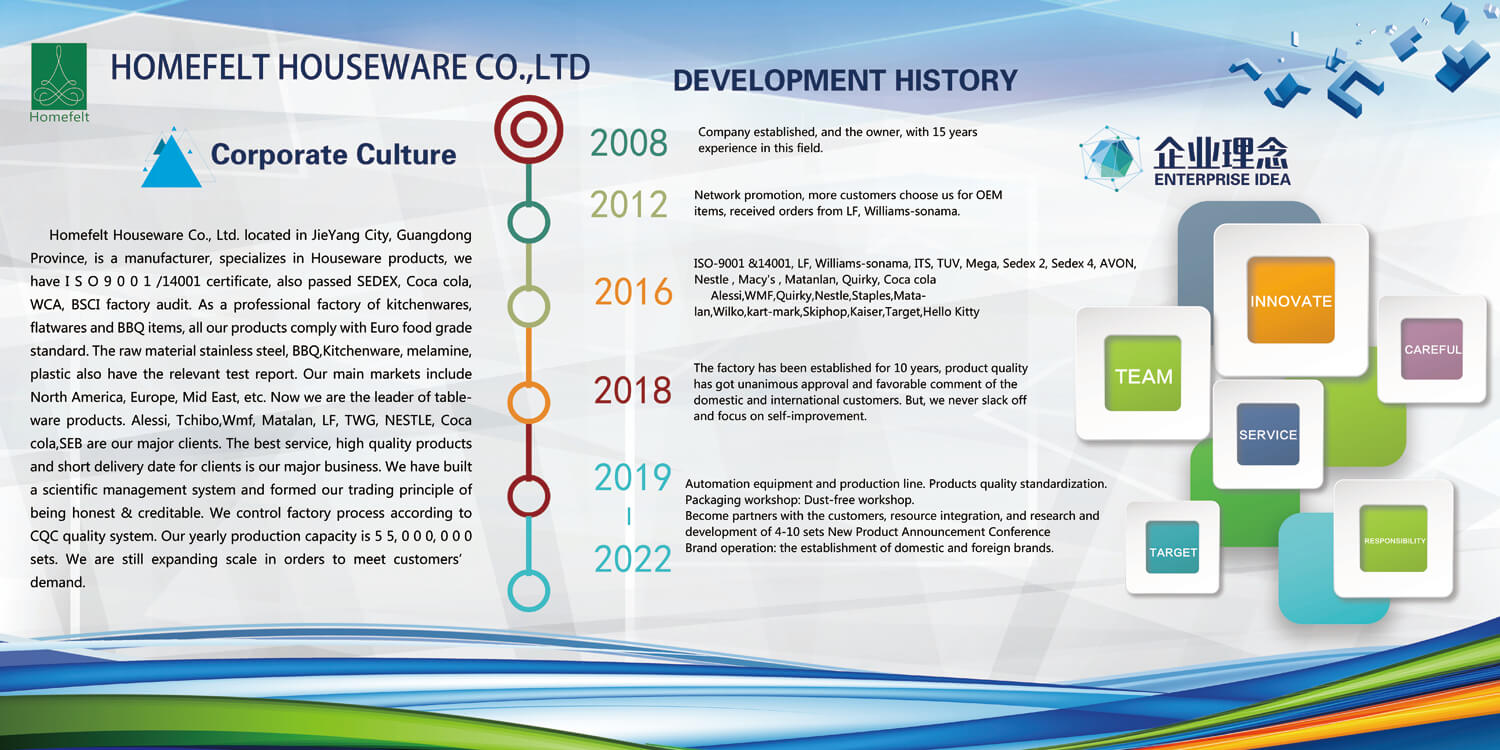
Homefelt has more than 30 years of stainless steel manufacturing experience and produces stainless steel cutlery together with kitchen and dining products, BBQ tools, pet bowls and children's tableware.
For international B2B customers, Homefelt supports standard stainless steel spoon orders as well as customized, OEM and private label projects.
Buyers can provide product specifications, estimated quantities, packaging requirements and target delivery dates.
This allows the production schedule to be considered according to the actual requirements of the project.
A Practical Lead Time Planning Process
B2B buyers can follow these steps:
-
Define the product
-
Confirm whether it is standard or customized
-
Provide complete specifications
-
Request samples where necessary
-
Confirm tooling requirements
-
Approve the sample
-
Confirm material preparation
-
Establish the production start date
-
Confirm the estimated manufacturing period
-
Plan inspection
-
Confirm packaging
-
Schedule shipment
-
Calculate the expected arrival date
-
Maintain appropriate inventory coverage
-
Monitor progress until dispatch
Questions to Ask a Stainless Steel Spoon Manufacturer
Before placing an order, buyers can ask:
-
When can production begin?
-
What is the estimated manufacturing time?
-
Is tooling required?
-
How long will sample development take?
-
Is the material currently available?
-
How long will customized packaging require?
-
When should inspection be scheduled?
-
What factors could delay production?
-
Can the factory provide production updates?
-
When is the expected shipment-ready date?
Common Lead Time Mistakes
Confusing Production Time With Delivery Time
Manufacturing and international transportation are separate stages.
Starting Packaging Too Late
Custom packaging can become a bottleneck if it is not prepared early.
Ignoring Sample Approval
Bulk production normally depends on a confirmed product reference.
Waiting Until Inventory Is Nearly Empty
Long production and transportation cycles make late replenishment risky.
Not Communicating the Required Arrival Date
A supplier cannot properly plan around a deadline that has not been clearly communicated.
Conclusion
Stainless steel spoon lead time depends on much more than the physical manufacturing process.
Product development, tooling, material preparation, bulk production, finishing, inspection, packaging and transportation can all influence the final delivery schedule.
For B2B buyers, the most effective approach is to establish a complete project timeline and confirm each major stage with the manufacturer before production begins.
Homefelt has more than 30 years of stainless steel manufacturing experience and works with international B2B customers on standard, customized, OEM and private label stainless steel products.
Clear communication and early planning can help buyers coordinate production with inventory requirements, retail launches, restaurant projects and international shipping schedules.
You May Be Interested In
Stainless Steel Spoon Production Scheduling: How Factories Organize Bulk Manufacturing
Stainless Steel Spoon Sample Approval: Avoiding Delays Before Mass Production
Stainless Steel Spoon Tooling Development: What Custom Projects Need to Plan
Stainless Steel Spoon Export Shipping: Preparing Orders for International Transportation
Stainless Steel Spoon Inventory Planning: Connecting Factory Lead Time With Stock Levels
Stainless Steel Spoon Replenishment Planning: When B2B Buyers Should Place Repeat Orders

Related Article