
Stainless Steel Spoon Manufacturing Process: How Spoons Are Made
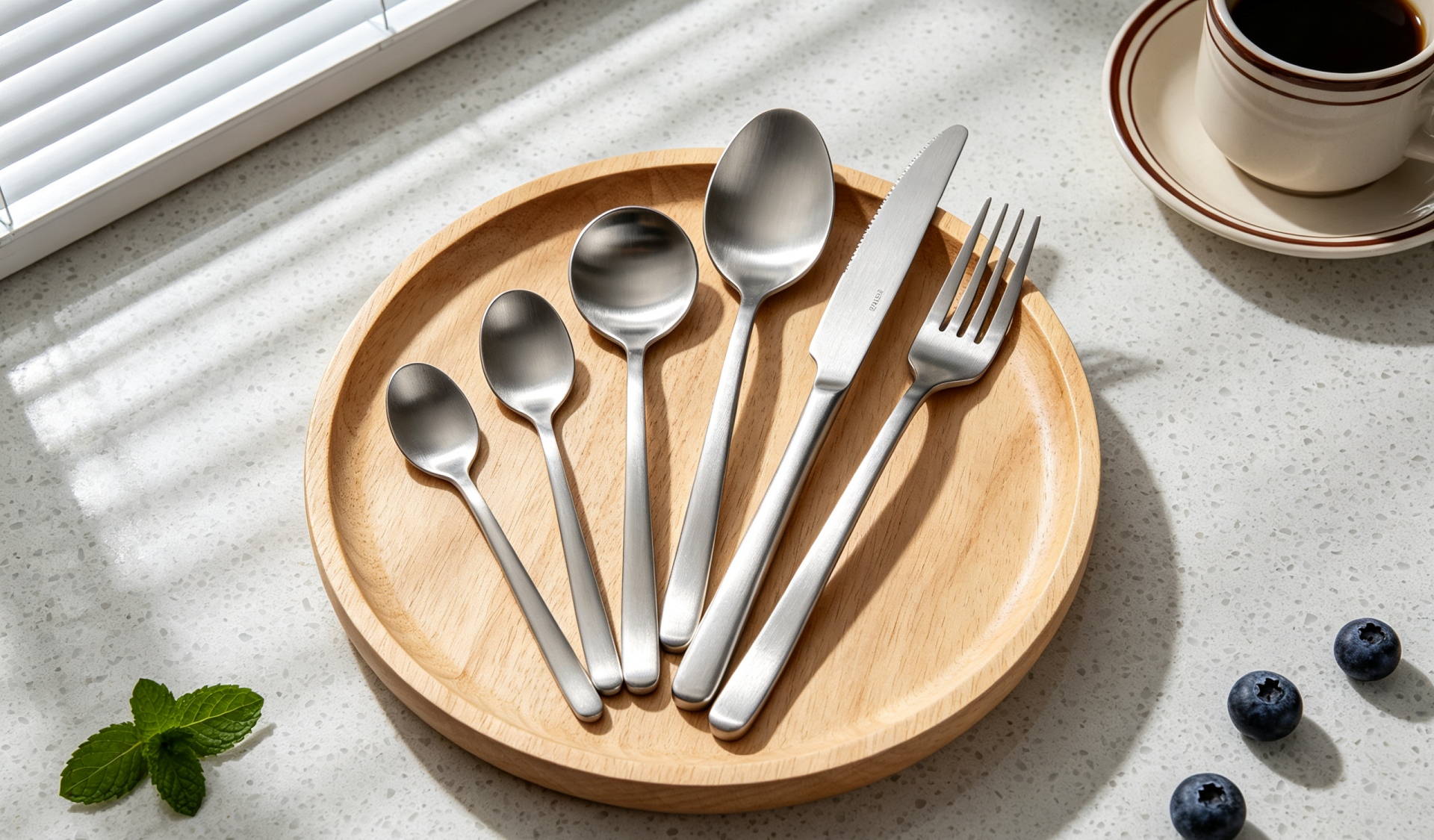
Stainless Steel Spoon Manufacturing Process: How Spoons Are Made
A stainless steel spoon may look like a simple tableware product, but producing consistent spoons for restaurants, hotels, retailers and distributors requires a controlled manufacturing process.
From stainless steel material preparation to forming, handle shaping, polishing, inspection and packaging, each stage affects the finished product.
For B2B buyers, understanding the stainless steel spoon manufacturing process can make it easier to evaluate suppliers, compare quotations and define product specifications before placing a wholesale or custom order.
The exact process can vary according to spoon design, material, thickness, production equipment and surface finish. However, the general production flow remains similar across many stainless steel spoon products.
What Is Stainless Steel Spoon Manufacturing?
Stainless steel spoon manufacturing is the process of transforming stainless steel material into finished spoons for dining, foodservice, hospitality and retail applications.
A typical production process may include:
-
Material preparation
-
Cutting
-
Blank preparation
-
Stamping
-
Spoon bowl forming
-
Handle forming
-
Trimming
-
Grinding
-
Polishing or surface finishing
-
Cleaning
-
Quality inspection
-
Packaging
Custom products may require additional tooling and sample development before mass production.
Step 1: Stainless Steel Material Selection
The manufacturing process starts with the selection of stainless steel material.
The material should be specified according to the buyer's product requirements.
For B2B projects, buyers may define:
-
Stainless steel grade
-
Thickness
-
Product dimensions
-
Target weight
-
Surface finish
Material should be confirmed before production begins.
Different material specifications can affect the product's appearance, weight, production characteristics and cost.
Step 2: Material Preparation
The stainless steel material is prepared for the manufacturing process.
The material format and preparation method depend on the production equipment and product design.
Proper material preparation helps establish consistent conditions for subsequent forming operations.
For large orders, stable material supply is also important for maintaining production continuity.
Step 3: Cutting the Stainless Steel Material
The stainless steel material is cut into suitable pieces for further processing.
The dimensions of the initial material depend on the final spoon design.
Accurate cutting helps reduce unnecessary material waste and provides a consistent starting point for forming.
The production method may vary according to spoon size, thickness and manufacturing requirements.
Step 4: Blank Preparation
The initial piece of stainless steel is shaped into a blank that provides the basic outline of the spoon.
At this stage, the product does not yet have its final bowl and handle profile.
The blank serves as the foundation for subsequent forming operations.
The dimensions and shape of the blank depend on the final product design.
Step 5: Stamping
Stamping is an important stage in stainless steel spoon production.
During stamping, controlled pressure is used to shape the stainless steel according to the required profile.
Production tooling plays an important role in maintaining consistency.
For standard products, established tooling can be used.
For custom stainless steel spoons, new tooling may be developed according to the approved design.
Step 6: Spoon Bowl Forming
The bowl is one of the most important parts of the spoon.
The stainless steel is formed to create the required bowl shape, width, length and depth.
The bowl design depends on the intended application.
A teaspoon may have a relatively small bowl, while a soup spoon may require a deeper profile.
For custom products, the bowl dimensions should be confirmed before mass production.
Step 7: Handle Forming
The handle is formed according to the product design.
Handle styles may include:
-
Straight
-
Tapered
-
Rounded
-
Wide
-
Narrow
-
Decorative
-
Custom
The handle should remain visually and functionally balanced with the spoon bowl.
For complete flatware collections, the spoon handle should coordinate with the corresponding fork and knife designs.
Step 8: Trimming and Edge Processing
After forming, excess material may need to be removed.
Trimming creates the final outline of the product.
Edge processing can also help refine the product profile before surface finishing.
The exact operations depend on the design and production process.
Step 9: Grinding
Grinding can be used to refine the surface and remove or reduce manufacturing marks.
This stage helps prepare the spoon for subsequent polishing or other surface treatments.
Controlled grinding is important because excessive or uneven processing can affect product dimensions and appearance.
Step 10: Polishing
Polishing determines the final appearance of many stainless steel spoons.
A polished spoon can have a bright and reflective appearance.
Other finishing processes can create satin, brushed or matte surfaces.
The selected finish should be based on the buyer's product requirements.
Stainless Steel Spoon Surface Finishes
Different finishes can create different product styles.
Polished Finish
A polished stainless steel spoon provides a bright and reflective appearance.
It is commonly considered for:
-
Hotels
-
Formal restaurants
-
Premium tableware
-
Hospitality collections
Satin Finish
A satin finish creates a softer visual appearance with less reflection.
It can work well for contemporary and minimalist tableware.
Brushed Finish
A brushed finish creates visible directional texture.
It can support modern and industrial-inspired flatware designs.
Matte Appearance
A matte appearance provides relatively low reflectivity and can create an understated product style.
The exact appearance should be confirmed with a physical sample.
Step 11: Cleaning
After forming and surface finishing, the spoon is cleaned to remove production residues.
Cleaning prepares the product for final inspection.
The exact cleaning method depends on the factory's production process and product requirements.
Step 12: Drying and Handling
After cleaning, the spoons are dried and prepared for inspection.
Careful handling is important because finished surfaces can be scratched or marked during transportation between production areas.
This is particularly important for highly polished products.
Step 13: Quality Inspection
Quality control checks whether the finished stainless steel spoons meet the approved product specifications.
Inspection may include:
-
Material
-
Overall length
-
Bowl dimensions
-
Thickness
-
Weight
-
Handle shape
-
Bowl shape
-
Surface finish
-
Visual defects
-
Packaging
The inspection criteria should be established before mass production.
Checking Stainless Steel Spoon Dimensions
Finished products can be measured against the approved dimensions.
Important measurements may include:
-
Overall length
-
Bowl length
-
Bowl width
-
Bowl depth
-
Handle width
-
Thickness
For custom products, the manufacturer's measurement method should match the approved technical specification.
Checking Spoon Weight
Weight can be checked when it is an important product requirement.
Weight depends on material, thickness, dimensions and design.
A target weight and acceptable tolerance should be agreed before production.
Weight should not be evaluated independently from the rest of the product specification.
Checking Surface Finish
Surface inspection can identify:
-
Scratches
-
Uneven polishing
-
Uneven brushing
-
Stains
-
Visible manufacturing marks
-
Inconsistent surface appearance
The approved sample can be used as a visual reference.
Checking Spoon Shape
The finished spoon should match the approved design.
Inspection may check:
-
Bowl symmetry
-
Handle alignment
-
Overall profile
-
Bowl depth
-
Handle shape
Consistent shape is especially important when ordering large quantities.
Step 14: Packaging
After inspection, finished spoons are packed according to the buyer's requirements.
Packaging options can include:
-
Bulk packaging
-
Individual packaging
-
Retail boxes
-
Cutlery set packaging
-
Gift packaging
-
Private label packaging
The packaging should protect the finished surface during transportation and storage.
Stainless Steel Spoon Bulk Packaging
For restaurants, hotels and distributors, bulk packaging can provide an efficient solution.
The buyer may specify:
-
Pieces per inner pack
-
Pieces per carton
-
Carton dimensions
-
Carton weight
-
Shipping marks
Packaging requirements should be confirmed before production.
Private Label Stainless Steel Spoon Production
Private label projects may include additional production stages.
These can include:
-
Brand design review
-
Logo confirmation
-
Packaging development
-
Sample approval
-
Production
-
Final branding inspection
The exact process depends on the private label requirements.
Custom Stainless Steel Spoon Manufacturing
Custom spoon production generally begins with a product concept or reference sample.
The process may include:
-
Design review
-
Technical evaluation
-
Material confirmation
-
Tooling development
-
Prototype or sample production
-
Sample approval
-
Mass production
-
Quality inspection
-
Packaging
Custom products should not enter mass production until the final specification is approved.
Tooling for Stainless Steel Spoons
Tooling is important for producing consistent custom shapes.
A custom handle or bowl profile may require dedicated tooling.
The tooling process can affect:
-
Development time
-
Sample production
-
Product consistency
-
Initial development cost
Buyers should discuss tooling requirements with the manufacturer before confirming a custom order.
Factors Affecting Stainless Steel Spoon Manufacturing Cost
The manufacturing cost of a stainless steel spoon can depend on:
-
Material
-
Thickness
-
Product weight
-
Product dimensions
-
Design complexity
-
Tooling
-
Surface finish
-
Order quantity
-
Packaging
-
Branding
This is why two visually similar spoons can have different wholesale prices.
Factors Affecting Production Lead Time
Production lead time can depend on:
-
Product availability
-
Order quantity
-
Material availability
-
Customization
-
Tooling
-
Sample approval
-
Surface finishing
-
Packaging
Standard products may have a simpler production process, while custom products require additional development.
How to Choose a Stainless Steel Spoon Manufacturer
B2B buyers should evaluate suppliers according to the requirements of their project.
Important factors include:
-
Stainless steel manufacturing experience
-
Product range
-
Production capability
-
Custom tooling
-
Surface finishing
-
Quality control
-
Production capacity
-
Packaging
-
Communication
-
Repeat-order capability
A supplier should be able to explain how the requested spoon will be manufactured.
Questions to Ask a Stainless Steel Spoon Factory
Before placing a wholesale order, buyers can ask:
-
What stainless steel material is available?
-
Can you manufacture the requested dimensions?
-
What thickness options are available?
-
What surface finishes can you provide?
-
Can you develop custom tooling?
-
Can you provide production samples?
-
How is quality inspected?
-
What packaging options are available?
-
Can you support private label production?
-
Can the same specification be reproduced for repeat orders?
Clear answers can help buyers evaluate supplier suitability.
Working With an Experienced Stainless Steel Spoon Manufacturer
Homefelt has more than 30 years of stainless steel manufacturing experience and produces stainless steel cutlery together with kitchen and dining products, BBQ tools, pet bowls and children's tableware.
For international B2B customers, Homefelt supports standard and customized stainless steel products.
Importers, distributors, restaurant suppliers, hospitality businesses, retailers and private label brands can discuss stainless steel spoon design, material, dimensions, thickness, weight, surface finish, branding, packaging and estimated quantities according to their requirements.
For repeat orders, approved samples and documented specifications can help maintain product consistency.
From Stainless Steel Material to Finished Spoon
The complete process can be summarized as:
-
Select the stainless steel material
-
Prepare the material
-
Cut the material
-
Create the blank
-
Stamp and form the product
-
Form the spoon bowl
-
Shape the handle
-
Trim and refine the profile
-
Grind the surface
-
Polish or apply another finish
-
Clean the product
-
Inspect dimensions and appearance
-
Pack the finished spoons
-
Complete final order verification
Each stage contributes to the final product.
Why Manufacturing Process Matters to B2B Buyers
Understanding how stainless steel spoons are made helps buyers ask better questions.
Instead of comparing suppliers only by price, buyers can evaluate:
-
Material specifications
-
Manufacturing capability
-
Product consistency
-
Finishing quality
-
Customization support
-
Quality control
-
Packaging
-
Repeat production
This provides a more complete basis for supplier selection.
Conclusion
The stainless steel spoon manufacturing process involves much more than simply forming a piece of metal into a spoon. Material selection, blank preparation, stamping, bowl forming, handle shaping, surface finishing, quality inspection and packaging all contribute to the final product.
For B2B buyers, understanding these stages can make supplier evaluation and product development more efficient. A clear specification, approved sample and documented quality requirements can help reduce misunderstandings during mass production.
Homefelt has more than 30 years of stainless steel manufacturing experience and works with international B2B customers on standard and customized stainless steel products.
By working with an experienced stainless steel spoon manufacturer and defining product requirements clearly, importers, distributors, restaurants, hotels, retailers and private label brands can establish a more reliable supply program for stainless steel spoons.
You May Be Interested In
Stainless Steel Spoon Sizes, Dimensions and Specifications: A B2B Buying Guide
Stainless Steel Spoon Finishes: Polished, Satin, Brushed and More
Custom Stainless Steel Spoon Manufacturing for Private Label Brands
Wholesale Stainless Steel Spoon Supplier: A B2B Buying Guide
Stainless Steel Spoon Quality Control: Inspection Guide for B2B Buyers
Stainless Steel Flatware Manufacturing Process: From Material to Finished Product


Stainless Steel Spoon Materials and Grades: A B2B Sourcing Guide
Stainless Steel Spoon Finishes: Polished, Satin, Brushed and More
Related Article



