Stainless Steel Spoon Materials and Grades: A B2B Sourcing Guide

Stainless Steel Spoon Materials and Grades: What B2B Buyers Should Know
When purchasing a stainless steel spoon for commercial use, material selection is one of the first specifications to confirm. The material can influence appearance, corrosion resistance, manufacturing characteristics, product positioning and overall cost.
For restaurants, hotels, distributors, retailers and private label brands, choosing a stainless steel spoon is not simply about selecting the most attractive design. The material should match the intended application, target market and purchasing requirements.
Two products may look similar but have different stainless steel specifications. For this reason, B2B buyers should understand the material before comparing supplier quotations.
Why Stainless Steel Material Matters
Stainless steel is widely used for tableware because it provides a combination of durability, appearance and suitability for repeated use.
However, stainless steel is not a single material specification. Different grades have different compositions and characteristics.
For stainless steel spoon sourcing, buyers may need to confirm:
-
Stainless steel grade
-
Material composition
-
Thickness
-
Product weight
-
Surface finish
-
Intended application
Material should be documented as part of the final product specification.
What Does Stainless Steel Grade Mean?
A stainless steel grade identifies a particular material composition and set of properties.
For flatware, buyers commonly encounter designations such as 18/10 and 18/0.
These numbers describe the approximate chromium and nickel content associated with the material designation.
The exact material specification should always be confirmed with the manufacturer according to the product requirements.
18/10 Stainless Steel Spoon
An 18/10 stainless steel spoon is commonly associated with premium stainless steel tableware.
The designation generally indicates approximately 18 percent chromium and 10 percent nickel.
Chromium contributes to the corrosion-resistant characteristics of stainless steel, while nickel can contribute to corrosion resistance, appearance and other material properties.
18/10 stainless steel is often considered for premium tableware collections, hotels, restaurants and retail products where material positioning is important.
18/0 Stainless Steel Spoon
An 18/0 stainless steel spoon generally refers to stainless steel containing approximately 18 percent chromium and no intentionally added nickel within the standard designation.
It can be used for a wide range of tableware applications.
18/0 products may be attractive for B2B projects where buyers want to balance product requirements and purchasing cost.
The appropriate material depends on the intended application rather than the grade name alone.
18/10 vs 18/0 Stainless Steel Spoon
The difference between 18/10 and 18/0 is primarily related to their material composition.
For buyers comparing the two options, several factors should be considered:
-
Material composition
-
Appearance
-
Corrosion resistance requirements
-
Product positioning
-
Magnetic characteristics
-
Cost expectations
-
Target market
Neither designation should automatically be treated as suitable for every project.
The buyer's requirements should determine the appropriate material.
Appearance and Material Selection
Material and surface finish work together to create the final appearance.
A polished stainless steel spoon can have a bright and reflective surface.
A satin or brushed finish can create a softer appearance.
The underlying stainless steel material and the selected finishing process should therefore be considered together.
For premium retail or hospitality projects, buyers may want to evaluate material and finish through physical samples.
Stainless Steel Spoon Durability
Durability depends on more than the stainless steel grade.
Other factors include:
-
Material thickness
-
Product weight
-
Spoon design
-
Forming process
-
Surface finishing
-
Intended use
-
Handling and cleaning conditions
A thicker spoon made from a particular material is not automatically more suitable than a thinner spoon made from another grade.
The complete product specification should be considered.
Material and Spoon Thickness
Thickness is an important specification when discussing stainless steel spoons.
A thicker product can provide a more substantial hand feel.
A thinner product can provide a lighter profile and may be appropriate for certain commercial applications.
The selected material should be evaluated together with thickness and target weight.
Material and Spoon Weight
Material selection can influence the final weight, but product dimensions and thickness are also major factors.
When requesting a quotation, B2B buyers should provide a target weight if weight is important to the project.
This helps suppliers understand the expected product specification more accurately.
Material and Surface Finish
Stainless steel spoon finishes can include:
-
Polished
-
Mirror
-
Satin
-
Brushed
-
Matte
-
Decorative colored finishes
The same basic spoon design can have a different appearance depending on the selected finish.
For this reason, material and finish should be specified separately.
Foodservice Stainless Steel Spoons
Restaurants and catering businesses often require spoons that can withstand frequent handling and repeated cleaning.
The appropriate material should be selected according to the expected operating environment and product requirements.
Commercial buyers should also consider:
-
Product thickness
-
Weight
-
Surface finish
-
Replacement requirements
-
Purchasing volume
-
Storage
-
Cleaning conditions
A practical specification can help ensure that the product is appropriate for the intended use.
Stainless Steel Spoons for Hotels
Hotels may require different spoon specifications for restaurants, banquets, breakfast services and other dining operations.
Material consistency can be important when a product becomes part of a long-term tableware collection.
For repeat purchasing, the supplier should retain the approved material and product specifications.
Stainless Steel Spoons for Retail
Retail products may be positioned at different price and quality levels.
A premium collection may emphasize 18/10 stainless steel and a substantial product design.
A value-oriented collection may use another appropriate stainless steel specification.
The material choice should correspond with the intended retail positioning rather than being selected independently of the product concept.
Stainless Steel Spoons for Private Label
Private label brands often have specific material requirements based on their market positioning.
A private label stainless steel spoon specification may include:
-
Material grade
-
Product dimensions
-
Thickness
-
Weight
-
Handle design
-
Bowl design
-
Surface finish
-
Logo
-
Packaging
Material requirements should be confirmed before sample approval and mass production.
How to Verify Stainless Steel Spoon Material
For B2B orders, buyers should not rely only on a product description.
Material requirements can be documented in the product specification and confirmed with the supplier.
Depending on the project, buyers may request appropriate material documentation or testing.
The exact verification method should reflect the importance and requirements of the order.
Material Consistency in Bulk Orders
Material consistency becomes especially important when purchasing large quantities.
If a product is reordered over time, the same material specification should be maintained unless the buyer approves a change.
The supplier should have a clear product record covering:
-
Material
-
Dimensions
-
Thickness
-
Weight
-
Finish
-
Packaging
This information can help support consistent repeat production.
Material and Supplier Quotations
A quotation for stainless steel spoons should clearly identify the product specification.
Buyers should avoid comparing prices based only on the product name.
For example, two quotations for a stainless steel spoon may differ because of:
-
Stainless steel grade
-
Thickness
-
Weight
-
Dimensions
-
Surface finish
-
Packaging
-
Order quantity
Equivalent specifications are necessary for a meaningful comparison.
Material and Manufacturing Cost
Stainless steel material is an important part of product cost.
The final quotation may also be influenced by:
-
Material price
-
Product weight
-
Manufacturing process
-
Surface finishing
-
Tooling
-
Order quantity
-
Packaging
A higher material specification may increase product cost, but the commercial value depends on the intended market and application.
Common Mistakes When Selecting Spoon Materials
B2B buyers can encounter several common sourcing mistakes.
Choosing Only by Price
The lowest quotation may not represent the same material or product specification.
Using Only the Product Name
Terms such as stainless steel spoon do not define the complete material specification.
Ignoring Thickness
Material grade alone does not determine the final product weight or hand feel.
Not Approving a Sample
A physical sample can reveal differences in appearance, weight and finish that are difficult to evaluate from photographs.
Failing to Document the Specification
Without a clear product record, repeat orders can become more difficult to control.
How to Select the Right Stainless Steel Spoon Material
A practical selection process can include:
-
Define the intended application
-
Identify the target market
-
Select the required stainless steel grade
-
Define thickness
-
Set the target weight
-
Choose the surface finish
-
Confirm dimensions
-
Review a physical sample
-
Document the approved specification
-
Apply the same specification to bulk production
This approach helps connect material selection with the complete product requirement.
Working With an Experienced Stainless Steel Spoon Manufacturer
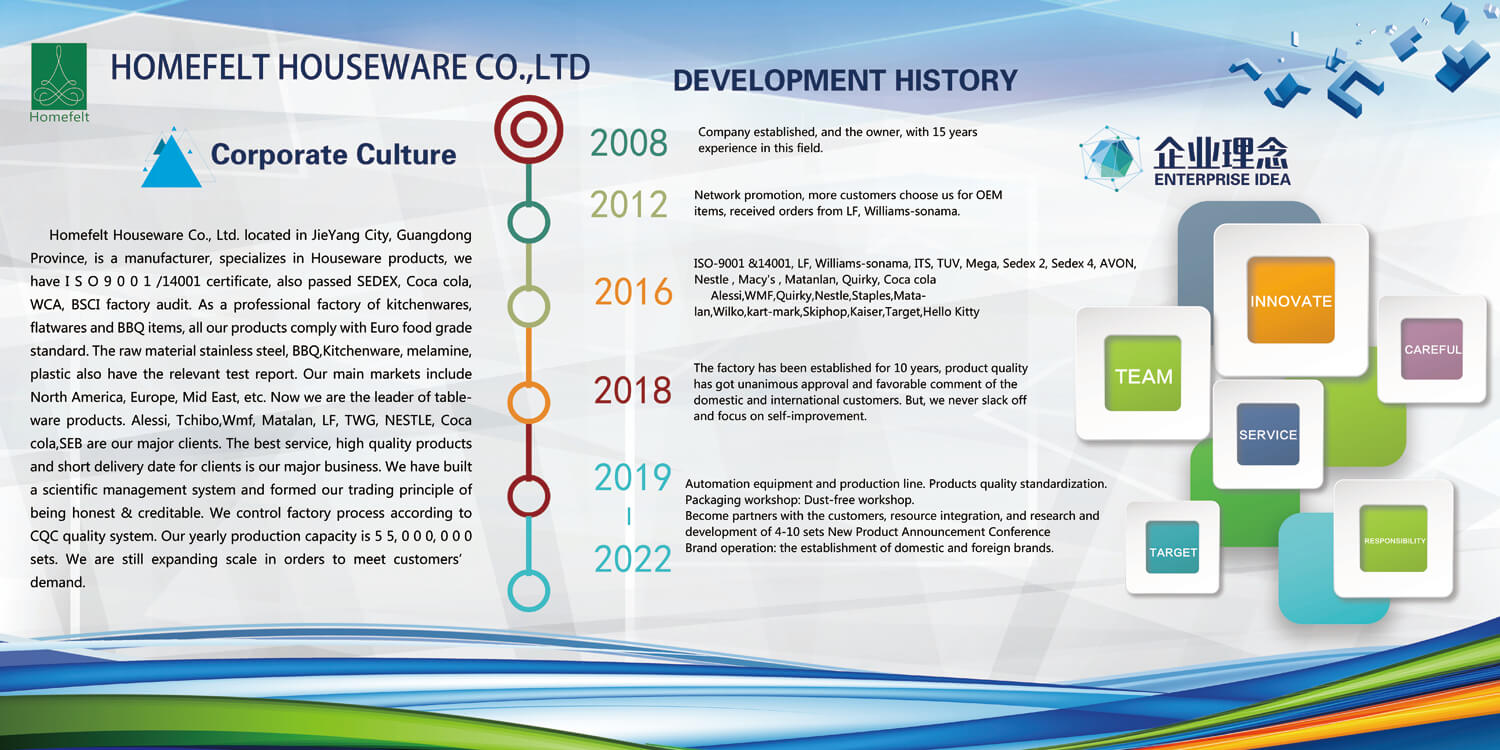
Homefelt has more than 30 years of stainless steel manufacturing experience and produces stainless steel cutlery together with kitchen and dining products, BBQ tools, pet bowls and children's tableware.
For international B2B customers, Homefelt supports standard and customized stainless steel products.
Importers, distributors, restaurant suppliers, hospitality businesses, retailers and private label brands can discuss stainless steel spoon material, grade, dimensions, thickness, weight, surface finish, branding, packaging and estimated quantities according to their project requirements.
For repeat orders, approved samples and documented specifications can help maintain material and product consistency.
What to Include in a Stainless Steel Spoon Specification
A complete B2B specification can include:
-
Product name
-
Stainless steel grade
-
Overall length
-
Bowl dimensions
-
Handle dimensions
-
Thickness
-
Target weight
-
Surface finish
-
Logo requirements
-
Packaging
-
Quantity
-
Quality requirements
The more clearly these details are defined, the easier it is to compare suppliers and control production.
Choosing Between 18/10 and 18/0
The choice between 18/10 and 18/0 should depend on the project.
For premium tableware positioning, buyers may consider 18/10.
For projects focused on balancing performance and purchasing cost, 18/0 may be considered.
The decision should also take into account the target market, product design, finish, thickness and commercial requirements.
A manufacturer can help evaluate the practical options based on the intended product.
Conclusion
Stainless steel spoon material is an important part of B2B product development. 18/10 and 18/0 are two common material designations, but the right choice depends on the intended application, product positioning and complete specification.
Material grade should be considered together with thickness, weight, dimensions and surface finish. For bulk and private label projects, clear documentation and sample approval can also help maintain consistency across production and future repeat orders.
Homefelt has more than 30 years of stainless steel manufacturing experience and works with international B2B customers on standard and customized stainless steel products.
By defining the material requirement clearly before production, importers, distributors, restaurants, hotels, retailers and private label brands can make more informed decisions when sourcing stainless steel spoons for commercial use.
You May Be Interested In
Stainless Steel Spoon Sizes, Dimensions and Specifications: A B2B Buying Guide
Stainless Steel Spoon Finishes: Polished, Satin, Brushed and More
Stainless Steel Spoon Manufacturing Process: How Spoons Are Made
Custom Stainless Steel Spoon Manufacturing for Private Label Brands
Wholesale Stainless Steel Spoon Supplier: A B2B Buying Guide
Stainless Steel Spoon Quality Control: Inspection Guide for B2B Buyers

Custom Stainless Steel Spoon Manufacturer for OEM and Private Label
Stainless Steel Spoon Manufacturing Process: How Spoons Are Made
Related Article