Stainless Steel Spoon Packaging: A B2B Guide to Retail and Export Orders

Stainless Steel Spoon Packaging: A B2B Guide to Retail and Export Orders
Packaging is an important part of stainless steel spoon purchasing for international B2B buyers.
The packaging does more than protect products during transportation. It can also affect warehouse handling, retail presentation, carton efficiency, product identification and the overall purchasing experience.
For wholesalers, distributors, retailers, restaurants and private label brands, packaging should be planned together with the product instead of being treated as the final step before shipment.
Why Stainless Steel Spoon Packaging Matters
Stainless steel spoons may travel through several stages before reaching the final user.
A typical supply chain can involve:
-
Factory production
-
Individual or set packing
-
Inner cartons
-
Master cartons
-
Container loading
-
International transportation
-
Warehouse handling
-
Distribution
-
Retail or foodservice delivery
Appropriate packaging helps organize these stages and provides protection throughout the supply chain.
What Should Packaging Protect Against?
Export packaging should be designed around the actual transportation and handling conditions.
Potential risks include:
-
Surface scratches
-
Product movement
-
Compression
-
Moisture exposure
-
Carton damage
-
Rough handling
-
Mixing of different products
The packaging structure should therefore correspond to the product and shipping method.
Individual Stainless Steel Spoon Packaging
Individual packaging can be useful when products need to be sold separately or handled individually.
Possible formats include:
-
Paper sleeves
-
Plastic bags
-
Printed pouches
-
Individual boxes
-
Protective wrapping
The appropriate option depends on the destination market and product positioning.
Bulk Packaging
Wholesale buyers may prefer bulk packaging when the products are supplied directly to restaurants, distributors or commercial users.
Bulk packing can reduce unnecessary packaging materials and simplify warehouse handling.
The buyer should still ensure that the spoons are sufficiently separated or protected to minimize unnecessary surface contact during transportation.
Retail Packaging
Retail products usually require a stronger presentation element.
Retail packaging may include:
-
Product boxes
-
Printed cartons
-
Window boxes
-
Product information
-
Barcodes
-
Brand logos
The packaging should match the positioning of the stainless steel spoon and the expectations of the target market.
Private Label Packaging
Private label brands often require packaging that reflects their own identity.
Customization can include:
-
Brand logo
-
Product name
-
Product information
-
Barcode
-
Country-of-origin information
-
Care instructions
-
Retail labeling
Artwork should be approved before printing begins.
Packaging for Spoon Sets
When stainless steel spoons are supplied as part of a set, packaging requirements become more complex.
A set may include different spoon sizes or other flatware pieces.
The packaging needs to keep the components organized while maintaining a consistent presentation.
For example, a cutlery set may require an internal tray, paper insert or other structure to keep each item in its intended position.
Protective Materials
Protective materials should be selected according to the product surface and transportation requirements.
Possible materials include:
-
Paper
-
Foam
-
Plastic bags
-
Cardboard dividers
-
Protective sleeves
The goal is to provide sufficient protection without creating unnecessary packaging complexity.
Mirror Finish Packaging
Highly reflective stainless steel surfaces can make scratches or contact marks more noticeable.
For mirror polished products, packaging should therefore pay particular attention to surface protection.
The supplier and buyer should agree on the acceptable appearance standard before mass production.
Satin Finish Packaging
Satin and brushed finishes have a different visual character from mirror polished products.
Although they may be less visually sensitive to certain marks, the surface should still be protected from unnecessary abrasion during transportation.
The packaging solution should correspond to the final finish.
Carton Design
Master cartons should be strong enough to support the planned shipping and handling conditions.
Important carton considerations include:
-
Carton dimensions
-
Product quantity
-
Gross weight
-
Net weight
-
Internal arrangement
-
Stacking requirements
An efficient carton structure can help improve warehouse and transportation management.
Carton Quantity
The number of spoons packed into each carton should be established clearly.
A consistent carton quantity makes it easier for distributors and warehouse teams to:
-
Count inventory
-
Pick products
-
Receive shipments
-
Prepare customer orders
For international shipments, carton quantities should be recorded accurately on the packing documentation.
Packaging and Shipping Efficiency
Packaging affects the amount of space occupied by a shipment.
A well-designed package can help balance:
-
Product protection
-
Carton volume
-
Product quantity
-
Shipping cost
-
Warehouse space
However, reducing carton size should never compromise product protection.
Packaging and Container Loading
For large B2B orders, carton dimensions can influence container utilization.
Buyers may benefit from reviewing the packaging structure before confirming a large order.
The supplier can provide carton dimensions and estimated loading information for planning purposes.
Product Identification
Clear identification is useful throughout the supply chain.
Packaging labels may include:
-
Product name
-
Item number
-
Quantity
-
Material
-
Finish
-
Purchase order reference
-
Barcode
-
Customer information
The exact labeling requirements should be confirmed according to the buyer's distribution system.
Barcode Requirements
Retail customers may require barcodes for inventory and checkout systems.
The buyer should provide the correct barcode information and artwork before packaging production begins.
Barcode placement should also be checked during the sample approval stage.
Packaging Artwork
Custom packaging requires careful artwork management.
The buyer should check:
-
Brand name
-
Product description
-
Product specifications
-
Barcode
-
Dimensions
-
Printing colors
-
Legal information
-
Country-specific requirements
A packaging proof should be approved before mass printing.
Packaging Samples
A packaging sample can be evaluated together with the finished stainless steel spoon.
The buyer can check:
-
Product fit
-
Protection
-
Visual appearance
-
Labeling
-
Opening method
-
Carton construction
This is particularly useful for new private label products.
Packaging and Product Quality
Packaging cannot compensate for poor product quality.
The stainless steel spoon should first meet the approved requirements for:
-
Material
-
Dimensions
-
Weight
-
Finish
-
Shape
-
Workmanship
Packaging should then protect the approved product during storage and transportation.
Packaging for Restaurant Suppliers
Restaurant suppliers may prioritize efficient bulk packaging over premium retail presentation.
Their main requirements may include:
-
Easy counting
-
Simple storage
-
Efficient cartons
-
Product protection
-
Clear identification
A practical packaging system can help reduce handling time in distribution centers.
Packaging for Hotel Projects
Hotel projects may involve large quantities of coordinated tableware.
Packaging should make it easy to identify different products and quantities during receiving.
Clear carton labeling can be especially useful when several spoon styles or sizes are shipped together.
Packaging for Retail Distributors
Retail distributors need packaging that supports both warehouse handling and final sales.
A product may move from the manufacturer's carton to a distribution center and then to individual stores.
The packaging should remain practical throughout this process.
Packaging for International Export
Export orders require additional attention because the goods may travel long distances and pass through multiple handling points.
The buyer and supplier should confirm:
-
Packing method
-
Carton specifications
-
Labels
-
Quantity per carton
-
Shipping marks
-
Documentation
These details should be finalized before production packing begins.
Packaging and Sustainability
Some B2B buyers are looking to reduce unnecessary packaging materials.
Possible approaches include:
-
Simplifying inner packaging
-
Using recyclable paper materials
-
Reducing oversized cartons
-
Optimizing product quantities per carton
-
Avoiding unnecessary inserts
The appropriate solution should still provide sufficient product protection.
Balancing Protection and Cost
Packaging is part of the overall product cost.
A more complex package may increase:
-
Material cost
-
Printing cost
-
Assembly time
-
Storage requirements
-
Shipping volume
Buyers should therefore define the required level of packaging according to the intended market.
Packaging Cost in B2B Purchasing
When requesting a quotation, buyers should clarify whether the quoted price includes:
-
Individual packing
-
Inner cartons
-
Master cartons
-
Printing
-
Labels
-
Inserts
-
Special protective materials
Clear communication prevents misunderstandings during order confirmation.
Working With an Experienced Stainless Steel Manufacturer
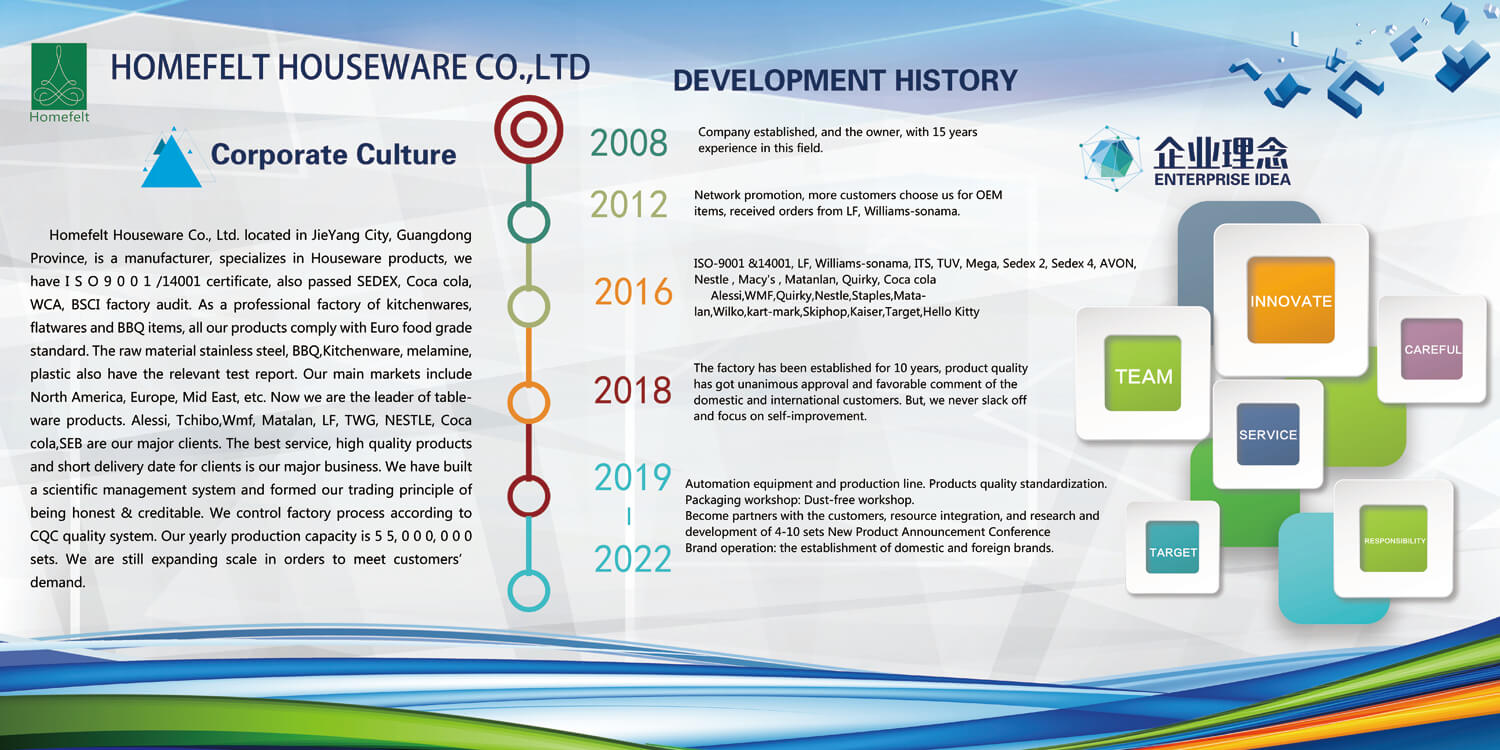
Homefelt has more than 30 years of stainless steel manufacturing experience and produces stainless steel cutlery together with kitchen and dining products, BBQ tools, pet bowls and children's tableware.
For international B2B customers, Homefelt supports standard, customized, OEM and private label stainless steel spoon projects.
Buyers can provide packaging artwork, preferred packing methods, retail requirements or shipping specifications.
The packaging can then be developed around the actual product dimensions, order quantity and intended sales channel.
A Practical Packaging Development Process
B2B buyers can follow these steps:
-
Define the sales channel
-
Determine whether individual or bulk packing is required
-
Confirm product dimensions
-
Select the protective method
-
Determine inner-pack quantity
-
Determine master-carton quantity
-
Provide packaging artwork
-
Confirm labeling requirements
-
Review packaging samples
-
Check carton dimensions and weight
-
Confirm packing instructions
-
Approve the final packaging
-
Include the packing specification in the purchase order
Questions to Ask a Stainless Steel Spoon Manufacturer
Before confirming packaging, buyers can ask:
-
What individual packing options are available?
-
Can the packaging be customized?
-
What is the minimum quantity for printed packaging?
-
Can the supplier provide packaging samples?
-
How many spoons fit in each inner carton?
-
How many inner cartons fit in a master carton?
-
What are the carton dimensions and weights?
-
Can barcode labels be applied?
-
Can shipping marks be customized?
-
Can packaging be optimized for international export?
Common Packaging Mistakes
Using Insufficient Protection
Products can move against each other during transportation if the internal packing is poorly designed.
Over-Packaging the Product
Excessive materials can increase product cost and shipping volume unnecessarily.
Approving Artwork Too Late
Packaging printing can become a bottleneck if artwork approval is delayed.
Ignoring Carton Dimensions
Large or inefficient cartons can increase warehouse and shipping requirements.
Not Defining Packing Quantities
Unclear quantities can create problems during receiving and inventory management.
Conclusion
Stainless steel spoon packaging should be planned according to the product, sales channel, transportation method and destination market.
Retail products may require attractive branded packaging, while foodservice and wholesale orders may benefit from efficient bulk packing. Private label projects can combine protective packaging with customized branding.
For international B2B purchasing, carton dimensions, packing quantities, labels and shipping marks should be confirmed before mass production and recorded as part of the final order specification.
Homefelt has more than 30 years of stainless steel manufacturing experience and works with international B2B customers on standard, customized, OEM and private label stainless steel products.
A well-planned packaging solution can protect the stainless steel spoon, simplify logistics and provide a more consistent experience from factory production to the final customer.
You May Be Interested In
Stainless Steel Spoon Private Label Packaging: Building a Consistent Brand Presentation
Stainless Steel Spoon Export Cartons: Planning Quantity, Weight and Dimensions
Stainless Steel Spoon Surface Protection: Reducing Scratches During Transportation
Stainless Steel Spoon Retail Boxes: Packaging Options for Different Market Positions
Stainless Steel Spoon Shipping Preparation: What B2B Export Buyers Should Confirm
Stainless Steel Spoon Packaging Costs: Understanding the Factors Behind the Final Packing Price

Related Article