
Stainless Steel Spoon Packaging and Shipping: A B2B Export Guide
Stainless Steel Spoon Packaging and Shipping: A B2B Export Guide
Packaging is an important part of stainless steel spoon sourcing, especially when products are shipped internationally. A well-made spoon can still arrive with scratches, dents or surface damage if the packaging does not provide sufficient protection.
For importers, distributors, restaurant suppliers, retailers and private label brands, packaging should therefore be considered together with the product specification, order quantity and shipping method.
The right packaging solution depends on whether the spoons are purchased in bulk, packed as retail products or included in a complete flatware set.
Why Stainless Steel Spoon Packaging Matters
Stainless steel spoons are relatively durable, but finished surfaces can still be affected by contact, friction and impact during transportation.
Packaging helps protect:
-
Surface finish
-
Spoon edges
-
Handle appearance
-
Product cleanliness
-
Retail presentation
-
Product quantity
For polished and decorative finishes, packaging protection can be especially important because visible surface marks may affect the appearance of the final product.
Common Stainless Steel Spoon Packaging Methods
B2B buyers can choose from several packaging approaches.
Common options include:
-
Bulk packaging
-
Individual protective packaging
-
Paper separation
-
Polybag packaging
-
Retail boxes
-
Gift boxes
-
Cutlery set boxes
-
Inner cartons
-
Export cartons
The appropriate option depends on the final sales channel and shipping requirements.
Bulk Packaging for Stainless Steel Spoons
Bulk packaging is commonly used for commercial and wholesale orders.
A large quantity of spoons can be grouped into an inner carton or protective package.
This approach may be suitable for:
-
Restaurants
-
Hotels
-
Food service distributors
-
Wholesale suppliers
-
Commercial buyers
Bulk packaging can reduce packaging material and simplify warehouse handling.
However, sufficient protection should still be provided between products when the surface finish requires it.
Individual Protective Packaging
Individual packaging provides additional separation between spoons.
Possible materials include:
-
Plastic bags
-
Paper sleeves
-
Protective film
-
Soft separators
This type of packaging can be useful for products with polished or decorative surfaces.
The packaging method should be selected according to the product finish and transportation conditions.
Paper Separation
Paper separators can reduce direct contact between individual spoons.
They may be used between:
-
Spoon bowls
-
Handles
-
Complete flatware pieces
Paper separation can be particularly useful when several finished products are packed together.
The exact packaging structure should be tested before large-scale shipment.
Retail Packaging for Stainless Steel Spoons
Retail products may require packaging that provides both protection and presentation.
Retail packaging can include:
-
Printed boxes
-
Window boxes
-
Color boxes
-
Hanging packaging
-
Product sets
-
Private label packaging
The packaging should correspond to the target market and retail positioning.
Stainless Steel Spoon Packaging for Private Label Brands
Private label projects may require customized packaging.
The buyer may provide:
-
Brand logo
-
Packaging artwork
-
Product information
-
Barcode
-
Product specifications
-
Carton markings
The packaging design should be confirmed before mass production.
Packaging samples can help verify the final appearance and dimensions.
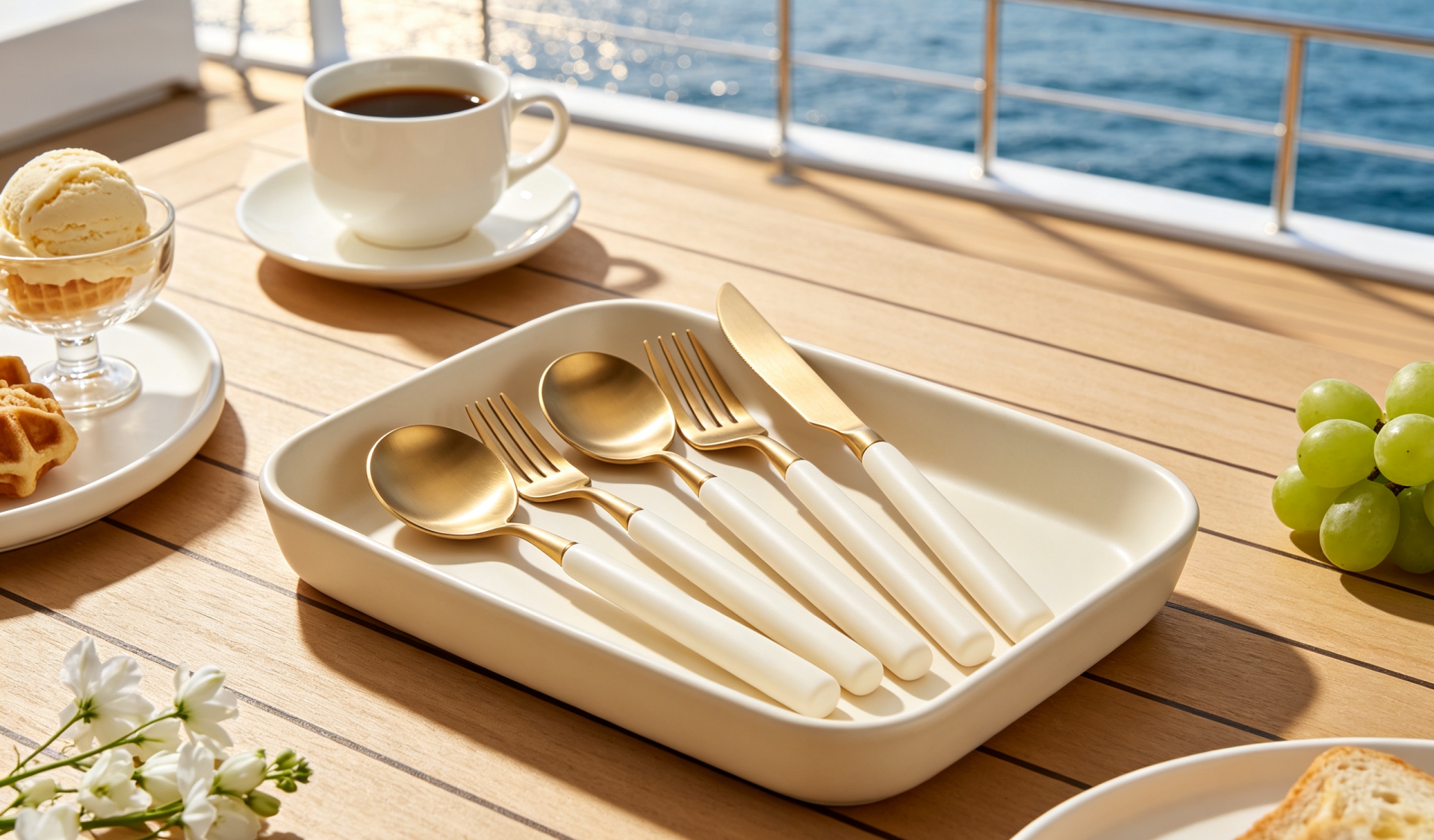
Packaging for Stainless Steel Spoon Sets
Spoons may be sold individually or as part of a larger flatware set.
A set may include:
-
Table spoon
-
Table fork
-
Table knife
-
Teaspoon
-
Dessert spoon
When packaging a complete set, the inner structure should keep different pieces organized and protected.
The packaging should also prevent unnecessary movement during transportation.
Protective Packaging for Polished Spoons
Polished and mirror-finished spoons can require additional surface protection.
Possible solutions include:
-
Individual sleeves
-
Paper separators
-
Protective film
-
Separate compartments
-
Carefully arranged inner packaging
The selected method should be tested with the actual product before shipment.
Packaging for Brushed and Satin Spoons
Brushed and satin surfaces have different visual characteristics from highly polished products.
Although they may be less reflective, visible surface marks can still affect product appearance.
The packaging should therefore prevent excessive friction between individual pieces.
Packaging for Colored Stainless Steel Spoons
Colored finishes may require additional protection because the decorative surface is part of the product appearance.
Packaging should reduce:
-
Friction
-
Scratching
-
Surface contact
-
Impact
The approved packaging method should be tested before bulk shipment.
Inner Carton Packaging
An inner carton can group smaller quantities of spoons inside the main export carton.
This can help with:
-
Warehouse handling
-
Quantity management
-
Product organization
-
Retail distribution
The quantity per inner carton should be agreed according to the buyer's requirements.
Export Carton Packaging
The outer carton provides the main protection during international transportation.
Important carton details can include:
-
Carton dimensions
-
Product quantity
-
Gross weight
-
Net weight
-
Carton markings
-
Shipping labels
Carton strength should be appropriate for the expected handling and transportation conditions.
Carton Markings
Export cartons may require specific information.
Depending on the buyer's requirements, markings can include:
-
Brand name
-
Product name
-
Product code
-
Quantity
-
Carton number
-
Country of origin information
-
Handling marks
The final requirements should be confirmed before production.
Packaging and Container Loading
Packaging dimensions can influence how efficiently products are loaded for export.
B2B buyers should consider:
-
Inner carton dimensions
-
Master carton dimensions
-
Carton quantity
-
Pallet requirements
-
Container loading
Efficient carton design can help improve warehouse organization and transportation planning.
Packaging and Shipping Cost
Packaging can influence the overall logistics cost.
Factors may include:
-
Packaging material
-
Carton dimensions
-
Product quantity
-
Gross weight
-
Volume
-
Shipping method
A more protective package may require additional material, while overly large packaging can increase shipping volume.
The best solution balances product protection with practical logistics requirements.
Shipping Stainless Steel Spoons by Sea
Sea freight is commonly considered for larger B2B export orders.
For container shipments, buyers should pay attention to:
-
Carton strength
-
Moisture protection
-
Container loading
-
Product arrangement
-
Carton markings
The packaging should be suitable for the expected transportation duration and handling conditions.
Shipping Stainless Steel Spoons by Air
Air freight may be used for smaller or urgent shipments.
Because air freight can have different cost structures, packaging should remain protective without creating unnecessary volume.
For samples or urgent replenishment orders, compact packaging may be particularly useful.
Shipping Samples to B2B Buyers
Samples require careful packaging because the buyer may use them to evaluate the final product.
A sample shipment can include:
-
Stainless steel spoon sample
-
Product specification
-
Finish reference
-
Packaging sample if required
The sample should arrive in a condition that accurately represents the proposed production quality.
Packaging Inspection Before Shipment
Packaging should be checked before the order leaves the factory.
Inspection can include:
-
Product protection
-
Quantity per package
-
Packaging material
-
Box dimensions
-
Label information
-
Carton condition
This helps identify packaging problems before international transportation begins.
Common Packaging Problems
Potential problems include:
-
Insufficient product separation
-
Excessive movement inside cartons
-
Weak cartons
-
Incorrect quantities
-
Incorrect labels
-
Inadequate surface protection
-
Oversized packaging
Packaging should be evaluated using the actual product and intended shipping method.
How to Choose the Right Packaging
B2B buyers can consider five main factors:
Product Finish
Mirror and decorative finishes may require additional protection.
Order Quantity
Large wholesale orders may benefit from bulk packaging.
Sales Channel
Retail products generally require more presentation-focused packaging.
Shipping Method
Sea, air and courier shipments may require different packaging approaches.
Target Cost
Packaging should provide sufficient protection without creating unnecessary cost or volume.
Packaging for Restaurants and Hotels
Commercial buyers may prioritize practical packaging over retail presentation.
Bulk cartons can simplify:
-
Warehouse storage
-
Restaurant distribution
-
Inventory management
-
Replenishment
The packaging should still protect the product surface during transportation.
Packaging for Distributors
Distributors may require packaging that is easy to store and redistribute.
Inner cartons can help divide large orders into manageable quantities.
Clear product codes and quantity markings can also simplify warehouse management.
Packaging for Retailers
Retail buyers may require:
-
Individual product packaging
-
Printed boxes
-
Barcode labels
-
Brand information
-
Product photography
-
Retail-ready cartons
The packaging should match the retailer's requirements and target market.
Packaging for Private Label Orders
Private label packaging often requires coordination between the buyer, packaging supplier and stainless steel spoon manufacturer.
The process can include:
-
Confirm packaging design
-
Confirm dimensions
-
Review artwork
-
Produce packaging samples
-
Approve the sample
-
Begin mass packaging
This can help prevent printing or dimensional problems during the final production stage.
How Packaging Affects Repeat Orders
Approved packaging specifications should be retained for repeat orders.
Records can include:
-
Packaging material
-
Product quantity per package
-
Inner carton specification
-
Master carton specification
-
Carton markings
-
Retail artwork
Keeping these details can help maintain consistency across future shipments.
Working With an Experienced Stainless Steel Spoon Manufacturer
Homefelt has more than 30 years of stainless steel manufacturing experience and produces stainless steel cutlery together with kitchen and dining products, BBQ tools, pet bowls and children's tableware.
For international B2B customers, Homefelt supports standard and customized stainless steel products together with different packaging requirements.
Importers, distributors, restaurant suppliers, hospitality businesses, retailers and private label brands can discuss stainless steel spoon dimensions, material, thickness, surface finish, logo, packaging, carton requirements and estimated quantities according to their projects.
For custom orders and repeat purchasing, approved product and packaging samples can provide a clear reference for production and shipment.
A Practical Stainless Steel Spoon Export Workflow
A typical B2B packaging and shipping process can follow these steps:
-
Confirm product specifications
-
Select the surface finish
-
Determine the sales channel
-
Choose the packaging method
-
Confirm product quantity per package
-
Design or approve retail packaging if required
-
Confirm inner carton specifications
-
Confirm export carton requirements
-
Test the packaging with the actual product
-
Approve the final packaging sample
-
Inspect products and cartons
-
Prepare the shipment
This approach connects product protection, presentation and logistics requirements.
Conclusion
Stainless steel spoon packaging plays an important role in protecting products during domestic handling and international transportation. The best packaging solution depends on the spoon's surface finish, order quantity, sales channel, shipping method and target cost.
Bulk packaging can work well for restaurants and distributors, while retail and private label products may require more customized presentation and protection.
Homefelt has more than 30 years of stainless steel manufacturing experience and works with international B2B customers on standard and customized stainless steel products.
By defining packaging requirements early, testing the actual product and approving the final packaging before shipment, importers, distributors, restaurant suppliers, hospitality businesses, retailers and private label brands can reduce packaging-related problems and build a more reliable export purchasing process.
You May Be Interested In
Stainless Steel Spoon Manufacturing Process: How Spoons Are Made
Stainless Steel Spoon Quality Control and Inspection Guide for B2B Buyers
Stainless Steel Spoon Finishes: Polished, Satin, Brushed and More
Stainless Steel Spoon Sizes and Dimensions: A Practical B2B Buying Guide
Custom Stainless Steel Spoon Manufacturing for OEM and Private Label Buyers
Wholesale Stainless Steel Spoon Supplier: How to Choose the Right Factory


Custom Stainless Steel Spoon Manufacturing for OEM and Private Label Buyers
Stainless Steel Spoon Materials and Grades: 18/10, 18/8 and 18/0 Compared
Related Article



