Stainless Steel Spoon Sizes and Dimensions: A B2B Buying Guide
Stainless Steel Spoon Sizes and Dimensions: A Practical B2B Buying Guide
Choosing the correct stainless steel spoon size is important for restaurants, hotels, distributors, retailers and private label brands. Spoon terminology may appear simple, but actual dimensions can vary between manufacturers and product collections.
A teaspoon from one supplier may not have the same length, bowl size or weight as a teaspoon from another. For this reason, B2B buyers should not rely only on product names when sourcing stainless steel spoons.
The best approach is to confirm the complete product specification, including overall length, bowl dimensions, thickness and weight. This helps buyers compare quotations more accurately and maintain consistency in bulk and repeat orders.
Why Stainless Steel Spoon Dimensions Matter
Spoon dimensions affect both appearance and practical use.
The size of a spoon can influence:
-
Table setting
-
Food application
-
Beverage service
-
Hand feel
-
Product weight
-
Packaging
-
Product positioning
For a complete flatware collection, consistent proportions between forks, knives and spoons can also affect the overall appearance of the set.
Common Types of Stainless Steel Spoons
Different spoon types are designed for different dining applications.
Common categories include:
-
Teaspoons
-
Tablespoons
-
Dinner spoons
-
Dessert spoons
-
Soup spoons
-
Coffee spoons
-
Serving spoons
The actual dimensions of each type can vary according to regional preferences, manufacturer designs and customer requirements.
Stainless Steel Teaspoon Size
A teaspoon is commonly used for tea, coffee, desserts and other small servings.
When sourcing a stainless steel teaspoon, buyers may specify:
-
Overall length
-
Bowl length
-
Bowl width
-
Bowl depth
-
Thickness
-
Weight
A compact size can be suitable for cups and smaller tableware, while a longer design may be required for larger beverage service.
The product name alone should not be used as the complete size specification.
Stainless Steel Coffee Spoon Size
A coffee spoon is generally designed for stirring coffee and other beverages.
Its dimensions may vary depending on the cup size and intended presentation.
B2B buyers can evaluate:
-
Handle length
-
Bowl size
-
Overall proportion
-
Product weight
For cafes and hospitality businesses, the spoon should fit comfortably with the selected cup and saucer collection.
Stainless Steel Tablespoon Size
A tablespoon or table spoon is generally larger than a teaspoon and may be used for everyday dining or serving applications.
The actual dimensions can vary between suppliers.
Buyers should confirm the intended application because the term may be used differently depending on the product market and manufacturer.
A clear technical specification can prevent confusion during quotation and production.
Stainless Steel Dinner Spoon Size
A dinner spoon is intended for general dining use.
It is often selected as part of a complete flatware collection.
Important dimensions can include:
-
Overall length
-
Bowl dimensions
-
Handle width
-
Thickness
-
Target weight
The dinner spoon should visually coordinate with the dinner fork and knife.
Stainless Steel Dessert Spoon Size
A dessert spoon is generally designed for serving or eating desserts.
Its size should be suitable for the intended plate or bowl.
When sourcing dessert spoons, buyers can compare the product against the complete flatware collection to maintain consistent proportions.
A physical sample is useful when appearance and hand feel are important.
Stainless Steel Soup Spoon Size
A soup spoon generally requires a larger or deeper bowl profile than smaller teaspoons.
Different soup spoon styles may have different shapes.
For example, a rounder bowl may be preferred for certain dining styles, while another market may prefer a more oval design.
The final dimensions should be based on the buyer's intended use rather than a generic product name.
Stainless Steel Serving Spoon Size
Serving spoons are designed for transferring or serving food.
They usually have larger dimensions than standard dining spoons.
Buyers may specify:
-
Overall length
-
Bowl capacity
-
Bowl dimensions
-
Handle length
-
Product weight
Serving utensils should also be considered together with the size of serving dishes and intended food applications.
Why There Is No Single Standard Spoon Size
There is no single global dimension that applies to every spoon labeled as a teaspoon, dinner spoon or dessert spoon.
Product dimensions can differ because of:
-
Regional market preferences
-
Manufacturer design
-
Product style
-
Flatware collection proportions
-
Intended application
-
Customer specifications
This is why B2B buyers should request actual dimensions rather than relying only on category names.
How to Measure a Stainless Steel Spoon
A consistent measurement method is important when defining a product.
Measurements can include:
Overall Length
Measure from the end of the handle to the front of the spoon bowl.
Bowl Length
Measure the length of the functional bowl area according to the agreed product drawing or sample.
Bowl Width
Measure the widest relevant point of the spoon bowl.
Bowl Depth
Measure the depth according to the agreed measurement method.
Handle Width
Measure the handle at the specified location.
Thickness
Measure the thickness at the agreed point because thickness can vary across different parts of the spoon.
The measurement method should be documented for custom and repeat orders.
Spoon Dimensions and Product Weight
Dimensions and weight are closely connected.
However, two spoons with similar dimensions may have different weights because of differences in:
-
Material
-
Thickness
-
Handle profile
-
Bowl depth
-
Manufacturing design
For this reason, buyers should specify both dimensions and target weight when weight is important.
Spoon Thickness Specifications
Thickness is another important part of a stainless steel spoon specification.
Buyers should confirm:
-
Nominal thickness
-
Measurement location
-
Acceptable tolerance
A general thickness description may not be sufficient because a formed spoon can have different thickness profiles across the product.
The exact requirement should be documented clearly.
Spoon Size and Table Setting
The size of a spoon contributes to the balance of a table setting.
A large dinner spoon placed next to a small dinner fork may create an inconsistent appearance.
For complete flatware collections, buyers should compare:
-
Spoon length
-
Fork length
-
Knife length
-
Handle proportions
-
Product weight
-
Surface finish
The goal is not necessarily to make every item the same size but to create a coordinated collection.
Spoon Size for Restaurants
Restaurants may use multiple spoon sizes depending on their menu.
A purchasing list can include:
-
Teaspoons for beverages
-
Dinner spoons for general dining
-
Soup spoons for soups
-
Dessert spoons for desserts
-
Serving spoons for shared dishes
Restaurant buyers should consider table size, dishware dimensions and service style when selecting products.
Spoon Size for Hotels
Hotels may require several different spoon sizes across restaurants, breakfast service, banquets and room service.
Standardizing specifications can make future purchasing easier.
A hotel purchasing record may include:
-
Product type
-
Product code
-
Overall dimensions
-
Weight
-
Finish
-
Packaging
This information can support consistent replenishment.
Spoon Size for Retail Products
Retail buyers should consider how spoon dimensions affect the product's market positioning.
A compact design may suit a minimalist collection.
A larger and heavier design may support premium positioning.
Packaging dimensions should also be considered when finalizing the product size.
A product that requires unusually large packaging may have different storage and shipping requirements.
Custom Stainless Steel Spoon Dimensions
Custom manufacturing allows buyers to specify unique dimensions.
A custom product may require:
-
Custom overall length
-
Custom bowl dimensions
-
Custom handle dimensions
-
Custom thickness
-
Custom weight
The manufacturer should evaluate whether the requested design is practical for production.
For completely new shapes, custom tooling may be required.
Using a Reference Sample
A physical reference sample can be useful when a buyer wants to reproduce an existing size or proportion.
The sample can be measured for:
-
Overall length
-
Bowl dimensions
-
Handle dimensions
-
Thickness
-
Weight
The buyer should confirm which details must be reproduced exactly and which can have acceptable tolerances.
Dimensions for Private Label Products
Private label brands should document product dimensions before mass production.
The product specification can include:
-
Product name
-
Product code
-
Overall length
-
Bowl length
-
Bowl width
-
Bowl depth
-
Thickness
-
Target weight
-
Material
-
Surface finish
This creates a clear production reference.
How Dimensions Affect Manufacturing
Product dimensions can affect:
-
Material usage
-
Tooling
-
Forming
-
Product weight
-
Packaging
-
Production cost
For this reason, significant dimensional changes should be reviewed with the manufacturer before production.
How Dimensions Affect Wholesale Cost
A larger spoon may require more material, but overall cost depends on the complete design.
Factors include:
-
Material grade
-
Product dimensions
-
Thickness
-
Weight
-
Design complexity
-
Surface finish
-
Order quantity
-
Packaging
Buyers should compare supplier quotations using identical specifications.
Dimension Tolerances for Bulk Orders
Mass-produced products may require agreed tolerances.
Buyers should identify which dimensions are most important to the project.
For example, a custom spoon may require tighter control over overall length or bowl width.
The manufacturer and buyer should agree on reasonable measurement methods and tolerances before mass production.
Common Mistakes When Specifying Spoon Sizes
Using Only Product Names
A product name such as teaspoon does not define actual dimensions.
Forgetting Product Weight
Weight can influence hand feel and product positioning.
Not Defining Thickness
Thickness should be measured at an agreed location.
Comparing Different Specifications
Two suppliers cannot be compared accurately if their spoon dimensions or weights differ.
Skipping Sample Approval
A physical sample helps confirm actual size, proportions and hand feel.
How to Prepare a Stainless Steel Spoon Size Specification
Before requesting a quotation, buyers can prepare the following information:
-
Spoon type
-
Overall length
-
Bowl length
-
Bowl width
-
Bowl depth
-
Handle dimensions
-
Thickness
-
Target weight
-
Material
-
Surface finish
-
Quantity
A drawing or reference sample can provide additional clarity.
Working With an Experienced Stainless Steel Spoon Manufacturer
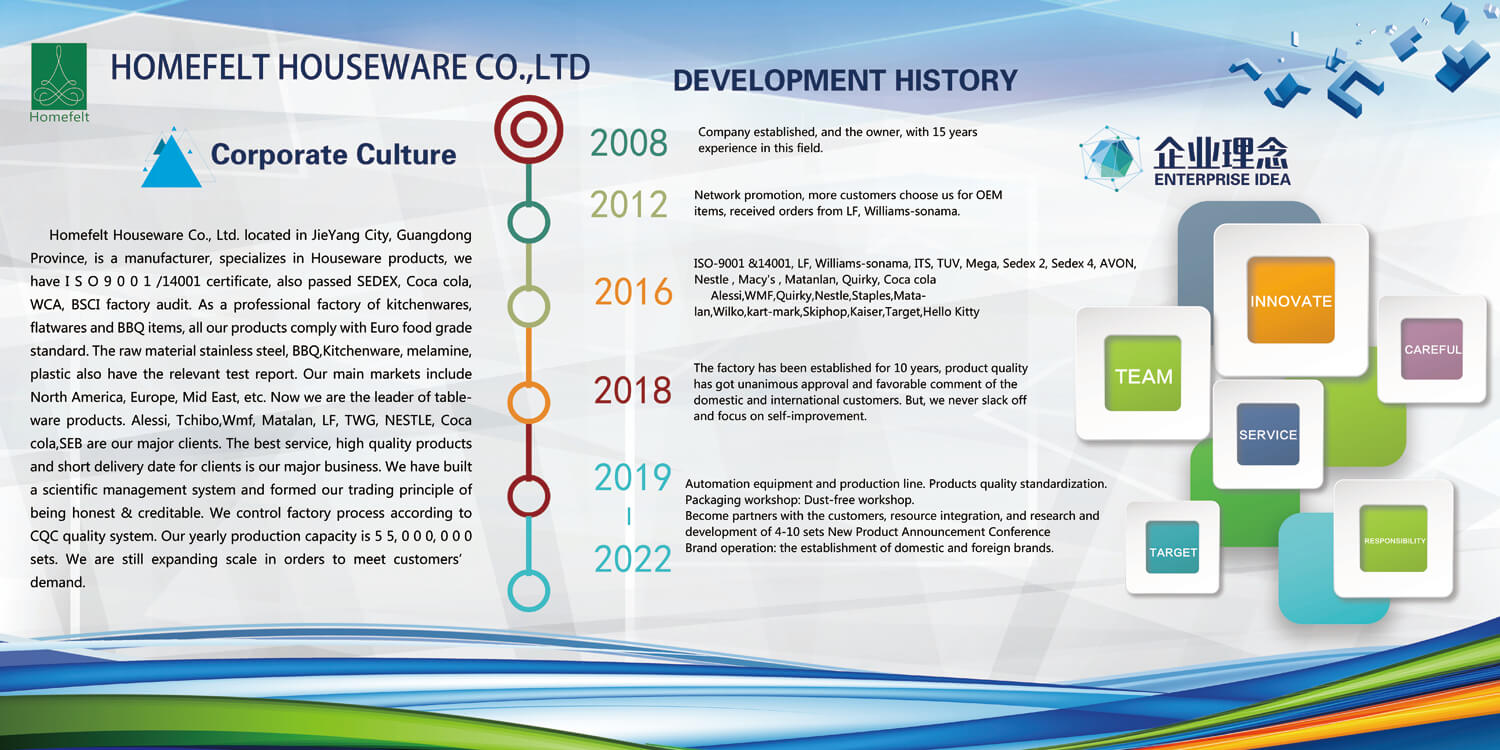
Homefelt has more than 30 years of stainless steel manufacturing experience and produces stainless steel cutlery together with kitchen and dining products, BBQ tools, pet bowls and children's tableware.
For international B2B customers, Homefelt supports standard and customized stainless steel products.
Importers, distributors, restaurant suppliers, hospitality businesses, retailers and private label brands can discuss stainless steel spoon sizes, dimensions, thickness, weight, material, surface finish, packaging and estimated quantities according to their project requirements.
For custom development and repeat orders, approved samples and documented specifications can help maintain consistency.
A Practical Size Selection Process
B2B buyers can follow these steps:
-
Identify the spoon type
-
Define the intended application
-
Confirm overall dimensions
-
Confirm bowl dimensions
-
Define thickness
-
Set a target weight
-
Select the material
-
Choose the surface finish
-
Review a physical sample
-
Document the approved specification
This approach helps ensure that size selection is connected to the complete product requirement.
Conclusion
Stainless steel spoon sizes and dimensions can vary between manufacturers, markets and product collections. A teaspoon, dinner spoon or soup spoon should therefore not be defined only by its name.
For B2B sourcing, the most reliable approach is to confirm actual dimensions, thickness and weight together with material and surface finish. These details help buyers compare suppliers, evaluate samples and control bulk production.
Homefelt has more than 30 years of stainless steel manufacturing experience and works with international B2B customers on standard and customized stainless steel products.
By preparing a complete size specification and approving the product before mass production, importers, distributors, restaurant suppliers, hospitality businesses, retailers and private label brands can create a more consistent stainless steel spoon purchasing program.
You May Be Interested In
Stainless Steel Spoon Materials and Grades: What B2B Buyers Should Know
Stainless Steel Spoon Manufacturing Process: How Spoons Are Made
Stainless Steel Spoon Quality Control and Inspection Guide for B2B Buyers
Stainless Steel Spoon Packaging and Shipping: A B2B Export Guide
Custom Stainless Steel Spoon Manufacturing for OEM and Private Label Buyers
Wholesale Stainless Steel Spoon Supplier: How to Choose the Right Factory

Stainless Steel Spoon Finishes: Polished, Satin, Brushed and More
Wholesale Stainless Steel Spoon Supplier: How to Choose the Right Factory
Related Article