
Stainless Steel Table Knife Blade Straightness for Consistent B2B Cutlery
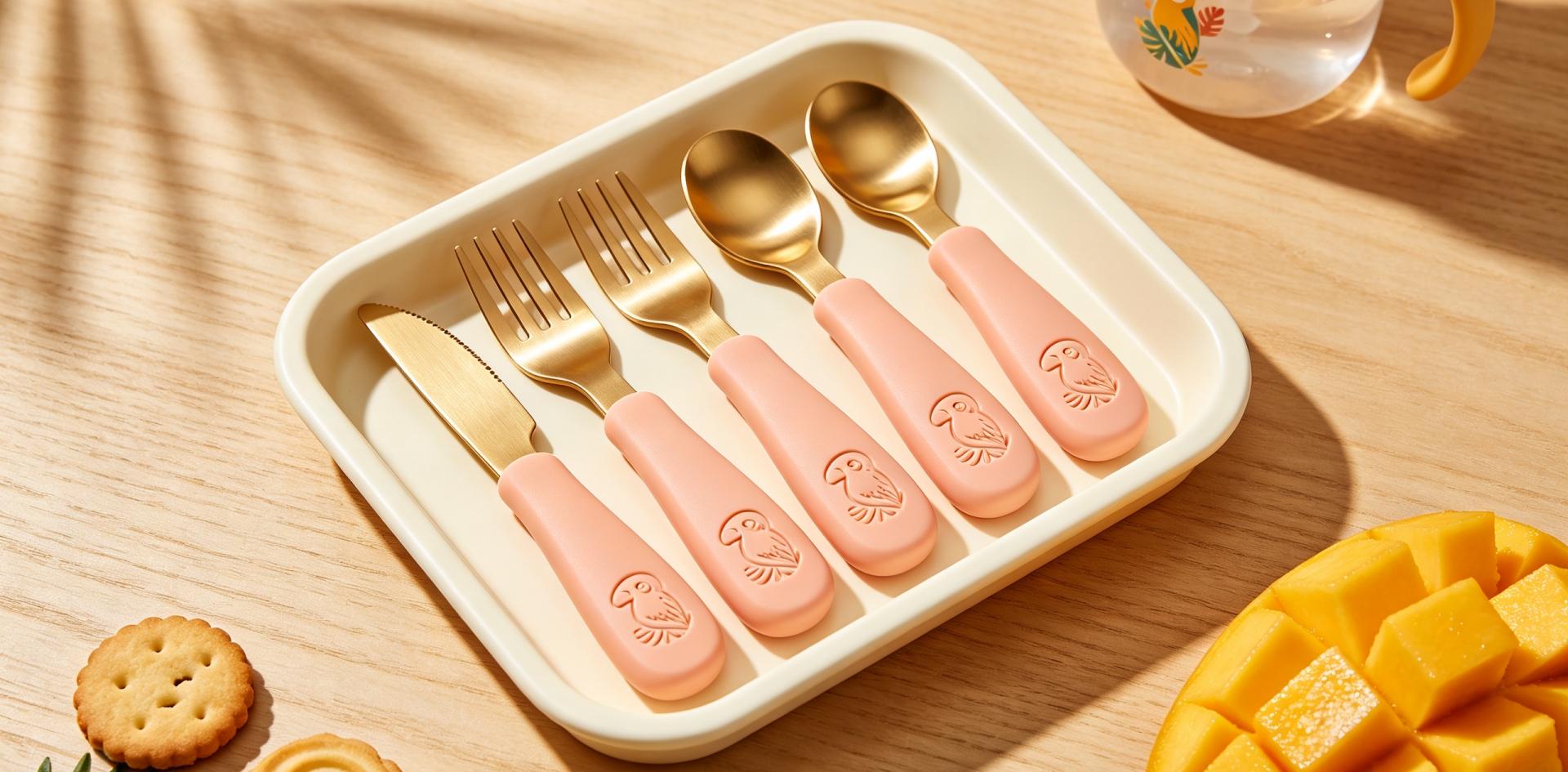
Stainless Steel Table Knife Blade Straightness for Consistent B2B Cutlery
When buyers evaluate stainless steel table knives, they usually focus on material, thickness, weight, handle design and surface finish. One product detail that can also affect the overall appearance is blade straightness.
For B2B cutlery projects, a table knife is not only a functional utensil. It is part of a coordinated collection that may include matching spoons and forks. When multiple knives are placed together, even small differences in blade alignment can become visible.
For wholesalers, hospitality suppliers, distributors and private label brands, controlling blade straightness can therefore contribute to a more consistent stainless steel cutlery collection.
What Blade Straightness Means in Table Knives
Blade straightness describes whether the knife blade follows the intended shape and alignment defined by the product design.
A table knife does not necessarily need to have a completely straight blade from the tip to the handle. Different knife designs can include curved cutting edges, shaped tips or specific blade profiles.
The important point is that the blade should remain consistent with the approved design.
For a custom stainless steel table knife, buyers and manufacturers can establish the intended blade profile through product drawings, measurements and an approved sample. Production pieces can then be compared with these references.
This creates a clearer standard than simply describing a knife as “straight” or “good quality.”
Why Blade Alignment Matters for B2B Cutlery
When a single knife is viewed independently, a small difference in blade alignment may not always be obvious. When many identical knives are arranged together, however, differences can become easier to identify.
This matters for commercial buyers purchasing large quantities.
Restaurants, hotels, catering companies and hospitality distributors may handle dozens, hundreds or thousands of knives from the same collection. The products are often stored, displayed or placed together during service.
Consistent blade profiles help the complete collection maintain a uniform visual appearance.
For private label buyers, this consistency can also support the overall identity of a cutlery range.
Blade Straightness and the Approved Sample
For OEM and ODM stainless steel cutlery projects, the approved sample is an important reference.
A sample allows the buyer to evaluate the actual product rather than relying only on product drawings or digital images. The blade shape, handle relationship, proportions, finish and overall appearance can be reviewed before bulk production.
Once the sample is approved, it can serve as a practical reference for future production.
This is particularly useful for custom table knives because blade profiles can vary significantly between different collections. A traditional table knife, modern minimalist knife and decorative private label design may each require a different blade shape.
The goal is not to force every knife into one standard shape. The goal is to reproduce the specific design that has been approved.
Blade and Handle Alignment
Blade straightness should also be considered together with handle alignment.
A table knife is visually divided into several sections, but customers normally perceive it as one complete product. If the blade and handle do not maintain the intended relationship, the knife can appear unbalanced even when the individual components are correctly finished.
For this reason, buyers developing a custom knife can review:
-
Blade profile
-
Blade direction
-
Blade-to-handle alignment
-
Handle centerline
-
Tip position
-
Spine profile
-
Cutting-edge shape
-
Overall visual balance
These points can be incorporated into a product specification before the production order is confirmed.
Different Knife Designs Need Different References
Not every stainless steel table knife uses the same blade geometry.
Some designs have a relatively simple straight profile. Others have a curved cutting edge, rounded tip or more pronounced transition between the blade and handle.
A professional stainless steel cutlery manufacturer should therefore work according to the customer's specific design rather than applying a generic blade standard to every project.
For B2B buyers, this is particularly important when creating a new private label collection. The knife should match the visual language of the corresponding spoon and fork while maintaining its own functional structure.
Checking Multiple Knives During Sampling
A useful sampling process can include more than examining one knife.
When possible, buyers can compare several pieces of the same model side by side. Place them on the same flat surface and view them from above. Compare the blade tips, handle centerlines and overall profiles.
The purpose is to identify whether the products maintain the same basic shape.
Photography can also be useful for documenting approved samples, but physical comparison remains valuable when evaluating dimensional characteristics.
For international B2B projects, clear sample records can make later communication easier between the buyer and factory.
Blade Straightness in Large-Volume Production
Bulk production introduces the requirement of repeatability.
Producing one well-finished table knife is different from producing a large quantity of knives that need to maintain the same approved blade profile.
For a commercial stainless steel cutlery project, production inspection should therefore consider consistency across multiple pieces rather than only individual product appearance.
When a buyer has approved a specific knife design, the factory can use the approved sample and product specifications as production references.
This helps connect product development with mass production and future repeat orders.
Why It Matters for Matching Cutlery Sets
Many B2B buyers purchase complete stainless steel cutlery sets rather than individual pieces.
A typical collection may contain table knives, dinner forks, table spoons and additional pieces depending on the customer's market.
The knife does not need to have the same physical shape as the spoon or fork, but the products should look like part of the same collection.
Matching handle proportions, surface finish, overall scale and visual direction can create a more unified appearance.
Blade alignment is therefore one element within the broader relationship between the knife and the rest of the cutlery collection.
Product Specifications Make Communication Easier
When buyers request quotations from stainless steel cutlery factories, detailed product information can reduce misunderstandings.
For a table knife project, the specification may include:
-
Product name and model
-
Stainless steel material
-
Overall length
-
Blade length
-
Blade thickness
-
Handle dimensions
-
Knife weight
-
Blade profile
-
Handle design
-
Surface finish
-
Logo requirements
-
Packaging requirements
-
Approved sample reference
-
Required quantity
These details give the manufacturer a clearer understanding of the product before preparing a quotation and production plan.
Custom Table Knives for Private Label Collections
Private label customers often have their own product concepts, drawings or market requirements.
A custom stainless steel knife can be developed around these requirements rather than selecting a standard product without modification.
OEM and ODM cooperation can cover product shape, handle design, dimensions, finish, logo application and packaging. For larger collections, the knife can also be developed together with matching spoons and forks.
Homefelt factory provides stainless steel cutlery customization for B2B customers, including OEM/ODM, private label, wholesale and large-volume production.
The objective is to turn the customer's product requirements into a practical stainless steel cutlery specification that can be sampled and reproduced.
What Buyers Should Discuss Before Ordering
Before placing a bulk order for stainless steel table knives, buyers can confirm the product details with the manufacturer.
The blade profile should be clearly understood. The approved sample should be identified. Dimensions and thickness should be confirmed. The surface finish and handle design should also be consistent with the rest of the cutlery collection.
If the project involves multiple knife models, each model should have its own reference.
This approach can make future repeat orders easier because both buyer and manufacturer have a clear product standard to follow.
Working With Homefelt Factory
Homefelt factory has 40 years of experience in the stainless steel cutlery business and supports B2B customers with customized knives, forks, spoons and cutlery sets.
The factory can support OEM/ODM and private label projects covering product development, customization, wholesale orders and large-volume production.
For buyers, the discussion can begin with a product drawing, existing sample, reference image or basic specification. The requirements can then be developed into a clearer product proposal for sampling and quotation.
For international B2B projects, having one factory that can coordinate different cutlery pieces within the same collection can also simplify communication and order management.
Conclusion
Blade straightness is a specific but useful product detail when developing stainless steel table knives for B2B markets.
The requirement should not be understood as making every knife completely straight. Instead, it means maintaining the intended blade profile, alignment and relationship with the handle according to the approved product design.
For wholesalers, hospitality suppliers, distributors and private label brands, checking several samples together can help identify differences before moving into bulk production.
A clear product specification, approved sample and consistent production reference can help maintain the intended appearance across large quantities and repeat orders.
If you are developing custom stainless steel table knives or a complete cutlery collection, contact Homefelt factory at ingrid@homefelt.net to discuss your product specifications, OEM/ODM requirements, private label project or bulk order.
You May Be Interested In
Stainless Steel Fork Tine Spacing Consistency for B2B Cutlery
Stainless Steel Cutlery Surface Flatness Control for Bulk Production
Related Article



