
Stainless Steel Table Knife Bolster Design for B2B
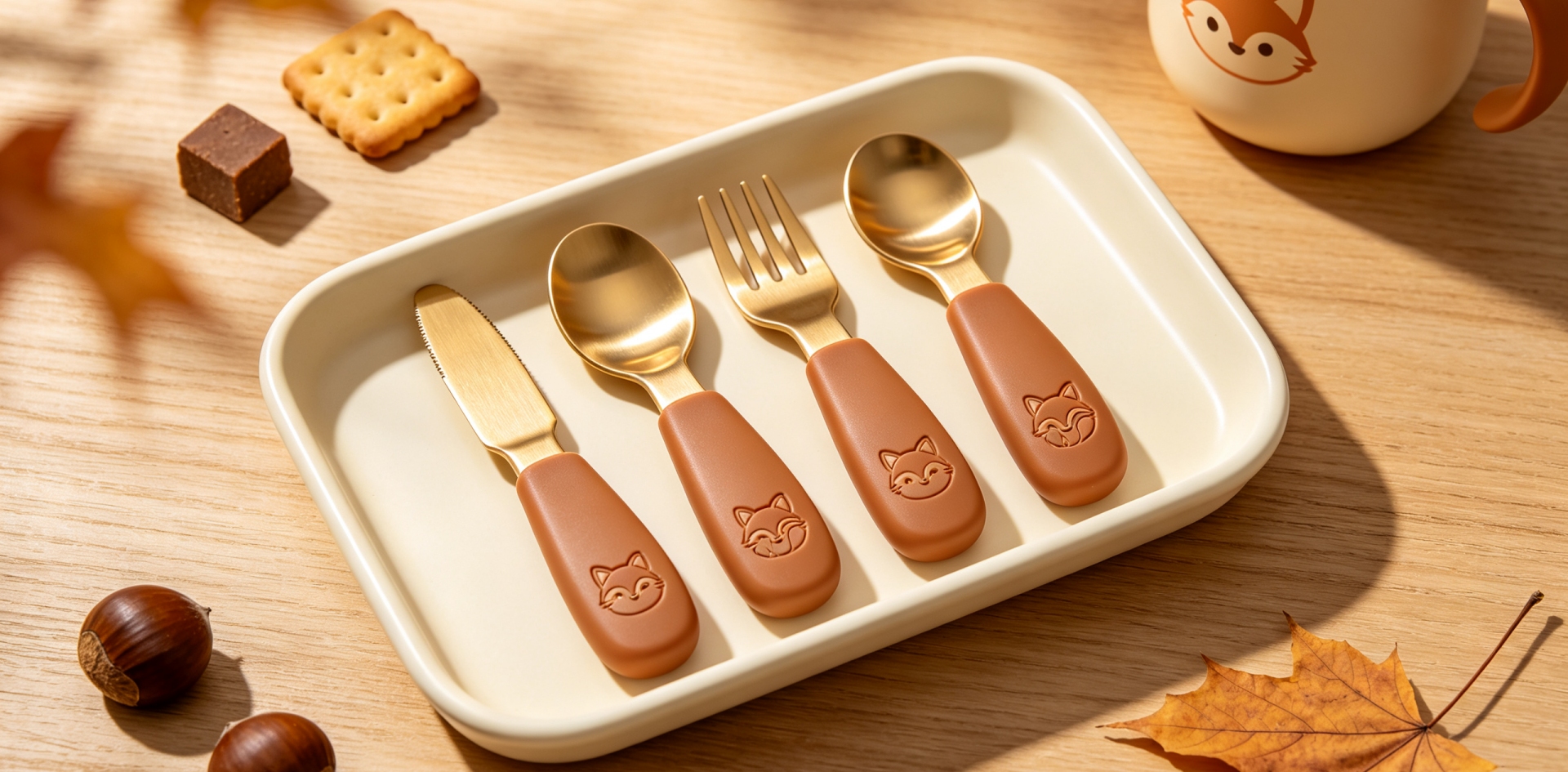
Stainless Steel Table Knife Bolster Design for B2B
When developing a stainless steel table knife for a professional cutlery collection, buyers often concentrate on the blade and handle as two separate components. In practice, the area connecting these two sections can have an important influence on the finished product.
This area is commonly associated with the bolster or blade-handle junction.
Its shape, thickness, proportion and transition can affect the visual balance of the knife and how the complete product is perceived. For B2B buyers developing OEM, ODM or private label cutlery, defining this area clearly can help create a more consistent production result.
The bolster is not necessarily a large or highly visible feature. On some table knives it may be subtle, while on other designs it becomes an obvious part of the knife's character. The appropriate approach depends on the product concept and manufacturing requirements.
What Is a Knife Bolster?
The bolster is the transition area near the point where the blade connects with the handle. Its exact form varies according to the construction and design of the knife.
Some stainless steel table knives use a simple continuous transition between blade and handle. Others incorporate a more defined section that gives the knife a stronger visual break.
This area can influence how the blade appears to continue into the handle. It can also contribute to the overall visual weight of the knife.
For a B2B product, the important consideration is not whether a bolster is automatically better. Instead, the design should match the intended style, construction and production method.
Why the Blade-Handle Junction Matters
A table knife contains several major visual sections, and the connection between them can affect the overall impression of the product.
If the junction is too visually heavy compared with the handle, the knife may appear unbalanced. If it is too minimal for a substantial handle, the transition may look visually weak.
These relationships become particularly noticeable when the knife is displayed alongside matching forks and spoons.
For private label brands, this area can therefore be part of the collection's design language. A consistent transition can help connect different pieces while allowing each product to maintain its own functional structure.
Bolster Design and Knife Proportions
The appearance of a bolster depends on the surrounding dimensions.
Blade width, handle width, handle thickness and overall knife length all influence how the connection area is perceived.
A compact knife may require a different transition from a long, substantial table knife. Likewise, a slim modern collection may use a different approach from a heavier traditional design.
This is why a bolster should not be specified independently from the rest of the knife.
During OEM or ODM development, the factory can review the complete product drawing or reference sample and evaluate how the connection area fits with the overall proportions.
This can help transform a visual concept into a more practical production specification.
Structural Considerations for B2B Production
The blade-handle junction is also a manufacturing area.
Its final form depends on the product construction and the processes used to shape and finish the knife. The factory needs to ensure that the intended design can be reproduced consistently throughout the production run.
For a large B2B order, consistency is important because even relatively small differences can become noticeable when many knives are displayed together.
An approved sample can provide a useful reference, while the production specification can record the important characteristics of the connection area.
This creates a clearer standard for both initial production and future repeat orders.
Bolster Design for Private Label Collections
Private label brands often want their cutlery to have a recognizable appearance without making the products unnecessarily complicated.
The blade-handle junction can contribute to that identity.
A distinctive transition may give a knife a particular visual character. Alternatively, a very clean and understated junction may support a minimalist collection.
The right choice depends on the brand's product positioning.
For a complete collection, the same design principle can then be carried through the knife, fork and spoon handles. The individual structures remain different, but the products can still feel like part of one coordinated range.
This is particularly useful when a brand wants to build a long-term collection rather than purchase unrelated standard items.
Developing the Bolster From a Reference Sample
Many B2B buyers begin custom projects with an existing product.
The reference may be a sample from another supplier, a photograph, a drawing or an early prototype. The factory then needs to understand which characteristics are essential to the desired result.
The blade-handle junction is one of the areas where photographs alone may not communicate every detail.
A physical sample can show the actual proportions, surface transitions and visual weight of the area. During development, the buyer and manufacturer can then discuss which characteristics should be retained and which can be adjusted.
This approach can be especially useful when a buyer wants to create a similar design with modifications for a new collection.
Balancing Design With Manufacturing Efficiency
A custom knife should be distinctive enough to support the customer's product strategy, but it also needs to be practical for commercial production.
A highly complicated bolster design may require additional manufacturing development or more detailed process control. A simpler construction may be easier to reproduce at high volume.
Neither option is universally correct.
The appropriate solution depends on the order quantity, product positioning, target price and desired appearance.
An experienced stainless steel cutlery manufacturer can review the design with these factors in mind and help the buyer determine which features should receive the most attention.
This can make the development process more efficient before the order enters mass production.
Consistency Across Production Runs
For B2B buyers, consistency extends beyond the first order.
A successful table knife may be reordered repeatedly as sales increase. The same product may also become the basis for additional pieces in the collection.
For this reason, the approved bolster design should be treated as part of the product reference.
The reference can include the knife's material, dimensions, handle construction, surface finish and other important characteristics.
When a repeat order is placed, these details give the factory a clearer basis for reproducing the original product.
This can be particularly valuable for private label brands that need their core products to remain visually stable over time.
Coordinating the Knife With Forks and Spoons
A knife's bolster is not normally designed in isolation when it belongs to a complete flatware collection.
The handle proportions should coordinate with the corresponding fork and spoon. The surface treatment should also create a consistent visual impression across the set.
For example, a knife with a substantial blade-handle junction may need a stronger handle proportion to look balanced beside a matching fork and spoon.
On the other hand, a minimalist collection may benefit from a much quieter transition.
The objective is to create relationships between the pieces rather than making every component structurally identical.
OEM and ODM Stainless Steel Knife Development
OEM and ODM buyers may have different levels of technical information when they approach a factory.
Some provide detailed drawings, while others provide samples and general design requirements.
Homefelt factory can work with customers to develop stainless steel knives, forks, spoons and complete flatware collections according to their project requirements.
The development process can include product design, material selection, customization, surface finishing, packaging and other related requirements.
For a custom table knife, the blade-handle junction can be discussed as part of the overall product rather than treated as a separate manufacturing issue.
This helps the factory understand the customer's intended appearance and provides a clearer basis for production.
Homefelt Factory for Custom B2B Cutlery
Homefelt factory provides stainless steel cutlery solutions for wholesalers, distributors, private label brands and other B2B customers.
OEM, ODM and large-volume production can be developed according to different product requirements. Customers can discuss customized knives, forks, spoons and complete flatware sets with the factory team.
The service can also cover customized packaging and transportation coordination, creating a more integrated process for customers managing a complete product program.
For a new table knife project, buyers can provide their existing sample, drawing or product concept. The factory can then review the design and discuss the details that need to be confirmed before production.
This approach allows the final product to be developed around the customer's actual requirements rather than relying only on a standard catalog model.
From Custom Design to Long-Term Supply
The purpose of defining the bolster is not to add unnecessary complexity to a cutlery project.
Instead, it is about identifying the small design details that can influence the final appearance and making those details clear before mass production.
When the product specification, approved sample and manufacturing requirements are aligned, the transition from development to production becomes more straightforward.
The same reference can then support future reorders and related product development.
For a B2B brand, this creates a useful foundation for maintaining a stable product identity as the collection grows.
Why the Connection Area Deserves Attention
A stainless steel table knife is made from many connected design decisions.
The blade profile, handle proportions, surface finish and blade-handle junction all contribute to the final appearance. The bolster may occupy only a small area, but it can influence how the two largest sections of the knife visually connect.
For buyers developing custom cutlery, this is one of the details that can be evaluated during product development.
The right specification depends on the intended product and does not need to be unnecessarily complicated. What matters is that the important characteristics are understood by both the buyer and manufacturer.
With a clear reference and appropriate production control, the same design can then be reproduced for larger orders and future replenishment.
Homefelt Factory for Stainless Steel Knife, Fork and Spoon Programs
Homefelt factory supports B2B customers with customized stainless steel knives, forks, spoons and complete flatware collections.
Whether the project is OEM, ODM, private label, wholesale or large-volume production, the service can be adapted to the customer's product requirements.
Product design, customization, packaging and transportation can be coordinated as part of a one-stop service approach.
For buyers preparing a new table knife, discussing the blade-handle junction early can help ensure that the intended proportions are understood before production begins. Once the design is approved, the key characteristics can become part of the product reference for future orders.
A successful cutlery collection is built from many details working together. A well-defined bolster or blade-handle junction can help create a balanced table knife and support greater consistency across a professional B2B product range.
Custom Stainless Steel Table Knife Manufacturing
OEM & ODM Stainless Steel Flatware Development
Private Label Stainless Steel Cutlery Manufacturing
Wholesale Stainless Steel Knife, Fork and Spoon Collections
Homefelt Factory Custom Cutlery Service
B2B Stainless Steel Cutlery Manufacturing
Stainless Steel Cutlery Handle End Profile for B2B
Stainless Steel Spoon Wall Thickness for B2B Orders
Related Article



