
Textured Handle Stainless Steel Cutlery for B2B Brands
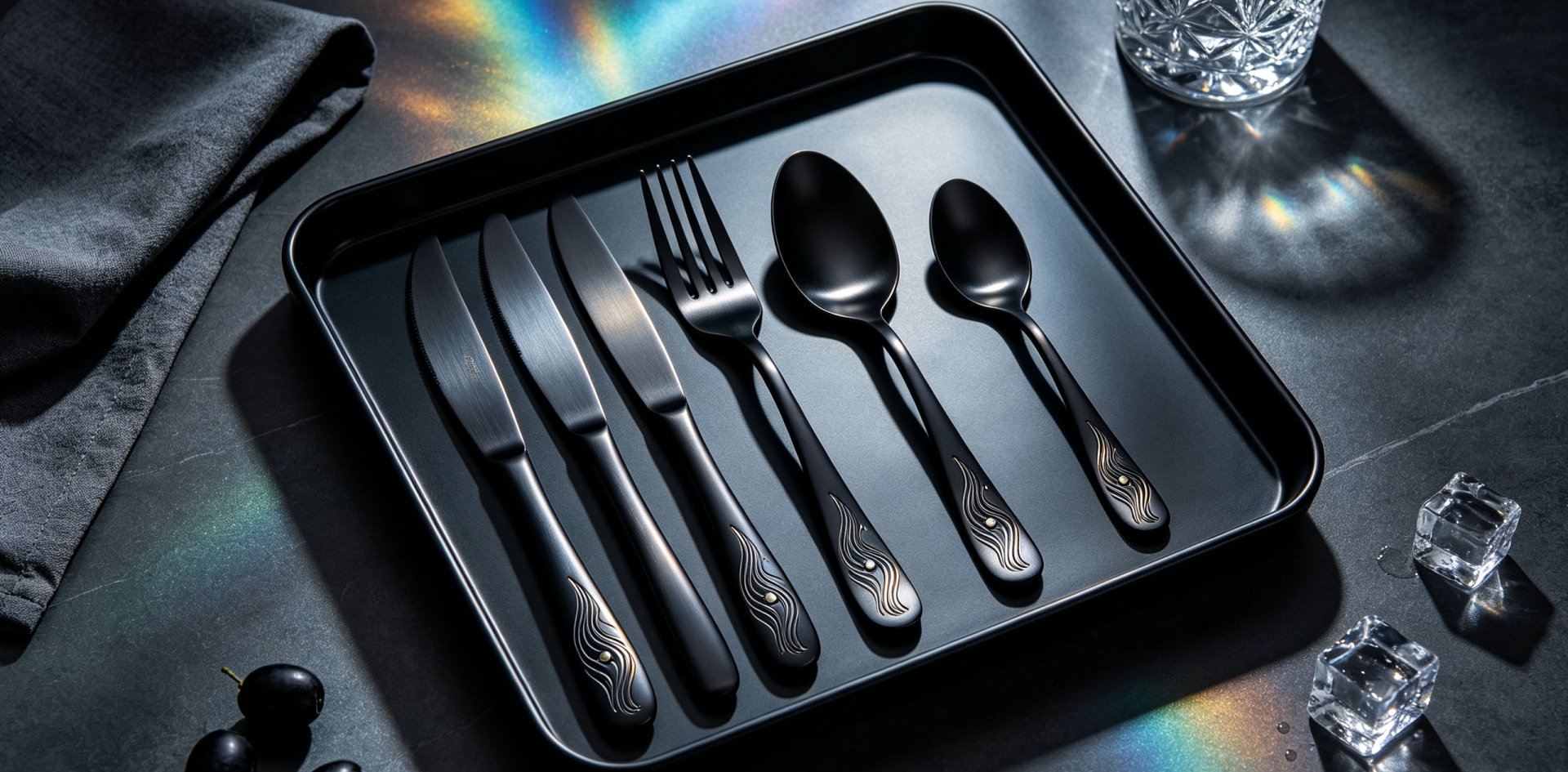
Textured Handle Stainless Steel Cutlery for B2B Brands
When buyers develop a stainless steel cutlery collection, the handle is often one of the first areas that attracts attention. It is visible throughout the dining experience, contributes to the overall appearance of the product and can give a collection its own recognizable character.
For B2B brands, wholesalers and private label companies, handle texture offers another way to create product differentiation without changing the basic function of a knife, fork or spoon.
However, textured handle cutlery needs to be considered from both design and manufacturing perspectives. The texture should support the intended appearance and hand feel while remaining practical for repeat production.
Why Handle Texture Matters
A smooth stainless steel handle creates a clean and simple appearance. Adding texture can produce a different visual effect and make the product feel more distinctive.
Depending on the design, texture may appear as fine lines, geometric patterns, raised details, recessed areas or other decorative treatments.
The right choice depends on the product positioning.
A subtle texture may suit a modern everyday collection, while a more pronounced pattern may be appropriate for a distinctive private label range.
For B2B customers, the important point is to choose a texture that supports the complete product concept rather than treating the handle decoration as an isolated feature.
Texture and Hand Feel
A cutlery handle is held directly during use, so its surface should be considered from a practical perspective as well as a visual one.
A decorative pattern that looks attractive in a photograph may feel different when the product is actually held.
The size, depth, spacing and direction of the texture can influence the tactile experience.
This is one reason physical samples are useful during the development of customized stainless steel cutlery. Buyers can evaluate not only the appearance but also how the handle feels in the hand.
For OEM and ODM projects, feedback at this stage can help the factory adjust the design before the product moves into larger-scale manufacturing.
Choosing the Right Texture Direction
The direction of a handle pattern can change the visual character of a cutlery piece.
Longitudinal lines can emphasize the length of a handle, while cross patterns or geometric details can create a stronger decorative effect. A central pattern can also become a recognizable element of a private label collection.
The texture should work with the shape of the handle.
If the handle tapers toward one end, for example, a pattern may need to be adjusted to follow the changing surface. A design that looks balanced on a flat reference image may require additional consideration when applied to a three-dimensional handle.
For this reason, the factory should review the actual product geometry when discussing a custom texture.
Creating a Consistent Collection
If a brand develops a knife, fork and spoon collection with textured handles, consistency becomes important.
The three pieces naturally have different working ends, but their handles can share a common decorative language.
The same pattern can sometimes be adapted across different handle shapes. In other cases, slight adjustments may be necessary to maintain visual balance.
A professional stainless steel cutlery manufacturer can evaluate the texture across the complete collection rather than looking at only one product.
This helps the finished knife, fork and spoon set feel like one coordinated product family.
Texture and Product Positioning
Different handle treatments can support different market directions.
A restrained texture may be suitable for a practical wholesale range. A more detailed decorative treatment can help a private label brand create a stronger visual identity.
For premium-oriented collections, texture can also be combined with a specific surface finish or color treatment to create a more distinctive appearance.
The key is to consider these elements together.
The handle texture, overall shape, surface finish and packaging should communicate the same product direction.
Custom Options for Private Label Brands
Private label buyers often want their products to look different from standard catalogue items.
A customized handle can provide an opportunity to create that distinction.
The customization may involve the handle profile itself, decorative texture, logo placement, surface finish or a combination of several elements.
Homefelt factory can discuss these requirements according to the customer's product concept.
For customers with their own drawings or samples, the factory can review the existing design. For customers with only a reference image or general idea, the discussion can start from the desired appearance and target product positioning.
The objective is to turn the customer's concept into a product that can be manufactured consistently.
Considering Manufacturing Practicality
Not every decorative texture is equally practical for large-scale production.
The shape of the handle, the depth and complexity of the pattern, tooling requirements and production process all need to be considered.
This is particularly important for B2B buyers because a design may eventually be produced in thousands or tens of thousands of pieces.
A factory review at an early stage can help identify potential manufacturing challenges before the design is finalized.
This does not mean that customized products need to be limited to simple designs. Instead, early communication allows the buyer and manufacturer to determine a practical way to achieve the intended result.
Texture Across Different Cutlery Pieces
A design created for a spoon handle may need minor adjustments when applied to a knife or fork.
The handle length may differ, the connection area may have a different shape and the overall proportions may change.
Applying exactly the same graphic pattern without considering these differences can sometimes create an unbalanced appearance.
For a coordinated collection, the design principle can remain consistent while the actual application is adapted to each product.
This approach can help maintain collection identity without forcing every piece into exactly the same geometry.
Combining Texture With Other Custom Features
Handle texture does not have to be the only customized element.
B2B brands may combine textured handles with different finishes, colored surfaces, logos, decorative lines or customized packaging.
For example, a private label collection may use a distinctive handle pattern together with branded gift or retail packaging.
For larger projects, these elements can be planned together so that product development and packaging development follow the same visual direction.
Homefelt provides an integrated service approach covering stainless steel cutlery customization, OEM and ODM manufacturing, private label support, packaging coordination and bulk production.
This allows customers to discuss the complete project instead of managing each part separately.
Choosing a Supplier for Textured Cutlery
When evaluating a supplier for customized textured stainless steel cutlery, buyers should look beyond the appearance of the initial sample.
It is useful to consider whether the supplier can support the complete product range, maintain consistent production, handle customized specifications and coordinate packaging for commercial orders.
Communication is also important.
The supplier should understand the intended product concept before the design is finalized. This makes it easier to identify which details need confirmation and which elements can be adjusted for manufacturing.
For B2B customers, the goal is to develop a product that looks distinctive at the sample stage and remains practical when produced repeatedly.
From Custom Design to Bulk Production
Once the handle texture, material, finish and other specifications are confirmed, the product can move toward commercial production.
For a larger order, the same approved requirements should be maintained across the production quantity.
This is where factory experience becomes particularly valuable. The development stage creates the product concept, while manufacturing capability determines how effectively that concept can be reproduced at commercial scale.
Homefelt factory supports large-volume stainless steel cutlery production for B2B customers and can discuss customized knives, forks, spoons and complete flatware sets.
The service can be adapted to the customer's actual requirements, from a specific customized item to a broader OEM, ODM or private label collection.
A Practical Starting Point for Buyers
If you are considering textured handle stainless steel cutlery, you do not need to have every technical detail finalized before contacting a factory.
A reference photograph, existing sample, drawing or simple description of the desired handle can provide a useful starting point.
You can also share the estimated quantity, preferred material, finish and target market if these details are already available.
Homefelt can then review the project and discuss possible customization, product development, packaging and production arrangements.
For B2B brands, the best result often comes from combining creative product ideas with practical manufacturing experience.
Custom Textured Stainless Steel Cutlery
OEM & ODM Flatware Manufacturing
Private Label Stainless Steel Cutlery Factory
Custom Stainless Steel Knife Fork Spoon
Stainless Steel Table Knife Cutting Performance for B2B
Stainless Steel Cutlery Collection Structure for B2B Brands
Related Article



