
Stainless Steel Cutlery Tooling Maintenance for B2B Production
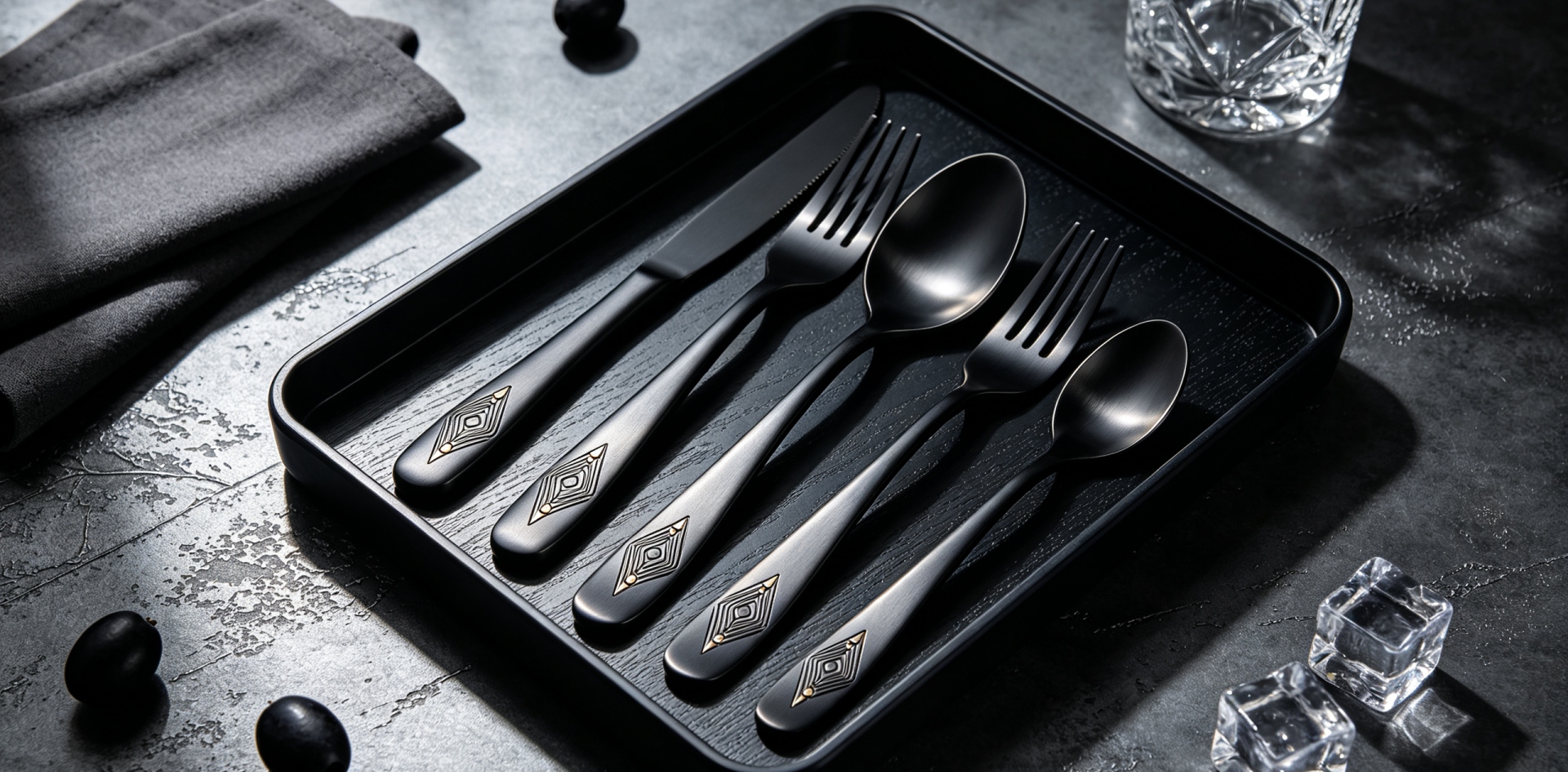
Stainless Steel Cutlery Tooling Maintenance for B2B Production
For B2B stainless steel cutlery production, the finished knife, fork or spoon is only the visible result of many manufacturing steps. Behind each product are forming tools, molds, fixtures and other production equipment that help create the required shape.
When a customer develops a custom stainless steel cutlery design, the tooling becomes an important part of the manufacturing process. Maintaining these tools properly can help a factory continue producing the intended product over repeated production runs.
This is particularly relevant for wholesalers, distributors, private label brands and importers who expect to reorder the same stainless steel cutlery design over time.
Why Tooling Matters in Stainless Steel Cutlery Manufacturing
Stainless steel cutlery requires controlled forming and processing to achieve the desired shape. Knives, forks and spoons may look relatively simple, but each product can involve dedicated tooling according to its design and manufacturing method.
A custom handle profile, spoon shape or fork structure may require specific production tools. Once the tooling has been developed, it becomes an important reference for future manufacturing.
For B2B customers, this means tooling is not simply a production expense. It can also become part of the foundation for a long-term product program.
A professional stainless steel cutlery factory therefore needs to manage tooling carefully throughout the life of a product.
How Tooling Maintenance Supports Repeat Production
Many B2B customers do not place only one order.
A retailer may launch a new cutlery collection and reorder it according to sales. A distributor may purchase the same products several times a year. A private label brand may keep a successful collection in its catalog for several seasons.
In these situations, production tools may be used repeatedly.
Regular maintenance allows the factory to monitor the condition of important tooling and address potential issues before they interfere with normal production. Depending on the type of tool, maintenance can involve cleaning, inspection, adjustment or replacement of worn components.
The exact maintenance procedure depends on the tooling structure and manufacturing process, but the basic objective remains the same: keep the equipment suitable for continued production.
Tooling Condition and Custom Cutlery Projects
Custom stainless steel cutlery projects can require more attention than standard products because the customer may have specific design requirements.
For an OEM or ODM project, the factory may develop tooling according to an approved product design. Once the product enters bulk production, that tooling becomes part of the manufacturing setup.
If the customer later requests another production run, the factory can evaluate the condition of the existing tooling before production begins.
This can be useful for long-term projects because the customer does not necessarily need to treat every repeat order as a completely new development project.
Tooling Maintenance and Production Planning
Tool maintenance also has a connection with production planning.
When a factory manages many stainless steel cutlery products, different tools may be used for different collections. A professional production team needs to understand which tooling belongs to which product and whether it is ready for the planned manufacturing schedule.
For B2B orders involving several knives, forks and spoons, this organization becomes especially useful.
Instead of waiting until production starts to discover that a particular tool needs attention, the factory can include tooling condition as part of its preparation process.
This helps the production team organize the necessary work before manufacturing begins.
Supporting Long-Term OEM and ODM Manufacturing
OEM and ODM customers often expect more than a single shipment.
They may start with one product and gradually develop a larger collection. A successful project can lead to additional spoon, fork and knife designs using related production concepts.
Tooling management becomes increasingly important as the product range grows.
An experienced stainless steel flatware manufacturer can maintain production information and tooling references for different customer projects. This creates a more organized foundation for future product development.
For private label brands, this can be particularly useful because their cutlery collection may remain active for a long period.
When a product becomes an established part of a brand's range, reliable access to suitable production tooling can support future replenishment.
Tooling Maintenance Is Not the Same as Changing the Product
One concern some B2B buyers may have is whether tooling maintenance will change the finished product.
Proper maintenance is intended to keep production equipment in suitable working condition, not to arbitrarily change the approved product design.
When a customer has approved a stainless steel cutlery sample, the production team can use the approved product information as a reference when evaluating the tooling and manufacturing process.
If a tool requires repair or replacement, the factory should consider the relationship between the new or maintained tooling and the approved product requirements.
This is why communication between the customer and manufacturer remains important when a custom product has been in production for a long time.
When Tooling May Need Attention
Tooling does not necessarily have one universal service life.
The actual condition depends on factors such as the tooling design, material, manufacturing process, production volume and frequency of use.
For this reason, an experienced factory should evaluate tooling based on its actual condition rather than relying only on a fixed number of production cycles.
Signs that a tool may require attention can include changes in forming performance, unexpected production difficulty or other indications identified during manufacturing.
Addressing these issues as part of normal factory management can help prevent unnecessary disruption to a B2B production project.
The Value of an Experienced Stainless Steel Cutlery Factory
For buyers, it can be difficult to evaluate the factory's tooling management simply by looking at finished products.
However, tooling capability can become important when a customer needs custom products, repeated production or a growing stainless steel cutlery collection.
A manufacturer with experience in knives, forks, spoons and complete cutlery sets can understand how tooling connects with product development and mass production.
This is especially valuable for B2B customers who want to build a long-term product line instead of purchasing unrelated products from different suppliers.
Homefelt factory provides stainless steel cutlery manufacturing services for wholesalers, distributors, importers, retailers and brands. Our product range focuses on stainless steel knives, forks, spoons and cutlery sets, with OEM, ODM and private label support for B2B projects.
We can work with customers according to their individual requirements and provide a one-stop service covering product customization, design coordination, packaging, transportation and related project support.
For customers developing a new product, we can discuss the product concept and manufacturing requirements at the beginning of the project. For existing customers, we can also support repeat production and further product development according to their business plans.
The purpose of this approach is to build a practical long-term relationship rather than simply complete one order.
For a B2B stainless steel cutlery project, details such as tooling, product design, manufacturing capability and service support all contribute to the overall production process. Choosing a factory that understands these connections can make future cooperation easier as the product range develops.
If you are planning a new stainless steel cutlery project or need a factory for ongoing OEM, ODM or private label production, it is useful to discuss your requirements before finalizing the product plan.
Stainless Steel Cutlery Production Changeover for B2B Orders
Stainless Steel Cutlery Material Traceability for B2B Orders
Related Article



