Stainless Steel Cutlery Manufacturer | Choosing Cutlery Sets for B2B Sales
Stainless Steel Cutlery Manufacturer: How to Choose the Right Cutlery Set for Your Sales Channel
Choosing a stainless steel cutlery set for a B2B business is more than deciding how many pieces should be placed in one box. The right set needs to match the sales channel, target customer, product positioning, packaging requirements, and purchasing expectations.
A retailer may need a visually attractive set designed for shelf or online presentation. A wholesaler may prefer practical configurations that are easy to store and distribute. A private-label brand may want a distinctive combination that supports its own product identity, while a hospitality supplier may require a practical set suitable for professional use.
For this reason, B2B buyers should define the commercial purpose of a cutlery set before finalizing the product configuration.
An experienced Stainless Steel Cutlery Manufacturer can help buyers evaluate these requirements and develop a set that is suitable for both the intended customer and the manufacturing process.
Why the Sales Channel Matters
The same stainless steel cutlery product can be sold through different channels, but the ideal product configuration may not be the same.
Retail customers often make purchasing decisions based on appearance, convenience, price, and packaging.
Wholesale buyers may focus on product range, inventory efficiency, and repeat supply.
Private-label brands may place greater importance on customization, branding, and differentiation.
Hospitality and foodservice businesses may prioritize practicality, durability, and easy replenishment.
Understanding these differences helps determine what type of cutlery set should be developed.
Retail Cutlery Sets
Retail cutlery sets are usually presented as complete consumer products.
The customer needs to understand quickly what is included in the package and what type of use the set is designed for.
A retail set may contain the essential pieces required for everyday dining, while larger sets can provide a more complete table setting.
The presentation of the set is also important.
Product arrangement, packaging design, product information, branding, and visual consistency can all influence the customer's perception of the product.
For B2B retail buyers, it is therefore useful to consider the product and packaging as one commercial package.
Wholesale Cutlery Sets
Wholesale purchasing can involve different priorities.
A wholesaler may purchase larger quantities and distribute products to retailers, hospitality customers, restaurants, or other businesses.
In this situation, the cutlery set needs to be practical for inventory management and transportation.
The product configuration should be easy to identify, count, store, and reorder.
Wholesale buyers may also benefit from offering several set options rather than relying on a single configuration.
For example, a basic set can serve price-sensitive customers, while a larger or more premium set can target customers looking for a more complete tableware solution.
Private-Label Cutlery Sets
Private-label brands often have greater flexibility when developing their product range.
Instead of selecting an existing combination, the brand can create a custom cutlery set based on its target customer.
The brand may choose the number of pieces, product styles, handle design, finish, logo placement, and packaging.
This creates an opportunity to build a product that looks different from standard market offerings.
For a private-label project, the set should also fit the overall identity of the brand.
The product design, packaging, logo, and presentation should work together rather than appearing as unrelated elements.
Hospitality and Professional Applications
Hospitality suppliers may have different requirements from consumer retail brands.
Products can be used frequently and may need to fit existing tableware and service environments.
The set configuration should therefore be based on practical application rather than simply maximizing the number of pieces.
In some cases, individual pieces may be more suitable than consumer-style sets because businesses need to replace specific spoons, forks, or knives as inventory is consumed or damaged.
A B2B buyer should therefore determine whether a complete set or individual product supply better matches the customer's purchasing habits.
Think About the End Customer
Before developing a set, buyers should ask who will actually use it.
Is it intended for households, restaurants, hotels, catering companies, retailers, distributors, or another customer group?
Different users may have different expectations.
A household buyer may want convenience and a complete set for everyday dining.
A restaurant supplier may need practical products that can be replenished individually.
A premium retail customer may be more interested in design, finish, packaging, and presentation.
The answer can influence both the set configuration and the product specifications.
Determine the Right Number of Pieces
The number of pieces should support the intended use.
A small set can be easier to position at an accessible price point and may be suitable for individual consumers or smaller households.
A larger set can provide a more complete dining solution and may be attractive for customers purchasing tableware for several people.
However, adding more pieces also increases product cost, packaging requirements, shipping weight, and storage requirements.
The best configuration is therefore not necessarily the largest one.
The goal is to create a combination that makes commercial sense for the target customer.
Individual Pieces Versus Complete Sets
Some businesses may benefit from offering both individual pieces and complete sets.
Individual spoons, forks, and knives can provide flexibility for replacement purchases.
Complete sets can provide convenience for customers purchasing a new collection.
Offering both formats can also allow a brand or distributor to serve different purchasing situations without developing completely different product lines.
The decision depends on the sales channel and inventory strategy.
Coordinate Spoon, Fork and Knife Design
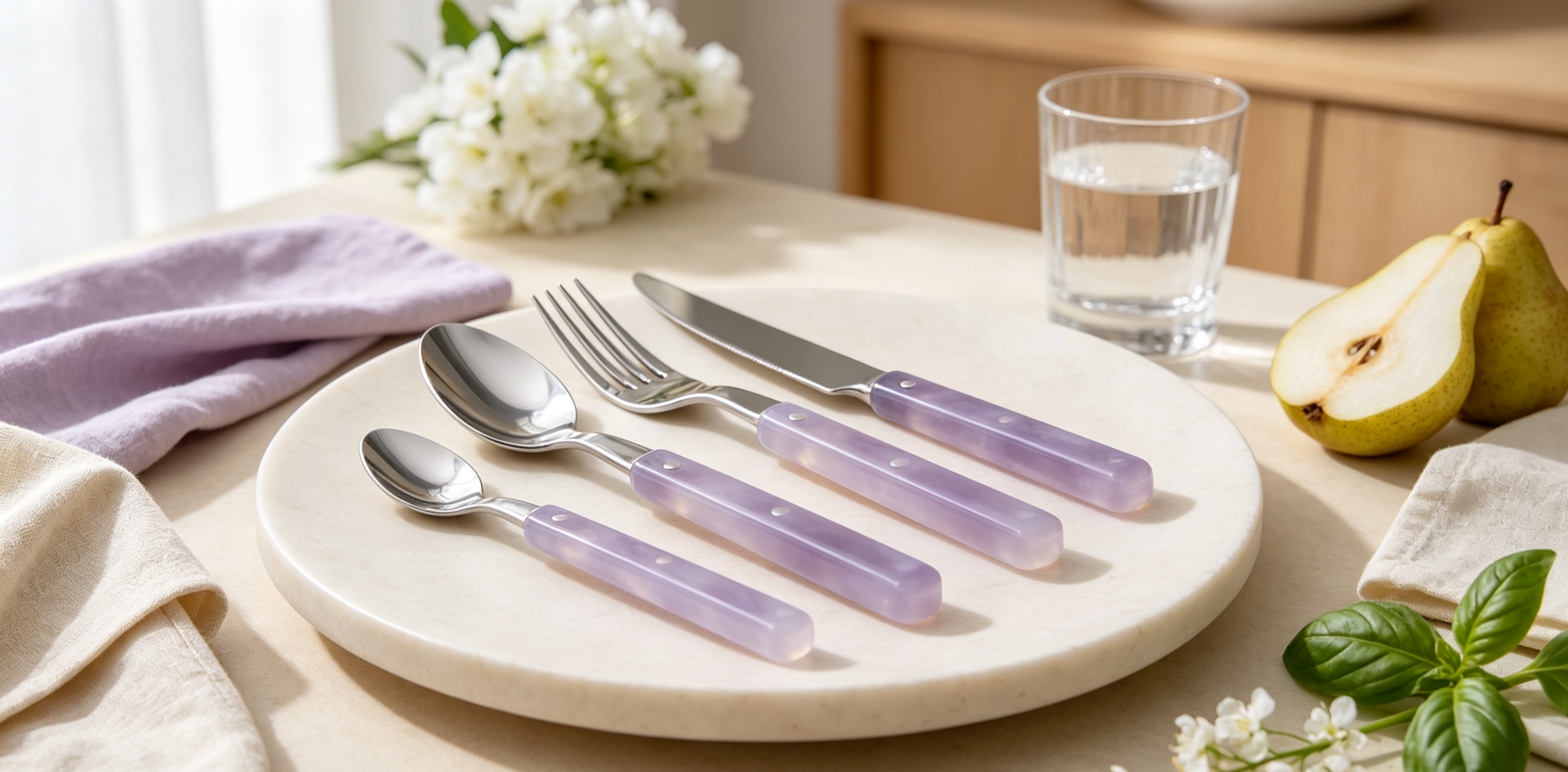
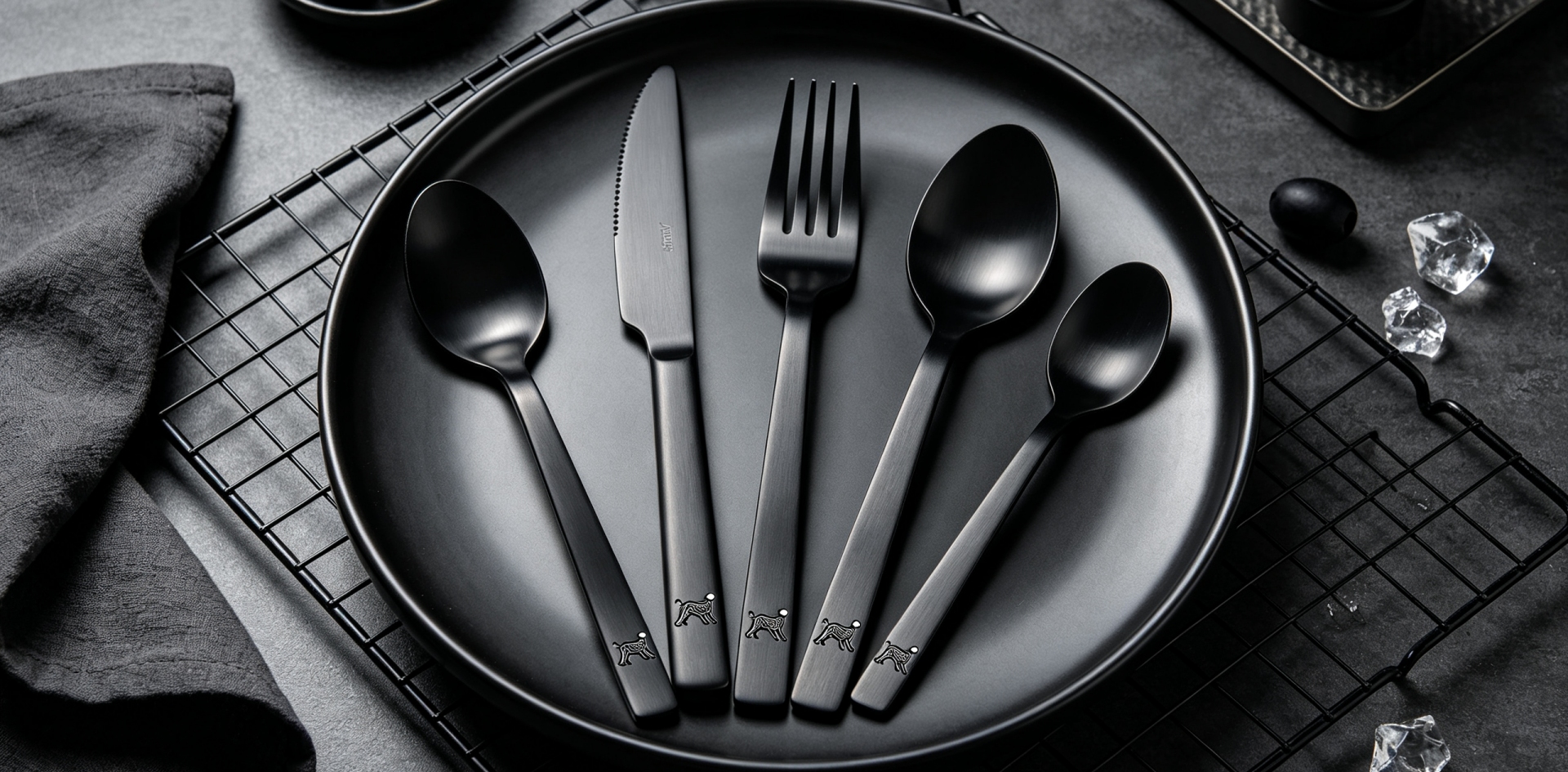
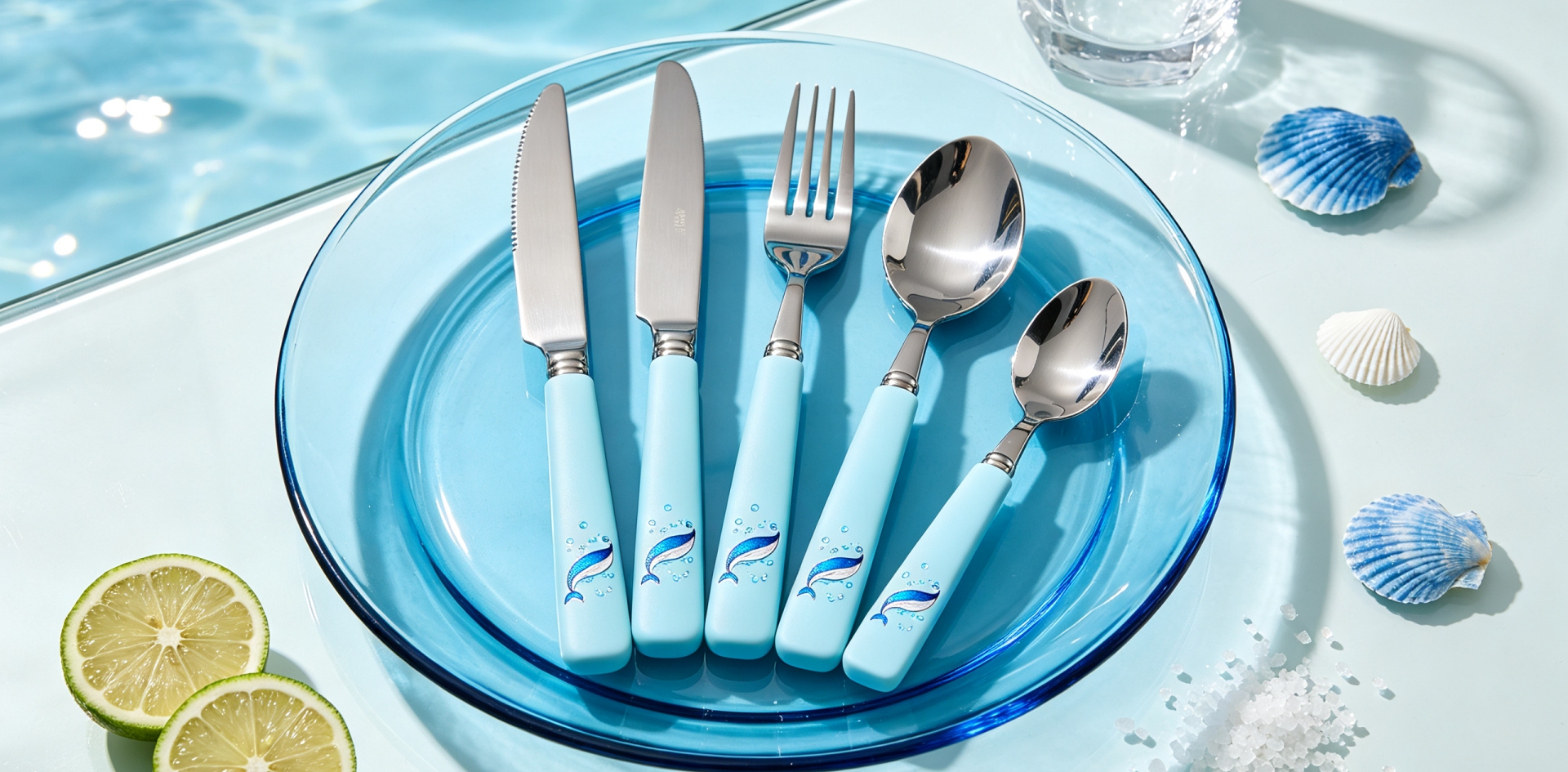
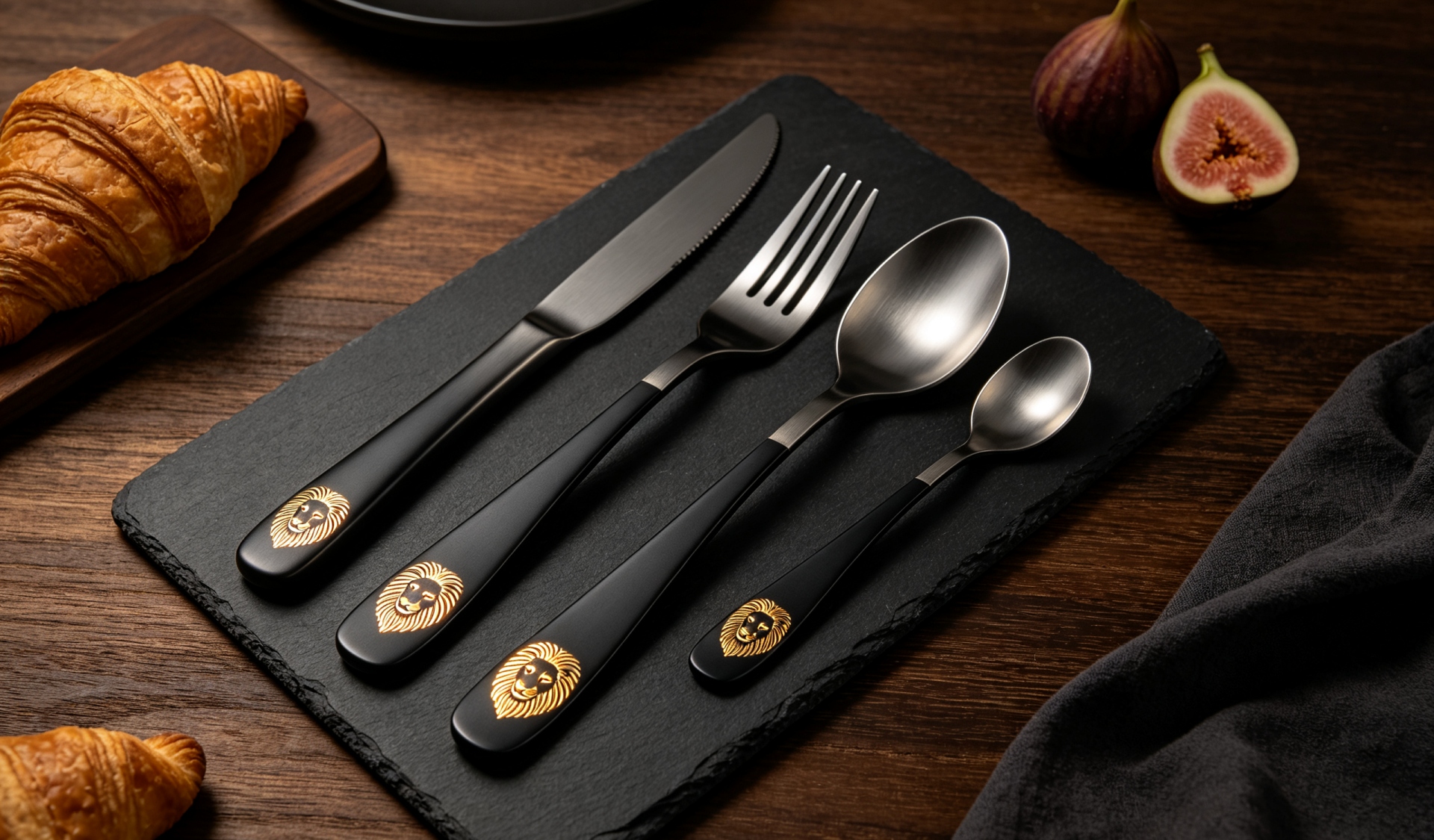
When a set contains several different products, they should look like part of the same collection.
The handle shape, surface finish, proportions, and decorative details should be coordinated.
The spoon bowl and fork head will naturally have different functional structures, while the knife will have its own blade requirements.
The handles can provide the strongest visual connection between the pieces.
This allows the complete set to appear intentional and professionally designed.
Consider the Product Size
The physical size of each piece also affects set development.
A long-handled knife combined with a compact spoon and fork may create an unusual visual balance.
Likewise, oversized handles may require more space inside the packaging.
Before finalizing the set, buyers should consider the actual dimensions of every component.
A Stainless Steel Cutlery Manufacturer can evaluate the products together to ensure that the selected pieces work well as a complete set.
Packaging Should Follow the Set
Once the product configuration has been established, packaging should be designed around the actual contents.
The internal arrangement needs to accommodate every piece securely.
The packaging also needs to match the intended sales channel.
Retail sets may require branded boxes and attractive product presentation.
Wholesale sets may prioritize practical cartons and efficient transportation.
Private-label products may need customized printed packaging that reflects the brand identity.
The packaging should therefore be considered during set development rather than after the product is finalized.
Think About Shipping and Storage
A cutlery set becomes a physical package that needs to be transported and stored.
The number of pieces, packaging size, carton quantity, and total shipment weight can all influence logistics.
For international B2B buyers, these factors should be considered before finalizing the product.
A visually attractive package that uses excessive space may not be commercially efficient for large-volume distribution.
An experienced cutlery factory can help buyers consider product and packaging dimensions together.
Set Design and Product Positioning
The set configuration can also communicate the position of a product.
A simple four-piece set can be presented as an everyday solution.
A larger set with additional serving pieces may be positioned as a more complete dining collection.
A customized set with premium finishing and branded packaging can support a higher-end private-label proposition.
The product configuration should therefore be consistent with the price level and customer expectations.
Avoid Adding Unnecessary Pieces
More components do not always make a set more attractive.
If customers rarely use certain pieces, including them may increase the price without adding meaningful value.
B2B buyers should consider actual customer demand when determining the set contents.
This is especially important for retailers because unnecessary pieces can increase shelf price and make the product less competitive.
A focused set with the right products can sometimes provide a clearer commercial proposition than a larger set with unnecessary components.
Develop Different Set Levels
For businesses with multiple customer segments, creating several set levels can be useful.
A basic version can focus on essential dining pieces.
A standard version can include additional products.
A premium version can combine a larger product range with upgraded finishing or packaging.
The three products can share the same overall design language while targeting different purchasing levels.
This approach can give retailers and distributors more flexibility when building their product range.
Custom Sets for Private-Label Brands
A private-label brand may have specific requirements that cannot be met by a standard set.
For example, the brand may want a particular combination of products that matches its customer profile.
The company may also want its own handle design, logo, finish, and packaging.
A custom set gives the brand greater control over the complete customer experience.
The manufacturer can develop the individual products and then coordinate them into a complete commercial package.
This is one reason custom stainless steel cutlery can be valuable for brands looking to create a differentiated product range.
Consider Future Product Expansion
A cutlery set should ideally leave room for future development.
A brand may launch a basic collection first and later add serving utensils, dessert pieces, specialty products, or larger set configurations.
If the initial products share a consistent design language, future additions can be developed as extensions of the existing collection.
This can make the brand's product range easier for customers to recognize.
A manufacturer with experience in custom product development can also discuss potential future extensions during the initial project.
Choosing a Manufacturer for Custom Sets
The manufacturer should be able to handle more than individual cutlery production.
A custom set may require coordination between product manufacturing, finishing, branding, quality control, packaging, and final packing.
The factory should understand how these elements work together.
For B2B buyers, this can simplify communication and make it easier to manage the complete product rather than coordinating different suppliers for different components.
Homefelt Houseware Co., Limited has more than 40 years of experience in stainless steel cutlery manufacturing and supports international B2B customers with stainless steel spoons, forks, knives, flatware sets, OEM, ODM, and private-label projects.
For custom cutlery sets, buyers can provide their preferred product combination, reference designs, branding requirements, packaging ideas, and estimated quantities.
The manufacturing team can then evaluate the requirements and develop a suitable solution for the intended sales channel.
Build the Set Around the Customer
The most effective stainless steel cutlery set is not necessarily the one with the most pieces or the lowest price.
It is the set that makes sense for the customer who will purchase and use it.
Retail customers may need convenience and attractive presentation.
Wholesale customers may need practical configurations and efficient supply.
Private-label brands may need differentiation and consistent branding.
Hospitality customers may need functional products that can be replenished efficiently.
By starting with these requirements, B2B buyers can make better decisions about the product configuration, material, finish, packaging, and overall positioning.
For businesses developing a new cutlery product, working with a Stainless Steel Cutlery Manufacturer from the early planning stage can help turn the intended sales concept into a practical product set ready for bulk production.
Request a Custom Stainless Steel Cutlery Set for Your Brand
Get a Quote for Private Label Stainless Steel Cutlery Sets
Send Your Cutlery Set Requirements to Our Factory
Develop a Custom Flatware Set for Your Retail Product Range
Request OEM Stainless Steel Cutlery Sets for Wholesale
Discuss Custom Tableware Sets With an Experienced Manufacturer
Send Your Product Combination and Packaging Requirements
Request B2B Pricing for Custom Stainless Steel Flatware Sets
Start Your Private Label Cutlery Set Development Project
Contact Our Factory for Custom Stainless Steel Cutlery Set Production
Related Article