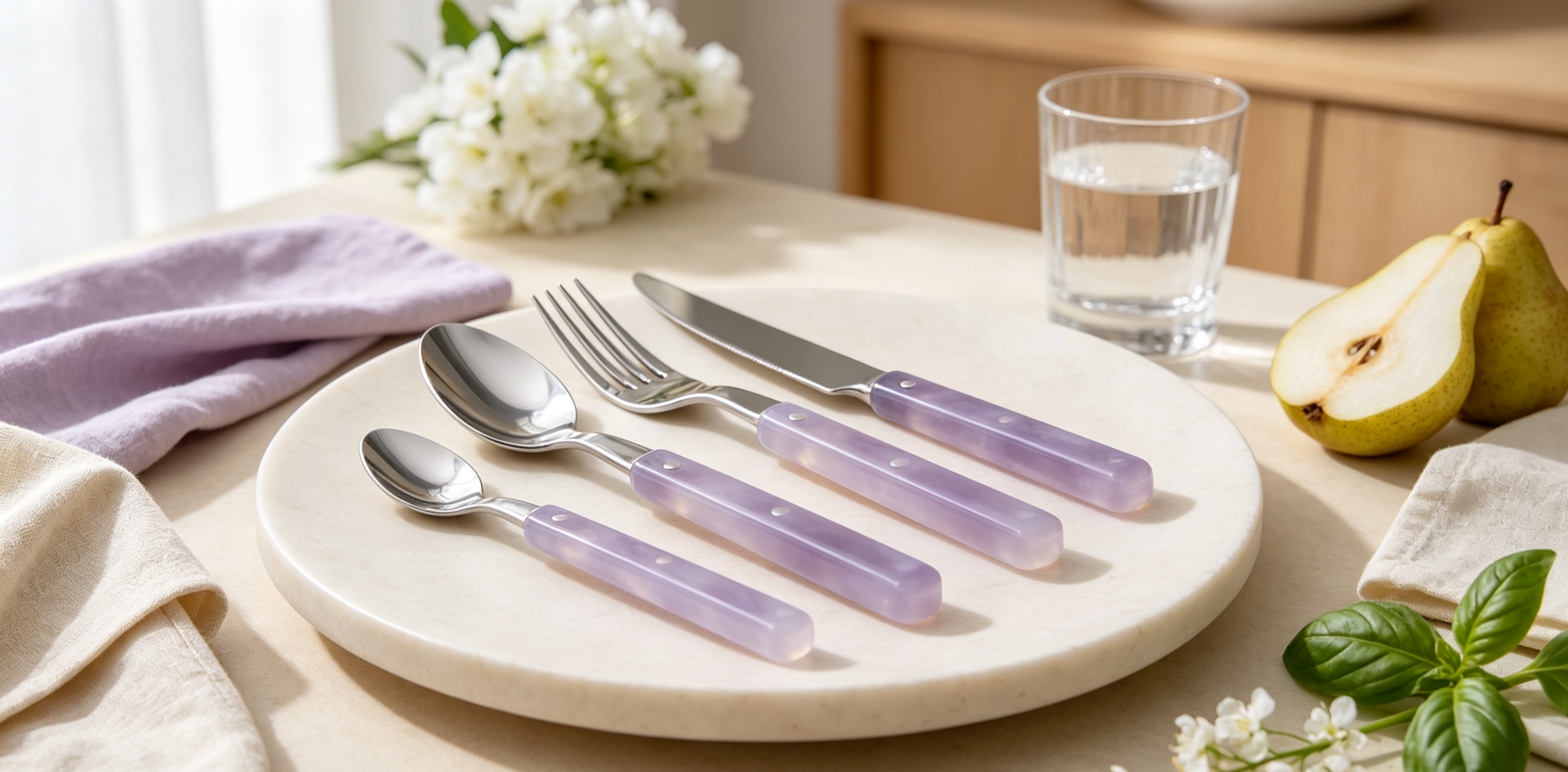
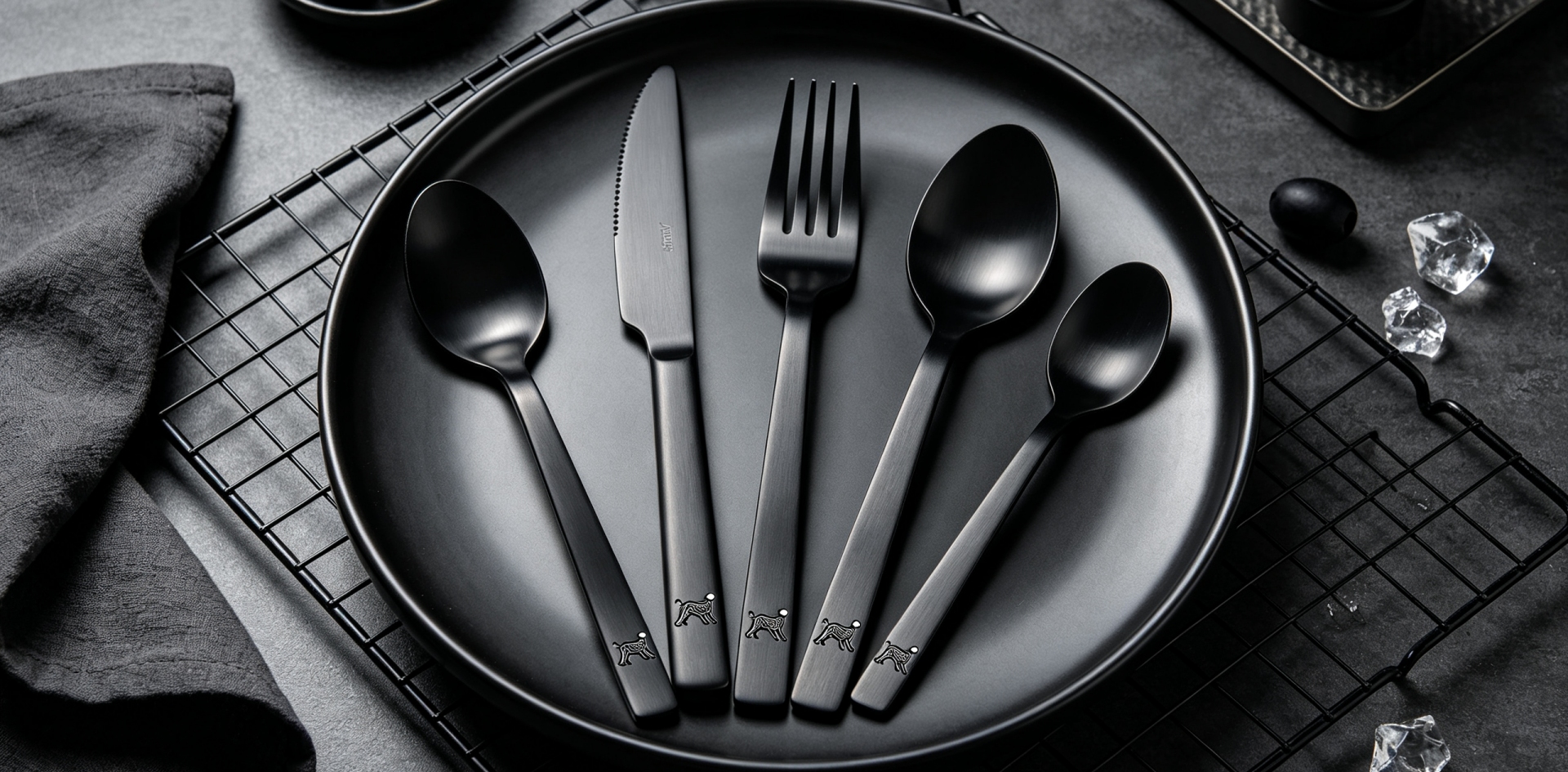
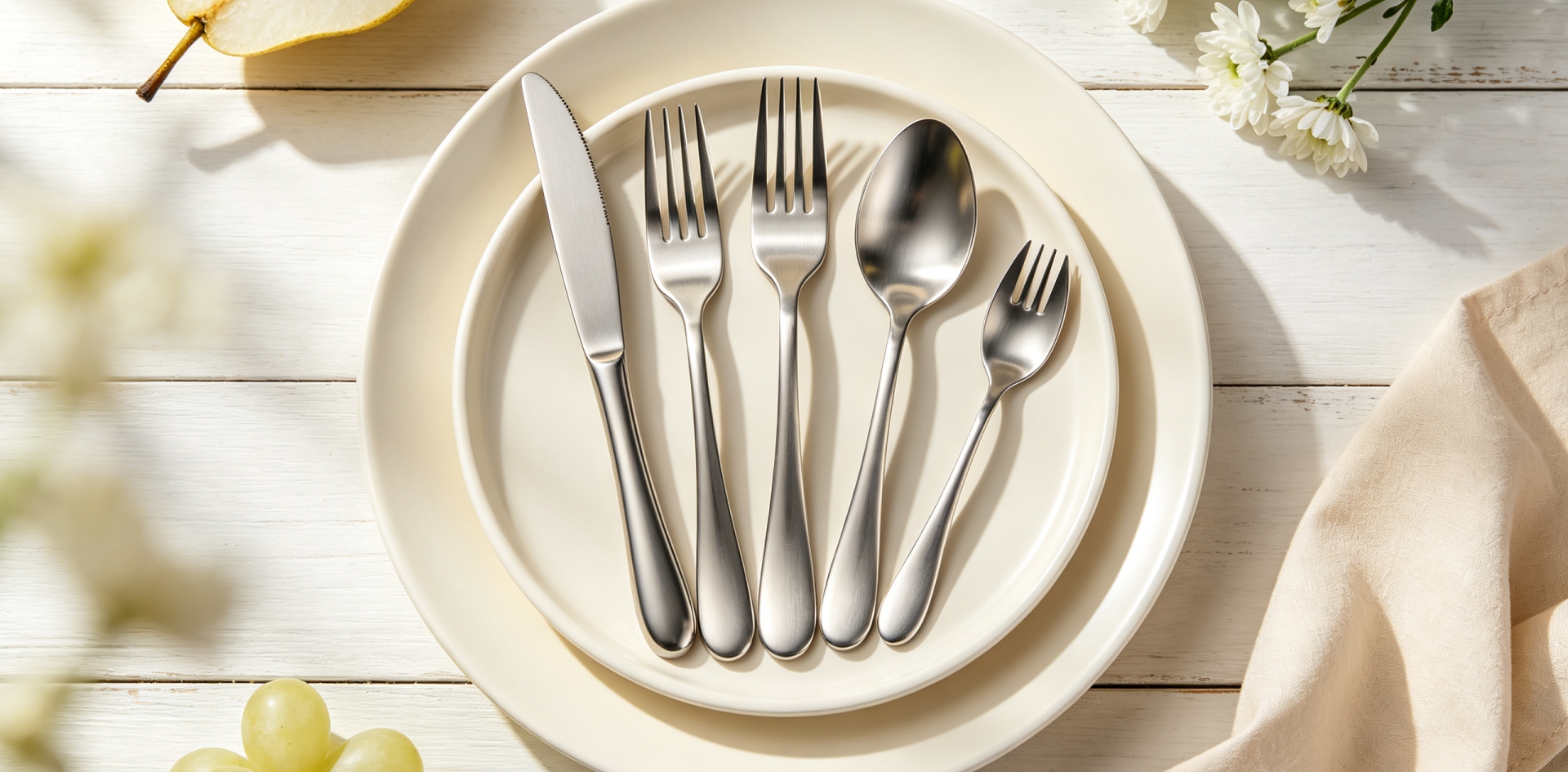
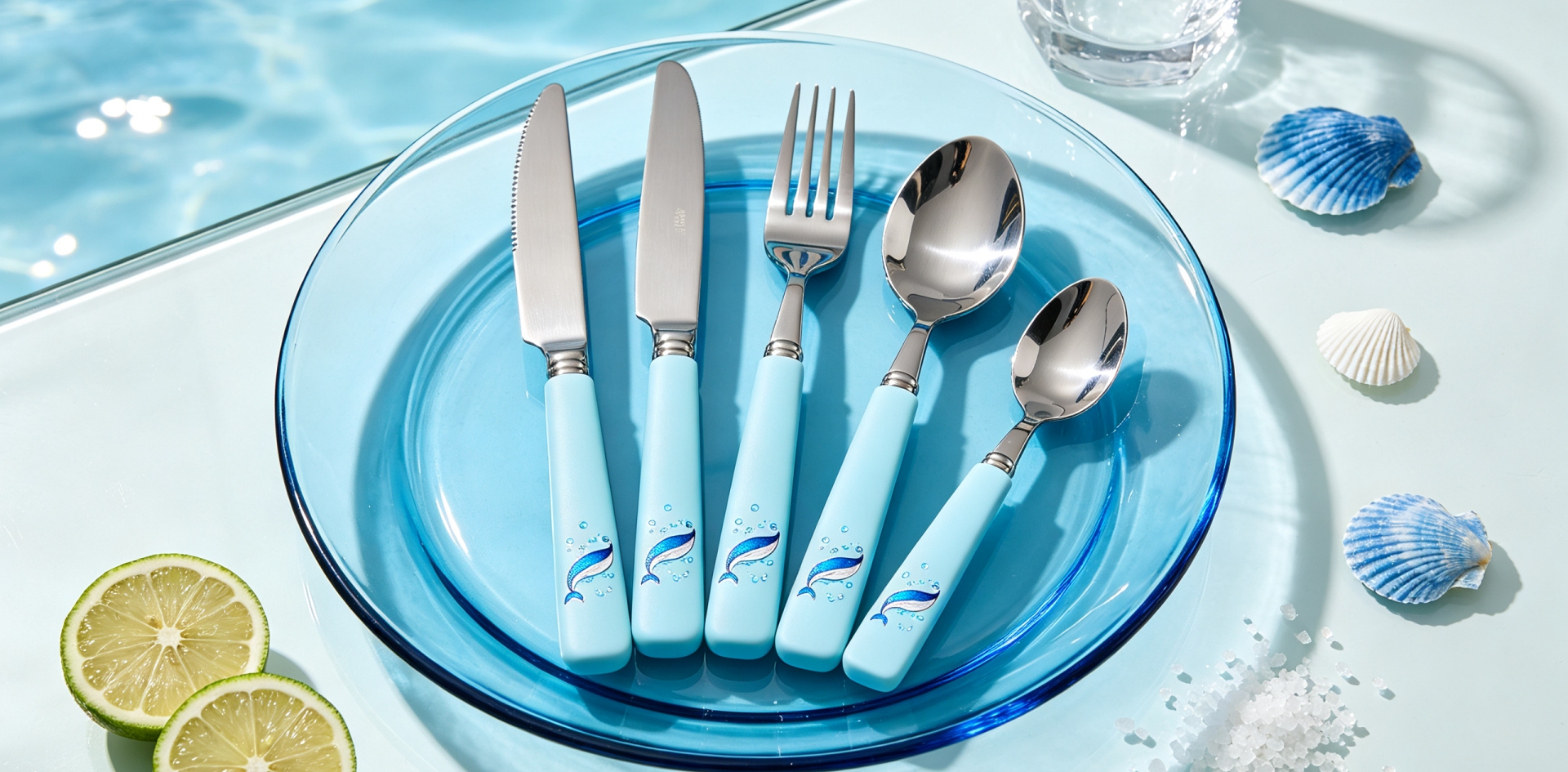
Co-Branded Cutlery Supplier | Custom Stainless Steel Flatware for Brands
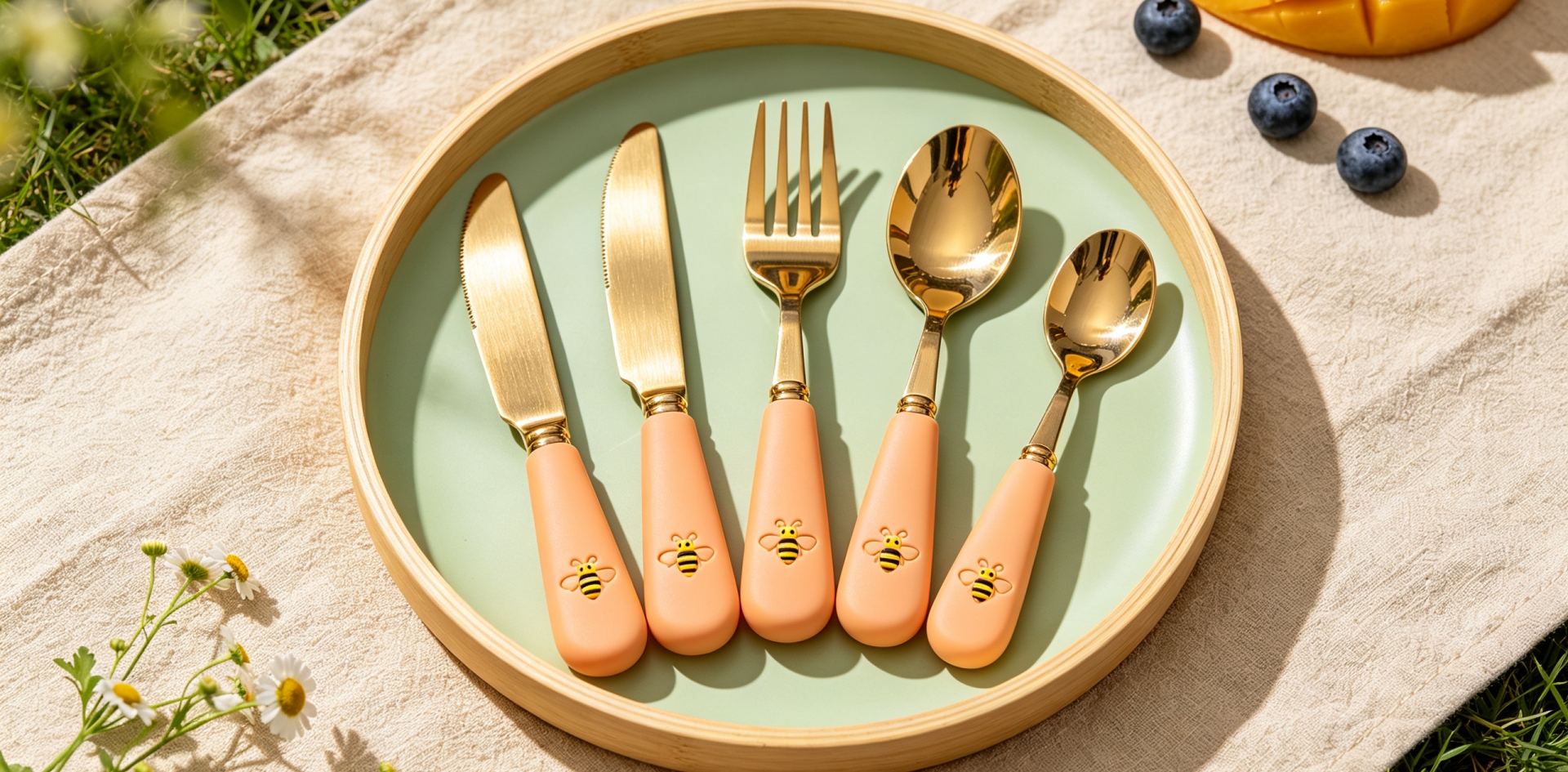
Co-Branded Cutlery Supplier: Creating Stainless Steel Flatware for Brand Partnerships
Brand collaborations can create new opportunities for companies that want to connect their identity with practical, everyday products. Stainless steel cutlery is one product category that can be adapted to different brand concepts, customer groups and commercial programs.
For a brand partnership, however, simply adding a logo to a standard spoon or fork may not be enough. The product may need to reflect the visual identity of the participating brands while still meeting practical requirements for manufacturing, packaging, quality and commercial distribution.
This is where an experienced co-branded cutlery supplier can become an important part of the project.
A professional stainless steel cutlery manufacturer can help businesses develop spoons, forks, knives and flatware sets for brand collaborations, licensed product programs and other B2B partnership projects.
What Is Co-Branded Cutlery?
Co-branded cutlery refers to products developed for cooperation between two or more commercial brands, organizations or business partners.
The branding may appear on the cutlery itself, the packaging, or both. Depending on the project, the product design can also be customized to reflect a particular brand concept.
For example, a food-related company may cooperate with a lifestyle brand to create a branded spoon collection. A hospitality brand may develop a special flatware program with another company. A consumer brand may also work with a manufacturer to create a limited commercial product series.
The exact structure depends on the partnership, but the manufacturing requirements remain important.
The stainless steel material, dimensions, shape, finish, branding, packaging and production specifications should all be clearly defined before bulk manufacturing begins.
Why Stainless Steel Cutlery Works for Brand Partnerships
Cutlery is a practical product that can be used repeatedly in homes, restaurants, hospitality environments and other commercial settings.
This gives branded stainless steel flatware a useful advantage. Instead of being a purely decorative promotional item, it can become part of the customer's daily experience with a brand.
Spoons, forks and knives can also be developed as individual products or as coordinated flatware sets.
A brand partnership may therefore use cutlery in several ways. A company can develop a special spoon, create a complete branded flatware set, or produce a customized collection for a specific sales program.
The product can be designed around the intended customer and commercial application rather than relying on a one-size-fits-all solution.
Custom Flatware for Licensed Brand Programs
Licensed brand programs require careful attention to product details.
When a product carries the identity of a recognized brand, the appearance of the finished item needs to match the approved concept. This can involve product shape, logo placement, surface finish, packaging and other visual details.
A manufacturer should therefore receive clear specifications and approved artwork before production.
For custom stainless steel flatware, the development process can begin with product references, drawings, samples or other design information. The manufacturer can then evaluate the requirements and determine how the concept can be translated into a production-ready product.
This process helps reduce misunderstandings between the brand owner, licensing partner and manufacturing team.
Developing a Custom Stainless Steel Spoon
Spoons are particularly flexible for co-branded projects.
A custom stainless steel spoon can be designed with different handle shapes, surface finishes and visual details. Depending on the project, the spoon may be produced as an individual item or included within a coordinated flatware set.
For a brand collaboration, the spoon can become a recognizable product element.
A simple stainless steel spoon may be appropriate for a practical commercial program, while a more distinctive design can be considered for a premium brand concept.
The important point is to balance brand identity with manufacturability.
A design that looks attractive on a drawing still needs to be suitable for forming, polishing, finishing, branding and mass production. Working with the manufacturer during the development stage can help identify potential production issues before the project moves into larger quantities.
Custom Flatware Design for Brand Identity
Brand identity does not have to rely only on a logo.
The overall shape and appearance of a flatware product can also communicate a brand's positioning.
Handle proportions, surface treatment, edges, curves and finish can all influence how the product is perceived.
For example, a minimalist design may suit a modern lifestyle brand, while a more decorative design may work better for a traditional or premium concept.
The manufacturer can help translate the approved design direction into stainless steel cutlery that can be produced consistently.
This is particularly important when multiple pieces are included in the same project. Spoons, forks and knives should maintain a coordinated visual language so the final set looks like one complete product family.
Co-Branded Cutlery Finishes
Surface finish can have a strong influence on the final appearance of branded stainless steel cutlery.
Polished stainless steel provides a clean and familiar appearance. Matte or brushed surfaces can create a more contemporary visual effect. Other finishes may be considered when they match the project's design direction and production requirements.
For co-branded projects, the finish should be considered together with the product shape and packaging.
A brand may have very specific expectations about how the finished product should look under different lighting conditions or when displayed in retail packaging.
Sample approval is therefore valuable before bulk production.
The physical sample allows the participating brands to review the actual appearance and confirm whether the product meets the approved concept.
Packaging for Co-Branded Flatware
Packaging is another important part of a brand partnership.
A carefully developed stainless steel spoon or flatware set can lose some of its commercial impact if the packaging does not communicate the same brand identity.
Packaging can therefore be developed around the product concept.
Depending on the sales channel, the project may use individual packaging, set packaging, branded boxes, sleeves or other suitable formats.
The packaging should also provide appropriate protection during transportation and storage.
For B2B projects, packaging requirements should be confirmed early because packaging materials, artwork, dimensions and packing methods can influence production planning and shipping arrangements.
Managing Samples Before Bulk Production
Co-branded projects often involve several parties.
There may be a brand owner, licensing partner, distributor, purchasing company and manufacturing supplier. Each party may have different expectations about the final product.
A physical sample provides a useful reference point.
Before bulk production, the buyer can review the actual spoon, fork, knife or flatware set and check important details such as shape, weight, finish, branding and packaging.
Once the final specification is approved, the manufacturer can use the approved sample and specifications as production references.
This creates a clearer foundation for larger B2B orders.
Quality and Consistency in Brand Collaboration Projects
Brand partnerships often involve products that will be sold or distributed under a recognizable identity. Consistency is therefore particularly important.
The products in a production batch should follow the approved specifications for material, dimensions, appearance, branding and packaging.
Consistency also matters for repeat orders.
If a co-branded cutlery program continues after the initial launch, future production should maintain the same product characteristics whenever the specifications remain unchanged.
An experienced stainless steel cutlery manufacturer can provide the production structure needed to support this type of long-term B2B program.
From Concept to Commercial Production
A successful co-branded cutlery project usually requires coordination across several stages.
The project may begin with the brand concept and product requirements. The next steps can include design review, material and specification confirmation, sample development, branding confirmation, packaging development and final approval.
After these details are confirmed, the manufacturer can prepare for bulk production.
This structured approach is useful because it separates creative decisions from production decisions while keeping both connected.
The goal is not simply to make a branded spoon or flatware set. The goal is to create a commercially practical product that can be produced consistently at the required quantity and delivered in suitable packaging.
Why Choose an Experienced Stainless Steel Cutlery Manufacturer?
Co-branded projects can involve more development work than standard cutlery orders.
The manufacturer needs to understand how design requirements affect production, how branding interacts with the product surface, and how packaging should be coordinated with the finished cutlery.
An experienced manufacturer can also help identify practical solutions when a proposed design needs adjustment before production.
For B2B buyers, this can reduce communication problems and make it easier to move from an initial concept to a finished product.
Homefelt: B2B Stainless Steel Cutlery Manufacturing
Homefelt Houseware Co., Limited has more than 40 years of experience in stainless steel cutlery manufacturing and supports international B2B customers with standard and customized products.
The company's product range includes stainless steel spoons, forks, knives and flatware sets, together with OEM, ODM and private-label manufacturing services.
Homefelt has experience working with well-known international brands including Tchibo, Alessi, WMF, LASSIG, Liewood, Hello Kitty, Disney and Target, among others.
The company has also passed BSCI, SEDEX 4P, BRC, ISO9001 and Disney audits, with FAMA and FSC certifications.
This combination of manufacturing experience and international B2B project experience provides a practical foundation for customized cutlery programs.
Starting a Co-Branded Cutlery Project
The easiest way to begin is to prepare the basic project information.
This may include the preferred product type, estimated quantity, design references, stainless steel requirements, surface finish, branding method, packaging concept and expected delivery schedule.
If the design is still being developed, drawings or reference products can also help the manufacturer understand the intended direction.
Once the requirements are available, the supplier can evaluate the project and discuss suitable manufacturing options.
For larger B2B programs, early communication is particularly useful. It allows the manufacturer to identify production requirements, sample needs and packaging considerations before the project reaches the bulk-order stage.
Co-branded stainless steel cutlery can provide brands with a practical way to create distinctive products while combining functionality with brand identity.
Whether the project requires a custom spoon, coordinated flatware, branded packaging or a complete co-branded cutlery program, choosing an experienced manufacturing partner can make the process more manageable.
For brands, licensing companies, distributors and business partners planning a customized stainless steel cutlery project, providing clear product requirements is the first step toward receiving a practical manufacturing proposal and quotation.
Request a Quote for Co-Branded Stainless Steel Cutlery
Contact Our Factory for Custom Flatware Development
Send Your Spoon Design Requirements for a B2B Project
Kitchenware Brand Cutlery Supplier | B2B Stainless Steel Flatware
Catering Equipment Cutlery Supplier | B2B Stainless Steel Flatware
Related Article