
Colored Stainless Steel Cutlery Batch Consistency for B2B
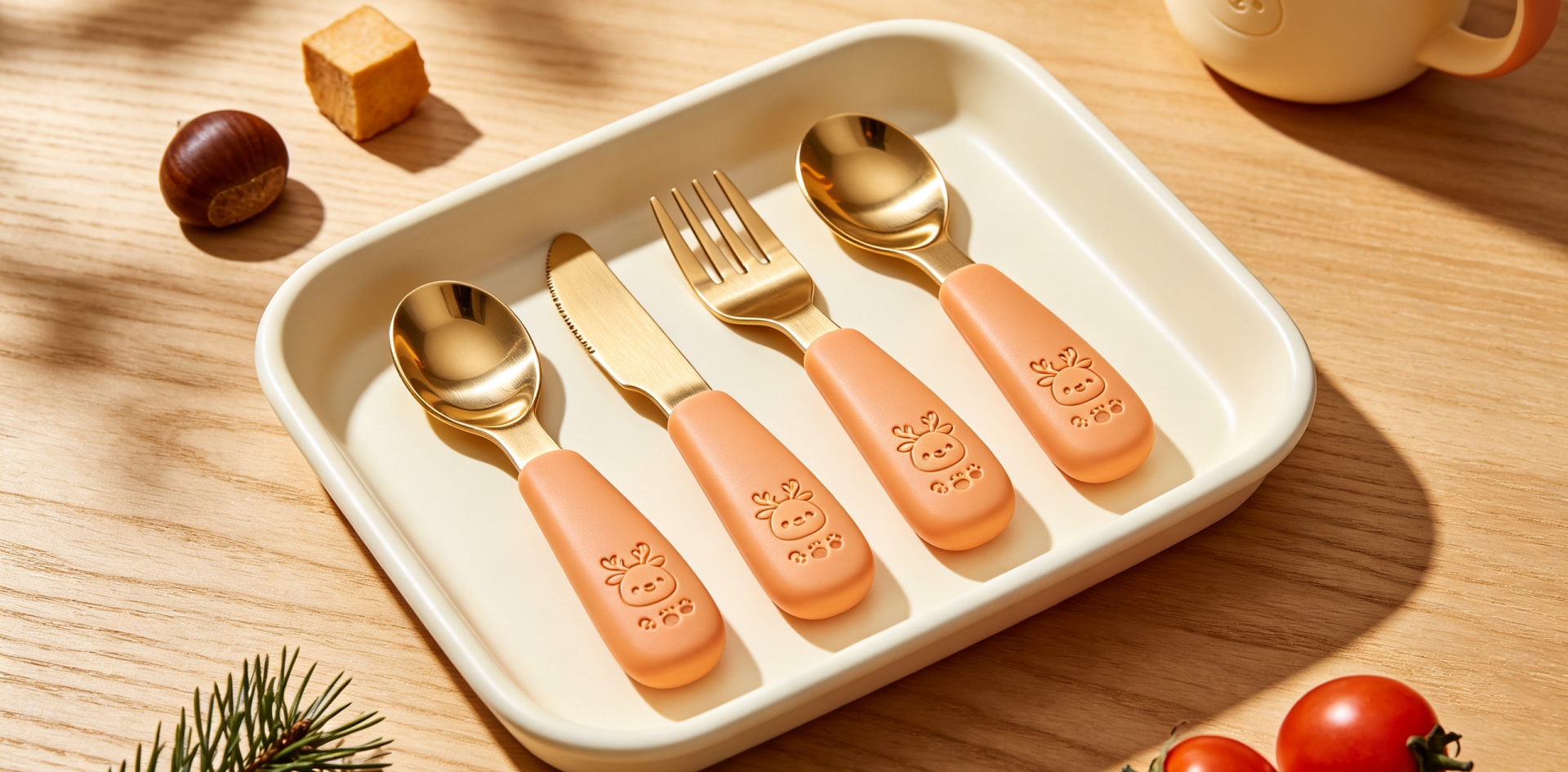
Colored Stainless Steel Cutlery Batch Consistency for B2B
Colored stainless steel cutlery has become an interesting option for brands that want to create a more distinctive flatware collection.
Gold, black, rose gold and other colored finishes can give stainless steel knives, forks and spoons a different visual identity, making them suitable for retail collections, hospitality projects and private label products.
For B2B buyers, however, developing a colored cutlery collection involves an important production consideration: maintaining a consistent appearance from the approved sample to mass production and future repeat orders.
Color consistency is not simply about choosing a color name. It is about establishing a practical reference that the manufacturer can use throughout the production process.
Why Color Consistency Matters
When a brand develops a colored stainless steel cutlery collection, the color becomes part of the product identity.
Customers may expect the spoon, fork and knife in the same collection to have a coordinated appearance. If the color difference between products is obvious, the collection may look less consistent.
The same issue can appear between different production batches.
A retailer may receive an initial order and later reorder the same product. If the second batch has a noticeably different appearance, the new inventory may not match the existing stock on the shelf.
For this reason, color consistency deserves attention during both product development and repeat production.
Color Names Are Not Always Enough
Terms such as gold, black, champagne or rose gold provide a general description, but they may not be precise enough to define a production requirement by themselves.
Two products can both be described as “gold” while having visibly different tones.
For a B2B project, the buyer and manufacturer should therefore establish a more specific reference for the desired appearance.
The approved sample can play an important role in this process.
The Sample as a Visual Reference
For custom colored stainless steel cutlery, an approved sample gives the factory a physical reference for production.
The sample can be reviewed for the overall color, surface appearance and visual relationship between the different products in the collection.
Once the sample is approved, it can serve as a reference for future production.
This is especially useful for private label brands that expect to reorder the same cutlery collection over a long period.
The buyer and factory can then compare later production against the established reference rather than relying only on a verbal color description.
Coordinating Knives, Forks and Spoons
A complete flatware collection may contain several product shapes.
The same color finish may appear on a knife, fork and spoon, but the underlying product geometry and surface characteristics can influence how the finish looks.
For example, a wider handle may reflect light differently from a narrow handle.
This means that color consistency should be considered across the entire collection rather than evaluating only one individual item.
For B2B buyers developing a coordinated collection, reviewing the knife, fork and spoon together can provide a more useful visual reference.
Managing Production Batches
Color consistency becomes particularly important when orders are manufactured in different batches.
A buyer may place one order this season and another several months later.
The second production run should be compared with the established reference so that the appearance remains commercially consistent.
The actual production conditions may vary, so the factory needs a clear standard to work toward.
This is one reason why maintaining an approved sample and clear product records is valuable for long-term cutlery programs.
Color Consistency in Repeat Orders
Repeat orders can create a different challenge from the first production run.
The buyer may already have existing inventory in the market when a new order is manufactured.
If the new products are significantly different in appearance, the buyer may have difficulty mixing old and new inventory.
For this reason, buyers should communicate clearly when a repeat order needs to match an earlier production batch.
Providing the original product reference and approved sample can help the manufacturer understand that the new production should follow the existing standard.
Different Finishes Require Different Considerations
Not all colored stainless steel cutlery uses the same finishing method.
PVD is one commonly used technology for creating colored surfaces on stainless steel cutlery, but the specific production process and finishing requirements can vary by product.
Different finishes can also create different visual characteristics.
For B2B buyers, it is therefore useful to discuss the required finish with the manufacturer rather than selecting a color only from a general product photograph.
The factory can then review the product design, surface requirements and expected production volume before confirming the manufacturing approach.
Color and Surface Appearance
Color should not be considered separately from surface finish.
A highly reflective polished surface may make a color appear different from a more subdued surface.
Similarly, scratches, surface marks or uneven finishing can affect the visual appearance of a colored product.
For a private label collection, the buyer should therefore consider both the desired color and the required surface quality.
This helps create a more complete production reference.
Developing a Custom Colored Collection
OEM manufacturing gives brands the opportunity to develop colored stainless steel cutlery according to their own product requirements.
A buyer may start with a standard cutlery shape and request a specific finish, or develop a more customized product with a unique handle design.
The manufacturer can review the design, material, finishing requirements and estimated volume before production.
Homefelt factory supports customized stainless steel knives, forks, spoons and flatware sets for B2B customers, including OEM, ODM and private label projects.
For brands developing a colored collection, the product can be reviewed as a complete program rather than as individual pieces.
This helps maintain a coordinated appearance across the range.
Managing Color During Sampling
The sampling stage is an important opportunity to confirm the expected appearance.
Instead of approving a colored cutlery sample based only on a photograph, buyers can review the physical sample and confirm whether the color and surface appearance meet the project requirements.
If adjustments are needed, they can be discussed before mass production.
This can reduce the risk of discovering a major appearance difference after a large quantity has already been manufactured.
For larger B2B programs, taking the time to confirm the visual reference before production can be valuable.
What Buyers Should Communicate
When requesting a quotation for colored stainless steel cutlery, buyers can provide several useful details:
Product type
Stainless steel specification
Desired color
Surface finish
Reference sample if available
Quantity
Individual pieces or sets
Packaging requirements
Expected repeat-order requirements
The more clearly the project is defined, the easier it is for the manufacturer to understand the desired result.
Color Consistency and Private Label Brands
For private label brands, color can become part of the brand's visual language.
A distinctive colored cutlery collection may be used across several products or product launches.
In this situation, consistency becomes even more important because the customer may associate the color with the brand itself.
A clear physical reference and documented product requirements can help the manufacturer reproduce the product more consistently over time.
Planning for Future Orders
If a buyer expects to reorder the same colored cutlery, the original production reference should be retained.
The buyer can keep the approved sample, product reference and relevant specifications as part of the product file.
When a new order is placed, these references can be provided again to the manufacturer.
This gives both sides a clearer basis for discussing repeat production.
It is especially useful when the product has been on the market for several years or when the original purchasing team has changed.
Choosing a Manufacturer for Colored Cutlery
A supplier for colored stainless steel cutlery should be able to discuss more than the available color options.
The manufacturer should understand the relationship between product design, surface finish, sampling and repeat production.
For B2B customers, this is important because a successful colored cutlery program may require continuing supply over multiple production cycles.
Homefelt combines stainless steel cutlery manufacturing experience with OEM, ODM and private label production capabilities. The factory can manufacture customized knives, forks, spoons and complete flatware sets for wholesale and large-volume orders.
Buyers can provide their desired product design, color direction, quantity and target market when requesting a quotation.
Building a Consistent Colored Flatware Program
Colored stainless steel cutlery can give a B2B product range a distinctive appearance, but the visual standard needs to be clearly defined.
An approved sample, clear product reference and consistent communication can help connect the first production run with future orders.
For brands, distributors and wholesalers, this approach makes it easier to manage colored cutlery as a long-term product rather than treating every production batch as a separate project.
Whether the requirement is a gold stainless steel flatware set, black cutlery collection or another customized finish, discussing the visual standard with the manufacturer before bulk production can create a clearer path from sample approval to repeat supply.
Custom Colored Stainless Steel Cutlery
OEM & ODM Stainless Steel Flatware Manufacturing
Stainless Steel Cutlery Price Tiers for B2B Product Lines
Stainless Steel Cutlery After-Sales Support for B2B Buyers
Related Article



