
Colored Stainless Steel Cutlery for B2B Private Label Orders
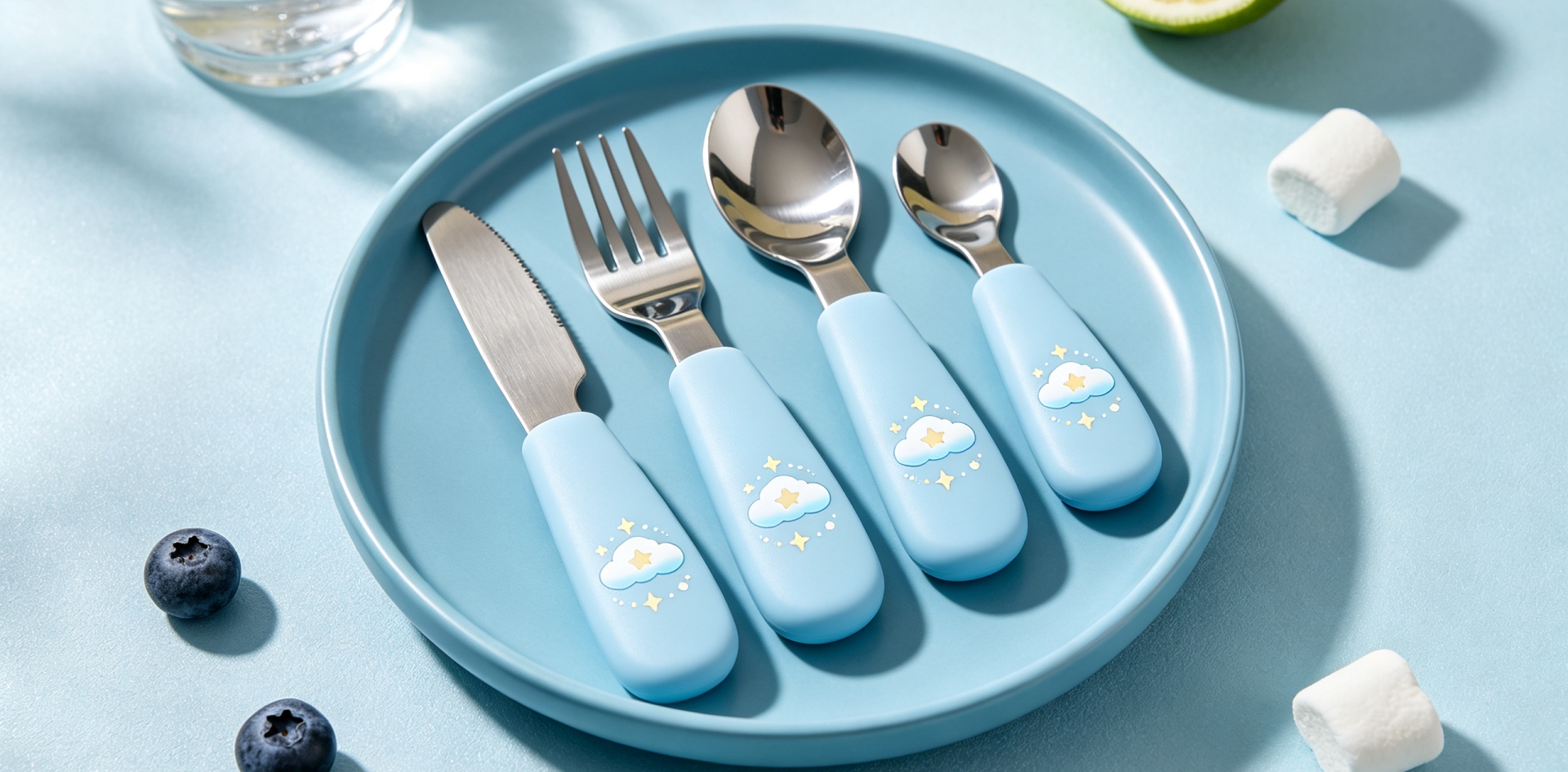
Colored Stainless Steel Cutlery for B2B Private Label Orders
For brands developing a distinctive stainless steel flatware collection, color can become an important part of the product identity. Colored knives, forks, spoons, and complete cutlery sets can create a different visual direction from traditional silver-tone stainless steel products.
However, for B2B buyers, a colored cutlery project involves more than selecting an attractive color. When products are manufactured in commercial quantities, the buyer also needs to consider sample approval, color reference, production consistency, and the relationship between different items in the same collection.
For private label brands, wholesalers, and distributors, these details can influence how successfully a customized colored flatware range performs in the market.
Why Colored Cutlery Requires Clear Specifications
A standard stainless steel cutlery product may already have an established surface appearance. A colored product adds another layer of product specification.
The buyer may have a particular brand color, a reference sample, or a target visual effect in mind.
Simply describing a product as “gold,” “black,” or another color may not provide enough information for a manufacturing project.
A B2B buyer should therefore establish a clear color reference during product development. This gives the manufacturer a defined target when preparing samples and production.
For a private label collection, the color should also be considered together with the overall design, packaging, and positioning of the product.
Sample Approval Before Bulk Production
For customized colored stainless steel cutlery, sample approval is an important part of the development process.
A physical sample allows the buyer to evaluate the actual product rather than relying only on digital images.
The buyer can review the overall appearance and determine whether the color works with the intended product design.
Once the sample has been approved, it can serve as an important reference for the commercial production order.
This process is particularly useful when a brand plans to purchase large quantities and wants to establish a clear visual standard before committing to bulk manufacturing.
Maintaining Consistency Across Knives, Forks, and Spoons
A complete flatware collection usually includes several product types.
The knife, fork, and spoon may have different shapes and manufacturing processes, but they are expected to look like part of the same collection.
For colored stainless steel cutlery, this means that the appearance of the different pieces needs to be considered as a complete product group.
A buyer may want a matching color across all pieces in a collection, including individual cutlery and complete sets.
Discussing this requirement with the manufacturer during development helps establish a consistent product target.
Color and Private Label Brand Identity
For private label brands, a distinctive color can become part of the visual identity of a collection.
A brand may choose a specific tone to complement its packaging, logo, retail environment, or broader homeware range.
When the color becomes part of the product identity, it should be treated as a defined product specification rather than an informal preference.
This becomes increasingly important when the same collection is reordered.
The factory needs a clear reference to understand what the buyer expects from future production.
Supporting Repeat B2B Orders
A successful colored flatware product may be reordered several times.
For a distributor or brand, the goal is usually to maintain a recognizable product appearance as the collection moves from one production batch to another.
This requires the manufacturer to retain the relevant product information and approved references.
The buyer should also keep records of the approved sample and product specifications.
When a repeat order is placed, these references can be used to establish the production requirements again.
This helps create a more organized process for long-term private label supply.
Different Colors for Different Product Collections
B2B buyers may also use color to differentiate product collections.
A homeware brand could develop one stainless steel flatware range in one color and another collection with a different visual direction.
A distributor might offer several colors to different customer groups or sales channels.
This can create additional SKU requirements for the manufacturer.
When several colored products are involved, each variation should have a clear product reference so that the purchasing and production teams can distinguish between them.
This is especially important when several colors are ordered within the same commercial program.
Colored Cutlery for Wholesale Programs
Wholesale buyers often need products that are visually distinctive while remaining suitable for commercial production.
Colored stainless steel cutlery can provide an alternative to conventional silver-tone flatware and may be suitable for homeware brands, hospitality suppliers, retailers, and other B2B channels.
The appropriate product specifications depend on the buyer's market and sales strategy.
A manufacturer can discuss the available options according to the required product type, finish, quantity, and commercial positioning.
For larger wholesale programs, establishing clear specifications before production is particularly important because a small difference can affect a large number of units.
OEM and ODM Colored Flatware
OEM projects allow buyers to provide their own product specifications and branding requirements.
A company may already know the exact design and color it wants and ask the manufacturer to produce the products according to those requirements.
ODM projects can involve more collaboration during product development.
The manufacturer may help the buyer determine how the desired appearance can be achieved within the practical requirements of stainless steel cutlery production.
In both cases, color should be discussed together with the complete product design rather than treated as an isolated feature.
The Manufacturing Perspective
For a stainless steel cutlery factory, producing colored products involves coordinating the product material, surface preparation, finishing process, and production conditions.
The final appearance depends on the complete manufacturing process.
This is why an experienced manufacturer will normally want to understand the buyer's requirements before confirming the production solution.
The buyer can provide product references, samples, target colors, estimated quantities, and other relevant information.
The factory can then evaluate the project and determine the appropriate manufacturing approach.
Planning a Commercial Color Program
For a B2B buyer planning several colored cutlery products, it can be useful to prepare a simple product matrix.
The matrix can identify each SKU, product type, color, quantity, packaging requirement, and intended market.
This gives the manufacturer a clearer overview of the project.
It can also help the buyer understand how many individual products are involved and which items belong to the same collection.
For large private label programs, this type of organization can make communication significantly easier.
Homefelt for Custom Colored Stainless Steel Cutlery
Homefelt manufactures stainless steel knives, forks, spoons, cutlery sets, and flatware for B2B customers.
The factory supports OEM, ODM, private label, custom manufacturing, wholesale, and bulk production projects.
For brands interested in customized colored stainless steel cutlery, the project can be discussed according to the desired product design, color requirements, quantities, and overall commercial objectives.
Whether the buyer needs a small customized collection or a larger wholesale program, the first step is to define the product requirements clearly.
From Color Concept to Bulk Production
A colored cutlery project begins with a visual idea, but successful commercial production requires that idea to become a clear manufacturing specification.
The buyer and factory need to establish the product design, color reference, sample approval, and production requirements before the bulk order is confirmed.
Once these details are agreed, the manufacturer can organize production according to the approved product.
For a private label brand, this creates a stronger foundation for future reorders and collection expansion.
Conclusion
Colored stainless steel cutlery can give B2B brands and distributors another way to create a distinctive flatware collection.
The key to a successful project is not simply selecting a color. It is establishing a clear reference, approving the sample, coordinating the complete cutlery collection, and maintaining the agreed product specifications for future production.
For OEM, ODM, private label, wholesale, and bulk orders, working with an experienced stainless steel cutlery manufacturer can help turn a color concept into a commercially practical product range.
Homefelt supports international B2B customers with custom stainless steel knives, forks, spoons, and flatware sets for a variety of product programs.
If you are planning a colored stainless steel cutlery collection, providing your target design, color reference, product requirements, and estimated quantities can be a practical starting point for a factory quotation and manufacturing discussion.
Request a Quote for Colored Stainless Steel Cutlery
Discuss Your Private Label Flatware Collection
Explore OEM and ODM Cutlery Manufacturing
Custom Engraved Stainless Steel Cutlery for B2B
B2B Stainless Steel Cutlery Export for International Buyers
Related Article



