Stainless Steel Cutlery Manufacturer | Custom Order & MOQ Guide

was sagt die bezeichnung 18 8 auf besteck aus
Viele fragen sich beim Kauf von Besteck: was sagt die bezeichnung 18 8 auf besteck aus. Diese Kennzeichnung beschreibt die Zusammensetzung des Edelstahls und ist ein wichtiges Qualitätsmerkmal. Die Zahl 18 steht für 18% Chrom, die 8 für 8% Nickel. Diese Legierung sorgt für Korrosionsbeständigkeit und einen schönen Glanz. Chrom verhindert Rostbildung, während Nickel den Stahl härter und glänzender macht.
Homefelt als etablierte Produktionsstätte mit über 30 Jahren Erfahrung legt großen Wert auf diese Qualitätsstandards. Wir verwenden für unsere Bestecklinien Edelstahl mit exakter Legierung, um Haltbarkeit, Glanz und einfache Reinigung zu garantieren. Homefelt weiß, dass Konsumenten Wert auf Materialien legen, die nicht nur gut aussehen, sondern auch hygienisch und langlebig sind.
Viele unserer Kunden suchen gezielt nach solchen hochwertigen Materialien, etwa wenn sie ein besteck set spülmaschinenfest benötigen. Durch die Legierung 18/8 wird das Besteck nicht nur robuster, sondern behält auch nach vielen Spülgängen seinen Glanz. In unserer Fertigung achten wir darauf, dass Kanten sauber verarbeitet und Oberflächen perfekt poliert werden, damit auch in der professionellen Nutzung alles den hohen Ansprüchen entspricht.
Ein weiteres Beispiel für exzellentes Design und Verarbeitung ist das besteck engl. Es steht für klassische Eleganz mit einer dezenten Linienführung, die zeitlos wirkt. Solche Sets sind beliebt in der Gastronomie, aber auch in privaten Haushalten, die Wert auf einen edlen, internationalen Stil legen. Homefelt bietet eigene Designs in diesem Stil an und sorgt durch strenge Qualitätskontrollen für gleichbleibend hohe Standards.
Nicht zu vergessen ist das traditionsreiche besteck nivella solingen, das in Deutschland für seine Messerqualität bekannt ist. Auch Bestecklinien mit diesem Namen stehen für sorgfältige Verarbeitung und ausgesuchte Materialien. Homefelt setzt ebenfalls auf diese Philosophie – jedes Stück Besteck soll durch Funktionalität und Langlebigkeit überzeugen. Unsere Fabrik bietet sowohl klassische als auch moderne Designs und produziert neben Besteck auch Küchenmesser, Grillwerkzeuge und Spezialanfertigungen.
Die Bezeichnung 18/8 ist für Homefelt ein Synonym für Verantwortung: Wir möchten unseren Kunden Produkte liefern, die nachhaltig sind und viele Jahre Freude machen. Unsere Produktion arbeitet umweltschonend und achtet auf eine ressourcenschonende Verarbeitung. Dabei sind wir flexibel und können sowohl große Serien für den Handel als auch maßgeschneiderte Sonderwünsche erfüllen.
Homefelt ist Ihr Partner für Besteck in Edelstahlqualität – egal ob für die Gastronomie, den Einzelhandel oder Direktvertrieb. Wir verstehen, was unsere Kunden wollen: Zeitlose Schönheit, hygienische Materialien und faire Preise. Mit mehr als drei Jahrzehnten Erfahrung bieten wir Ihnen Lösungen, die überzeugen.
Wenn Sie auf der Suche nach einem hochwertigen, spülmaschinenfesten besteck set spülmaschinenfest sind oder sich für elegante Designs wie besteck engl interessieren, ist Homefelt Ihr kompetenter Ansprechpartner. Vertrauen Sie auf unsere Erfahrung und Qualität.
Stainless Steel Cutlery Manufacturer: How to Plan a Custom Order for Your Business
Ordering stainless steel cutlery for a business involves more than selecting a product from a catalog and confirming a quantity. For wholesalers, distributors, retailers, restaurants, hospitality suppliers and private label brands, a successful order needs to match product requirements with expected demand, target pricing and future purchasing plans.
This becomes even more important when the project involves customized stainless steel spoons, forks, knives or complete flatware sets.
A professional Stainless Steel Cutlery Manufacturer can help B2B buyers move from an initial product idea to a practical order by reviewing specifications, quantities, samples, branding and packaging requirements.
Understanding how these elements connect can make the purchasing process more efficient and help buyers prepare a clearer inquiry.
Start With Your Expected Market Demand
Before discussing order quantities, buyers should first consider how the products will be sold.
A distributor may purchase cutlery for several customers, while a retailer may be preparing a new product launch. A private label brand may be testing a new collection before expanding it into a larger range.
These different situations can result in very different purchasing requirements.
A buyer should consider:
Expected sales volume
Number of SKUs
Target market
Sales channel
Product launch schedule
Potential repeat orders
Future product expansion
The initial order does not always need to represent the buyer's total long-term demand.
For a new product, the first shipment may be used to test the market. If the product performs well, later orders can increase as sales become more predictable.
This is why it is useful to discuss both the initial order and potential future demand with the manufacturer.
What Does MOQ Mean for Custom Cutlery?
MOQ, or minimum order quantity, is an important consideration for many B2B buyers.
The practical MOQ for a custom stainless steel cutlery project can depend on the product design, customization requirements, packaging and manufacturing arrangements.
A standard product may have different purchasing conditions from a completely customized design.
For example, developing a new handle shape or customized product structure may involve additional preparation compared with ordering an established product.
Packaging can also influence the order structure. Individual retail packaging, customized boxes or branded sets may require additional production arrangements.
Instead of focusing only on one fixed quantity, buyers should explain their project requirements and expected demand.
The manufacturer can then evaluate the order according to the actual specifications.
Planning Quantity Across Multiple SKUs
A common challenge for retail brands and distributors is deciding how to divide an order across several products.
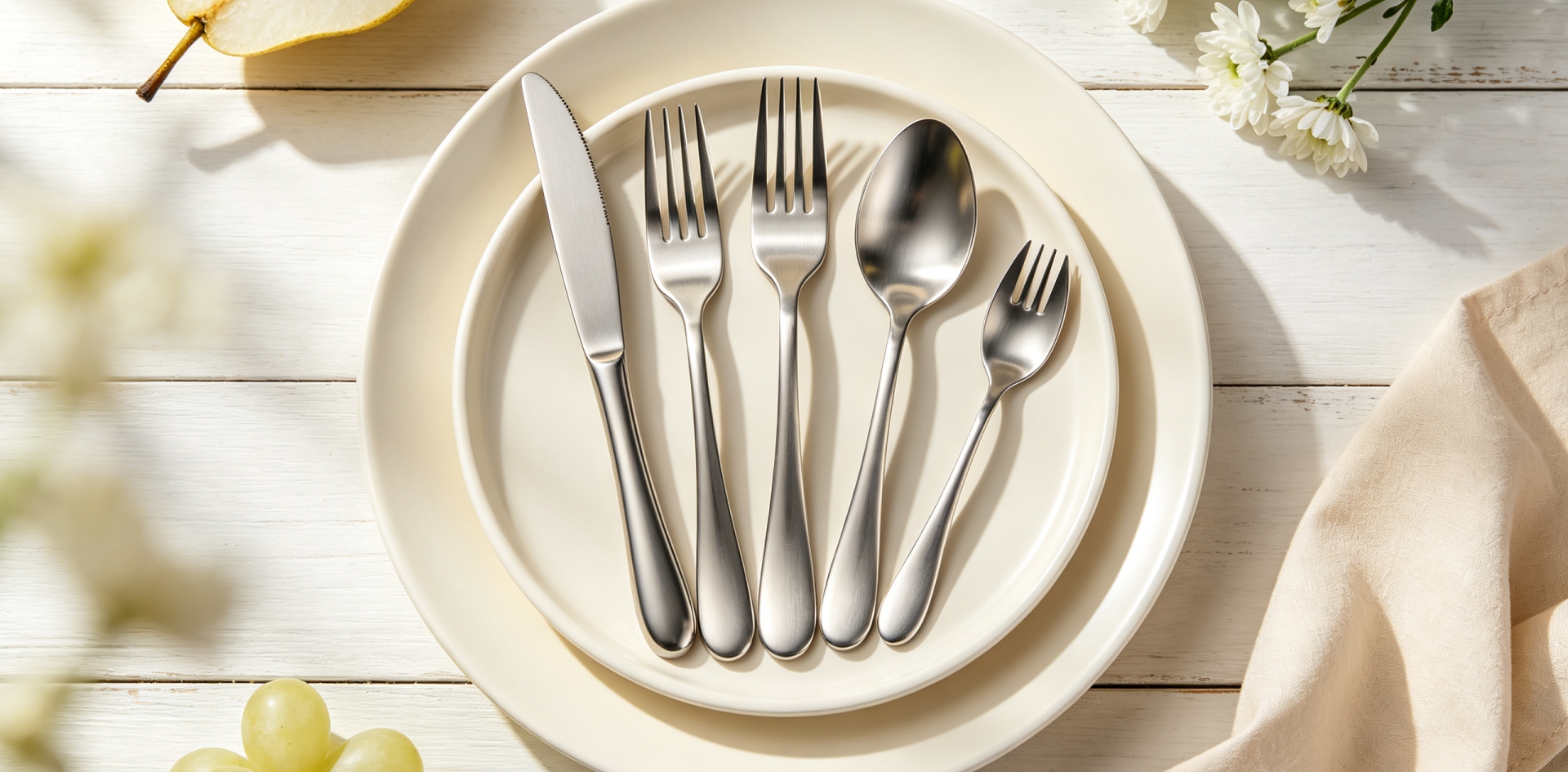
A complete cutlery collection may include dinner spoons, table forks, knives, teaspoons and additional serving pieces.
Ordering a large quantity of one product may not always make sense if the remaining products are needed in smaller quantities.
Buyers should therefore consider the complete SKU structure.
For example, a new collection may begin with several core products and later expand into additional matching pieces.
Planning the product range together can help create a more practical purchasing strategy.
It can also make packaging and product presentation more consistent.
Custom Product Requirements and Order Quantity
Customization can involve many different levels.
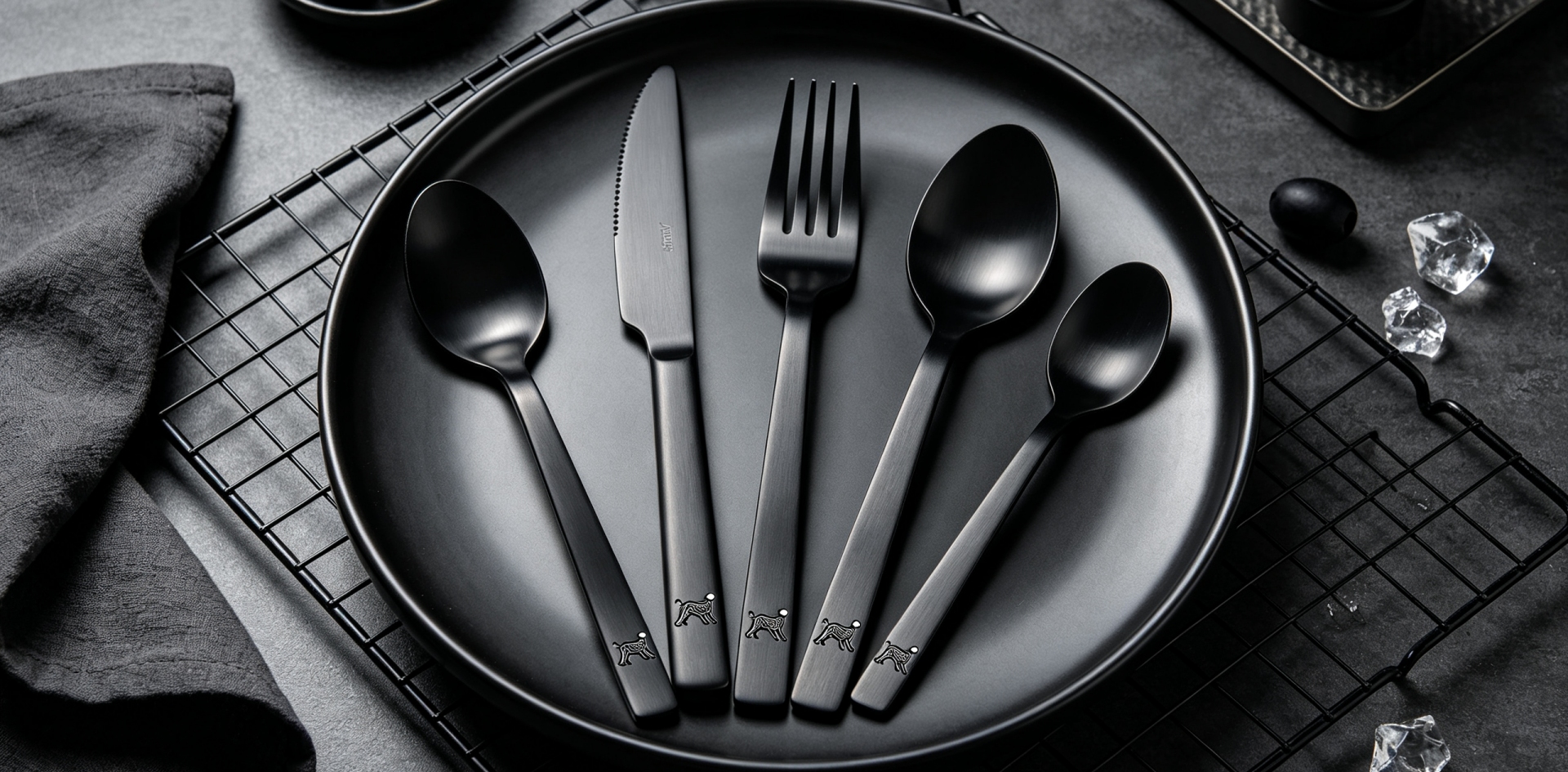
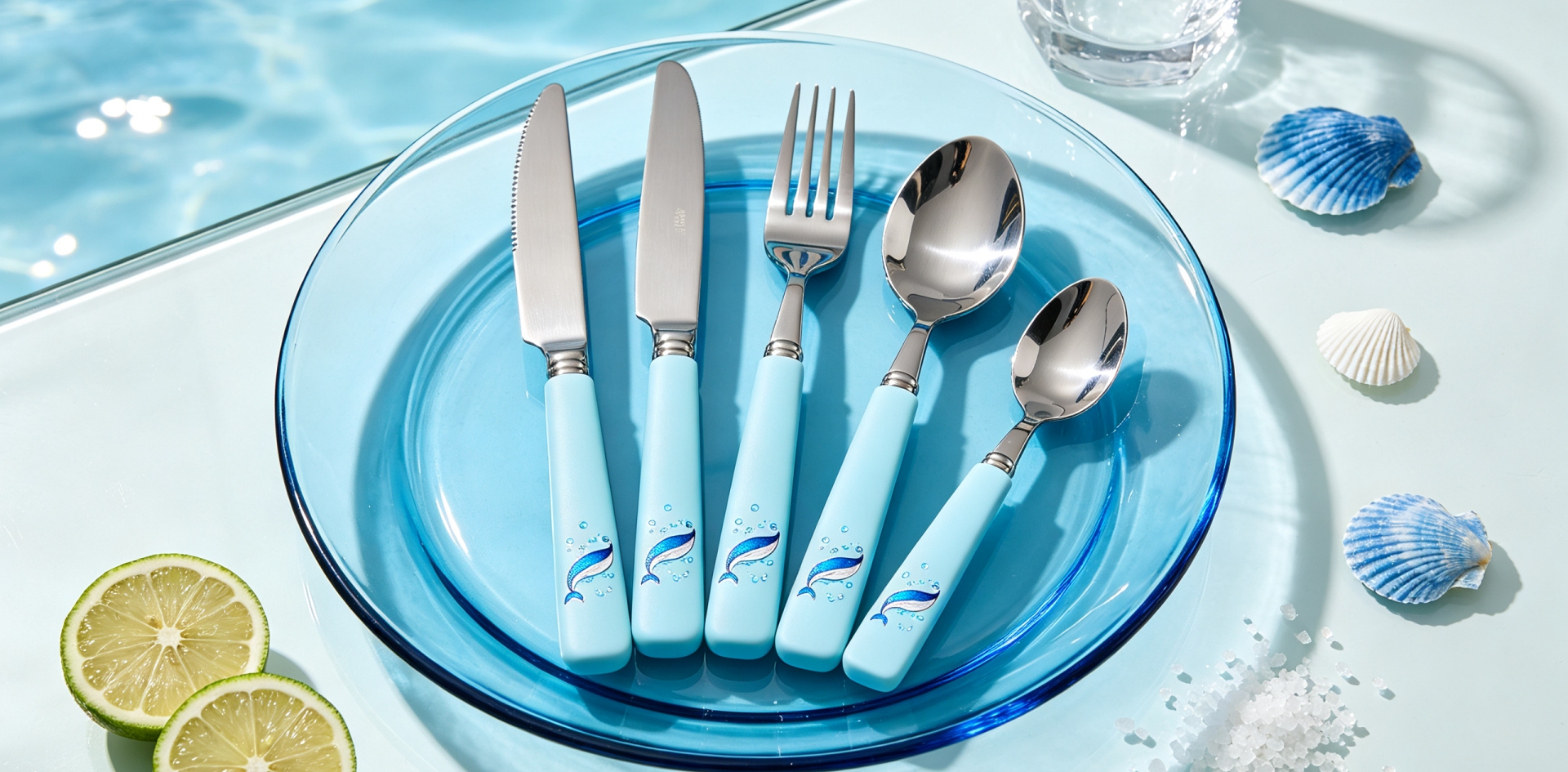
Some buyers may only need their company logo on an existing cutlery design.
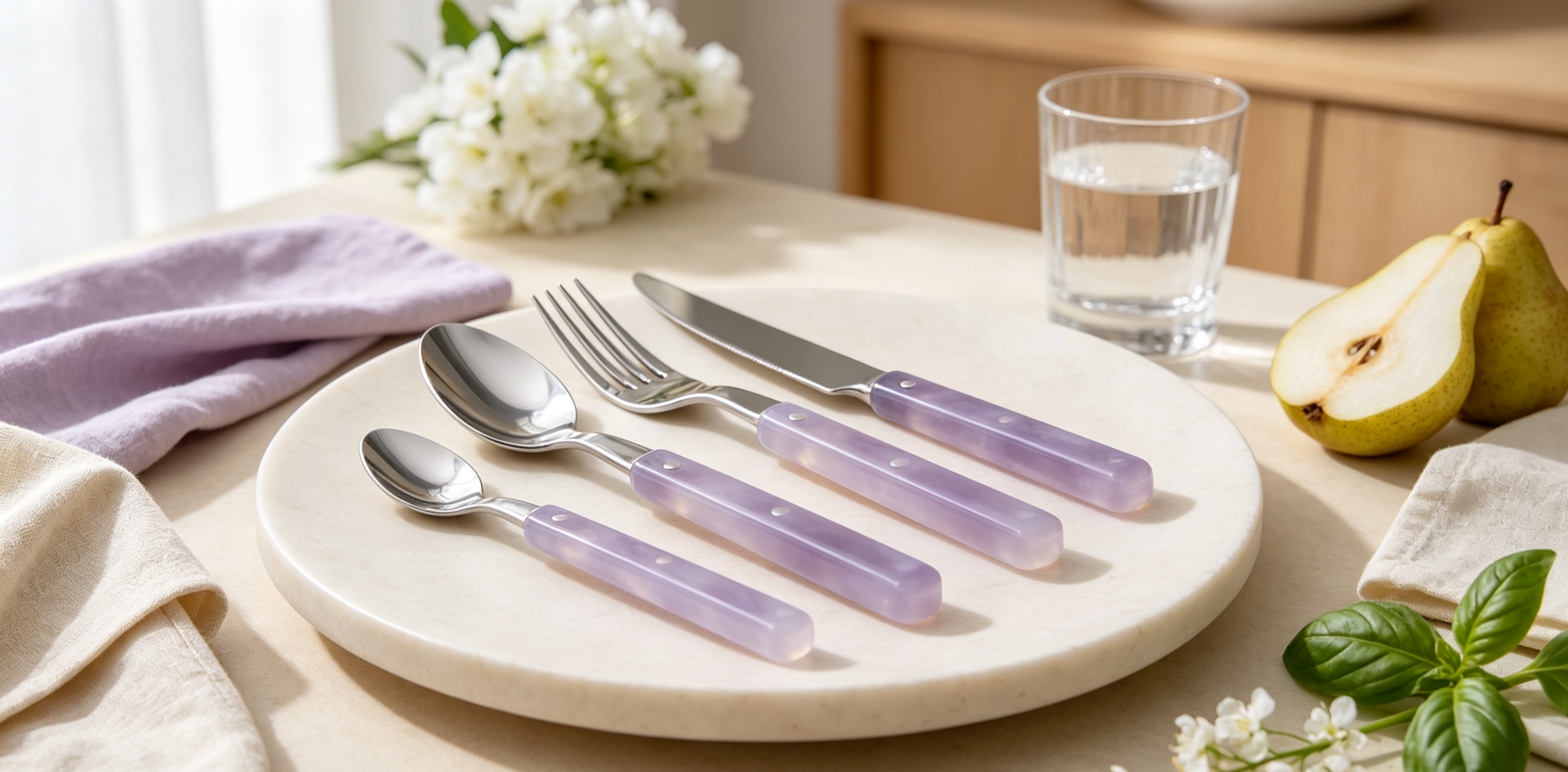
Others may require customized handles, product dimensions, surface finishes or packaging.
The more customized a product becomes, the more important it is to establish clear specifications before discussing the final order.
A Stainless Steel Cutlery Manufacturer may need information such as:
Product type
Material specification
Product dimensions
Thickness
Approximate weight
Handle design
Surface finish
Branding method
Packaging format
Estimated quantity
These details allow the manufacturer to understand what needs to be produced and provide a more relevant quotation.
Why Samples Should Come Before Bulk Orders
For customized products, samples are an important part of the purchasing process.
A sample gives the buyer a physical product to evaluate before moving into larger-scale production.
This is particularly useful when the buyer has specific expectations for appearance, weight, balance or surface finish.
During sample evaluation, buyers can check whether the product matches their intended market position.
They can also review the handle shape, product dimensions, logo placement and packaging if these elements are included in the project.
Once the sample is approved, it can provide an important reference for bulk production.
This helps create a clearer connection between product development and the final order.
How Customization Can Affect Pricing
The price of stainless steel cutlery depends on more than the basic product shape.
Material, product weight, construction, finishing, customization, packaging and order quantity can all influence the final quotation.
For example, a heavier product may require more material than a lightweight design.
A customized surface finish may involve additional production requirements.
Branded packaging can also affect the total cost.
This means buyers should avoid comparing quotations based only on the unit price if the specifications are different.
A useful comparison should be based on equivalent product requirements.
When requesting a quote, providing complete information can help manufacturers prepare a more accurate commercial proposal.
Balancing Quality and Target Price
Every B2B project has a target price, but price should be considered together with the intended product quality and market positioning.
An affordable everyday cutlery collection may have different requirements from a premium private label range.
Similarly, products intended for hospitality use may have different specifications from products designed for retail consumers.
The buyer should therefore communicate the target market and intended positioning whenever possible.
This gives the Stainless Steel Cutlery Manufacturer more context when discussing product specifications.
Instead of simply asking for the cheapest available product, buyers can ask for options that meet a particular commercial objective.
This approach can make the quotation process more useful.
Choosing Between Standard and Custom Products
Standard products can be an efficient choice when the buyer needs an established design and wants to move toward production quickly.
Custom products are more suitable when differentiation is important.
For example, a private label brand may want a distinctive handle shape that is not commonly available from standard suppliers.
A retailer may want a particular finish and packaging combination.
A distributor may need a product configuration designed for a specific customer segment.
There is no single correct approach.
The right choice depends on the buyer's market, product strategy, order quantity and development budget.
An experienced manufacturer can discuss both standard and customized approaches with the buyer.
Preparing Branding Requirements
If the order includes private labeling, branding details should be prepared early.
The buyer may need to provide a logo file, preferred logo position and preferred branding method.
The branding should be considered together with the product design.
For example, the available space on a handle can influence where a logo can be placed.
Packaging branding also needs to be coordinated with the product.
If the cutlery is sold as a retail set, the package should clearly communicate the brand and product information.
Planning these details before production can help avoid unnecessary changes later.
Planning Custom Packaging
Packaging is another important part of a custom order.
B2B buyers may require bulk cartons for wholesale distribution or customized retail packaging for consumer sales.
The packaging format can depend on the sales channel.
A retail product may require a branded box, sleeve or other presentation format.
A hospitality supplier may prioritize efficient protective packaging for larger quantities.
When requesting a quotation, buyers should describe their packaging expectations clearly.
This allows packaging requirements to be considered alongside the product rather than added unexpectedly at the final stage.
Preparing for Bulk Production
Once the product, sample and commercial terms have been confirmed, the order can move toward bulk production.
At this point, clear specifications are particularly important.
The approved sample, product details, finish, branding and packaging requirements should provide a common reference for the production team.
For a B2B buyer, this is also the stage where production planning becomes important.
The order may need to coordinate with a product launch, promotional campaign, seasonal sales period or customer delivery schedule.
Providing a realistic purchasing timeline helps the manufacturer understand the importance of the required delivery date.
Planning Repeat Orders From the Beginning
A good custom cutlery order should not be viewed as an isolated transaction.
If the product performs well, the buyer may need to reorder the same design.
Retailers may also expand their collection by adding matching products.
For this reason, buyers should think about future orders when developing the first product.
Keeping clear product specifications and approved samples can make future purchasing more efficient.
The buyer can then reorder the established product or use the existing collection as the foundation for additional development.
This is especially valuable for private label brands building a long-term tableware category.
Working With an Experienced Stainless Steel Cutlery Manufacturer
Manufacturing experience can make a significant difference when a project includes several requirements at the same time.
The buyer may need to coordinate product design, materials, finishing, branding, packaging, quantity and delivery.
An experienced manufacturer understands that these elements are connected.
Homefelt has more than 40 years of experience in stainless steel cutlery manufacturing and has worked with international brands and B2B customers. Its services include OEM, ODM and customized stainless steel cutlery projects.
For B2B buyers, this experience can be useful when developing a project that needs to move from an initial idea into repeatable commercial production.
The goal is to create a practical solution that matches the buyer's business requirements rather than simply producing a product according to a basic description.
How to Prepare a Better Cutlery Inquiry
A well-prepared inquiry can help speed up communication between the buyer and manufacturer.
Instead of sending only a product photograph and asking for a price, buyers can provide several basic details.
A useful inquiry may include:
Product photographs or drawings
Required product type
Material preference
Dimensions or thickness
Surface finish
Estimated quantity
Number of SKUs
Logo requirements
Packaging requirements
Target market
Expected delivery schedule
Reference samples, if available
Not every project will have all of these details at the beginning.
Even basic information can be useful.
If the buyer is still developing the product, the manufacturer can discuss the remaining requirements during the next stage.
Making the Order Process More Efficient
The most efficient custom cutlery projects usually have clear communication from the beginning.
The buyer explains the business objective.
The manufacturer reviews the product requirements.
Samples are developed when necessary.
The buyer evaluates and confirms the sample.
The specifications are finalized.
The quotation and order details are confirmed.
Production begins according to the approved requirements.
The products are inspected and prepared for shipment.
Future orders can then follow the established product specifications.
This structure provides both sides with a clearer understanding of what is expected.
A Custom Cutlery Order Is More Than a Quantity
For B2B buyers, the quantity is only one part of the purchasing decision.
A successful order needs to combine product quality, commercial positioning, customization, packaging and supply planning.
The right Stainless Steel Cutlery Manufacturer should be able to understand these different requirements and help the buyer develop a practical solution.
Whether the project involves a few customized SKUs or a complete private label flatware collection, early planning can make the process easier.
Buyers who clearly define their product requirements, estimated quantity and market objectives can usually have more productive discussions with potential suppliers.
Start Planning Your Stainless Steel Cutlery Order
If you are preparing a new cutlery project, you do not need to have every detail finalized before contacting a manufacturer.
Start with the products you need, your approximate quantity and your target market.
Then provide any available drawings, photographs, samples or branding information.
An experienced manufacturer can review the requirements and help identify the next steps.
For wholesalers, retailers, distributors, hospitality suppliers and private label brands, a well-planned custom cutlery order can become the foundation for a long-term product line.
By considering quantity, specifications, samples, pricing, packaging and future demand together, buyers can make more informed sourcing decisions and build a more reliable supply relationship.
Need Help Planning Your Custom Cutlery Order? Request a Factory Quote
Not Sure What MOQ You Need for Your Project? Send Your Requirements to Our Team
Looking for an OEM Stainless Steel Cutlery Supplier? Contact Our Factory
Need Custom Spoons, Forks or Knives for Your Brand? Start Your Project
Want to Request Samples Before Placing a Bulk Order? Get in Touch
Need a Quote for a Customized Stainless Steel Flatware Collection? Send an Inquiry
Looking for a Manufacturer That Can Support Repeat Orders? Contact Us Today
Need Private Label Cutlery With Custom Packaging? Request a Factory Consultation
Planning a New Wholesale Stainless Steel Cutlery Project? Send Your Product Details
Ready to Place a Custom Stainless Steel Cutlery Order? Request Your Quote Today
wo kann ich versilbertes besteck ve
wo legt man das besteck hin
Related Article