
How to Develop Custom Stainless Steel Cutlery Set Combinations
How to Develop Custom Stainless Steel Cutlery Set Combinations
For many B2B buyers, purchasing stainless steel cutlery is not simply about selecting individual spoons, forks or knives. The real project is often to develop a complete cutlery set that fits a specific market, sales channel or brand.
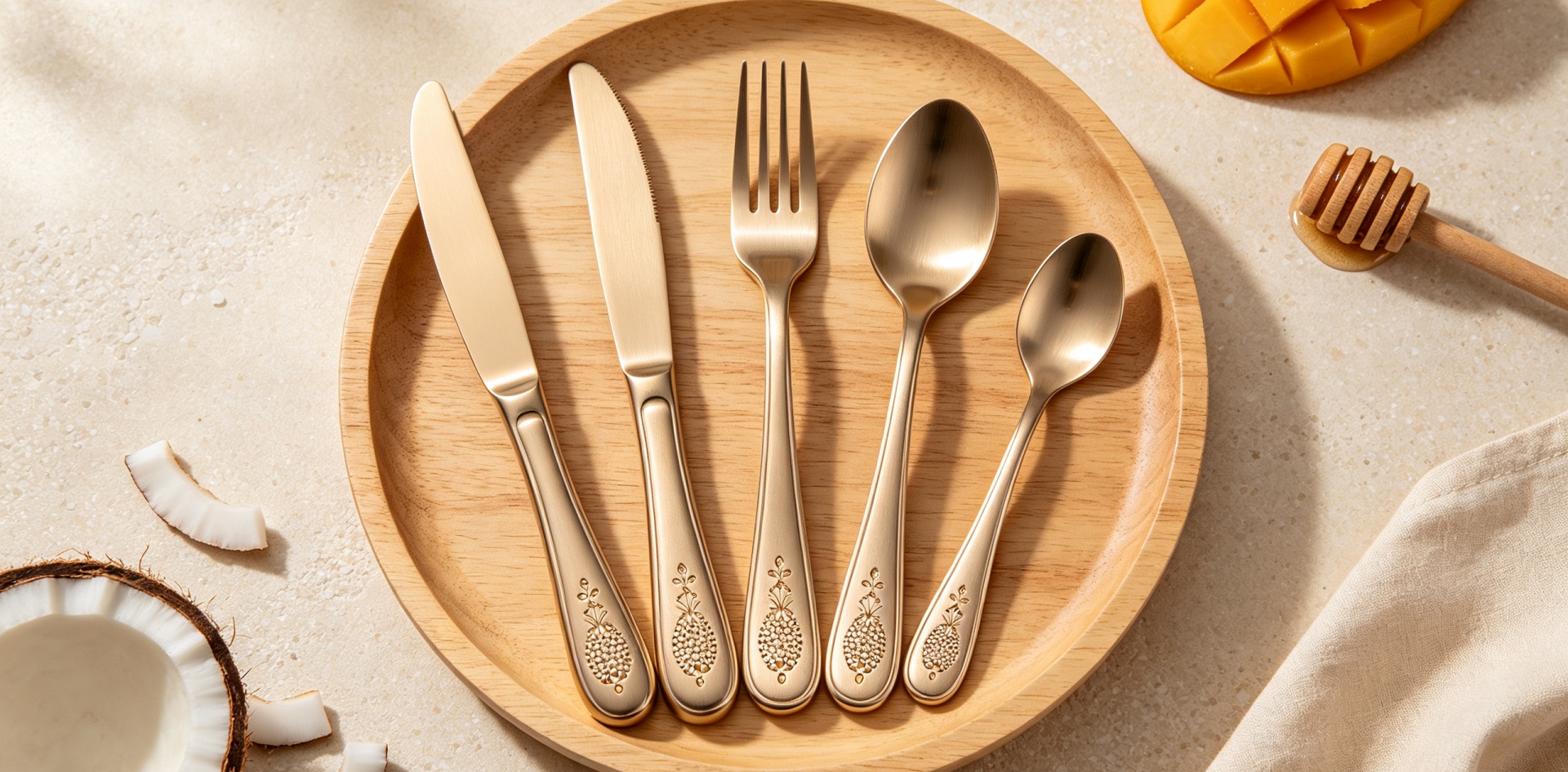
A cutlery set can contain different combinations of products depending on its intended use. A basic set may include a spoon, fork and knife, while another collection may add dessert spoons, teaspoons or serving pieces.
The important point is that the products should work together as one collection.
Homefelt factory specializes in stainless steel knives, forks, spoons and complete flatware sets for international B2B customers. With more than 40 years of experience in stainless steel cutlery manufacturing, Homefelt provides OEM, ODM, private label and bulk production services for customized projects.
Why Cutlery Set Composition Matters
Different customers have different expectations for a cutlery set.
A retail brand may want a compact set designed for household use.
A distributor may need several combinations for different markets.
A restaurant supplier may require a practical selection of essential pieces.
A private label brand may want a complete collection that can be expanded over time.
Therefore, the number and type of pieces in a set should be determined according to the customer's target market rather than simply following one standard combination.
A Typical Knife, Fork and Spoon Combination
One of the most common combinations includes:
-
Table knife
-
Table fork
-
Table spoon
This basic combination can be developed in many different styles.
The spoon, fork and knife can share the same handle design and surface finish while maintaining different functional shapes at their working ends.
For a B2B project, the customer can define the required material, dimensions, thickness, weight, finish and packaging before confirming the final set.
Adding Additional Cutlery Pieces
Some markets require more than three pieces.
A collection may also include:
-
Dessert spoon
-
Teaspoon
-
Dessert fork
-
Serving spoon
-
Serving fork
The exact combination can be customized according to the customer's sales channel.
For example, a retailer may sell different set sizes for different price points, while a hospitality supplier may require a larger range of individual pieces.
Developing several combinations around the same basic design can help create a more complete product range.
Keeping the Collection Visually Consistent
A cutlery set should look coordinated when all pieces are placed together.
The handle shape is one of the most important elements for achieving this consistency.
Other details can also be coordinated, including:
-
Stainless steel material
-
Handle proportions
-
Surface finish
-
Decorative details
-
Logo treatment
-
Product thickness
-
Overall design language
The working ends of the products naturally have different shapes, but the overall collection can still maintain a consistent visual identity.
This is particularly important for private label products where the cutlery itself becomes part of the brand presentation.
Choosing Product Specifications for the Complete Set
Each individual item can have its own technical specifications.
For a spoon, the buyer may need to confirm bowl dimensions, thickness and weight.
For a fork, tine structure and overall length may be important.
For a knife, blade dimensions and handle proportions may require additional consideration.
When these products are developed as one collection, the specifications should be reviewed together.
This helps ensure that the finished set looks balanced rather than appearing to be a combination of unrelated products.
Matching Material and Surface Finish
The material and surface finish should also be consistent across the set.
Buyers may have requirements for specific stainless steel grades depending on their market and product positioning.
Surface treatment can also influence the final appearance.
Mirror, satin, brushed and other finishes can create different visual effects.
For a complete collection, the selected finish should normally be coordinated across the spoon, fork and knife.
During a customized project, the approved sample can be used as a reference for future bulk production.
Packaging for Different Cutlery Set Formats
Packaging is another important part of the set development process.
A buyer may require:
-
Individual product packaging
-
Multi-piece retail sets
-
Branded gift boxes
-
Printed retail cartons
-
Sleeves
-
Bulk packaging
The appropriate format depends on how the product will be sold and transported.
A private label retailer may require branded packaging that matches its product identity.
A wholesaler may prefer packaging designed for efficient bulk handling.
Homefelt can discuss packaging requirements together with the cutlery set rather than treating packaging as a completely separate project.
Private Label Cutlery Set Development
For private label customers, a cutlery set can be developed around the brand's product positioning.
The customer may provide an existing brand style, packaging concept, product reference or design drawing.
The factory can then discuss the product specifications and customization requirements.
Logo placement, handle design, surface finish and packaging can be coordinated to create a complete private label product.
This allows the customer to move from a standard stainless steel cutlery concept toward a product specifically developed for its own market.
OEM and ODM Approaches
There are two common ways to develop a customized cutlery set.
With OEM manufacturing, the customer may already have detailed product specifications, drawings or samples.
The factory follows the approved requirements and organizes production according to the project.
With ODM development, the customer may begin with a general concept or product reference.
The manufacturer can discuss possible product structures, dimensions, materials, finishes and set combinations before developing the final specification.
Both approaches can be suitable depending on the customer's experience and project requirements.
Using Samples to Confirm the Final Set
Before bulk production, sample confirmation can help buyers evaluate the complete product.
Rather than looking at a single spoon or fork, customers can review the complete combination and consider whether the pieces work together visually and functionally.
The customer can then provide feedback before the production specification is finalized.
This is particularly useful for new private label collections where the final appearance needs to match the brand's expectations.
B2B Documentation and Factory Qualification
International buyers may also need to evaluate the manufacturer's production background and supporting documentation.
Homefelt has more than 40 years of stainless steel cutlery manufacturing experience and provides information about factory-related qualifications, including BSCI, SEDEX 4P, BRC and ISO 9001, as well as Disney audit experience and FAMA and FSC certifications.
Specific certification, testing or documentation requirements can be discussed according to the customer's project.
This allows buyers to communicate their requirements before production instead of discovering additional documentation needs later in the process.
One-Stop Service for Complete Cutlery Projects
Developing a cutlery set can involve product selection, design, sampling, packaging, production and shipping.
Homefelt provides one-stop support for these requirements.
Depending on the project, customers can discuss:
-
Product design
-
Spoon, fork and knife specifications
-
Material selection
-
Surface finish
-
Logo customization
-
Set combinations
-
Private label requirements
-
Packaging design
-
Bulk production
-
Shipping arrangements
The service can be adjusted according to the customer's actual business situation.
A buyer with an existing product design can provide the specifications directly.
A buyer with only a product concept can start with reference pictures or samples and discuss the development process with the factory.
Building a Complete Product Range
A well-planned cutlery set can also provide a foundation for future product expansion.
A customer may begin with a three-piece combination and later add dessert spoons, teaspoons or other matching pieces.
When the original handle design, finish and material specifications are clearly defined, additional products can be developed using the same product language.
This can make it easier for a private label brand or distributor to build a larger stainless steel flatware range over time.
Homefelt works with customers on both individual products and larger stainless steel cutlery programs, providing manufacturing support for new product development and repeat bulk orders.
Stainless Steel Cutlery Edge Details for Consistent B2B Quality
Stainless Steel Cutlery Surface Finish Options for Custom Collections
Related Article



