
Custom Stainless Steel Cutlery Tooling for OEM B2B Projects
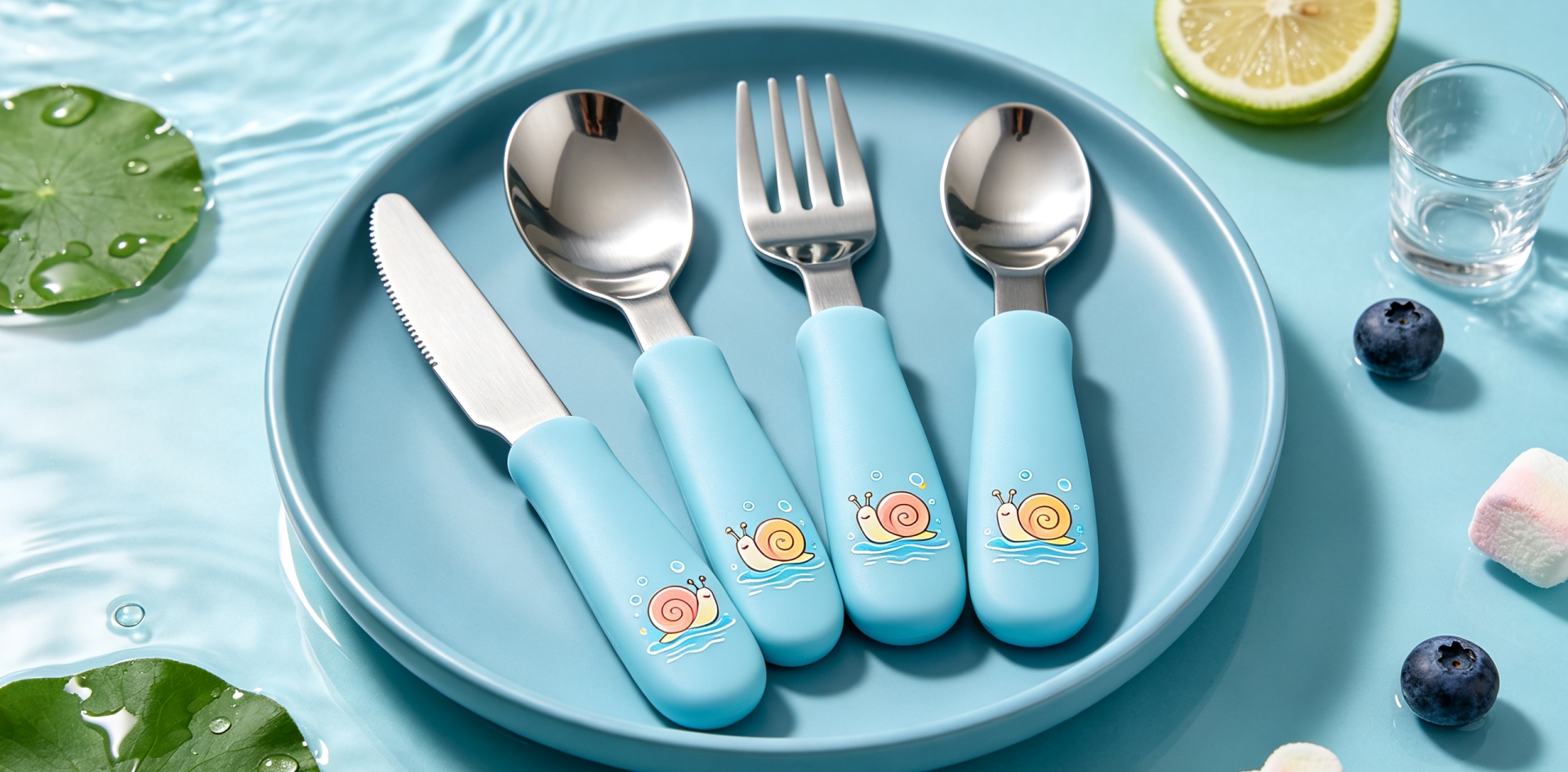
Custom Stainless Steel Cutlery Tooling for OEM B2B Projects
When a B2B buyer wants to develop a stainless steel cutlery design that is different from standard products, custom tooling can become an important part of the project. Spoons, forks and knives may look simple, but reproducing a specific design consistently in large quantities requires suitable production tooling and accurate manufacturing references.
For OEM and private label customers, tooling is especially relevant when the product needs a distinctive shape, a customized design or a new collection developed from drawings and samples. The right tooling solution can help transform a product concept into a repeatable manufacturing process.
What Is Cutlery Tooling?
Tooling refers to the production equipment and dies used to form or process stainless steel cutlery during manufacturing. Depending on the product and production method, different tools may be required for different stages of development.
For a standard cutlery model, an existing production tool may already be available. For a new design, however, the manufacturer may need to evaluate the product and develop new tooling according to the customer's requirements.
This is one reason why custom stainless steel cutlery projects should be discussed with the factory before production begins. The design needs to be considered from both a visual and manufacturing perspective.
Why Custom Tooling Matters for OEM Cutlery
OEM customers often want products that are not identical to existing market models. A retailer may want its own spoon and fork collection, while a hospitality supplier may require a particular knife design for a customer project.
A drawing or reference image can communicate the overall concept, but the factory still needs to determine how the design can be reproduced during production.
Custom tooling provides a manufacturing reference for the product. Once the tooling and sample have been approved, the same production concept can be used to manufacture larger quantities.
This is particularly useful for B2B projects where consistency is required across thousands of pieces.
Tooling for Custom Stainless Steel Spoons
A stainless steel spoon may include a specially developed bowl profile, handle transition or decorative detail. When the design differs significantly from an existing model, new tooling may be required.
The manufacturer can review the customer's drawing or reference sample and determine which parts of the design need dedicated tooling.
During sample development, the buyer can evaluate the actual spoon and provide feedback before the tooling and production specifications are finalized.
For private label collections, this process allows the brand to develop a product that is more closely connected to its own design requirements instead of selecting only from standard catalog products.
Tooling for Custom Forks
Forks have their own production requirements because the head contains multiple tines and the overall design must remain consistent from piece to piece.
When a custom fork design is developed, tooling needs to reflect the intended product shape and manufacturing requirements.
A sample produced from the development tooling gives the buyer an opportunity to review the actual product before moving into bulk manufacturing.
For B2B buyers, this step can be valuable because changes are generally easier to discuss during development than after a large production order has already started.
Tooling for Stainless Steel Knives
Custom stainless steel knives may also require dedicated tooling depending on the design.
The knife shape, handle concept and overall product construction can influence the production method. When a customer has a specific design requirement, the manufacturer can evaluate the product before confirming the tooling solution.
For OEM projects, the objective is to establish a repeatable production method that can support both the initial order and potential future reorders.
From Drawing to Tooling Sample
A custom cutlery project often begins with a drawing, CAD file, reference image or physical sample. The manufacturer reviews the information and evaluates the production requirements.
The development process can include:
-
Reviewing the customer's design
-
Confirming the stainless steel cutlery model
-
Evaluating the manufacturing requirements
-
Discussing tooling requirements
-
Developing the production tooling
-
Producing samples
-
Reviewing the sample with the customer
-
Confirming the final production reference
-
Moving to bulk manufacturing
The exact process depends on the product and the level of customization.
For buyers, the important point is that tooling should be considered before the final bulk order is confirmed.
Tooling and Sample Approval
The sample is an important communication point between the buyer and factory.
A drawing may show the intended design, but the physical sample allows the customer to evaluate the actual stainless steel spoon, fork or knife. If adjustments are needed, they can be discussed with the manufacturing team before mass production.
This approach can help reduce misunderstandings between the original design concept and the finished product.
Once the sample is approved, the factory can use the confirmed product and tooling information as a reference for bulk production.
Consistency in Large-Volume Production
For large B2B orders, consistency is one of the main reasons tooling needs to be properly managed.
A stable production tool helps the factory reproduce the same product design repeatedly. When the same spoon, fork or knife is reordered later, the approved production reference can also support future manufacturing.
This can be especially useful for distributors and private label brands that expect to purchase the same product over several seasons or years.
Instead of treating every order as a completely new development, the factory can work from established product and tooling references.
Custom Tooling for Private Label Collections
Private label customers may want to create several related stainless steel cutlery products under one brand. In this situation, tooling development can be part of a broader product development strategy.
Different spoons, forks and knives can be developed around a consistent design concept while still maintaining their individual product characteristics.
The factory can discuss which products require new tooling and which products may be adapted from existing manufacturing solutions. This helps buyers understand the development requirements before committing to the project.
For brands with larger product plans, this can also make it easier to organize future product development.
Balancing Tooling Investment and Order Volume
Custom tooling can involve additional development costs, so B2B buyers should consider expected order volume and long-term purchasing plans.
For a one-time small order, an existing product may sometimes be more practical. For a long-term private label project with larger quantities, custom tooling may provide more value because it allows the brand to create a product specifically for its market.
The appropriate approach depends on the design, quantity, target price and expected repeat orders.
An experienced factory can discuss these factors with the customer before the project moves forward.
Homefelt Factory for OEM and Custom Cutlery
Homefelt factory has 40 years of experience in the stainless steel cutlery business and supports customized spoon, fork and knife projects for B2B customers.
The factory provides OEM/ODM, private label, wholesale and large-volume production services. Customers can provide drawings, reference products or design concepts for evaluation, and the manufacturing team can discuss product development, tooling, sampling and production requirements.
For projects that require additional services, Homefelt can also support packaging and shipping arrangements according to the customer's purchasing needs.
The goal is to create a practical manufacturing solution that supports the customer's current order while also providing a foundation for future repeat production.
Stainless Steel Cutlery Rounded Edge Design for B2B Collections
Stainless Steel Cutlery Handle Joint Quality for B2B Orders
Related Article



