Home Improvement Showroom Cutlery Supplier | Custom Stainless Steel Flatware
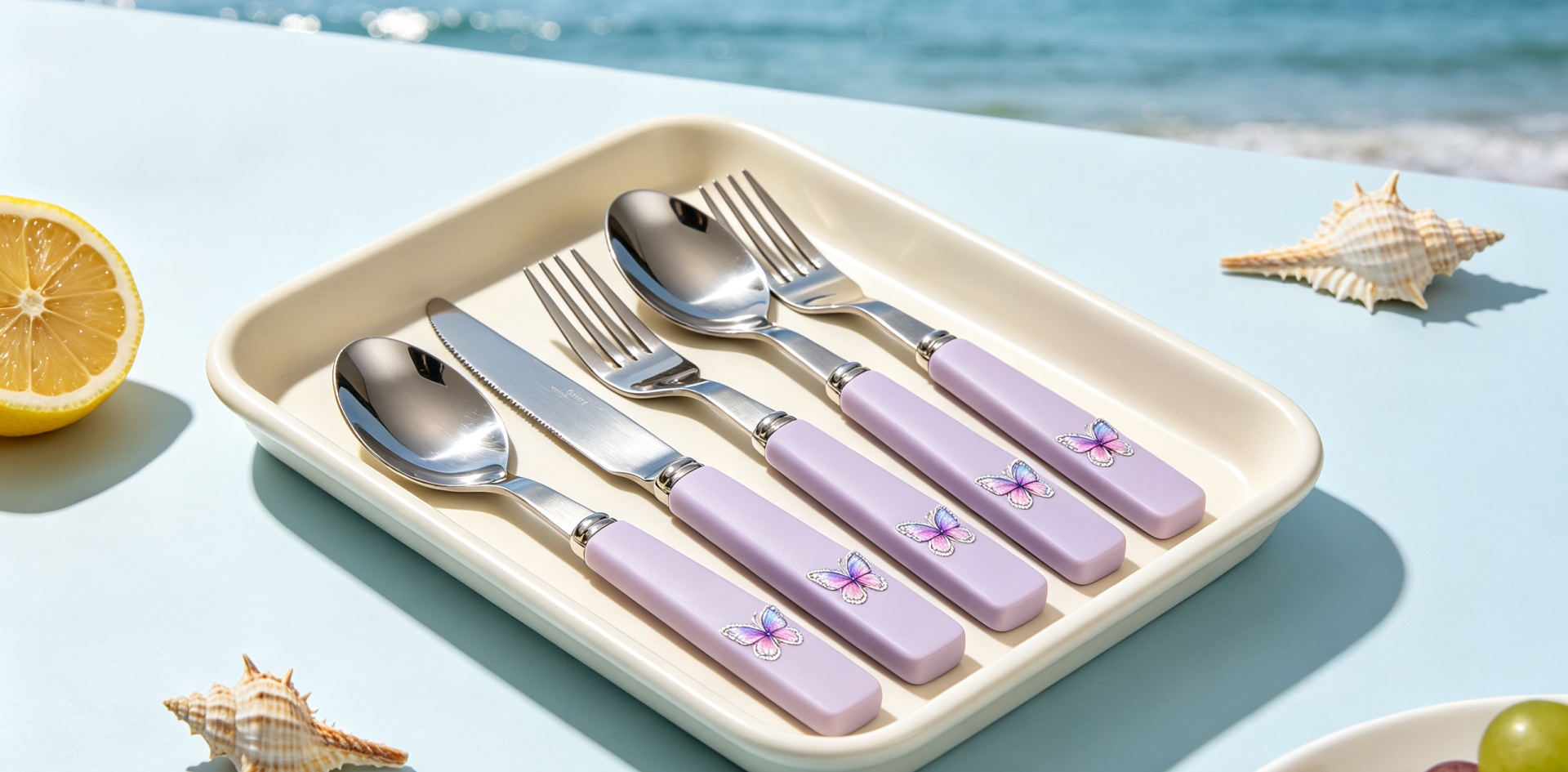
Home Improvement Showroom Cutlery Supplier: Stainless Steel Flatware for Kitchen and Retail Spaces
Home improvement stores and kitchen showrooms increasingly use complete room settings to demonstrate how products work in real homes. A modern kitchen display may include cabinets, countertops, sinks, appliances, dining furniture and tableware accessories.
When customers walk into these spaces, they are not simply looking at individual products. They are imagining how a complete kitchen or dining environment could look in their own home.
Stainless steel cutlery can therefore become a useful part of the showroom experience. Spoons, forks, knives and flatware sets can support product demonstrations, coffee service, cooking events and lifestyle displays.
For kitchen retailers, home improvement companies and distributors, sourcing cutlery from an experienced B2B manufacturer can provide flexibility when building a consistent product range.
Why Cutlery Matters in Kitchen Showrooms
A kitchen showroom is designed to create a realistic environment. Customers may see a dining table prepared with plates, glasses, cookware and cutlery while sales staff demonstrate appliances or discuss kitchen layouts.
Small details can make the display feel more complete.
A carefully selected stainless steel spoon, fork and knife can complement the overall kitchen design without becoming visually distracting. The products can also be used during demonstrations and customer hospitality.
For larger retailers, the same approach can be applied across multiple showroom locations. A standardized flatware collection can help create a consistent presentation while simplifying purchasing and replenishment.
Matching Flatware with Kitchen Design
Kitchen styles vary widely. Some showrooms focus on minimalist contemporary kitchens, while others display traditional, luxury or family-oriented designs.
The flatware selected for these environments should ideally match the visual character of the display.
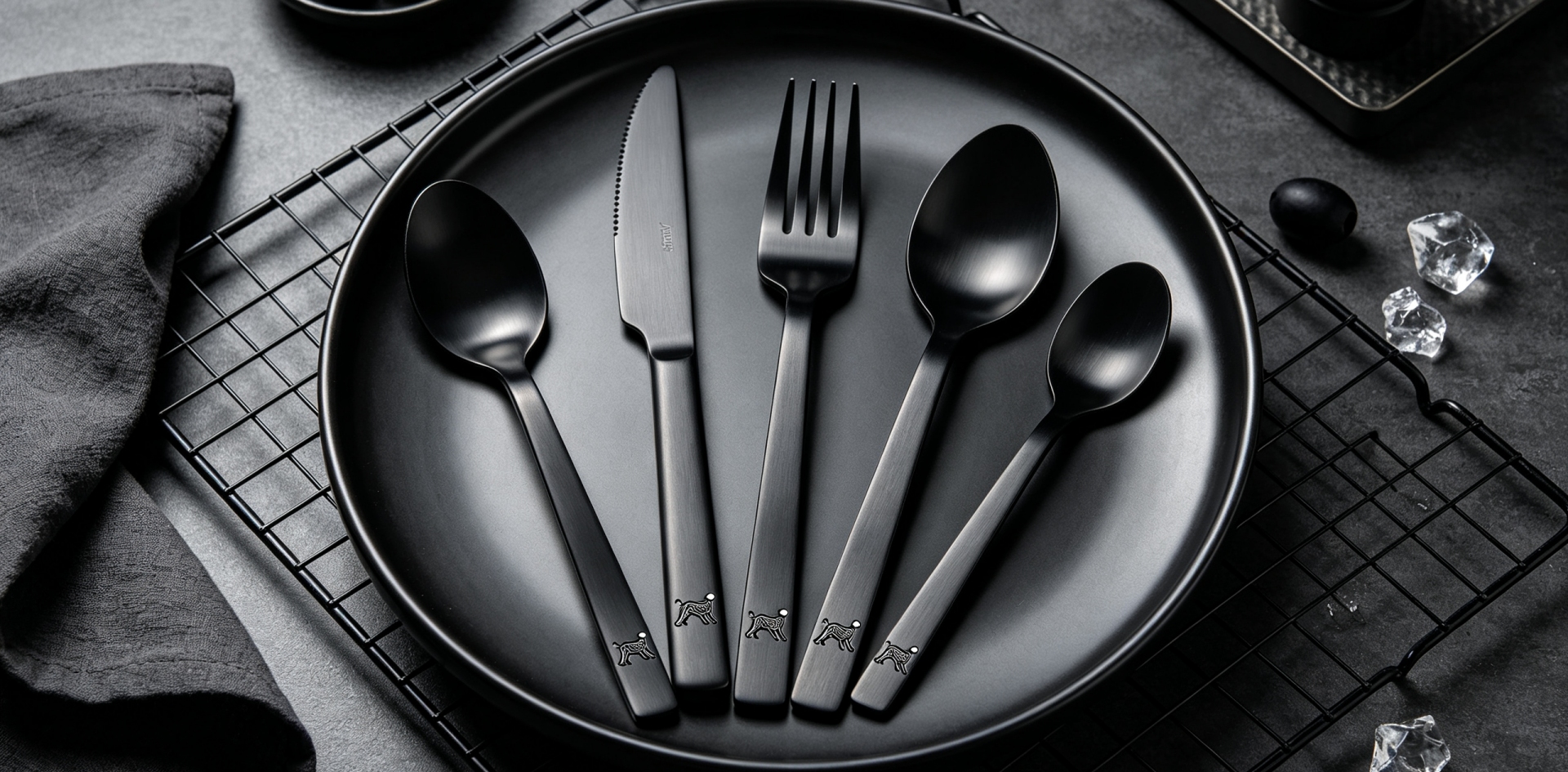
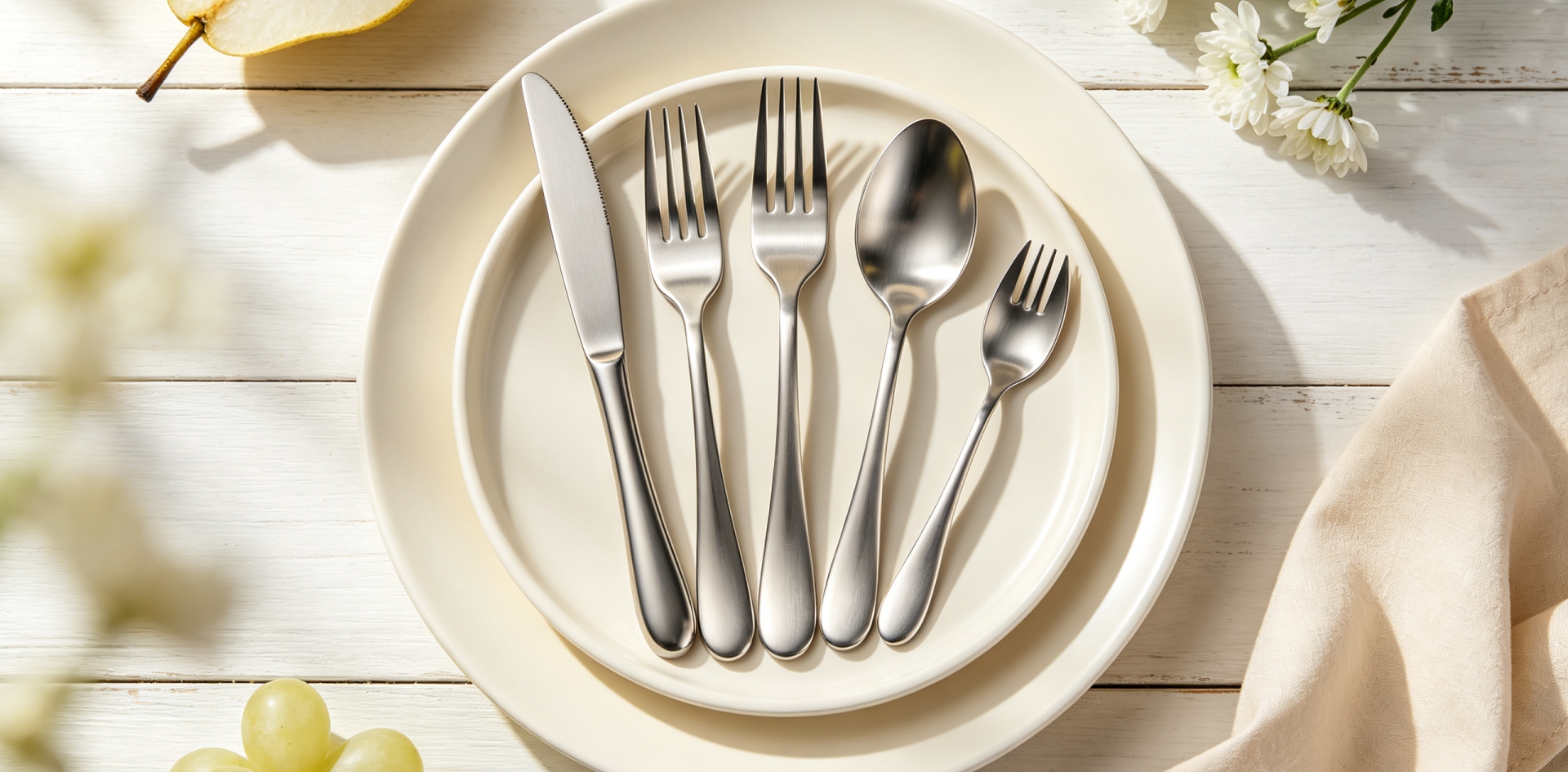
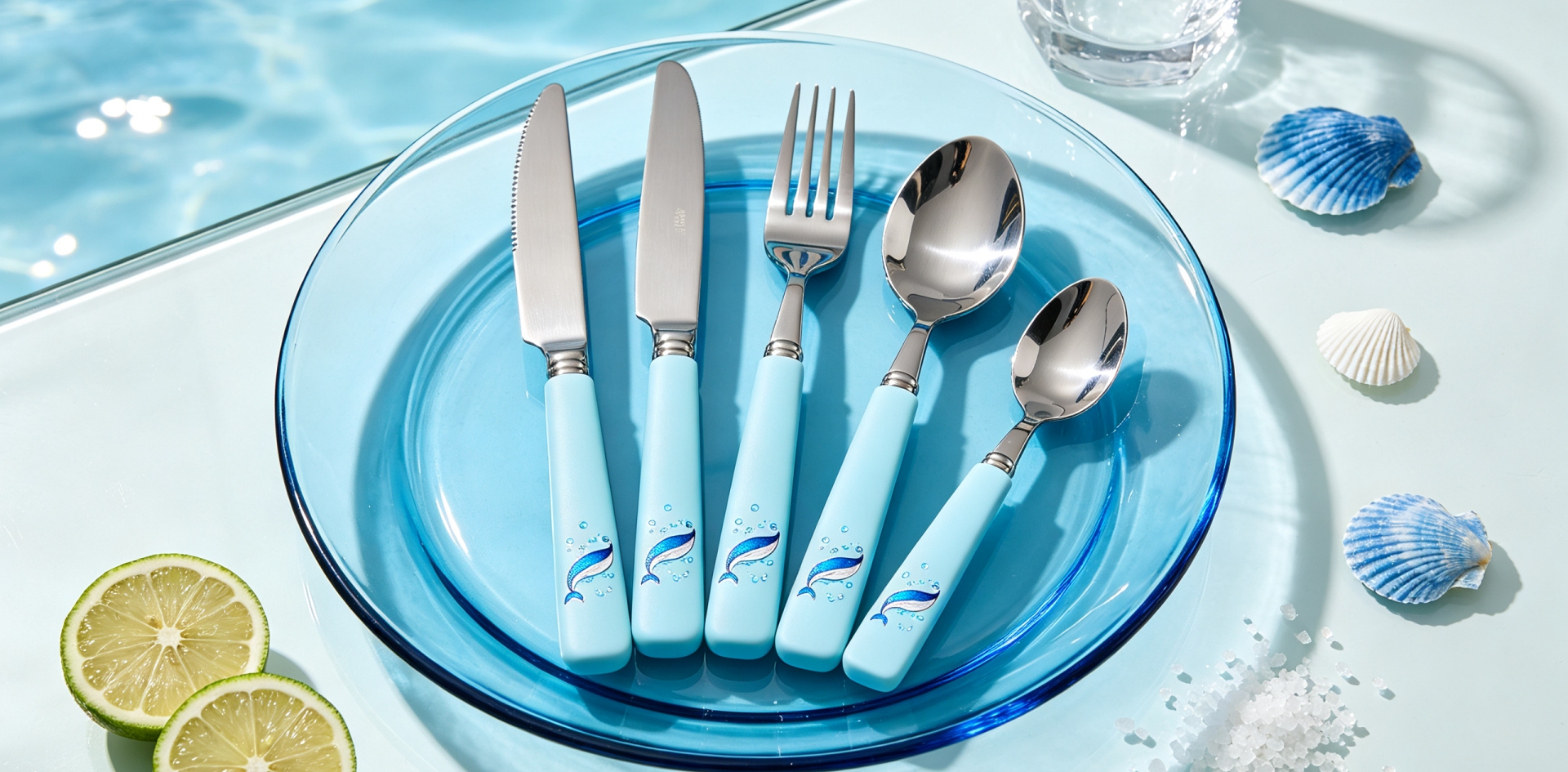
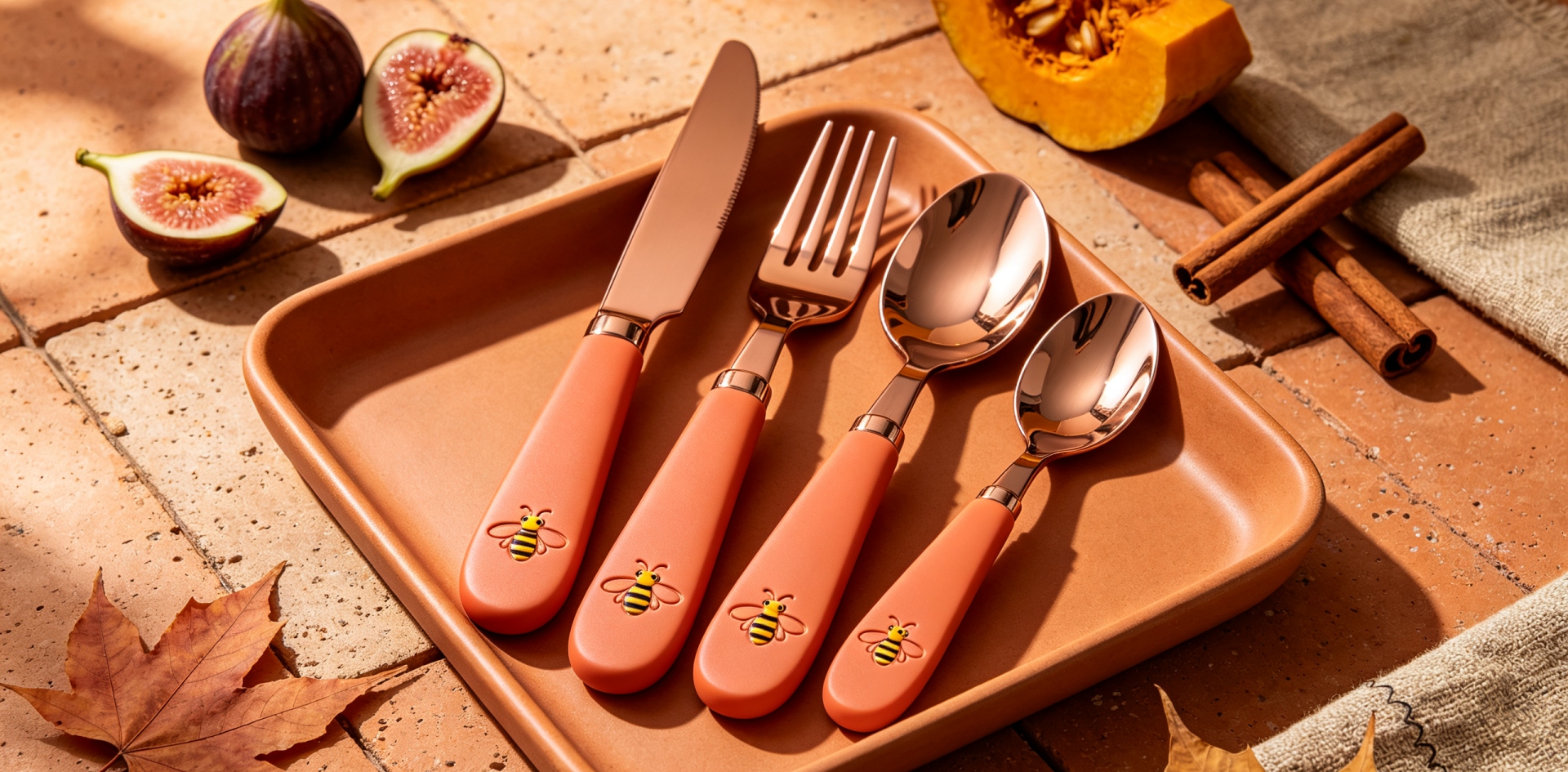
Handle shape, proportions, weight and surface finish can influence the overall appearance of stainless steel cutlery. A simple polished design may work well in a clean modern kitchen, while another style may be more suitable for a premium dining presentation.
For B2B buyers, selecting a complete collection instead of unrelated individual products can create a more consistent result.
Spoons, forks and knives should look like they belong to the same product family. This is especially useful when the cutlery is displayed together with a dining table or kitchen island.
Cutlery for Cooking Demonstrations
Many kitchen showrooms organize cooking demonstrations to introduce ovens, induction cooktops, coffee machines, food processors and other equipment.
These activities can create a practical need for cutlery.
Spoons may be used for tasting sauces, desserts, coffee and prepared dishes. Forks and knives may be required when customers are invited to sample complete meals.
The type of cutlery required depends on the demonstration program.
A showroom that focuses mainly on coffee and small appliances may need teaspoons and dessert spoons. A showroom that regularly prepares complete meals may require a broader collection.
Planning the assortment according to actual usage can help retailers purchase the right quantities.
Choosing the Right Stainless Steel Spoon
The spoon is one of the most versatile items in a showroom kitchen.
It can be used for coffee service, tasting sessions, desserts, sauces and everyday dining demonstrations. However, different applications may require different spoon sizes and shapes.
A teaspoon designed for beverages is different from a dessert spoon or a table spoon.
For B2B procurement, the best approach is to identify the intended applications before finalizing the product selection.
A professional stainless steel spoon supplier can provide different options and help buyers compare sizes, shapes, weights and finishes.
This allows the retailer to create a practical collection instead of purchasing products based only on appearance.
Custom Cutlery for Kitchen Brands
Some kitchen brands have a strong visual identity and may prefer customized products.
A custom stainless steel cutlery project can begin with a reference product, photograph, drawing or basic concept. The manufacturer can then evaluate the requirements and determine how the design can be developed for production.
Customization may involve the handle, dimensions, proportions, surface finish or overall appearance.
A company may also choose to develop a complete collection rather than customize only one spoon or fork.
This can be especially useful for kitchen brands that want their accessories to match their existing product design.
Developing Private Label Flatware
Home improvement retailers and kitchen brands may also want to sell complementary products under their own brand names.
Private label stainless steel flatware can provide an opportunity to expand the product assortment without establishing an independent manufacturing facility.
A retailer could develop a branded collection containing spoons, forks, knives and complete flatware sets.
The product range can be designed around the retailer's target market and sales channel.
For example, a premium kitchen retailer may require a more refined collection, while a large home improvement chain may prefer practical products that can be offered in several set configurations.
The same manufacturer can potentially support different product specifications for different market segments.
Wholesale Flatware for Multiple Retail Locations
Large home improvement companies often operate multiple stores and showrooms.
When the same kitchen concept is presented across different locations, standardized accessories can help maintain a consistent customer experience.
A centralized flatware purchasing program can also simplify inventory management.
Instead of allowing each showroom to purchase different products, the company can establish a core collection with clearly defined specifications.
Once the products have been approved, future orders can follow the same specifications.
This approach can be particularly useful when new stores are opened or existing locations are renovated.
Flatware Sets for Retail Sales
Individual cutlery pieces may be suitable for showroom use, but complete flatware sets can be more attractive for retail sales.
A basic set may include a spoon, fork and knife. Larger sets can include additional pieces according to the target market.
For kitchen retailers, set composition can be adapted to different price points and customer requirements.
The same collection can potentially be offered in several configurations without changing the basic design language.
This provides retailers with more flexibility when building a product range.
For B2B buyers, customized set composition can also make packaging and inventory planning easier.
Packaging for Home Improvement Retailers
Packaging becomes particularly important when stainless steel flatware is sold through retail stores.
Products intended only for internal showroom use can often be packed in larger quantities. Retail products may require individual packaging, multi-piece sets or branded boxes.
For private label projects, the packaging can be developed together with the product.
The retailer can define how many pieces should be included in each set and how the products should be presented.
Early coordination between product and packaging can help reduce unnecessary changes later in the project.
Supporting Retail and E-Commerce Channels
Many home improvement companies now sell through multiple channels.
A customer may discover a kitchen display in a physical showroom and later purchase related accessories through an online store.
This creates an opportunity for retailers to use the same flatware collection across different sales channels.
Products used in showrooms can also become retail products. A stainless steel spoon or flatware set displayed in a kitchen environment can be offered online as part of the retailer's broader home collection.
For this reason, B2B buyers should consider both showroom usage and commercial sales when planning a new product range.
A flexible product program can support physical stores, e-commerce and project-based sales without requiring completely different product families.
Consistent Quality for Repeat Orders
For retailers with multiple locations, the first order is only one part of the sourcing process.
As products become part of a regular assortment, repeat orders become increasingly important.
The specifications of the original products should therefore be clearly established. Material, dimensions, weight, surface finish and packaging requirements can all be documented for future production.
This helps the buyer maintain consistency when ordering additional quantities.
It is particularly valuable when the product is sold under a private label or included in a long-term retail assortment.
For international retailers, maintaining consistent specifications across different purchase cycles can also simplify product management.
Why Work with an Experienced Cutlery Manufacturer?
A home improvement retailer may initially need only a small quantity of cutlery for showroom displays. However, the project can grow into a larger retail or private label program.
Working with an experienced stainless steel cutlery manufacturer can provide more flexibility as requirements develop.
Homefelt Houseware Co., Limited has more than 40 years of experience in stainless steel cutlery manufacturing and serves international B2B customers.
The company supports OEM, ODM and Private Label projects and produces stainless steel spoons, forks, knives and flatware sets for different commercial applications.
Homefelt has experience working with well-known international brands and has passed BSCI, SEDEX 4P, BRC and ISO9001 audits, as well as a Disney audit. The company also holds FAMA and FSC certifications.
For kitchen retailers and home improvement companies, this experience can be useful when developing products that need to combine practical functionality with a consistent commercial presentation.
How to Start a Custom Cutlery Project
A B2B cutlery project can begin with basic information.
The buyer can provide the intended application, estimated quantity, preferred design and whether the products are for showroom use, retail sale or both.
Reference images are also useful when a specific style is required.
For a customized project, buyers can provide:
Product reference images
Required spoon, fork and knife types
Estimated order quantity
Preferred dimensions
Surface finish requirements
Set composition
Packaging requirements
Branding requirements
Expected delivery schedule
This information gives the manufacturer a practical starting point for discussing available solutions.
If the buyer has not finalized every specification, the first inquiry can simply explain the intended market and application. Product options can then be evaluated before moving to samples and production.
Building a Long-Term Product Program
The strongest B2B cutlery projects are often developed as product programs rather than single purchases.
A kitchen retailer may begin with a few showroom products and later add retail flatware sets. A home improvement chain may start with one store and eventually introduce the same collection across multiple locations.
A clear product structure makes this expansion easier.
The core collection can include the most important spoons, forks and knives, while additional products can be introduced later.
Packaging and set configurations can also be adjusted for different sales channels.
This gives the retailer room to expand the assortment while maintaining a consistent design direction.
A Practical B2B Solution for Kitchen and Home Improvement Businesses
Stainless steel cutlery may appear to be a small part of a kitchen showroom, but it can contribute to the overall presentation and customer experience.
For home improvement retailers and kitchen brands, the right collection can support cooking demonstrations, hospitality areas, lifestyle displays and retail sales.
A professional B2B manufacturer can provide more than standard products. The supplier can support product selection, custom development, flatware sets, packaging, branding and repeat orders.
Whether the requirement is a bulk order for showroom use or a fully customized Private Label collection for retail distribution, the project can start with a simple description of the products, quantities and intended application.
For companies planning to expand their kitchen accessory range, requesting product options and a quotation from an experienced stainless steel cutlery manufacturer can be the first step toward building a reliable long-term supply program.
Request a B2B quotation for custom stainless steel cutlery
Get wholesale pricing for stainless steel spoons and flatware
Develop a Private Label flatware collection for your retail brand
Request custom flatware sets for kitchen showrooms
Fournisseur de Couverts Inox pour Bowling | Solution B2B Personnalisée
Fournisseur de Couverts Inox pour Showrooms | Solutions B2B
Related Article