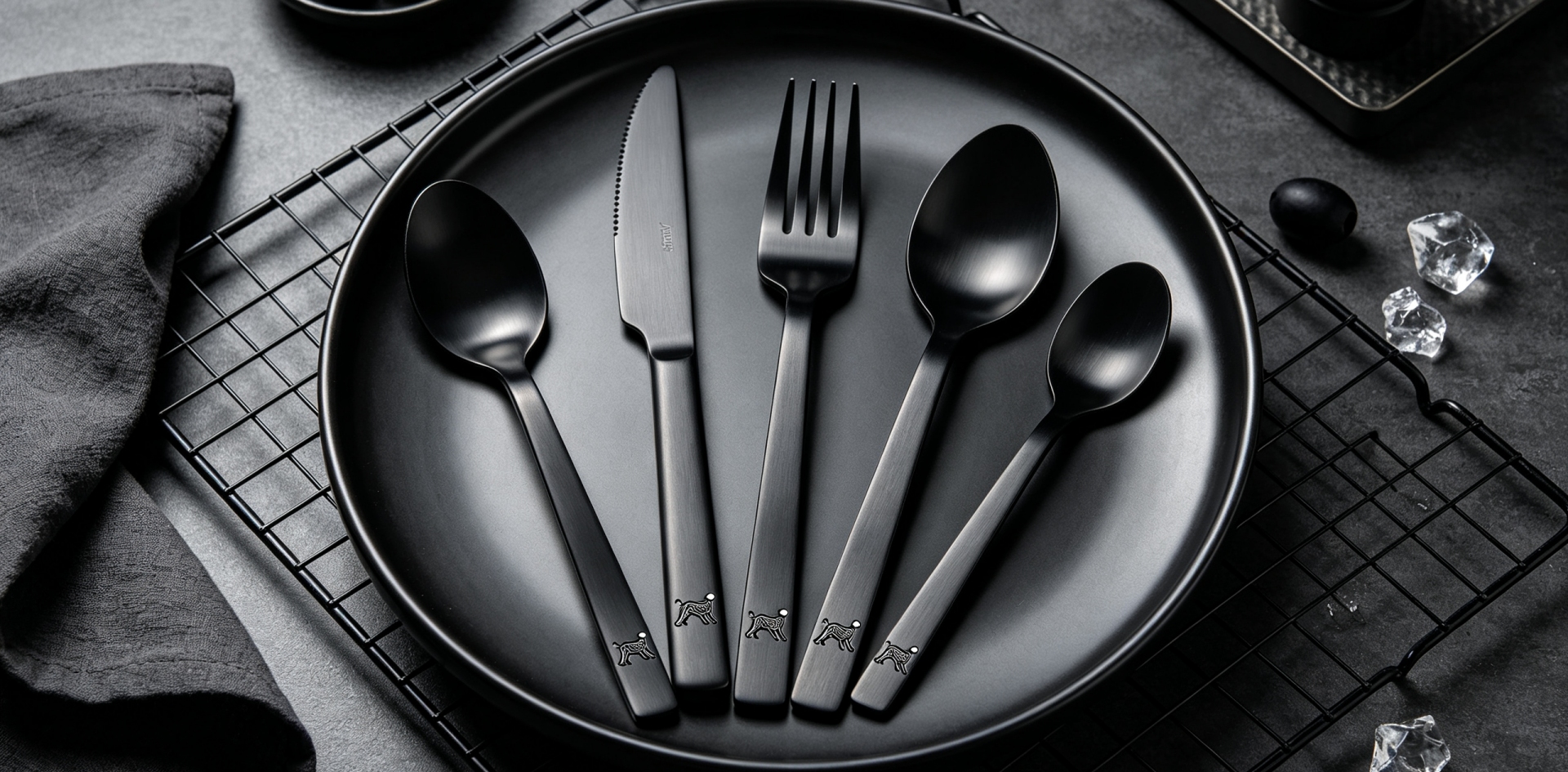
Stainless Steel Cutlery Manufacturer | How to Compare Custom Cutlery Quotes
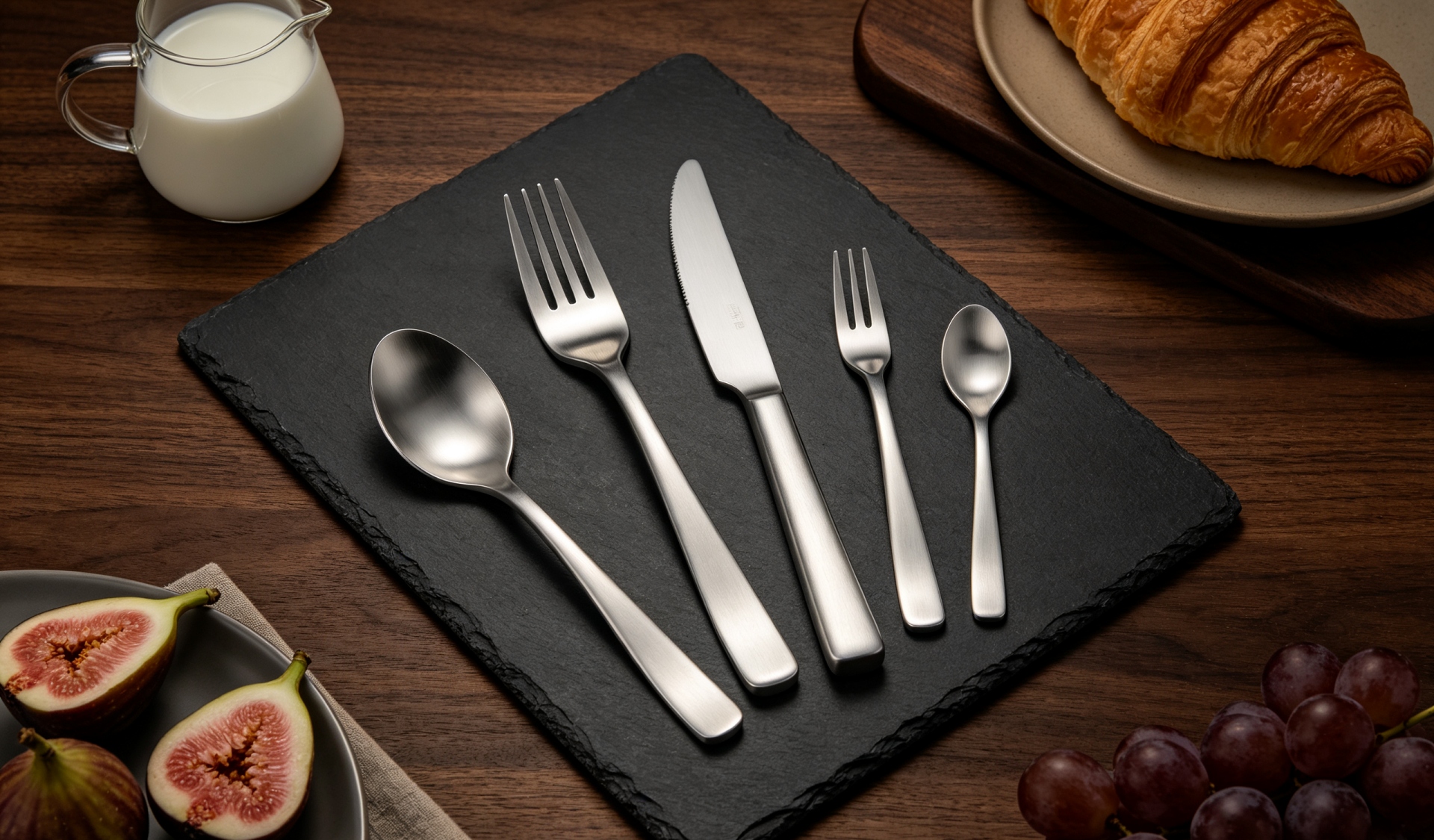
Stainless Steel Cutlery Manufacturer: How to Compare Custom Cutlery Quotations
When purchasing custom stainless steel cutlery for a business, price is naturally one of the first factors buyers consider. However, comparing quotations based only on the lowest unit price can lead to unexpected costs, inconsistent specifications, or quality problems during mass production.
For wholesalers, retailers, distributors, restaurants, hospitality suppliers, and private-label brands, a quotation should be evaluated as a complete sourcing proposal rather than simply a number per piece.
A professional Stainless Steel Cutlery Manufacturer can provide a quotation based on material, dimensions, production requirements, finishing, branding, packaging, order quantity, and other project details. Understanding these factors helps buyers compare suppliers more accurately and choose a solution that fits both product expectations and commercial goals.
What Does a Custom Cutlery Quotation Usually Include?
A custom cutlery quotation may contain much more information than the unit price. Depending on the project, a supplier may calculate costs for stainless steel material, forming, polishing, tooling, logo application, special finishing, packaging, inspection, and production.
The first step is therefore to make sure different suppliers are quoting for the same product specification.
For example, two spoons may look similar in a quotation but have different material grades, thicknesses, weights, surface treatments, or handle structures. A lower price does not necessarily represent better purchasing value if the products are not technically equivalent.
For B2B buyers, the quotation should be connected to a clearly defined product specification.
Material Is One of the First Cost Factors
Stainless steel material has a direct influence on product performance and manufacturing cost. Different stainless steel grades can provide different characteristics in terms of corrosion resistance, appearance, durability, and suitability for particular applications.
When comparing Stainless Steel Cutlery Price, buyers should confirm the material specification instead of looking only at the final price.
The same principle applies to thickness and overall product weight. A heavier spoon, fork, or knife generally requires more raw material and may involve different forming conditions.
For commercial projects, material specifications should be confirmed before comparing unit prices between factories.
Compare Product Specifications Before Comparing Prices
A quotation should always be evaluated against the complete product specification.
Important details may include:
Product type and dimensions
Material grade
Thickness
Product weight
Handle design
Surface finish
Logo or branding requirements
Special shapes or structures
Individual or set packaging
Carton requirements
Order quantity
If one supplier quotes a standard product while another quotes a fully customized product, their prices cannot be compared directly.
A reliable Stainless Steel Cutlery Supplier should be able to explain what is included in the quoted price and identify any specifications that may affect the final cost.
Tooling and Custom Development Costs
Custom cutlery often requires tooling or production development before mass manufacturing begins. This is particularly important when a buyer has a new handle shape, special profile, unique spoon bowl, or other customized structure.
Tooling costs should therefore be considered separately from the regular production price.
Some projects may require dedicated molds or forming tools, while simpler modifications may involve fewer development requirements. Buyers should ask whether tooling is included in the quotation, charged separately, or calculated according to the specific design.
Understanding this point prevents a common purchasing problem: accepting a low production price without realizing that additional development charges will appear later.
Finishing Can Change the Final Cost
The surface appearance of stainless steel cutlery can have a significant effect on manufacturing requirements.
Standard polished finishes may have different costs from brushed, matte, mirror, colored, or other customized finishes. Additional processes can increase production time and require additional quality control.
For retail and private-label products, the finish is also part of the product positioning. A particular surface treatment may be selected because it matches the visual identity of a brand or a specific tableware collection.
When comparing OEM Cutlery Pricing, buyers should make sure all suppliers are quoting the same finishing requirements.
Branding and Logo Application
Custom branding can also affect the quotation.
A logo may be applied to a handle or another suitable area using a production method appropriate for the product design. The complexity, position, size, and production method can all influence the cost.
For a private-label project, buyers should confirm whether logo application is included in the unit price or calculated separately.
It is also useful to confirm whether the supplier can provide a sample showing the actual logo position and appearance before mass production.
Packaging Should Be Included in the Comparison
Packaging is another area where apparently similar quotations can be significantly different.
A wholesale order may require simple bulk packaging, while a retail product may require an individual box, branded set box, paper insert, barcode label, protective material, or customized carton.
For a cutlery set, the packaging cost can become an important part of the overall product cost because several components need to be arranged and protected during transportation.
When comparing a Flatware Manufacturing Quote, buyers should therefore specify the required packaging format.
For example, the quotation should clarify whether the price includes individual packaging, set packaging, outer cartons, labels, printed materials, or other requested components.
Looking Beyond the Unit Price
The lowest unit price is not always the lowest total sourcing cost.
A buyer should consider the complete cost structure, including product price, tooling, packaging, sampling, inspection requirements, and other project-specific expenses.
A supplier with a slightly higher unit price may provide more suitable material, stronger quality control, better packaging, or more stable production. These factors can reduce the risk of product returns, customer complaints, repacking, or replacement orders.
For long-term B2B purchasing, total value is often more important than the lowest initial quotation.
Check Whether the Quotation Is Based on the Correct Quantity
Order quantity can influence manufacturing efficiency and pricing.
A quotation for a small trial order may not be directly comparable with a quotation based on a larger production quantity. Manufacturing, material purchasing, packaging, and production planning can all be affected by order volume.
Therefore, buyers should provide the expected quantity or purchasing range when requesting quotations.
If a business plans to increase order volume after the initial launch, it can also be useful to ask the supplier how pricing may change at different production quantities.
This gives the buyer a clearer understanding of the potential long-term cost structure.
Ask About Production Standards and Quality Control
Price comparison should also include quality expectations.
For stainless steel cutlery, buyers may have specific requirements for dimensions, surface appearance, polishing quality, logo consistency, product weight, packaging condition, and overall workmanship.
A professional factory should be able to establish clear production standards before mass manufacturing.
This is particularly important when several suppliers are being compared. If one factory includes detailed quality requirements while another provides only a basic unit price, the two quotations may represent different levels of service.
A quotation becomes much more useful when the product specification and quality expectations are clearly defined.
Consider the Supplier's Manufacturing Experience
The factory itself is another important part of the quotation evaluation.
An experienced Stainless Steel Cutlery Manufacturer may have established production processes, tooling experience, quality inspection procedures, and export experience that can support a more complicated project.
For customized products, manufacturing experience can be especially valuable because small design details may affect forming, polishing, assembly, branding, or packaging.
B2B buyers should therefore evaluate not only the price but also whether the supplier has the manufacturing capability needed for the project.
This is particularly relevant for brands planning repeat orders or developing several related cutlery products over time.
Why a Detailed Quotation Is Better for B2B Purchasing
A detailed quotation gives both sides a clearer understanding of the project.
Instead of simply receiving a number such as “$X per piece,” buyers can request a quotation that identifies the product specification, material, finish, packaging, quantity, tooling, and other important requirements.
This makes supplier comparison easier and reduces misunderstandings after the order is confirmed.
For customized projects, the quotation can also become an important reference during sampling and production because the commercial proposal is connected to the agreed product specifications.
How to Request a More Accurate Custom Cutlery Quote
The quality of the quotation depends heavily on the information provided to the manufacturer.
A buyer preparing a custom cutlery project should ideally provide product drawings, reference images, dimensions, material requirements, estimated quantity, finishing preferences, logo requirements, packaging ideas, and target market information when available.
If some specifications have not yet been finalized, an experienced manufacturer can help identify the details that need to be confirmed.
The more clearly the project is defined, the easier it becomes to compare quotations from different factories on an equal basis.
A Practical Way to Compare Three Suppliers
Suppose a buyer receives quotations from three Stainless Steel Cutlery Manufacturer candidates.
Supplier A offers the lowest unit price but uses different packaging.
Supplier B has a slightly higher price but includes customized branding and retail packaging.
Supplier C has a similar unit price to Supplier B but provides a different material specification.
Looking only at the unit price would make Supplier A appear to be the best option. After reviewing the complete quotation, however, the buyer may discover that Supplier B or C provides a better match for the actual project.
This simple example shows why quotation comparison should be based on the complete specification rather than one price figure.
The Best Quotation Is the One That Matches the Project
For B2B cutlery purchasing, a good quotation should make the relationship between product requirements and cost easy to understand.
Material, product dimensions, weight, finish, branding, packaging, quantity, tooling, and quality expectations should all be considered before making a final decision.
An experienced manufacturer can also help buyers identify which specifications have the greatest influence on cost and which improvements may provide better value for the intended market.
For companies developing a new cutlery collection, private-label product, restaurant supply program, or wholesale range, comparing quotations carefully can make the purchasing process more predictable and reduce unnecessary sourcing risks.
Homefelt Houseware Co., Limited has more than 40 years of experience in stainless steel cutlery manufacturing and supports B2B customers with custom stainless steel spoons, forks, knives, flatware sets, OEM, ODM, and private-label projects. With experience serving international brands and buyers, the factory can work from product requirements, reference samples, drawings, branding specifications, and packaging needs to develop a quotation suitable for the project.
If you are preparing a custom stainless steel cutlery project, providing your product specifications and estimated quantity is a practical first step. A detailed project brief allows the manufacturer to evaluate the requirements and prepare a quotation based on the actual product rather than a generic price.
Request a Custom Stainless Steel Cutlery Quote for Your Project
Compare Custom Flatware Solutions From Our Factory
Send Your Stainless Steel Cutlery Requirements to Our Manufacturer
Get a B2B Quote for Custom Spoons, Forks, Knives and Flatware Sets
Contact Our Stainless Steel Cutlery Factory for OEM and ODM Projects
Start Your Private Label Cutlery Project With an Experienced Manufacturer
Request Pricing for Custom Stainless Steel Flatware and Packaging
Send Your Cutlery Design and Quantity Requirements for a Factory Quote
Discuss Your Custom Cutlery Project With Our B2B Manufacturing Team
Get a Custom Stainless Steel Cutlery Solution for Your Brand
Stainless Steel Cutlery Manufacturer | Custom Cutlery Collection Development
Stainless Steel Cutlery Manufacturer | Understanding Custom Cutlery Lead Time
Related Article