
Replacement Stainless Steel Cutlery for B2B Supply
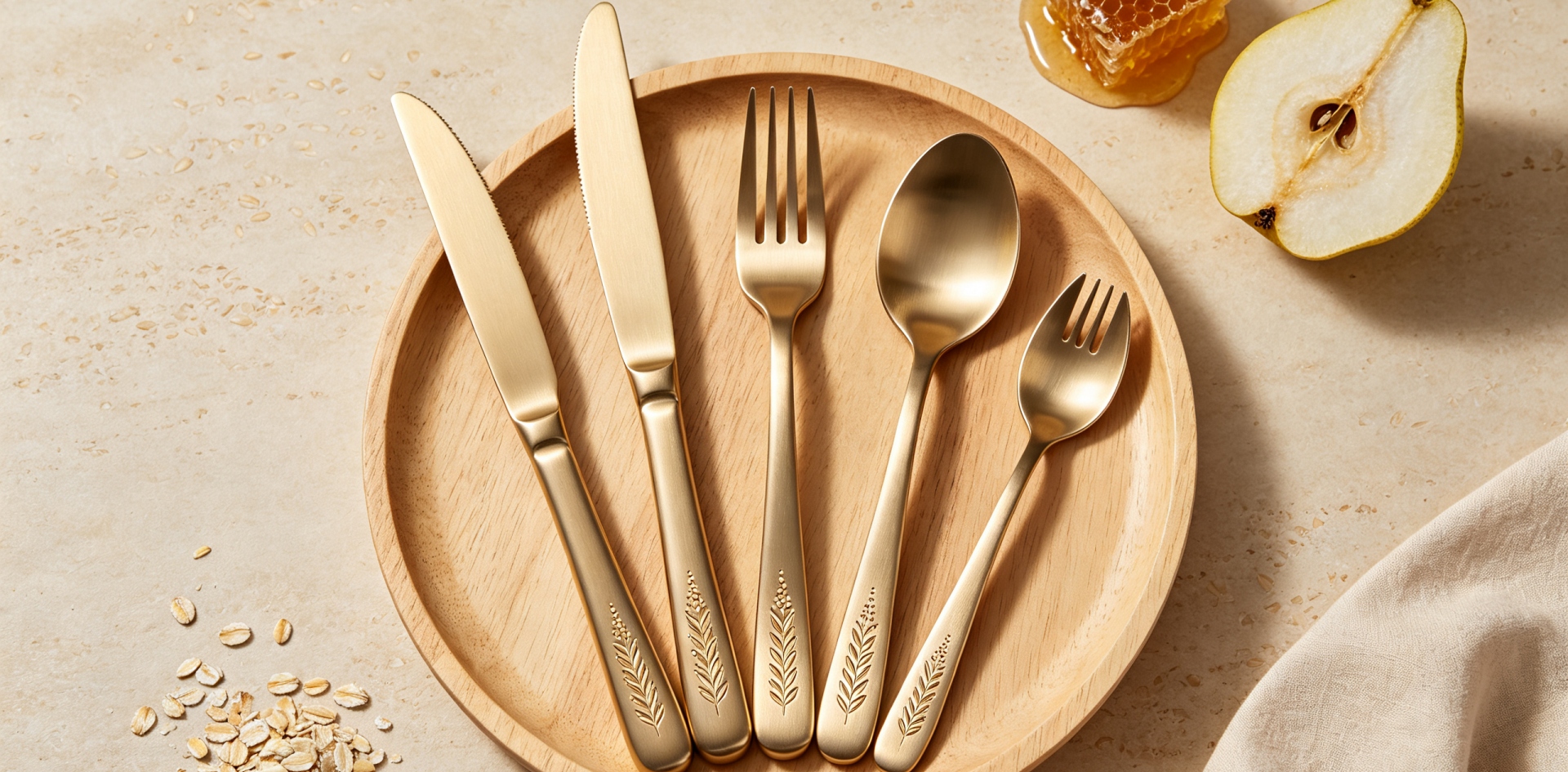
Replacement Stainless Steel Cutlery for B2B Supply
A stainless steel cutlery program does not always end after the initial order. For many B2B buyers, knives, forks and spoons need to remain available for customers long after the first production run.
Individual pieces can become damaged, lost or simply require replacement as a product range continues to sell. When this happens, buyers may need to purchase specific cutlery pieces without changing the entire collection.
This makes replacement supply an important consideration when developing a long-term stainless steel cutlery program.
For retailers, distributors, hospitality suppliers and private label brands, planning replacement availability from the beginning can help maintain product continuity and simplify future purchasing.
Why Replacement Supply Matters
Cutlery is a practical product that is handled frequently.
Even durable stainless steel products may eventually need replacement in commercial environments. A restaurant may need additional forks, a hotel supplier may require replacement spoons, or a retailer may need individual pieces for customers who have lost part of a set.
If the original product is no longer available, the buyer may have difficulty maintaining the same collection.
This is why long-term B2B cutlery programs can benefit from considering future replacement requirements.
Individual Pieces vs Complete Sets
Not every replacement requirement calls for a complete cutlery set.
A customer may need only one knife, several forks or a group of spoons.
For B2B suppliers, being able to purchase individual pieces can therefore be useful.
A manufacturer that produces the original collection can understand the relationship between the individual products and the complete set. This makes it easier to discuss future requirements when only certain pieces need to be replenished.
For buyers managing a large customer base, this can also reduce the need to purchase complete sets when only individual products are required.
Keeping the Original Design Available
One of the biggest challenges with replacement cutlery is maintaining the same appearance as the original product.
A replacement piece should ideally look appropriate alongside the existing collection.
Differences in handle shape, proportions, surface appearance or construction can become noticeable when the new product is placed next to older pieces.
For private label brands, this is particularly important because customers expect replacement pieces to belong to the same collection.
Working with the original manufacturer can help reduce unnecessary differences between the initial product and future production.
Replacement Supply for Hospitality Customers
Restaurants, hotels and other hospitality businesses can have ongoing replacement needs.
Cutlery is used repeatedly and handled by many people, so individual pieces may need to be replaced over time.
A hospitality supplier may therefore prefer to work with a manufacturer that can continue producing the same stainless steel knife, fork or spoon.
For these customers, long-term product continuity can be more useful than constantly changing to new designs.
This is one reason B2B buyers should consider future supply when selecting a cutlery manufacturing partner.
Replacement Programs for Retail Brands
Retail brands can face a different situation.
A customer may purchase a cutlery set and later need an additional spoon or replacement knife. If the brand offers individual pieces, it may need access to the original product specifications for future orders.
This can be particularly relevant for private label collections that are expected to remain on the market for several years.
Keeping clear product information can make future production discussions more efficient.
The buyer can refer to the original product specifications, samples and product identification when requesting another production run.
Managing Long-Term Product Continuity
A successful replacement program requires more than simply keeping a product name in a catalog.
The manufacturer and buyer should have a clear understanding of the product itself.
Useful information may include:
-
Stainless steel specification
-
Product dimensions
-
Handle construction
-
Surface appearance
-
Product reference
-
Packaging requirements
-
Original sample
-
Expected future demand
Keeping this information organized can make future replenishment easier.
For B2B customers managing multiple products, clear product references are particularly useful when several similar knives, forks or spoons are being purchased.
Planning for Future Production
A buyer does not necessarily need to know the exact future quantity of every replacement product.
However, discussing the possibility of future replenishment with the manufacturer can be useful.
If a collection is expected to remain active for a long period, the factory can understand that the project is not a one-time order.
This can support more effective communication when the buyer returns for another production run.
For private label programs, the same product may need to be manufactured again months or years after the initial launch.
A stable manufacturing relationship can make that process easier.
Replacement Cutlery and Custom Designs
Custom products can create a greater need for long-term supply planning.
If a brand develops a unique stainless steel knife, fork or spoon that is not a standard catalog item, finding another supplier later may require additional development work.
The original manufacturer is already familiar with the product structure and production requirements.
Homefelt factory supports OEM, ODM and private label manufacturing for stainless steel knives, forks, spoons and cutlery sets. For B2B customers, custom products can be developed for both initial production and longer-term supply programs.
This can be useful for brands that want to maintain a distinctive collection instead of replacing it with a standard market product.
Replacement Supply for Wholesale Programs
Wholesalers and distributors may also need individual replacement pieces for their customers.
A distributor can carry a cutlery collection for several customers and later receive requests for additional pieces.
If the manufacturer can provide the same product again, the distributor can continue supporting the existing collection instead of introducing a different design.
This can help maintain continuity across customer orders.
The requirement may be as simple as ordering additional dinner forks, but the ability to reproduce the correct product remains important.
Why Product References Matter
When a replacement order is placed months after the original purchase, product names alone may not always be enough.
A clear product reference can help identify the correct item.
Photos, specifications and physical samples can provide additional confirmation, particularly when a buyer has several similar products.
For long-term B2B projects, maintaining a clear reference system can therefore reduce communication problems.
The buyer and manufacturer can refer to the same product when discussing a new order.
Working With the Original Cutlery Manufacturer
Long-term replacement supply is easier when the manufacturer understands the original product.
Homefelt factory produces stainless steel knives, forks, spoons and cutlery sets for B2B wholesale, OEM, ODM and private label programs.
For brands and distributors, working directly with a manufacturer can provide a practical route for maintaining an existing cutlery collection.
Whether the requirement is a large replenishment order or a smaller quantity of individual pieces, clear product information helps the factory understand what needs to be produced.
Building Replacement Requirements Into the Original Project
Replacement supply does not need to be treated as a separate issue after the product has been launched.
It can be considered during the initial development of the cutlery collection.
When discussing a new project, buyers can explain whether the product is intended as a long-term range, whether individual pieces may be sold separately and whether future replenishment is expected.
This information helps put the initial order into a broader commercial context.
For brands building a long-lasting stainless steel cutlery collection, the ability to obtain matching replacement pieces can be an important part of the overall supply strategy.
A cutlery program is not only about producing the first order. For many B2B businesses, maintaining the same product over time is equally important.
With clear specifications, product references and direct communication with the manufacturer, replacement stainless steel cutlery can become a practical part of a long-term wholesale or private label program.
If your business needs stainless steel knives, forks, spoons or cutlery sets for an ongoing B2B range, you can share the current product details, required quantities and future supply expectations with Homefelt factory for a customized quotation.
Custom Stainless Steel Cutlery Manufacturing
Private Label Stainless Steel Cutlery
Retail Display Stainless Steel Cutlery for B2B Brands
Stainless Steel Cutlery Surface Reflectivity for B2B Brands
Related Article



