Salad Bar Cutlery Supplier | Stainless Steel Flatware for B2B Food Brands
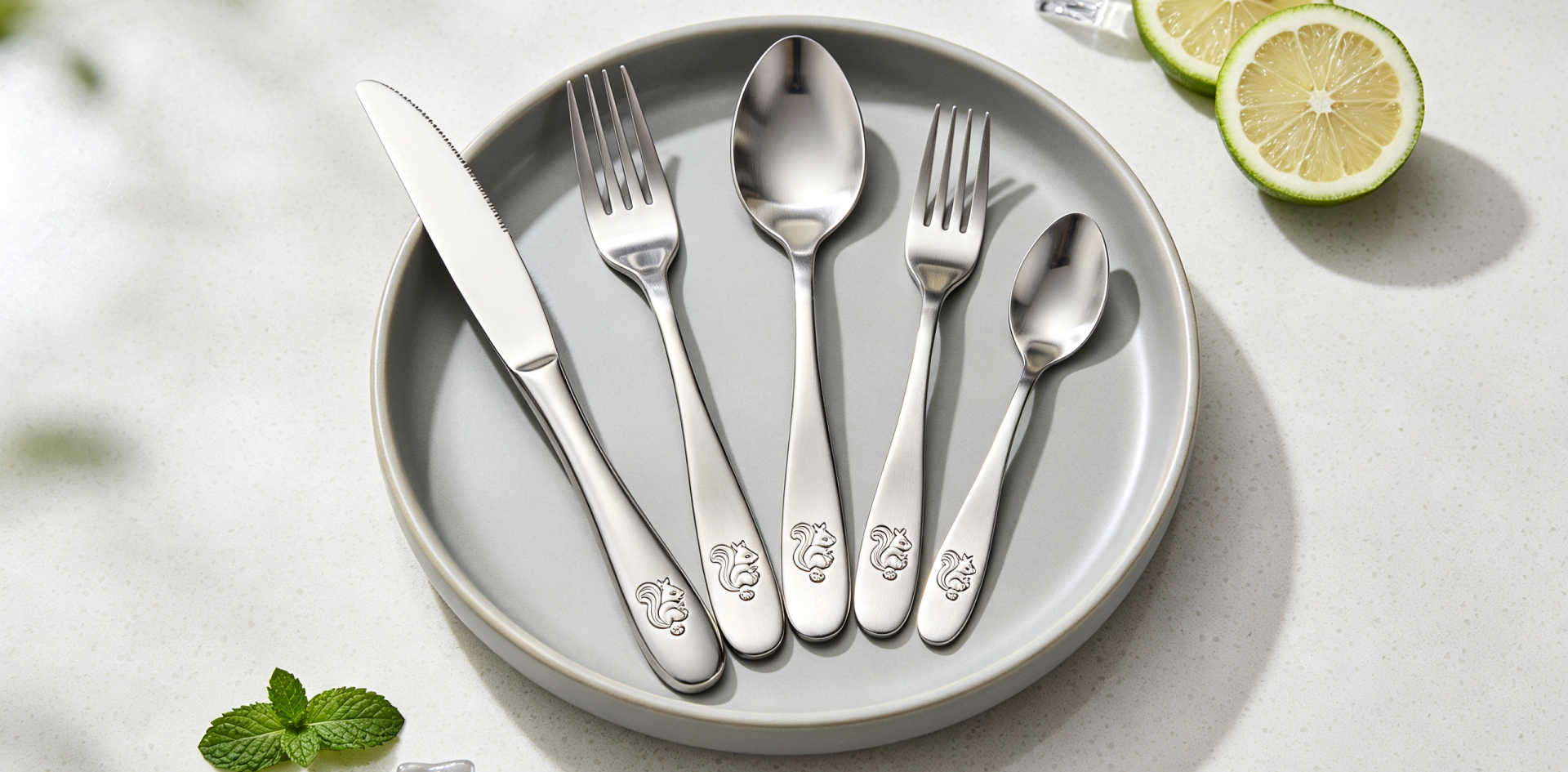
Salad Bar Cutlery Supplier: Stainless Steel Flatware for B2B Healthy Food Brands
Salad bars and healthy food concepts have developed into a growing category within modern foodservice. Many businesses now offer fresh salads, grain bowls, vegetables, fruit, yogurt, protein bowls, desserts, and other customizable meals.
This type of foodservice creates a specific need for practical and visually consistent cutlery. Spoons and forks are especially important for bowl-based meals, while knives may be required for larger salads, prepared dishes, or additional menu items.
For salad bar chains, healthy food brands, franchise operators, foodservice distributors, and wholesale buyers, choosing a reliable Salad Bar Cutlery Supplier can help establish a consistent product program across locations.
A professional stainless steel cutlery manufacturer can support standard products as well as customized spoons, forks, knives, flatware sets, branding, packaging, and bulk production.
Why Salad Bars Need the Right Cutlery
Salad bars often offer meals in bowls rather than traditional plate-based formats. Customers may combine vegetables, grains, beans, proteins, sauces, fruits, and other ingredients into one meal.
Because of this, the cutlery needs to match the eating experience.
A spoon can be useful for grain bowls, yogurt, fruit, desserts, and other foods, while a fork may be preferred for leafy salads and mixed dishes. Some concepts may provide both options depending on the menu.
For B2B buyers, the objective is to create a practical range that supports the actual food offered by the business while maintaining a consistent appearance.
Stainless Steel Cutlery for Healthy Food Concepts
Healthy food brands often build their identity around simplicity, freshness, and modern presentation. Their restaurants may use natural materials, clean interiors, minimalist packaging, and carefully designed serving products.
Stainless steel cutlery can fit naturally into these environments.
A simple stainless steel spoon can provide a clean appearance for everyday service, while a more distinctive design can support a premium food concept.
For businesses operating multiple stores, standardizing the cutlery collection can also simplify procurement. The same approved products can be used across different locations, helping create a more consistent customer experience.
The Importance of the Salad Bowl Spoon
The spoon can be one of the key products in a salad bar cutlery program.
Modern healthy food menus frequently include bowls containing grains, vegetables, legumes, fruit, yogurt, sauces, or other ingredients. Depending on the menu, customers may prefer different spoon sizes and shapes.
A smaller spoon can be suitable for desserts or yogurt, while a larger spoon can be more appropriate for bowls and certain meal formats.
The shape of the spoon head and handle can also influence how the product feels and looks in the customer's hand.
For a commercial food brand, it is therefore useful to consider the menu and serving format before finalizing the spoon specifications.
Custom Cutlery for Healthy Food Brands
A growing healthy food brand may want its cutlery to reflect its own identity rather than relying entirely on generic products.
Custom stainless steel cutlery can provide a way to develop a more distinctive product collection.
Buyers can provide product references, drawings, samples, or design requirements to communicate the desired direction. Depending on the project, the manufacturer can review requirements related to dimensions, handle design, surface appearance, and other specifications.
For a chain or franchise group, a custom product can then become an approved standard for multiple locations.
This can be especially useful when the brand is investing in a consistent restaurant concept.
Wholesale Cutlery for Salad Bar Chains
The purchasing requirements of a single salad shop are different from those of a chain with dozens of locations.
As the number of stores increases, the business may need to manage initial store supply, regular replenishment, new-store openings, replacement stock, and seasonal demand.
A wholesale cutlery program can help centralize these requirements.
A buyer may establish a core collection containing spoons, forks, knives, and other selected pieces. Quantities can then be planned according to the number of restaurants and expected usage.
For distributors, a broader range can be developed to serve different healthy food and salad concepts.
Standardizing the product specifications can make future purchasing easier and reduce unnecessary product variations.
Private Label Flatware for Healthy Food Brands
Some healthy food businesses develop strong consumer-facing brands and may eventually sell branded products outside their restaurants.
Private-label flatware can become part of this strategy.
A branded stainless steel spoon or flatware set can be designed for use in restaurants and potentially offered through retail stores, online channels, membership programs, or branded merchandise collections.
Private-label packaging can reinforce the brand identity and distinguish the product from generic flatware.
For an established food brand, this creates an opportunity to connect the restaurant experience with products that customers can use at home.
Branding and Packaging for B2B Orders
Branding requirements should be considered together with the product design.
If a salad chain wants branded cutlery for restaurant use, the project may focus on product customization. If the same company wants to sell the cutlery as a consumer product, packaging becomes an additional consideration.
Internal restaurant packaging may prioritize efficient storage and distribution, while retail packaging may focus more strongly on individual presentation.
For B2B projects, packaging specifications can include inner packing, carton quantities, labels, branding requirements, and other details.
Defining these requirements before production helps create a more organized purchasing process.
Creating a Complete Cutlery Range
A healthy food chain may begin with salads but later expand its menu.
Grain bowls, breakfast products, desserts, soups, fruit bowls, sandwiches, and other foods can create new cutlery requirements.
Rather than adding unrelated products each time the menu changes, a business can develop a coordinated flatware collection.
For example, the basic program may include a salad fork and spoon. As the menu grows, additional spoons, knives, and complete flatware sets can be added.
A consistent design across these products can help maintain the visual identity of the brand.
Supporting Multiple Restaurant Locations
For a multi-location business, procurement can become more complicated as the company grows.
Each store may need opening stock, replacement products, and additional quantities during busy periods. If every location purchases independently, different products may gradually enter the system.
A centralized B2B cutlery program can help avoid this problem.
The brand can approve a specific product collection and use the same specifications for different locations. New stores can then order according to the established program.
This approach can also make inventory planning easier for a central purchasing team.
Quality Consistency for Repeat Orders
Repeat-order consistency is an important consideration for foodservice brands.
Once a salad chain has approved a particular spoon or fork, future orders should follow the agreed specifications. Otherwise, differences between old and new products can become noticeable across locations.
Clear product specifications provide a useful reference for repeat manufacturing.
Dimensions, appearance, finishing requirements, packaging, and other agreed details can be recorded during the development stage.
When additional orders are placed, the approved product specifications can then be used as the basis for production.
Why Work With a Stainless Steel Cutlery Manufacturer?
For customized B2B projects, direct communication with a manufacturer can be useful.
Instead of selecting only from a standard retail assortment, buyers can explain the intended application, estimated volume, branding requirements, and packaging needs.
This can make it easier to determine whether a standard product is appropriate or whether customization should be considered.
Homefelt has more than 40 years of experience in the stainless steel cutlery business and supports international B2B buyers with spoons, forks, knives, flatware sets, and customized cutlery solutions.
The company has experience with OEM, ODM, and private-label projects and serves customers across international markets, including North America, Europe, the Middle East, and East Asia.
Its experience with international brands includes names such as Tchibo, Alessi, WMF, LASSIG, Liewood, Hello Kitty, Disney, and Target.
For healthy food chains and salad bar operators, this manufacturing experience can support projects ranging from standard bulk cutlery to customized product collections.
How to Prepare a Salad Bar Cutlery Inquiry
Before requesting a quotation, B2B buyers can prepare a basic product brief.
The brief can include the required products, estimated quantities, preferred sizes, design references, surface finish, branding requirements, and packaging expectations.
For a multi-store business, it can also be helpful to provide the approximate number of locations and expected replenishment requirements.
If the design is still under development, reference images, sketches, or existing products can help communicate the intended appearance.
For a customized product, buyers may choose to develop and review a sample before proceeding with bulk production. Once approved, the sample specifications can serve as a reference for future orders.
A Scalable Solution for Growing Healthy Food Chains
A healthy food business may begin with one location and gradually expand into multiple stores or franchise markets.
Its cutlery program should be able to grow with it.
An initial order may focus on basic spoons and forks. Later, the brand may add knives, dessert spoons, complete flatware sets, customized products, or private-label packaging.
Using an established manufacturing relationship can make these expansions easier to coordinate.
The same supplier can potentially support different product requirements as the brand develops its menu and sales channels.
This creates a more flexible procurement structure for growing businesses.
Long-Term B2B Cutlery Supply
For a professional foodservice buyer, the lowest initial price is not necessarily the only consideration.
A long-term supplier should also be able to support product consistency, repeat orders, customized requirements, packaging, and changing quantities.
For a salad bar chain, this can be particularly important when opening new locations.
A supplier relationship that begins with one spoon can eventually develop into a complete cutlery program covering multiple restaurants and product categories.
This approach can simplify purchasing while helping the brand maintain consistent product standards.
For salad bars, healthy food chains, bowl concepts, and foodservice distributors, stainless steel cutlery can be planned as part of the overall product and customer experience.
By defining the required products, quantities, design direction, branding, and packaging requirements, buyers can give a manufacturer a clear understanding of the project.
Homefelt supports international B2B buyers with stainless steel cutlery manufacturing, customized products, OEM and ODM solutions, private-label programs, and bulk production.
Whether the requirement is a simple stainless steel spoon for a salad bar or a complete branded flatware collection for a growing healthy food chain, a clear project brief provides a practical starting point for quotation, sample development, and production.
Request a Custom Stainless Steel Spoon Quote for Your Salad Brand
Explore Wholesale Stainless Steel Cutlery for Multiple Food Locations
Develop Private Label Flatware for a Healthy Food Brand
Discuss OEM and ODM Cutlery Manufacturing for a New Food Concept
Build a Custom B2B Cutlery Supply Program for Your Restaurant Chain
Hofladen Besteck Lieferant | Edelstahlbesteck für B2B-Food-Konzepte
Fournisseur de couverts pour aquariums | Couverts inox B2B personnalisés
Related Article