
Stackable Stainless Steel Cutlery for B2B Supply
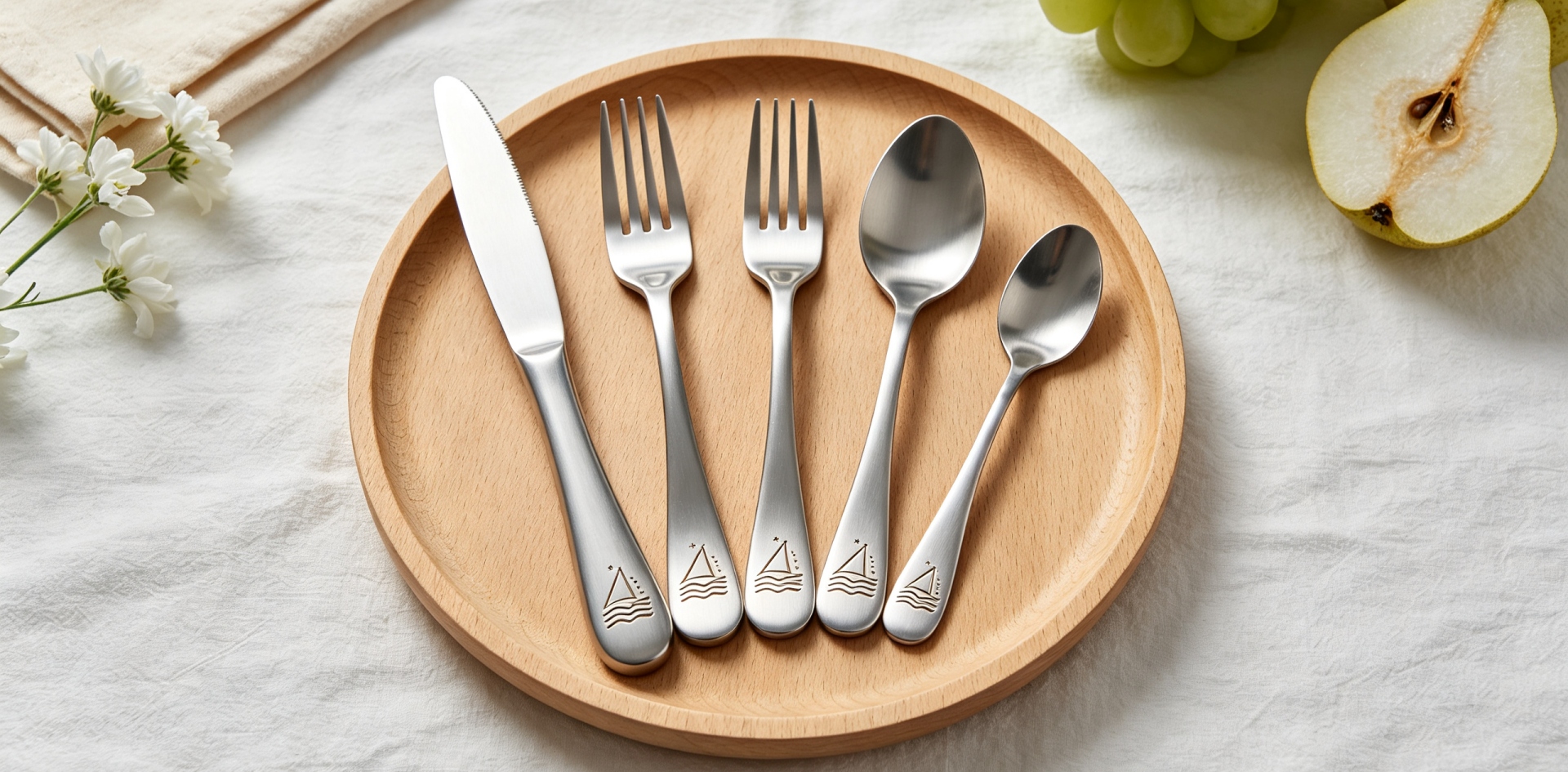
Stackable Stainless Steel Cutlery for B2B Supply
For B2B stainless steel cutlery buyers, product design is only one part of a successful purchasing program. How knives, forks and spoons are handled, stored and presented can also affect the practicality of a product range.
When individual pieces can be placed together efficiently, businesses may find it easier to organize stock, prepare products for packaging and manage cutlery during daily operations. This can be especially useful for hospitality suppliers, distributors, retailers and other buyers handling stainless steel cutlery in larger quantities.
For custom OEM and private label projects, stackability can therefore be considered as part of the product development process rather than treated as an afterthought.
What Does Stackable Cutlery Mean?
Stackable cutlery is designed so that similar pieces can be positioned together in an organized way.
For example, multiple spoons may sit together with relatively little unnecessary space between the handles and bowls. Forks can also be arranged into compact groups, while knives may be positioned according to their blade and handle configuration.
The exact result depends on the shape of the cutlery.
Handle thickness, curvature, transitions and overall geometry can all influence how efficiently pieces sit together. Two products with similar overall dimensions may therefore behave differently when stacked.
For B2B buyers, this is one reason why physical samples can be useful during product development.
Why Stackability Can Matter for Commercial Buyers
A consumer may only handle a few pieces at a time, but a wholesaler, restaurant supplier or distributor may handle hundreds or thousands of pieces.
Small differences in how products occupy space can become more noticeable when quantities increase.
Efficient stacking can make it easier to:
-
Organize warehouse stock
-
Handle large quantities of individual pieces
-
Prepare products for packaging
-
Arrange cutlery for display
-
Move products between storage areas
-
Manage replenishment more efficiently
This does not mean every B2B cutlery product needs to have the highest possible stacking efficiency. Instead, the appropriate design should match the intended use.
Stackability and Cutlery Handle Design
The handle is one of the most influential areas when considering how cutlery pieces sit together.
A very wide or heavily curved handle may create more empty space between pieces. A flatter or more controlled profile may allow several pieces to sit closer together.
However, changing the handle purely to improve stacking is not always the right solution.
The handle still needs to maintain the intended appearance, grip and overall balance of the product. For branded cutlery, visual identity may be just as important as compact storage.
A manufacturer experienced in custom stainless steel cutlery can help evaluate these requirements together rather than optimizing only one feature.
Considering Spoon, Fork and Knife Geometry
Each type of cutlery behaves differently.
A spoon has a bowl that naturally creates a specific contact area between pieces. Forks have multiple tines and a wider head structure. Knives have blades with different profiles and handle transitions.
As a result, a collection should not necessarily use exactly the same approach for every product.
For an OEM collection, the goal can be to develop a consistent visual language while allowing each individual piece to maintain an appropriate functional structure.
This is particularly relevant when a brand wants knives, forks and spoons to be sold as one coordinated collection.
Stackability for Hospitality and Foodservice Products
Commercial users may handle cutlery repeatedly throughout the day.
Restaurants, hotels, catering companies and other foodservice businesses often need practical ways to organize clean cutlery before service. Compact grouping can make handling more convenient, depending on the operating environment.
For suppliers serving these customers, product practicality can become an important part of the purchasing specification.
A stainless steel cutlery set intended for hospitality use may therefore need to be evaluated not only by appearance but also by how easily the pieces can be handled and organized in larger quantities.
Stackability for Wholesale and Distribution
Wholesale buyers face a different consideration.
A distributor may purchase multiple cartons of cutlery and later supply different customers. Individual pieces may be stored temporarily before being packed into sets or delivered as replacement items.
A product that can be grouped neatly can simplify certain handling processes.
This can be especially useful when a buyer sells both complete cutlery sets and individual knives, forks or spoons.
The manufacturer can discuss these requirements during product development so that the final product is aligned with the buyer's distribution model.
Testing the Physical Product
Stackability is difficult to judge from a product drawing alone.
A sample allows buyers to place multiple pieces together and observe how they behave in practice.
During evaluation, buyers can look at:
-
How closely the pieces sit together
-
Whether handles remain aligned
-
Whether pieces slide easily apart
-
Whether the arrangement remains stable
-
How the pieces look when grouped together
-
Whether the design remains comfortable to handle
These observations can help identify whether a proposed design is suitable for the intended commercial environment.
For custom projects, feedback from the sample stage can then be incorporated before bulk manufacturing.
Balancing Stackability With Product Appearance
Good cutlery design usually involves several considerations at the same time.
A handle that stacks efficiently may have a different visual character from a handle designed primarily for decoration. Likewise, a very distinctive shape may intentionally occupy more space because the brand wants a particular appearance.
For B2B product development, the important point is to define priorities before production.
If compact handling is an important requirement, the manufacturer should know this during the development stage. If visual differentiation is the main objective, the design can be developed accordingly.
This type of communication helps avoid trying to solve commercial requirements after the product has already entered mass production.
Custom Development With an Experienced Manufacturer
For OEM and ODM projects, stackability can be included as one of the product requirements alongside material, dimensions, finish, handle design and set configuration.
Homefelt factory manufactures stainless steel knives, forks, spoons and cutlery sets for wholesale and large-volume B2B projects. The factory supports custom development for brands, distributors and private label customers.
A buyer can provide a reference product, drawing or initial concept and explain how the finished cutlery will be used. These details give the manufacturer useful information when evaluating the product structure.
For larger programs, the same approach can be applied across several related pieces so that the finished collection remains consistent.
Making Practical Requirements Part of the Original Design
A successful stainless steel cutlery project should consider how the product will be used after manufacturing.
Appearance, material, functionality, handling and commercial requirements all contribute to the final product.
Stackability may not be the main selling point of a cutlery collection, but for some B2B applications it can be a practical detail that improves everyday handling.
For wholesalers, distributors, hospitality suppliers and private label brands, discussing these requirements before requesting samples can help create a more suitable product from the beginning.
If your business is developing a new stainless steel cutlery range and has specific requirements for handling, storage or commercial use, sharing these details with the manufacturer can help turn the concept into a production-ready solution.
Custom Stainless Steel Cutlery Manufacturing
Private Label Stainless Steel Cutlery
Stainless Steel Cutlery Sample Sets for B2B Buyers
Custom Handle Stainless Steel Cutlery for B2B Brands
Related Article



