
Stackable Stainless Steel Cutlery Design for Commercial B2B Projects
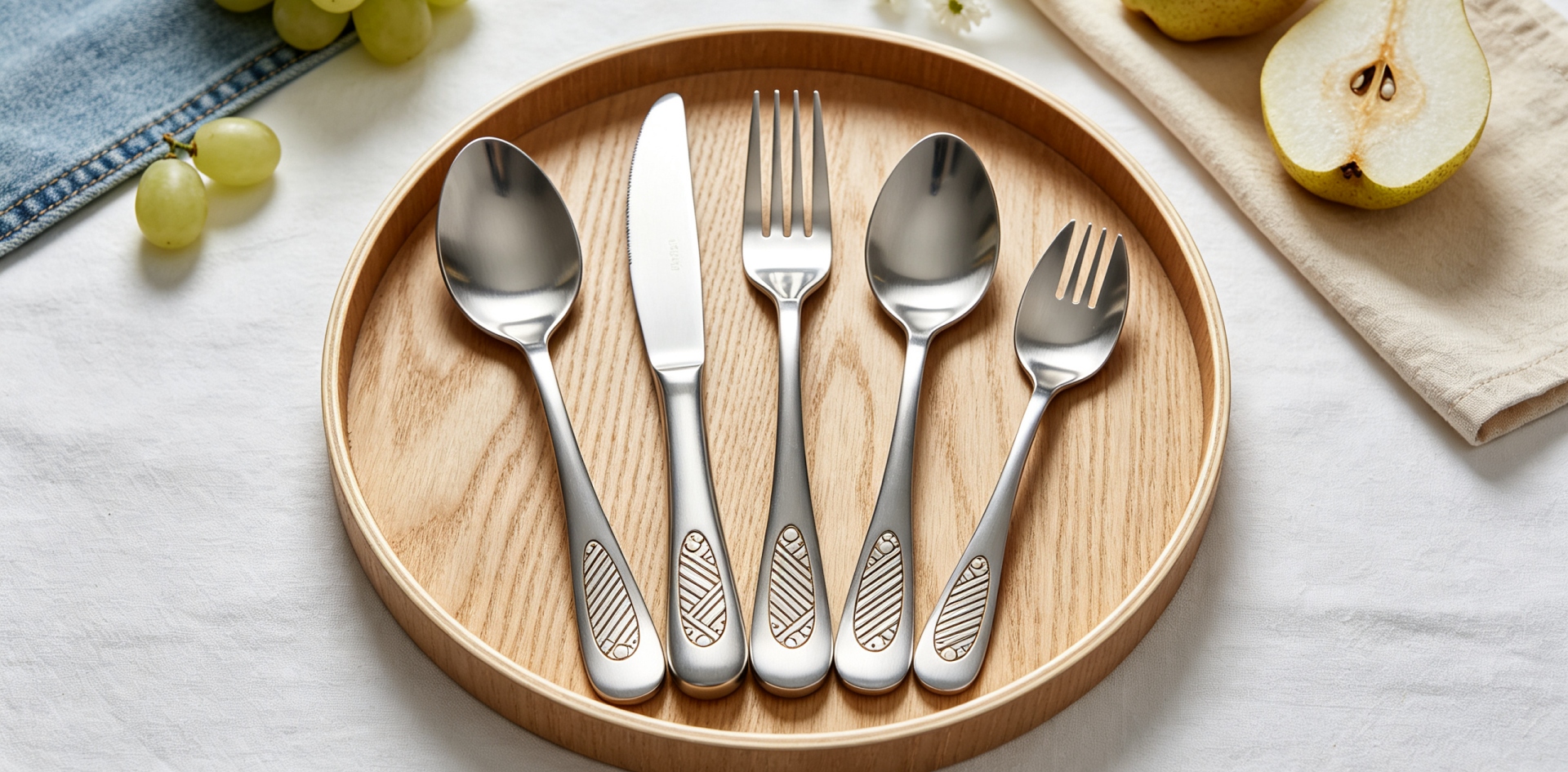
Stackable Stainless Steel Cutlery Design for Commercial B2B Projects
For restaurants, hotels, catering companies and other commercial buyers, stainless steel cutlery is handled in large quantities every day. Spoons, forks and knives need to be stored, transported, cleaned and prepared for service efficiently. Because of this, the way individual cutlery pieces fit together during storage can become an important consideration when developing a B2B product range.
Stackability is not usually the first specification buyers consider when sourcing stainless steel flatware, but it can influence storage efficiency and daily handling. For large-volume commercial projects, a practical cutlery design can help make storage areas easier to organize while reducing unnecessary space between individual pieces.
For OEM and private label projects, stackability can be considered during the product development stage together with the overall design and intended application.
Why Stackability Matters for Commercial Cutlery
Commercial kitchens and food-service operations often handle large numbers of spoons, forks and knives at the same time. After washing, the products need to be sorted and stored before they are used again.
If individual pieces can be arranged efficiently, staff may be able to organize larger quantities within a limited storage area.
This can be particularly useful for hotels, restaurants, catering companies and institutional food-service operations where cutlery is moved between washing, storage and service areas throughout the day.
For B2B buyers, the objective is not simply to make the products smaller. Instead, the cutlery should maintain its intended design while allowing practical handling and storage.
Stainless Steel Spoon Stacking
Spoons have a naturally curved structure, which means their relationship with other spoons can influence how efficiently they can be stored.
When developing a commercial stainless steel spoon, the product shape can be evaluated from a storage perspective as well as from normal use requirements.
For buyers purchasing large quantities, sample testing can show how multiple spoons sit together when placed in a storage container or service area.
This can provide useful information before a large order is confirmed.
A practical stacking arrangement can also make it easier for staff to move groups of spoons from one location to another.
Fork Arrangement and Storage
Forks have a different structure because of their tines and head shape. When several forks are placed together, the relationship between their handles and heads can affect how neatly they can be organized.
For commercial cutlery projects, buyers can evaluate a group of sample forks rather than examining only one individual piece.
This allows the purchasing team to understand how the products behave when stored in larger quantities.
For a private label collection, these considerations can also be included in the product development process so the final design works for both presentation and commercial handling.
Knife Storage Considerations
Knives can require different storage arrangements from spoons and forks because of their blade structure.
Commercial buyers may store table knives in dedicated containers, drawers, racks or other service-storage systems. The product design should therefore be considered in relation to the intended storage environment.
When developing a custom stainless steel knife, buyers can provide information about the expected application and storage method.
The manufacturer can then evaluate the product requirements during the development and sampling stage.
Testing Cutlery in Groups
One useful way to evaluate stackability is to examine multiple pieces together rather than focusing only on an individual sample.
For example, buyers can place several spoons, forks or knives together and observe:
-
How closely the pieces fit together
-
Whether the products remain organized
-
How much storage space they occupy
-
Whether the pieces separate easily when needed
-
Whether the arrangement works with existing storage equipment
This simple evaluation can provide practical information for commercial purchasing decisions.
For large B2B orders, it can also help identify design considerations before mass production.
Stackability and Commercial Kitchen Efficiency
Storage efficiency can become more important as the volume of cutlery increases.
A small restaurant may need hundreds of pieces, while a hotel, catering operation or large food-service supplier may handle considerably more. When large quantities are stored together, small differences in how products fit can affect the total space required.
For this reason, buyers can consider stackability as one part of the overall product evaluation.
It should not replace other requirements such as material, product quality or intended use, but it can provide an additional reference when comparing suitable commercial cutlery designs.
Stackable Cutlery for Hospitality Suppliers
Hospitality suppliers often need products that are practical for repeated commercial use. Their customers may include restaurants, hotels, catering businesses and other professional users.
A cutlery design that is easy to organize can make the product more attractive for these applications.
For distributors, stackability can also be discussed as part of the product information provided to commercial customers.
If the product has been developed specifically for professional use, the supplier can communicate the intended storage and handling advantages without changing the core product design.
Custom Stackable Flatware Development
OEM and ODM customers may have their own requirements for how stainless steel spoons, forks and knives should be stored.
For example, a customer may already use a particular storage system and want the new cutlery collection to fit within the available space.
In this situation, the buyer can provide reference information, drawings or sample storage conditions to the manufacturer.
Homefelt factory can discuss these requirements during product development and sampling. The final design can then be evaluated before the project moves into large-volume production.
This type of early communication can help reduce unnecessary changes after the production order has been confirmed.
Stackability and Private Label Collections
For private label brands, stackability can be considered as part of the complete product concept.
A brand may want its stainless steel spoon, fork and knife collection to look distinctive while still being practical for professional customers. Storage behavior can therefore be included in the product development discussion.
If several products are developed together, the manufacturer can review their individual characteristics and consider whether the collection provides a consistent commercial solution.
This is particularly relevant for brands targeting restaurants, hotels and catering distributors.
Evaluating Storage Before Bulk Production
A physical sample provides a useful opportunity to test the product in realistic conditions.
Instead of evaluating only one spoon, fork or knife, buyers can request enough samples to test a group of products. This can reveal practical storage characteristics that may not be obvious from product drawings or photographs.
For large orders, this type of evaluation can be completed before mass production begins.
Once the product has been approved, the sample and product specification can become references for future manufacturing and repeat orders.
Homefelt Factory for Commercial Stainless Steel Cutlery
Homefelt factory has 40 years of experience in the stainless steel cutlery business and provides customized spoons, forks and knives for B2B customers.
The factory supports OEM/ODM, private label, wholesale and large-volume production. Customers can discuss product design, commercial application, sample requirements, packaging and shipping arrangements according to their project needs.
For restaurants, hotels, distributors and other professional buyers, the team can discuss practical product requirements before the order moves into bulk production.
A detailed product specification and approved sample can also provide a useful reference when the same stainless steel cutlery needs to be reordered in the future.
Stainless Steel Cutlery Surface Flatness Control for Bulk Production
Stainless Steel Cutlery Knife Hardness for B2B Table Knife Projects
Related Article



