
Stainless Steel Cutlery Alignment: A Practical Detail for Custom B2B Designs
Stainless Steel Cutlery Alignment: A Practical Detail for Custom B2B Designs
When a stainless steel cutlery collection is developed for a retail brand, hospitality project, distributor, or private label program, attention usually goes first to the overall shape, material, finish, and handle design. Yet some of the qualities that make a collection look refined are much less obvious. Alignment is one of them.
For knives, forks, and spoons, the relationship between the center line, handle, functional section, and overall silhouette can have a noticeable effect on the finished product. Even when each individual piece appears simple, small deviations may become visible when several pieces are placed together.
For B2B buyers developing a custom stainless steel cutlery range, alignment is therefore worth discussing at the design and sampling stage rather than treating it as a minor finishing detail.
What Does Alignment Mean in Stainless Steel Cutlery?
In simple terms, alignment refers to how the different parts of a cutlery piece follow the intended central direction of the design.
A spoon should have a bowl and handle that visually follow the same intended axis. A fork should maintain a balanced relationship between its head and handle. A table knife should have a blade, neck, and handle that work together as one continuous form.
The concept becomes particularly important when the cutlery has a shaped handle, curved profile, asymmetric decoration, or a distinctive transition between functional and decorative areas.
For standard products, the design has already been established by the manufacturer. For OEM and private label projects, however, the buyer may provide drawings, reference samples, sketches, or brand design requirements. At that point, alignment becomes part of the technical conversation.
Why Alignment Matters for B2B Cutlery Projects
A single piece of cutlery can look acceptable when viewed separately, while the same deviation may become much easier to notice when ten, twenty, or more pieces are arranged together.
This is particularly relevant for boxed sets and retail displays. Consumers may not describe the issue as “alignment,” but they can still perceive whether a collection looks orderly and well made.
For a B2B buyer, this can affect several practical aspects of a product:
Visual consistency
A consistent center direction gives knives, forks, and spoons a more controlled appearance.
Collection harmony
When different shapes belong to the same range, their proportions and directional flow should feel related.
Packaging presentation
Cutlery placed inside a box, tray, or retail package benefits from a clean and predictable arrangement.
Brand perception
A well-controlled product appearance supports the overall impression of a private label or branded collection.
Production consistency
Clear alignment requirements help a factory understand which visual details are important during manufacturing and inspection.
Alignment Across Knives, Forks, and Spoons
Each cutlery type has its own structure, so alignment should not be interpreted in exactly the same way for every item.
A spoon normally requires attention to the relationship between the bowl and handle. If the bowl sits noticeably off the intended center direction, the product may look unbalanced when placed on a table or inside a set.
For a fork, the head, tine arrangement, and handle need to work together. The fork may include curved or shaped areas, but the overall form should still follow the intended design direction.
A table knife can present a different challenge because the blade often has a stronger visual direction. The relationship between the blade, neck, and handle needs to be considered as one complete silhouette rather than as separate components.
This is why a B2B cutlery manufacturer needs to evaluate the complete product instead of checking only one individual section.
The Relationship Between Alignment and Cutlery Design
Alignment should be established together with the overall design rather than added afterward.
For example, a brand may develop a handle with a distinctive taper or decorative shape. If the handle is visually strong, even a small change in its position relative to the functional section can alter the appearance of the complete piece.
The same applies to spoons and forks with decorative handles. The decorative center line may need to correspond with the functional center line to create the intended visual effect.
During custom development, it is useful to consider:
-
the central axis of the complete piece
-
the relationship between the handle and functional section
-
the direction of the blade, bowl, or fork head
-
decorative elements and their positioning
-
the way the piece looks when placed beside matching items
-
the relationship between individual pieces within the same collection
These details are easier to control when they are defined before production begins.
How Manufacturers Control Alignment
Alignment is influenced by several manufacturing stages rather than by one single operation.
Depending on the product construction and design, forming, stamping, shaping, polishing, and other processes can all influence the final position and appearance of the product.
For custom cutlery, the tooling and forming method should be developed around the approved product design. If the design has a particularly distinctive shape, the factory may need to pay closer attention to how the material moves during forming.
The important point for B2B buyers is that alignment should be considered part of the complete manufacturing process.
A reliable factory does not simply look at whether a piece has the correct length or width. It also needs to understand how the different dimensions work together to create the intended final appearance.
Reference Samples Make Communication Easier
When a buyer has a specific requirement for alignment, a reference sample can often communicate the idea more clearly than a long written description.
A physical sample allows the manufacturer to examine the center direction, overall silhouette, transitions, and visual relationship between different sections.
For new OEM projects, buyers can provide:
-
an existing cutlery sample
-
a drawing with dimensions
-
a CAD file
-
a product photograph with marked details
-
a sketch showing the desired shape
-
an existing collection that represents the brand style
The factory can then review the design and determine how the intended form can be translated into a repeatable production process.
Technical Drawings Should Show More Than Basic Dimensions
For custom stainless steel flatware, a drawing containing only length and width may not communicate enough information.
If alignment is an important design characteristic, the technical documentation should make the intended center direction clear.
For example, a drawing may identify the central axis and show how the handle, functional section, or decorative elements relate to it. This creates a clearer reference for sampling and later production.
It is also useful to establish which visual characteristics are essential to the brand and which dimensions can have normal manufacturing variation.
This distinction can make communication between buyer and manufacturer much more practical.
Alignment and Multi-Piece Cutlery Collections
The importance of alignment becomes even greater when a buyer develops a complete collection rather than one individual item.
A typical private label program may include several knives, forks, and spoons designed around the same visual language.
The pieces do not need to be identical, but they should feel like members of the same family.
For example, the handle direction, decorative positioning, and general visual flow can be coordinated across the collection. This makes the product range easier to present in retail packaging, catalogues, online stores, and hospitality settings.
For distributors, this type of consistency can also make it easier to expand a product range later with additional SKUs.
Planning Alignment Before Bulk Production
For a new B2B cutlery project, it is better to discuss alignment before the final sample is approved.
Once the product has entered bulk production, changing a fundamental shape or directional relationship can create additional tooling and production considerations.
A practical development process can therefore begin with the buyer's design requirements, followed by technical review, sample development, adjustment, and final approval.
At the sample stage, the buyer can review the product not only individually but also as part of the planned collection.
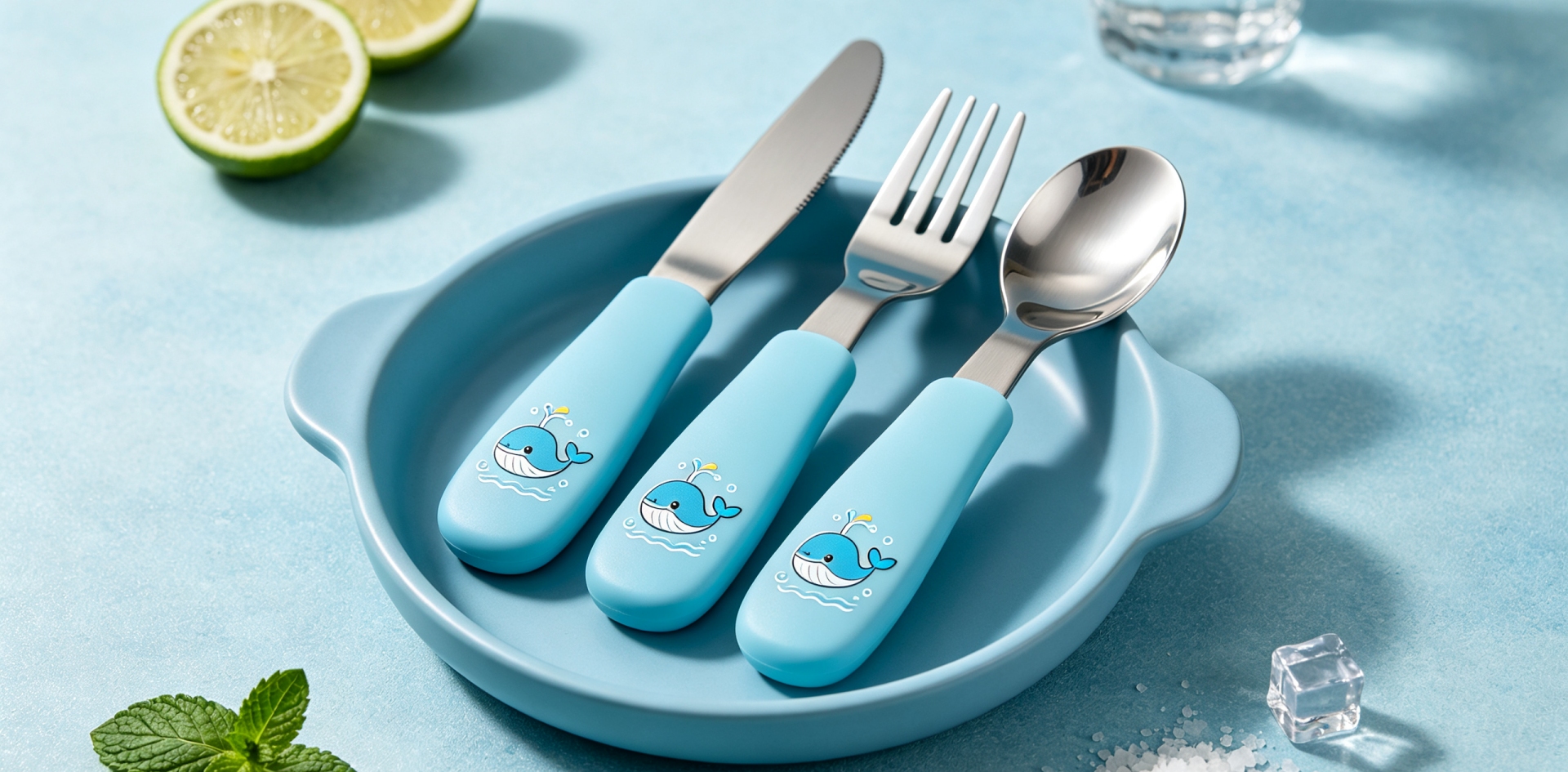
Placing the knife, fork, and spoon side by side can reveal visual relationships that may not be obvious when examining one piece at a time.
From Custom Concept to Repeatable Production
The real value of a custom stainless steel cutlery manufacturer is not simply the ability to make one attractive sample. The greater challenge is turning an approved design into a stable product that can be manufactured repeatedly.
For OEM, ODM, and private label projects, this means translating the buyer's visual requirements into practical manufacturing references.
Alignment can become one of those references.
When the intended direction and relationship between product sections are clearly understood, the factory has a better basis for tooling, forming, inspection, and production control.
This is especially useful for brands planning repeat orders or expanding an existing flatware collection.
Why Discuss This Detail With Your Manufacturer?
B2B cutlery development involves many individual decisions. Material, dimensions, finish, weight, packaging, tooling, and production quantities all need to work together.
Alignment may seem like a small design detail, but it can influence how the finished product looks when displayed, packaged, or combined with other pieces.
For this reason, buyers developing custom stainless steel cutlery should not hesitate to include alignment and overall directional consistency in their product discussions.
A manufacturer with OEM and private label experience can review the design, identify practical production considerations, and help turn a concept into a product suitable for repeat wholesale production.
If you already have a drawing, sample, product image, or basic concept, it can be used as the starting point for a custom project. The next step is to discuss the required materials, dimensions, finish, quantity, packaging, and other specifications so that a suitable quotation can be prepared.
Request a Custom Stainless Steel Cutlery Quote
Discuss Your OEM Flatware Project
Get a Wholesale Stainless Steel Cutlery Solution
Ask About Private Label Cutlery Manufacturing
Send Your Cutlery Design for Review
Rebord du Cuilleron Inox : Un Détail Important pour les Projets B2B
Stainless Steel Knife Spine Design: A Practical Detail for Custom B2B Flatware
Related Article



