
Stainless Steel Cutlery Assortment Standardization for Wholesale and Private Label Brands
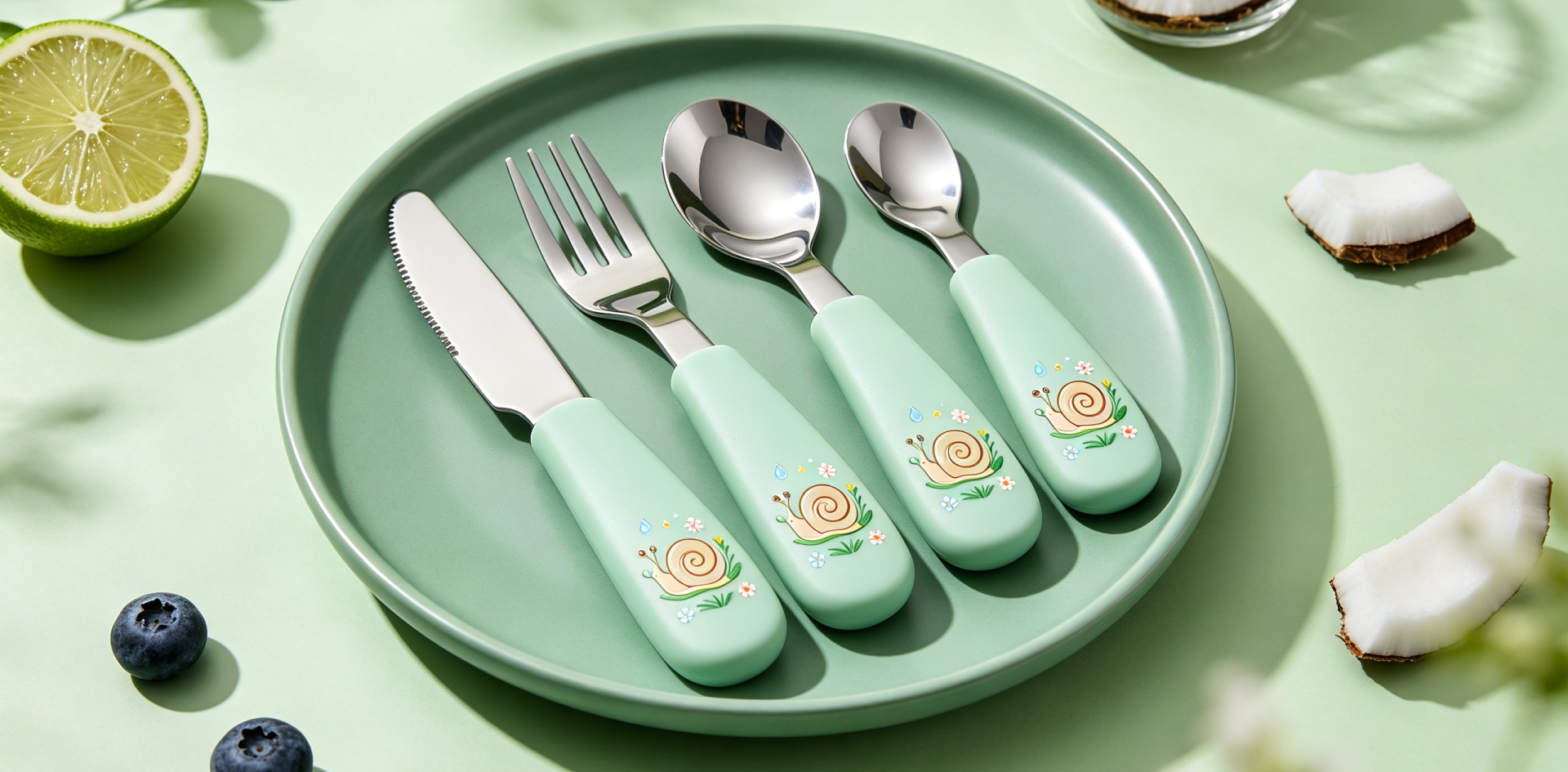
Stainless Steel Cutlery Assortment Standardization for Wholesale and Private Label Brands
For importers, wholesalers and private label brands, managing a stainless steel cutlery assortment involves more than selecting individual knives, forks and spoons. As product ranges expand, buyers may find themselves handling multiple versions of similar items, inconsistent specifications, overlapping product codes and packaging formats that are difficult to manage across sales channels.
Assortment standardization helps create a clearer structure for a cutlery collection. By defining which products belong in the range, documenting their specifications and establishing consistent naming and packaging rules, buyers can simplify sourcing while preserving the differences that matter to their customers.
Homefelt factory supports B2B stainless steel cutlery projects through OEM, ODM, wholesale and private label manufacturing. A well-organized assortment gives the buyer and factory a shared reference for product development, quotation, sample approval and repeat orders.
Identify the Purpose of Each Product in the Range
Before standardizing an assortment, buyers should understand why each product is included. Some items may serve as everyday bestsellers, while others are designed for premium retail, gift collections or specialized customer requirements.
A distributor, for example, might sell several stainless steel cutlery collections at different price levels. If two collections have almost identical dimensions, finishes and packaging, the purchasing team should determine whether both provide a meaningful difference for the target market.
The goal is not to reduce every range to the same design. It is to ensure that each product has a clear role and that differences are intentional rather than accidental.
Useful questions include:
-
Which customer group is each collection intended for?
-
What distinguishes the product from other items in the catalogue?
-
Which pieces are essential for the intended set configuration?
-
Are differences in material, dimensions or finish clearly defined?
-
Does the product require its own packaging and product code?
-
Is the item expected to remain available for repeat orders?
These questions help buyers decide which products should remain separate, which can share a common specification structure and which may need further evaluation.
Build a Standard Specification Framework
A standardized assortment needs consistent product records. If one supplier quotation describes a fork by overall length while another uses only a catalogue name, comparing the two products becomes difficult. A common specification framework reduces this ambiguity.
For each stainless steel knife, fork or spoon, the product record should include the information relevant to its design and purchasing requirements.
A practical specification may cover:
-
Product name and unique item code
-
Stainless steel grade and applicable material documentation
-
Overall length and key dimensions
-
Thickness or target weight where relevant
-
Handle design and surface finish
-
Logo or decorative details
-
Approved packaging configuration
-
Reference drawing, photograph or approved sample
-
Agreed inspection criteria
The framework should distinguish mandatory requirements from optional variations. For instance, the material grade and overall dimensions may be fixed for a particular product, while the retail box artwork may vary by customer or market.
Homefelt can review customer specifications during OEM and ODM discussions to help identify the information needed for product development and quotation. Buyers should confirm that each approved specification corresponds to the intended physical product.
Organize Products by Collection and Item Code
Product codes are particularly useful when an assortment contains many similar-looking cutlery pieces. A structured coding system can distinguish the collection, item type, finish or other relevant variations without making the code unnecessarily complicated.
For example, a buyer may assign separate codes to a dinner fork, dinner spoon and table knife within the same collection. If the collection is available in more than one finish, the coding system can distinguish those versions as well.
The exact structure should suit the buyer's inventory system. The important principle is that each code should identify one clearly defined product configuration. Two products should not share a code if they differ in a purchasing-critical characteristic.
When introducing a new code, update the related records, including the specification sheet, quotation, packaging artwork and purchase order where applicable. This reduces the chance that the correct design is paired with the wrong label or carton.
A simple master product list can serve as the central reference for purchasing, sales, warehousing and customer service teams.
Standardize Core Products Without Limiting Customization
Wholesale buyers often need a stable base range while also offering selected customized products. A useful approach is to define a core assortment and manage special versions as controlled variations.
The core range might include established knife, fork and spoon designs with confirmed dimensions and finishes. Customer-specific options could then be developed through agreed changes to logos, packaging, set composition or selected design features.
This structure can help buyers avoid creating an entirely separate product record for every minor variation. However, variations should only share a common product code or specification when the buyer's system can reliably identify the differences elsewhere.
For example, two sets may use the same stainless steel cutlery pieces but have different branded retail boxes. The product specifications may be shared, while the packaging artwork and finished-set references remain distinct.
If the cutlery itself changes in material, dimensions, finish or construction, the difference should be documented explicitly. A shared visual style does not mean the products are technically identical.
Coordinate Set Composition and Packaging
Assortment consistency extends to the way individual pieces are combined and presented. Buyers may offer the same cutlery design in multiple set sizes, such as smaller household sets and larger family configurations.
Each configuration should have a defined piece list. A set containing dinner knives, forks, dinner spoons and teaspoons must be described consistently across the product specification, retail packaging and purchase order.
The packaging specification should also identify the box style, insert arrangement, printed information and carton configuration. If several set sizes use similar packaging, buyers should verify that the insert and box dimensions match the actual contents.
For private label projects, artwork versions should be controlled carefully. A packaging file approved for one collection or market should not automatically be reused for another without checking the product information, language and barcode requirements.
Homefelt can coordinate cutlery customization with agreed packaging requirements, helping buyers maintain a consistent presentation across related products.
Establish Clear Rules for Product Changes
A standardized assortment can become inconsistent if product changes are introduced without updating the relevant records. Changes may involve material, handle details, finish, dimensions, logo position, packaging or a replacement item.
Buyers should define how changes are proposed, reviewed and approved. Each change request should identify the affected product code, the reason for the change and the specifications or artwork that need revision.
When a change affects the physical cutlery, an updated sample or technical drawing may be necessary before approval. Packaging changes may require a separate artwork review, even when the cutlery remains the same.
The buyer should also determine whether existing inventory can continue to be sold under the current product record or whether a new version needs to be identified. This is especially important for distributors supplying multiple customers who may still be using an earlier specification.
A controlled revision history makes it easier to answer questions about which version was approved for a particular order.
Use Sales and Purchasing Data to Review the Range
Standardization should reflect actual commercial needs. Sales records, quotation requests, customer feedback and replenishment patterns can help buyers identify products that deserve priority.
If several similar products serve the same purpose, the buyer can compare their demand, margins, customization requirements and purchasing complexity. Items with overlapping roles may need clearer differentiation or further review.
Products should not be removed simply because they sell less frequently. A specialist item may be important to a particular customer segment or may complete a collection. Instead, consider its commercial purpose alongside the cost of maintaining its specifications, packaging and stock.
Periodic assortment reviews help buyers keep the range relevant without making uncontrolled changes. The review can also identify opportunities to combine packaging formats, standardize selected components or simplify product documentation.
Verify Consistency Before Bulk Production
Before placing a large order, compare the final quotation, approved sample, specification sheet and purchase order. Each should describe the same product configuration.
The verification should cover material grade, dimensions, finish, piece count, logo details, packaging and agreed inspection criteria. If a product code refers to a particular version, confirm that the code appears consistently in the purchasing and production documents.
For larger projects, inspection records and applicable material documents can provide additional evidence that the delivered products meet the agreed requirements. Any testing or certification claim should be supported by relevant documentation for the specific product or project.
Homefelt has experience in stainless steel cutlery manufacturing and supports OEM, ODM, wholesale and private label projects. Its business credentials include BSCI, SEDEX 4P, BRC and ISO 9001 audit or certification experience, as well as Disney audit experience. FAMA and FSC certificates are available for applicable projects; buyers should confirm the relevant scope and documentation for their requirements.
How Homefelt Supports Standardized Cutlery Collections
Homefelt factory works with B2B buyers developing stainless steel cutlery ranges for wholesale distribution, retail brands and customized bulk orders. Support can include product specification discussions, design customization, logo requirements, packaging coordination and production planning according to the agreed project scope.
To review a collection, buyers can provide a current product list, technical drawings or photographs, target quantities, material requirements and details of any existing product codes. If the assortment is still under development, a preliminary list can help establish which products require separate specifications and which may share common design elements.
A clearly standardized range makes purchasing decisions easier to communicate and helps maintain consistency as products move from sample approval to repeat production. It also gives sales and warehouse teams a more reliable way to identify the right items for each customer.
You May Be Interested In
Stainless Steel Cutlery Batch Quality Verification for OEM and Wholesale Orders
Stainless Steel Cutlery Contract Specifications for Hospitality and Foodservice Buyers
Related Article



