
Stainless Steel Cutlery Batch Appearance Consistency for OEM Supply
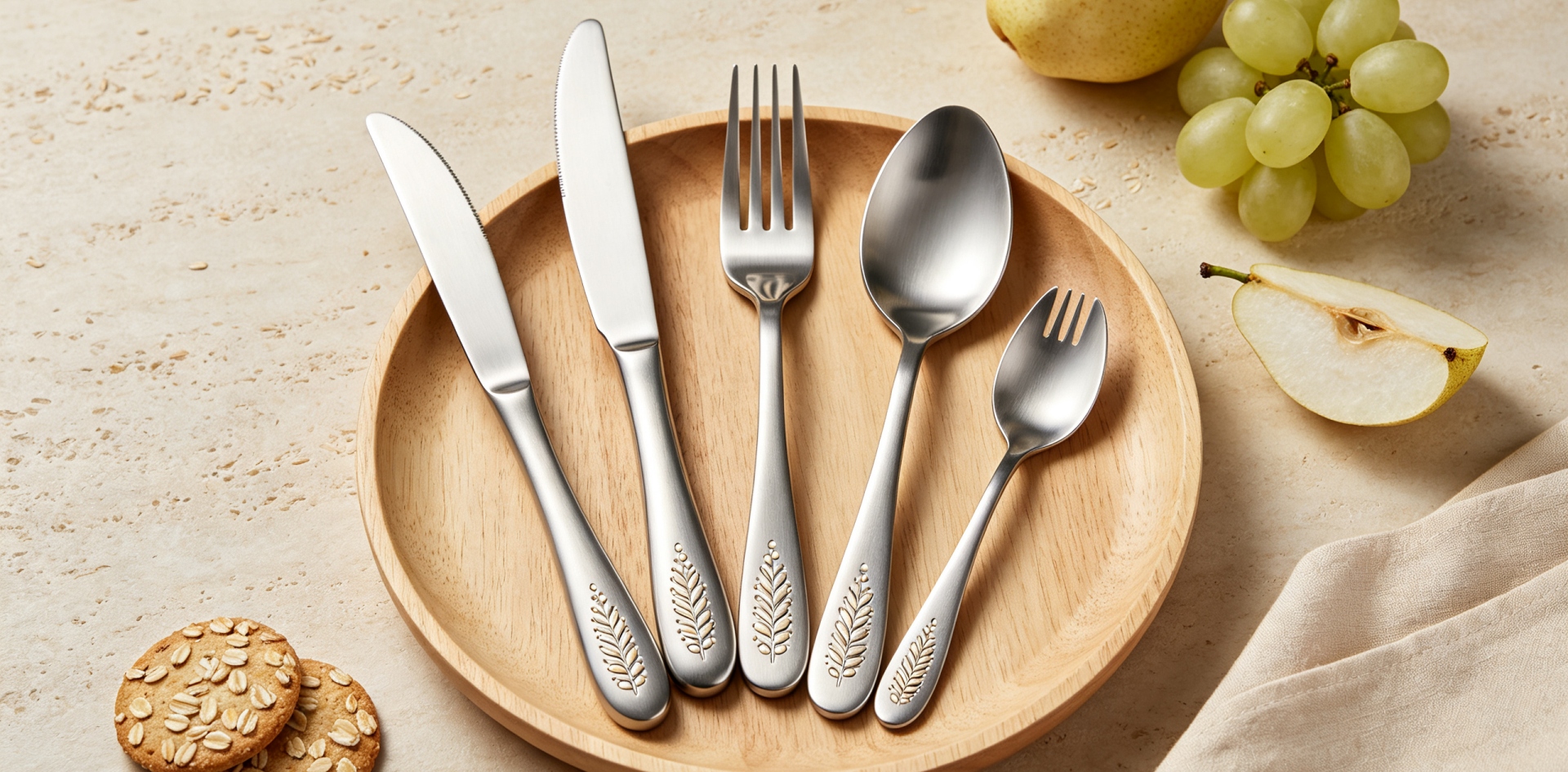
Stainless Steel Cutlery Batch Appearance Consistency for OEM Supply
For B2B stainless steel cutlery buyers, consistency is especially important when the same product will be purchased repeatedly over several production cycles. A distributor, retailer or private label brand expects a spoon, fork or knife ordered this year to remain visually consistent with the same product supplied in a previous batch.
Batch-to-batch appearance consistency is therefore more than a visual preference. It supports product recognition, collection coordination and long-term purchasing confidence.
For stainless steel cutlery, appearance can be influenced by surface finish, product geometry, processing conditions and production control. A professional factory needs to keep these elements connected to the approved product specification throughout commercial manufacturing.
Homefelt factory specializes in stainless steel knives, forks, spoons and flatware sets for OEM, ODM, private label, wholesale and bulk production. With decades of experience in the stainless steel cutlery industry, Homefelt works with B2B customers who need reliable product consistency across ongoing supply programs.
What Does Batch Appearance Consistency Mean?
Batch appearance consistency means that products manufactured at different times continue to present the same overall visual characteristics according to the agreed specification.
For stainless steel cutlery, buyers may compare products from different batches based on factors such as:
-
Overall shape
-
Surface appearance
-
Polish level
-
Brushed or other specified finish
-
Visual uniformity
-
Handle appearance
-
Product proportions
-
Color appearance for coated collections
-
Relationship between matching knife, fork and spoon designs
The purpose is not to make every individual product appear artificially identical in every microscopic detail. The practical objective is to maintain the commercial appearance expected by the buyer.
This becomes increasingly important when cutlery is sold under a consistent brand or collection.
Why Consistency Matters for Private Label Brands
A private label brand invests in creating a recognizable product identity.
If the same flatware design appears noticeably different between purchasing cycles, customers may perceive it as a different product even when the item number remains unchanged.
For retailers and distributors, this can create unnecessary complications when adding new inventory to existing stock.
A consistent manufacturing process helps reduce these visual differences and supports a more stable product range.
This is one reason B2B buyers should evaluate a factory not only by whether it can manufacture a product once, but also by whether it can maintain the agreed characteristics during repeat production.
Important Factors Behind Visual Consistency
Stainless steel cutlery appearance is influenced by several manufacturing factors.
The starting material, forming process, surface treatment and finishing method all contribute to the final appearance. Production handling and process control can also influence how a product looks after finishing.
For a commercial cutlery manufacturer, these factors need to be managed as part of the overall production process.
For example, if a customer specifies a particular surface appearance, the factory should have a clear product reference and corresponding production requirements rather than relying only on a general description such as “polished” or “brushed.”
The more precise the product requirement, the easier it becomes to maintain consistency across manufacturing batches.
Keeping Product Information Consistent
One practical foundation for batch consistency is keeping the product specification clear.
An OEM cutlery product may have information covering:
-
Product dimensions
-
Material requirements
-
Surface finish
-
Product weight where applicable
-
Handle specifications
-
Product identification
-
Packaging requirements
-
Approved reference information
When the product is reordered, the manufacturing team can use the established information as a reference for the new production batch.
This is especially useful for buyers with long-term purchasing programs, because the product may be manufactured several times over its commercial life.
Batch Consistency Across a Complete Collection
Consistency is not limited to one individual spoon or fork.
Many buyers purchase stainless steel cutlery as a collection. A dinner knife, dinner fork and table spoon may need to share a coordinated appearance even though their physical shapes are different.
For a private label brand, the relationship between these products can influence how the complete collection is presented to customers.
Homefelt’s manufacturing experience with stainless steel knives, forks and spoons allows buyers to develop related products under one broader project.
The factory can review the requirements of the collection rather than treating every item as an isolated product.
A Practical B2B Project Example
Consider a wholesale customer who purchases a stainless steel flatware collection twice a year.
The first production includes dinner knives, forks and spoons. Six months later, the customer places a replenishment order for the same collection.
The commercial requirement is straightforward: the second batch should maintain the same product identity as the first.
The manufacturer therefore needs to work from the established product requirements and reference information when preparing the new production.
If the buyer also introduces one new matching item, the factory needs to consider how that new product fits visually with the existing collection.
This is where manufacturing experience becomes valuable. The objective is not simply to reproduce one item but to maintain a coherent product range over time.
What Buyers Can Do to Support Consistency
Buyers can also contribute to better batch consistency by providing clear information.
When starting a project, it is useful to define:
-
Exact product specifications
-
Preferred surface appearance
-
Matching requirements between products
-
Product reference information
-
Packaging specifications
-
Expected repeat-order requirements
-
Any market-specific presentation requirements
If the buyer expects the product to remain available for several years, this should also be communicated to the manufacturer.
A long-term supply expectation encourages both sides to treat the product as an established commercial item rather than a one-time project.
Homefelt Factory for Long-Term Cutlery Supply
Homefelt factory provides stainless steel knife, fork and spoon manufacturing for B2B customers worldwide.
The factory supports OEM, ODM, private label, wholesale and large-volume production. Customers can develop individual products or complete stainless steel flatware collections according to their market requirements.
Homefelt has 40 years of experience in the stainless steel cutlery business and has worked with well-known brands. The factory has passed BSCI, SEDEX 4P, BRC and ISO9001 requirements, together with Disney audit requirements, and holds FAMA and FSC certifications.
For buyers evaluating a manufacturing partner, these credentials provide useful background information. More importantly, long-term manufacturing experience allows the factory team to understand the practical requirements involved in maintaining an established cutlery product across commercial production cycles.
Supporting Product Development and Manufacturing
For new products, Homefelt can support customers from the initial product concept through manufacturing.
Customers can provide drawings, reference images, samples or product requirements. The factory can then discuss the appropriate manufacturing approach for stainless steel knives, forks, spoons or flatware sets.
Homefelt also provides one-stop support covering product design, manufacturing, packaging and transportation according to the customer's project requirements.
This approach is useful for brands that want to build a consistent collection rather than source individual products from unrelated suppliers.
Why Consistency Should Be Discussed Before the First Order
Batch consistency is easier to manage when it is considered from the beginning of a project.
If a buyer waits until the second or third order to discuss appearance consistency, there may already be uncertainty about the original product reference or specification.
By establishing clear product information from the start, both the buyer and manufacturer have a stronger basis for future production.
For OEM and private label programs, this can make repeat purchasing more predictable and help the buyer maintain a stable product range.
Stainless Steel Cutlery Export Documentation for OEM and Bulk Buyers
Stainless Steel Cutlery Freight Efficiency for OEM and Bulk Supply
Related Article



