
Stainless Steel Cutlery Box Window Design for B2B Sets
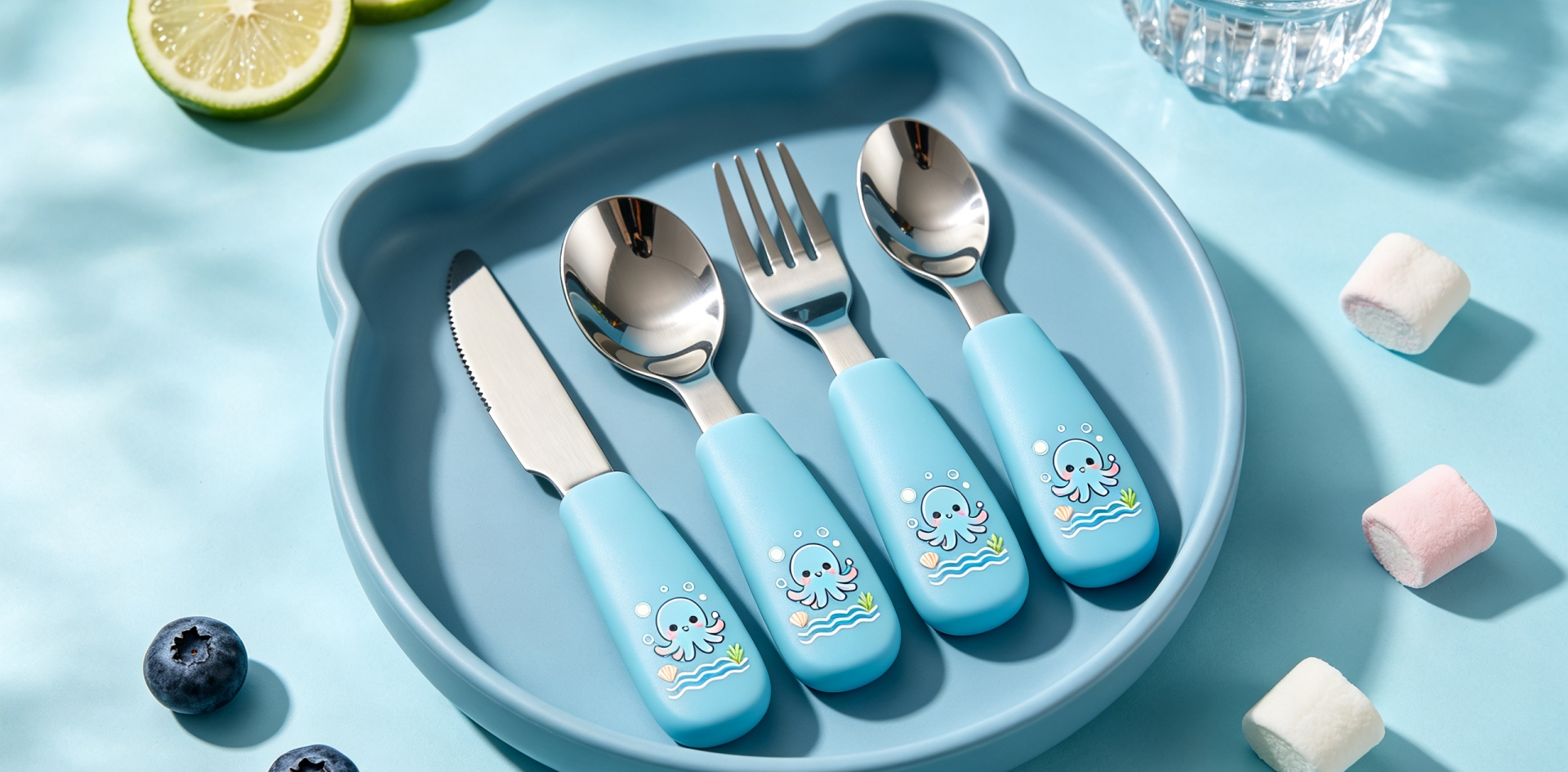
Stainless Steel Cutlery Box Window Design for B2B Sets
For a stainless steel cutlery set sold in retail packaging, the first impression is often created before the customer opens the box. The packaging structure, graphics and visible product area can influence how buyers understand the collection.
A transparent window is one option that allows part of the knife, fork or spoon to be seen without opening the package. For B2B brands, this small packaging feature can become part of the overall product presentation and should be considered together with the cutlery design.
Why a Packaging Window Can Matter
A stainless steel cutlery set contains products that customers may want to see before purchasing. Surface finish, handle design, proportions and overall style are easier to understand when at least part of the actual product is visible.
A packaging window can provide this visibility while keeping the set inside its retail package.
For distributors and private label brands, this can be useful when the product is displayed on shelves or in other retail environments where customers may not be able to open the package.
The purpose is not simply to make the box transparent. The window should show the most useful part of the cutlery while maintaining the structural integrity and visual identity of the package.
Choosing What the Window Should Show
The visible area should be selected according to the product design.
For some stainless steel flatware sets, the handle may be the most visually distinctive element. A customized handle shape, decorative detail or special finish can communicate the character of the collection immediately.
For other products, showing part of the spoon bowl, fork head or knife blade may provide more useful information.
The choice can therefore be based on the features the brand wants customers to notice first.
A packaging supplier and cutlery manufacturer can discuss these requirements together so the window position complements the actual product inside.
Window Position and Product Layout
The position of the window needs to work with the arrangement of the cutlery set.
If the window is placed over an area where the products are not positioned consistently, the visible presentation may vary from package to package.
This is why the window design should be considered together with the internal arrangement of the knives, forks and spoons.
A well-coordinated package can make the visible pieces appear intentionally positioned rather than randomly exposed.
For B2B production, this is particularly important because a packaging concept needs to remain practical across large quantities.
Balancing Visibility and Brand Graphics
A retail package needs to communicate product information while also presenting the physical cutlery.
Too much visible product can reduce the available space for branding and product information. Too little visibility may make the window less useful.
The ideal balance depends on the target market, packaging size and product positioning.
A premium private label collection may use a smaller, carefully positioned window to create a controlled presentation. A mass-market product may use a larger visible area to make the product immediately recognizable.
Both approaches can work when the packaging structure matches the product strategy.
Working With Different Cutlery Finishes
Stainless steel cutlery can have different surface treatments and finishes, including polished and colored surfaces.
A packaging window can help customers see these differences directly.
For example, a reflective polished surface can create a different impression from a matte or colored finish. Handle details may also appear differently under retail lighting.
For brands selling several collections, window placement can therefore become part of how each product range is presented.
The packaging should allow the actual product to support the visual message rather than relying entirely on printed images.
Protecting the Product During Display and Transportation
A packaging window must also be compatible with the physical requirements of the package.
The box still needs to hold the stainless steel cutlery securely during handling, transportation and retail display.
The window opening should not unnecessarily weaken areas of the package that need structural support. The materials around the opening also need to work with the selected packaging construction.
This is another reason why packaging development should consider the complete product rather than treating the window as an isolated graphic feature.
Coordinating the Window With Private Label Design
For private label brands, packaging is an important part of product identity.
A brand may already have established typography, logo placement, colors and graphic elements. The transparent window needs to fit naturally into this visual system.
The window can be positioned to reveal the product while leaving sufficient space for the brand name and other required information.
When multiple stainless steel cutlery sets share the same brand, a consistent window concept can also help create a recognizable packaging family.
Different products can have different internal layouts while maintaining a similar overall packaging structure.
Considering Set Size and Product Quantity
The appropriate window design may also depend on the number of pieces in the set.
A smaller set may have enough space for a compact window that reveals several representative pieces. A larger flatware set may require a different layout because more knives, forks and spoons need to be positioned inside the package.
The package dimensions, internal tray and visible product area should therefore be developed together.
For B2B buyers ordering multiple set configurations, this coordinated approach can help maintain a consistent appearance across different product SKUs.
From Sample Packaging to Bulk Production
Packaging concepts should be reviewed with actual stainless steel cutlery rather than only with a digital design.
A physical sample allows the buyer to see how much of the product is visible, whether the window is correctly positioned and whether the cutlery remains properly arranged.
It also provides an opportunity to evaluate the package as a complete retail product.
Once the packaging sample is approved, the final specifications can be prepared for bulk production.
This process is useful for OEM and private label projects where both the cutlery and packaging are being customized.
How Homefelt Supports Customized Cutlery Programs
Homefelt factory provides stainless steel knives, forks, spoons and complete flatware sets for B2B customers.
For customers developing private label products, the service can include customized cutlery, OEM and ODM manufacturing, wholesale supply and large-volume production.
Packaging requirements can also be discussed as part of the overall project. Depending on the customer's needs, product design, set configuration, packaging and transportation arrangements can be coordinated as part of a customized service package.
This is particularly useful for buyers who want to develop a complete retail-ready stainless steel cutlery collection rather than purchase standard products separately.
A Practical Approach to Packaging Development
When requesting a quotation for a custom stainless steel cutlery set, buyers can provide information about the target package size, number of pieces, preferred packaging style and whether the actual cutlery should be visible.
Reference packaging, drawings or product images can also help communicate the intended direction.
If the buyer does not yet have a finalized packaging concept, the project can begin with the cutlery specifications and target market. The packaging structure can then be discussed around the finished product.
This approach allows the packaging to develop around the real dimensions and appearance of the stainless steel cutlery.
Creating a Complete Retail Product
A successful stainless steel flatware set is not only about the individual knife, fork and spoon. The way the collection is presented can also influence how buyers understand the product.
A packaging window is one of many details that can connect the physical cutlery with the retail presentation.
When the product, internal arrangement and outer packaging are developed together, the final package can provide both product visibility and practical protection.
For B2B brands, distributors and wholesalers, this coordinated approach can also make it easier to create multiple cutlery collections under one product strategy.
Homefelt factory supports customers from individual stainless steel cutlery customization to complete OEM, ODM and private label flatware programs, including wholesale and bulk production requirements.
Stainless Steel Cutlery Box Closure Design for B2B Sets
Stainless Steel Spoon Neck Radius for B2B Cutlery Design
Related Article



