
Stainless Steel Cutlery Catalog Development for B2B Brands
Stainless Steel Cutlery Catalog Development for B2B Brands
For a B2B stainless steel cutlery business, a product catalog is more than a collection of photographs. It is a practical tool for showing buyers what products are available, how different items relate to one another and which options can be customized for a specific market.
A well-organized catalog can make it easier for distributors, retailers, hospitality buyers and private label brands to identify suitable products before starting a quotation discussion.
For a stainless steel cutlery factory, catalog development also provides an opportunity to present manufacturing capabilities through real products rather than through general descriptions.
Starting With a Clear Product Structure
A stainless steel cutlery catalog can become difficult to use when every product is presented independently.
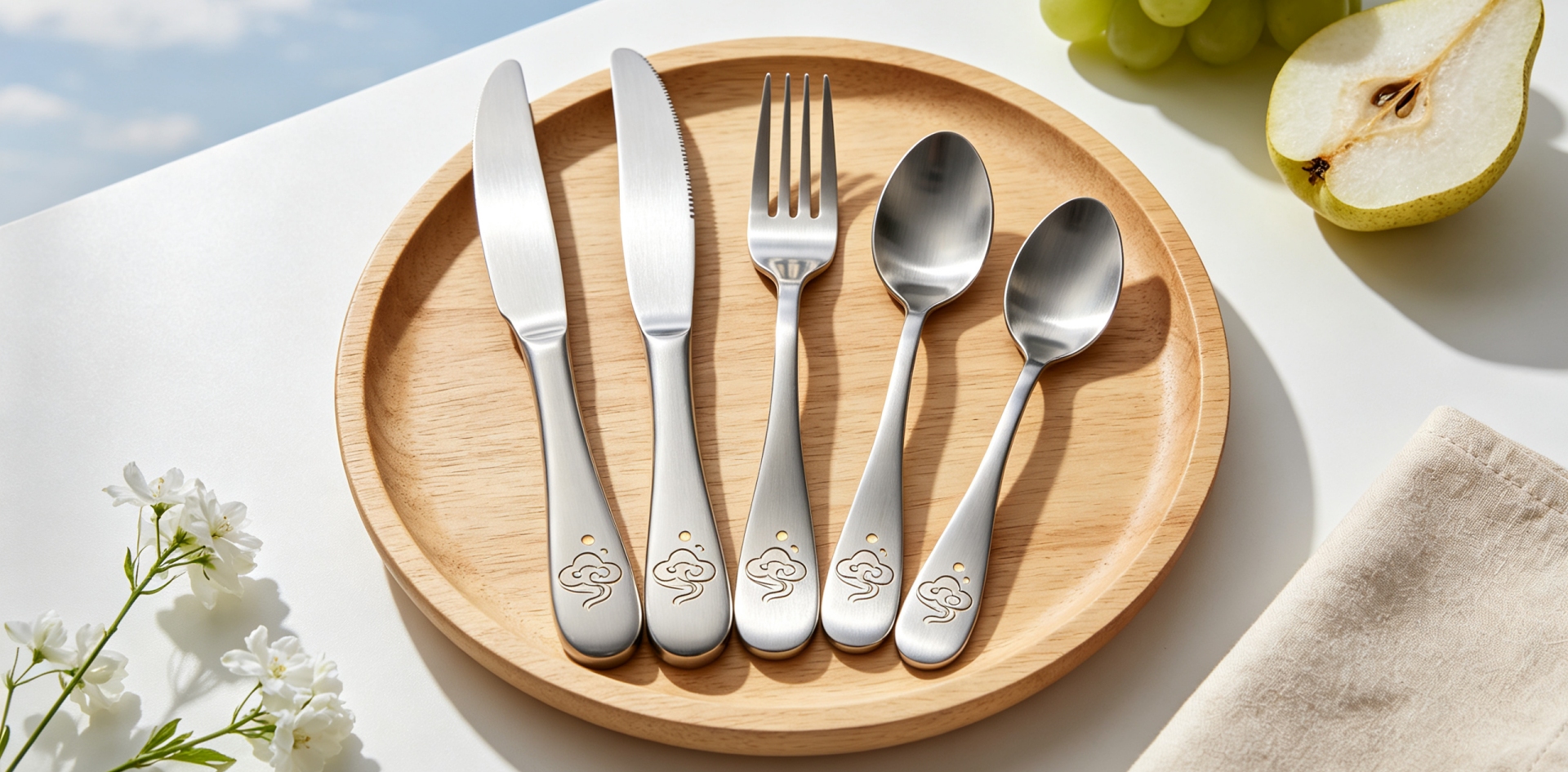
A better approach is to organize related products into clear groups. Knives, forks and spoons can be presented as individual items while also showing which products belong to the same collection.
For example, a buyer may first select a handle design and then review the matching dinner knife, dinner fork, tablespoon and teaspoon. This allows the customer to understand the collection as a complete product family.
The same structure can also make it easier to discuss customized additions later.
Showing Individual Products and Complete Collections
B2B buyers may purchase individual pieces or complete sets depending on their sales channel.
A distributor may need individual SKUs, while a retail brand may prefer four-piece or sixteen-piece flatware sets. A hospitality customer may focus on specific quantities of knives, forks and spoons.
A useful catalog should therefore make both options visible.
Showing individual products helps buyers identify specific items. Showing complete collections helps them understand how the products work together.
This combination can create more opportunities for customers to build an order according to their own business model.
Using Product References Consistently
Every product in a commercial catalog should have a clear reference.
This can include a model number, item code or other internal identifier. The reference should remain consistent when the product appears in quotations, samples, purchase orders and production documents.
This is especially important when a catalog contains products with similar shapes.
A buyer may request a particular fork based on a catalog image, but the factory needs an exact reference to make sure the correct version is quoted and produced.
For OEM and ODM projects, the reference can later be connected with the buyer's own product code or private label information.
Including Useful Product Information
A B2B catalog does not need to contain every technical detail, but important purchasing information should be easy to find.
Depending on the product, this may include:
Product code
Cutlery type
Material
Length
Weight
Finish
Handle style
Available set combinations
Packaging options
Customization possibilities
This gives buyers a practical starting point for comparing products.
When more detailed information is required, the factory can provide additional specifications during the quotation or sampling stage.
Designing a Catalog Around Buyer Decisions
Different buyers look for different information.
A retailer may first notice the overall appearance and packaging potential. A distributor may be more interested in product range and wholesale supply. A private label brand may focus on customization. A commercial customer may pay greater attention to specifications and durability.
A useful catalog can accommodate these different priorities without becoming overloaded.
Product photographs can show the design direction, while concise specifications provide the information needed to begin a commercial conversation.
The purpose is to help the buyer quickly identify products worth discussing further.
Highlighting Customization Possibilities
For B2B stainless steel cutlery, customization is often an important part of the buying decision.
A catalog can show standard products while also indicating where customization may be available.
Depending on the project, customization may involve handle design, dimensions, surface finish, product combinations, branding or packaging.
The catalog does not need to promise that every variation is available for every product. Instead, it can encourage buyers to discuss their requirements with the factory.
Homefelt factory supports custom stainless steel knives, forks, spoons and complete flatware sets for B2B customers. OEM, ODM and private label projects can be developed according to product concepts, market requirements and production quantities.
Building Product Families
A strong catalog can make it easier for buyers to identify products that belong together.
For example, a particular handle design may be available across several spoon, fork and knife styles. Presenting these products together helps the buyer understand the broader collection.
This is useful for brands that want to develop a coordinated stainless steel flatware range rather than purchasing unrelated individual items.
It can also create opportunities for additional orders. A customer who initially selects one fork may later add matching spoons and knives after seeing the complete product family.
Using Catalogs for New Product Development
A catalog does not have to represent only finished standard products.
For OEM and ODM customers, it can also serve as a source of design references. Buyers may identify a general shape or style they like and then request changes to create a new product.
The final design may differ from the catalog sample, but the existing product provides a starting point for the discussion.
This can be particularly useful when a brand wants to create a private label collection but does not yet have a complete design library.
Keeping the Catalog Connected to Factory Capability
A catalog is most useful when the products shown are supported by actual manufacturing capability.
For B2B buyers, there is an important difference between seeing an attractive product and finding a factory capable of producing it consistently in commercial quantities.
Homefelt focuses on stainless steel cutlery manufacturing and supports wholesale, OEM, ODM and private label orders. The product range includes stainless steel knives, forks, spoons and complete flatware sets.
This allows the catalog to function as a starting point for real production discussions rather than simply serving as a visual presentation.
Supporting Different Order Sizes
Not every customer will order the same volume.
A distributor may require a large quantity of several standard products. A private label brand may begin with a smaller collection and expand later. Another buyer may require a large custom project involving several different products.
A catalog can present the available product directions while leaving quantities and commercial terms to be discussed according to the individual project.
This gives buyers room to build an order around their actual market requirements.
Updating the Catalog as the Range Develops
A stainless steel cutlery catalog should not be treated as a permanent document.
As new designs are developed, existing products change or certain models become less relevant, the catalog should be updated.
For B2B customers, maintaining current product information is particularly important because outdated models can create confusion during quotation and ordering.
A clear product reference system makes these updates easier to manage.
Creating a Catalog That Leads to Business Conversations
The most useful catalog is not necessarily the one with the largest number of products. It is the one that helps buyers understand what they can purchase, customize and develop.
A buyer should be able to move naturally from viewing a product to asking about specifications, quantity, packaging, customization and quotation.
This is where a stainless steel cutlery factory can add value.
Homefelt can review a customer's product requirements and discuss suitable knives, forks, spoons or complete flatware sets. If the buyer already has a product concept, drawing or sample, the factory can also discuss possible customization and bulk manufacturing arrangements.
For brands developing a new collection, this can create a practical path from product selection to sample development and eventually to larger production.
From Catalog Selection to Bulk Production
A catalog is only the beginning of the B2B purchasing process.
Once the buyer identifies suitable products, the next stage can involve specifications, samples, packaging, quantity planning and quotation. After approval, the selected products can move into bulk production according to the confirmed requirements.
For OEM, ODM and private label customers, this process can also include additional design development before production begins.
A clear catalog makes the first step easier because both sides have a common product reference from which to start.
If you are developing a stainless steel cutlery catalog for your brand, distributor business or wholesale program, Homefelt can help you discuss suitable product combinations and customization requirements. Send your product ideas, preferred styles or target quantities to ingrid@homefelt.net for further discussion.
Custom Stainless Steel Cutlery Collections
OEM Stainless Steel Flatware Manufacturing
Private Label Knife, Fork and Spoon Production
Stainless Steel Cutlery Assortment Planning for B2B Buyers
Stainless Steel Cutlery Replenishment Planning for B2B Brands
Related Article



