
Stainless Steel Cutlery Compatibility: Building a More Efficient B2B Collection
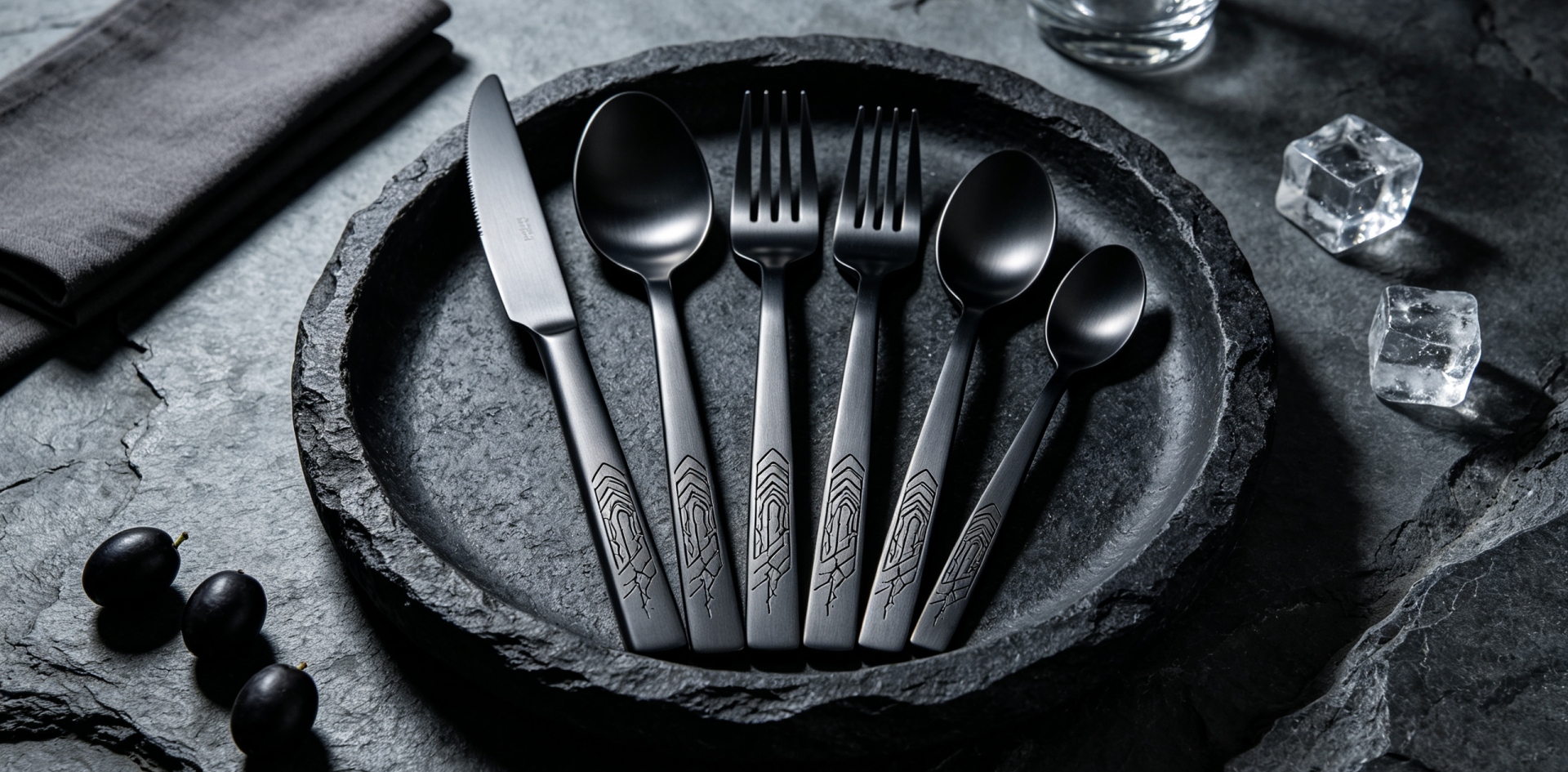
Stainless Steel Cutlery Compatibility: Building a More Efficient B2B Collection
When a B2B buyer develops a stainless steel cutlery collection, each knife, fork, and spoon is usually considered as an individual product. However, there is another important consideration: how well the different products work together as one collection.
For wholesalers, retailers, distributors, and private label brands, a coordinated collection can make product development, purchasing, merchandising, and future expansion more efficient.
Compatibility does not mean that every piece must be identical. Instead, it means that different pieces can share suitable design characteristics, proportions, visual elements, and commercial specifications while still maintaining their individual functions.
For OEM and ODM projects, this approach can help transform several separate products into a more complete stainless steel flatware program.
Why Compatibility Matters in a B2B Cutlery Collection
A stainless steel cutlery collection often contains several related products.
A basic program may include a table knife, dinner fork, and table spoon. A larger collection may include additional spoon and fork formats or different knife designs.
If every item is developed independently, the finished range may lack a consistent relationship between products. The handles may look unrelated, proportions may feel different, or the visual language may change from one item to another.
For a brand, this can make the collection harder to present as a unified product line.
By considering compatibility during the development stage, buyers can create a stronger connection between individual products while still allowing each piece to retain its own functional characteristics.
Matching Design Elements Across Knives, Forks and Spoons
One of the simplest ways to create compatibility is through shared design elements.
The handle shape is an obvious example. A knife, fork, and spoon can use related handle profiles so that customers immediately recognize them as part of the same collection.
Other elements can also be coordinated, including the overall proportions, decorative details, surface treatment, and transition areas between the handle and functional section.
The goal is not to make every item exactly the same. A knife naturally has different functional requirements from a spoon or fork.
Instead, the manufacturer can adapt the common design language to each individual product.
This creates a collection that looks coordinated without sacrificing the characteristics required by each piece.
Compatibility and Custom OEM Development
For OEM projects, the buyer may already have a specific product concept or brand design.
The manufacturer can review the proposed knife, fork, and spoon designs and consider how they can be developed as a related group.
For example, a customer may have a preferred handle concept but need different functional shapes for each product. The factory can use the established design direction as a starting point and adapt it across the collection.
This can be especially useful when the customer wants to launch several products under one private label.
Rather than developing every SKU from zero, the brand can establish a design foundation and then extend that concept across additional cutlery items.
This can make the development process more structured and give the finished collection a clearer commercial identity.
Reducing Unnecessary Product Development
A coordinated design system can also help B2B buyers manage development resources.
If a company plans to launch several stainless steel cutlery products, developing each product completely independently may require more design decisions, more samples, and more rounds of communication.
A common design foundation can simplify some of these decisions.
The buyer can first define the key characteristics of the collection and then determine how those characteristics should be applied to knives, forks, and spoons.
This does not eliminate the need for individual product development. Each item still requires its own technical specifications and sample evaluation.
However, the overall direction becomes clearer.
This approach can be useful for brands that plan to expand their product range gradually after the initial launch.
Supporting Future Collection Expansion
B2B cutlery collections often grow over time.
A company may initially launch three core products and later add more items based on market demand. If the original collection has a clear design foundation, new products can be developed to fit the existing range.
This provides an advantage for private label brands.
Instead of creating a completely different design for every new product, the manufacturer can develop additional products around the established collection concept.
The result is a product range that can expand while maintaining a recognizable relationship between its different SKUs.
For distributors, this can also make it easier to present several products as one coordinated stainless steel flatware collection.
Compatibility Beyond Appearance
Compatibility is not only a visual issue.
For B2B purchasing, the buyer may also want related products to share practical manufacturing requirements where appropriate.
For example, products within the same collection may use compatible material specifications or related surface treatments. Their packaging and commercial presentation may also be organized as part of one product program.
The specific requirements will depend on the project.
The important point is to consider the collection as a connected manufacturing program rather than a group of unrelated products.
This can help the buyer communicate requirements more clearly when requesting a quotation from a stainless steel cutlery factory.
Why It Matters for Wholesale Buyers
Wholesale buyers often need a product range rather than a single item.
A distributor may want several stainless steel cutlery products that can be sold together. A retailer may need a coordinated range for its own category. A private label brand may want to establish a recognizable flatware identity across multiple products.
In each case, compatibility can become a practical commercial consideration.
A coordinated collection can make product selection easier for the buyer's customers and can provide more opportunities to expand the product range later.
For the manufacturer, having a clear collection structure also provides useful information when discussing future OEM or ODM development.
What to Discuss With a Stainless Steel Cutlery Manufacturer
When developing a coordinated collection, B2B buyers can provide the manufacturer with several types of information.
This may include existing product references, sketches, inspiration images, preferred handle concepts, required materials, target markets, expected order quantities, and the products planned for future development.
The more clearly the overall collection concept is communicated, the easier it is for the factory to understand how individual products should relate to one another.
For a new project, buyers can also identify which products are required first and which products may be added later.
This allows the manufacturer to understand both the immediate order and the potential direction of the collection.
Homefelt for B2B Stainless Steel Cutlery Manufacturing
Homefelt specializes in stainless steel knives, forks, spoons, cutlery sets, and flatware for B2B customers.
With more than 40 years of experience in the stainless steel cutlery business, the factory supports wholesalers, distributors, brands, and professional buyers with OEM, ODM, private label, and bulk manufacturing solutions.
For customers developing a coordinated collection, the project can start from an existing product, reference sample, drawing, or new design concept. The manufacturing team can then work with the buyer to develop related products according to the intended collection direction.
This is particularly useful for brands that want their knives, forks, and spoons to share a recognizable design language while maintaining the appropriate functional characteristics of each product.
A well-planned collection can also provide a practical foundation for future product expansion. Once the core products have been established, additional stainless steel cutlery items can be developed around the same commercial concept.
For B2B buyers, this means that a custom cutlery project does not have to stop with one product. With the right manufacturing partner, an initial design concept can become the foundation for a broader private label or wholesale flatware program.
If you are developing a new stainless steel cutlery collection and need OEM, ODM, private label, or bulk manufacturing support, providing your product requirements to an experienced factory is a practical way to begin the project.
Request a Custom Stainless Steel Cutlery Quotation
Develop an OEM Knife, Fork and Spoon Collection
Start a Private Label Flatware Project
Request Wholesale Stainless Steel Cutlery Pricing
Stainless Steel Spoon Bowl Width: A Practical Detail for B2B Custom Designs
Gestion des Versions de Couverts Inox pour les Commandes B2B
Related Article



