
Stainless Steel Cutlery Development for B2B Brands
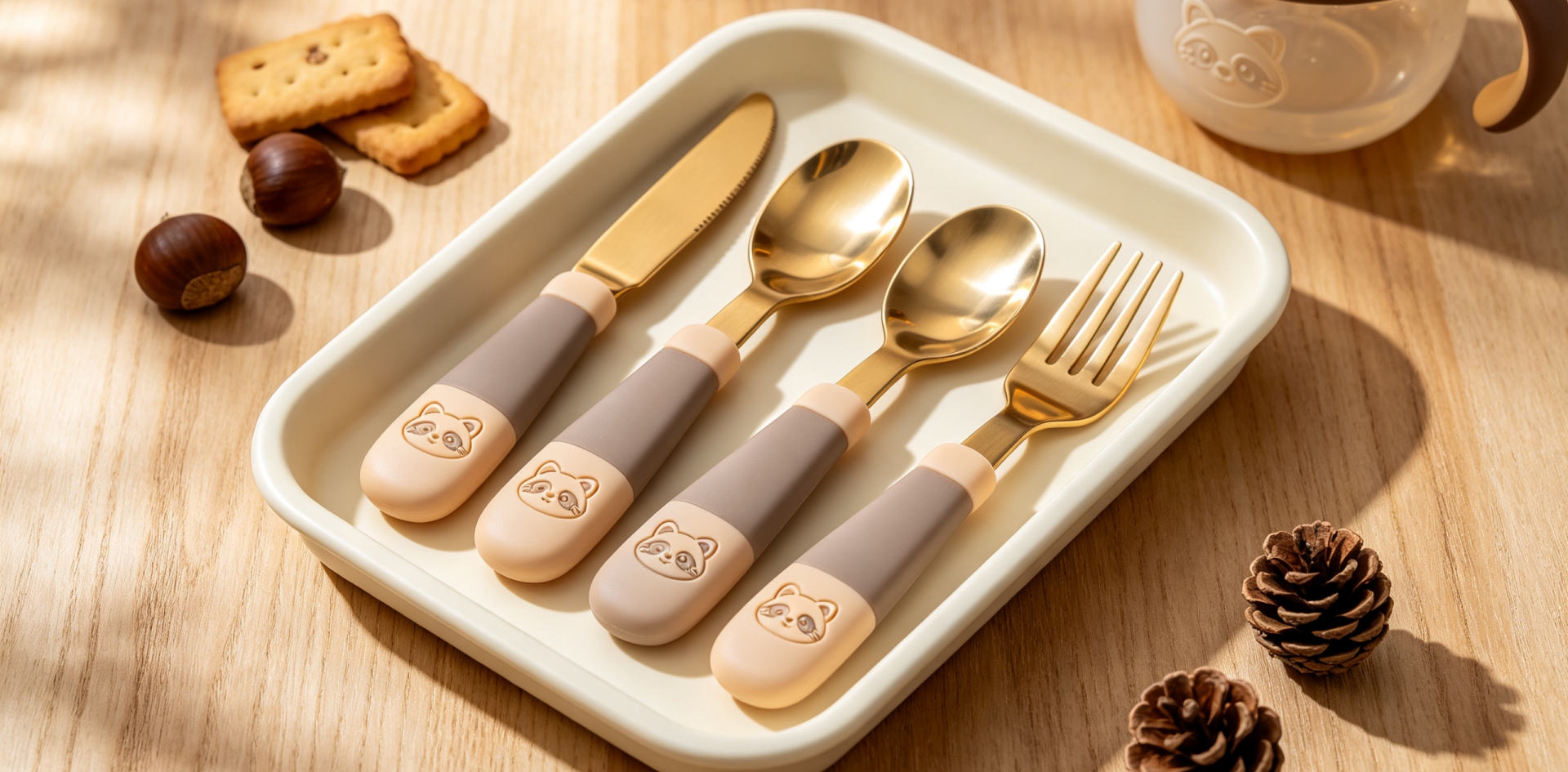
Stainless Steel Cutlery Development for B2B Brands
Developing a stainless steel cutlery collection is often more involved than selecting several attractive products from a catalogue. For B2B brands, the final collection needs to match the target market, price structure, product positioning and expected sales volume while remaining practical for manufacturing.
This is why the development stage matters.
A buyer may begin with a simple idea, a reference image or an existing product. From there, the project can develop into customized knives, forks, spoons or complete flatware sets with specific materials, finishes, packaging and branding requirements.
Working with an experienced stainless steel cutlery factory can make this process more organized and give the buyer a clearer path from concept to commercial production.
Starting With the Product Concept
Every B2B cutlery project starts from a different point.
Some brands already have detailed drawings and samples. Others have only a general direction, such as a modern collection for retail customers, a durable range for professional users or a coordinated private label flatware series.
The factory's role is not simply to manufacture the final product. During development, the supplier can review the concept and identify which details need to be confirmed before production.
These may include the product dimensions, stainless steel specification, handle design, surface finish, individual piece requirements and expected order quantity.
A clear starting point helps both sides understand the project before technical details become fixed.
Turning References Into Manufacturable Products
Reference products are useful during development, but a reference image does not always provide enough information for manufacturing.
A photograph may show the general appearance of a knife, fork or spoon without showing exact dimensions, thickness, construction or surface requirements.
For a custom project, the supplier may therefore need additional information or a physical sample before confirming the manufacturing approach.
Homefelt factory can work with customer references, drawings and existing samples to discuss how a desired appearance can be developed into a stainless steel cutlery product suitable for production.
This is particularly useful for brands that have strong product ideas but do not have an internal engineering or manufacturing team.
Developing More Than One Piece
A successful cutlery collection usually needs to work as a group.
A buyer may start with one spoon or fork, but the commercial collection may eventually require dinner knives, dinner forks, tablespoons, teaspoons and other coordinated pieces.
Developing these products together can help maintain a consistent design direction.
The handle shape, surface finish, decorative details and overall visual language can be reviewed across the collection rather than treated as unrelated products.
For B2B brands, this approach can make the final range easier to present to distributors, retailers and customers.
Balancing Design With Production Requirements
A visually interesting cutlery design still needs to be practical for manufacturing.
Certain shapes, decorative details or structural requirements may require additional tooling, production steps or special handling. These factors can influence both the development process and the final commercial cost.
Early communication with the factory gives buyers an opportunity to understand these relationships before the product is finalized.
The objective is not to remove creative elements from the design. Instead, it is to find a practical way to achieve the intended appearance while keeping the product suitable for repeat manufacturing.
This balance is especially important for private label brands that expect to reorder successful products over time.
From One Product to a Product Family
Many B2B brands begin with one product and gradually expand their stainless steel cutlery range.
A factory that understands the original product can become useful when additional pieces are developed. The original design direction can serve as a reference for new knives, forks, spoons or complete sets.
For example, a successful spoon design may become the starting point for a coordinated fork and knife collection. The brand can then offer individual pieces as well as complete flatware sets according to different sales channels.
This type of development can help a customer build a broader product range without starting every project completely from zero.
Customization Beyond the Cutlery Itself
B2B customization does not necessarily stop with the stainless steel product.
A private label project may also require logo application, branded packaging, set configurations, product labels and carton specifications.
These elements need to work together.
A product can be technically correct but still require additional coordination if the packaging does not match the set composition or the branding information differs between products.
A one-stop stainless steel cutlery factory can help connect these requirements so that product development and packaging development move in the same direction.
This integrated approach can be especially convenient for customers placing larger orders or preparing a complete collection for a new market.
Planning for Commercial Quantities
A product intended for B2B sales should be considered with commercial production in mind from the beginning.
The development process should take into account the expected order volume, number of SKUs, packaging configuration and potential future demand.
A product that works well as a sample also needs to remain practical when produced in larger quantities.
Homefelt supports large-volume stainless steel cutlery production and can discuss the transition from product development to bulk manufacturing according to the customer's project requirements.
This allows buyers to think beyond the first sample and consider how the product can support future business growth.
Why Factory Communication Matters During Development
Product development often involves several rounds of communication.
The buyer may adjust a handle, change a finish, request a different set configuration or revise packaging after reviewing a sample. If these changes are communicated clearly, the factory can respond more efficiently.
For this reason, it is helpful to provide consolidated feedback instead of sending disconnected changes through multiple messages.
A professional supplier can then review the complete requirement and confirm which changes affect the product, tooling, packaging or production process.
This creates a clearer development path and helps avoid unnecessary misunderstandings.
A One-Stop Service for B2B Cutlery Projects
For many importers, wholesalers, distributors and private label brands, working with several suppliers for product development, manufacturing, packaging and transportation can create additional coordination work.
Homefelt factory provides an integrated approach for stainless steel cutlery projects.
Customers can discuss product concepts, customized knives, forks and spoons, OEM or ODM requirements, private label programs, set configurations, packaging and large-volume production with one factory.
Transportation arrangements can also be discussed as part of the overall project, allowing customers to consider the complete process rather than only the manufacturing stage.
The service can be adapted according to the customer's actual situation. Some customers may need support mainly with product customization, while others may need a more complete package covering product development, packaging and export coordination.
Building a Long-Term Cutlery Program
The value of a manufacturing relationship can extend beyond one purchase order.
When a supplier understands a customer's product direction, future projects can become easier to develop. New products can be discussed within the same collection concept, and successful items can be expanded according to market demand.
For growing B2B brands, this creates an opportunity to build a stainless steel cutlery program step by step instead of attempting to develop an entire range at once.
The factory becomes part of the product development process while the customer remains focused on the market, sales channels and brand strategy.
Start Your Stainless Steel Cutlery Project
You do not need to have every detail finalized before contacting a factory.
An existing sample, product photograph, drawing, estimated quantity or simple description of your target product can provide a useful starting point.
Homefelt can review the available information and discuss suitable stainless steel cutlery options, customization requirements and production possibilities based on the project.
Whether you need one customized product or a complete OEM, ODM or private label collection, the next step can begin with a simple inquiry.
Custom Stainless Steel Knife, Fork and Spoon Manufacturing
OEM & ODM Stainless Steel Flatware
Private Label Stainless Steel Cutlery
Wholesale Stainless Steel Cutlery Factory
Stainless Steel Cutlery Development for B2B Brands
Stainless Steel Cutlery Product Data for B2B Buyers
Related Article



