
Stainless Steel Cutlery Embossed Pattern Design for Custom B2B Collections
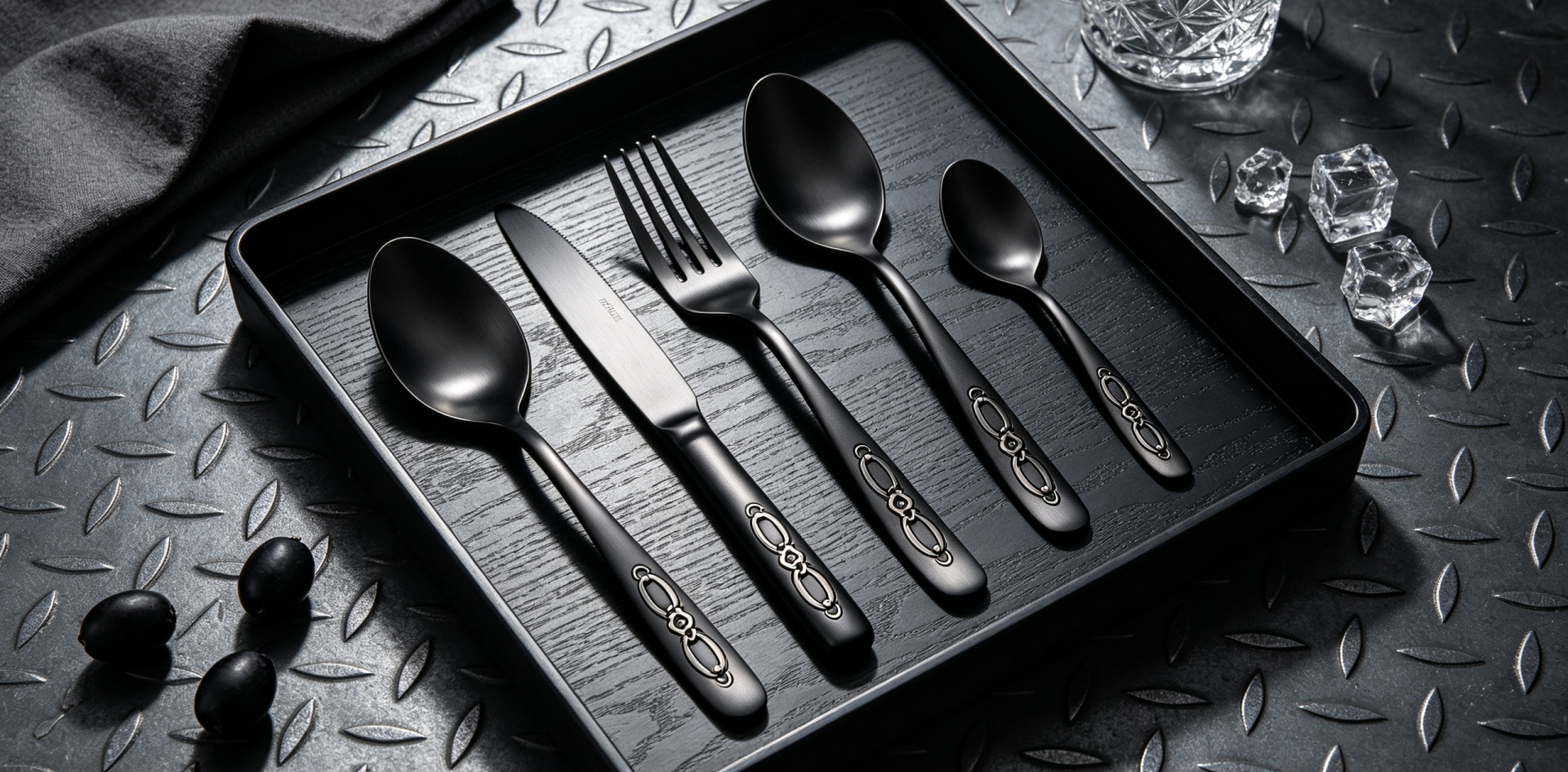
Stainless Steel Cutlery Embossed Pattern Design for Custom B2B Collections
Decorative details can give a stainless steel cutlery collection a more distinctive appearance without changing the basic function of the spoon, fork or knife. For B2B brands developing their own products, embossed patterns, pressed details and decorative shapes can be incorporated into the cutlery design to create a recognizable collection.
These details are especially useful for OEM and private label projects where buyers want something different from standard stainless steel flatware. However, decorative patterns need to be considered together with the product structure, manufacturing method and expected order quantity.
A well-developed design should be attractive while remaining practical for repeat production.
What Is an Embossed Pattern on Stainless Steel Cutlery?
An embossed pattern is a raised or pressed decorative detail formed into the stainless steel product. Depending on the design, it may appear on a spoon, fork or knife handle and can range from simple lines to more distinctive decorative elements.
The pattern can become part of the product design rather than being added only after the main manufacturing process.
For B2B buyers, this provides another way to develop a private label cutlery collection that has its own visual identity.
The final appearance depends on the product design, stainless steel material, pattern depth, location and manufacturing method. These details should be confirmed during the development stage.
Decorative Patterns for Stainless Steel Spoons
Spoons provide several possibilities for decorative development, particularly around the handle area.
A simple linear pattern can create a clean commercial appearance, while a more detailed design can be developed for collections targeting a particular retail or hospitality market.
The pattern should remain proportional to the spoon and work naturally with the overall product shape. If the decoration is too large or visually complicated, it may distract from the basic form of the product.
For custom B2B projects, buyers can provide a drawing, reference product or design concept. The manufacturer can then evaluate how the pattern can be incorporated into the spoon during production.
Embossed Details on Stainless Steel Forks
Forks can also incorporate decorative details into the handle or other suitable areas of the product.
When developing a custom fork, the decorative pattern needs to work with the existing product structure. The design should be clear enough to reproduce consistently while maintaining the intended appearance across the production batch.
For a collection containing both spoons and forks, buyers may choose related decorative elements so the two products look like part of the same product family.
This can help retailers and distributors build a more recognizable stainless steel flatware range.
Decorative Patterns for Stainless Steel Knives
Knives offer additional opportunities for decorative treatment, particularly when the handle has a suitable area for a custom pattern.
A knife design may use a simple pressed line, geometric detail or other decorative element to create visual continuity with the rest of a cutlery collection.
When developing a matching spoon, fork and knife range, the decorative language can be coordinated across the three products.
The final design should be reviewed as a physical sample because a pattern that looks attractive on a drawing may appear different after it is reproduced on the actual stainless steel product.
Why Sample Approval Matters
For custom embossed stainless steel cutlery, sample approval is an important stage before bulk production.
A physical sample allows the buyer to evaluate the actual pattern rather than relying only on a digital drawing. Buyers can check whether the decorative detail has the intended appearance and whether it works naturally with the spoon, fork or knife.
The sample can also be used to confirm the relationship between the pattern and the rest of the product design.
Once the sample is approved, the factory can use the confirmed product as a reference for the bulk order.
Pattern Consistency During Bulk Production
For B2B customers, decorative consistency is particularly important because small differences can become noticeable when large numbers of products are displayed together.
A custom stainless steel cutlery pattern should therefore be developed with mass production in mind.
The production team needs clear product references and suitable manufacturing processes to reproduce the decorative details consistently.
Quality inspection can then be used to check whether the finished products correspond to the approved requirements.
This is especially valuable for private label brands that plan to reorder the same products over a longer period.
Custom Patterns for Private Label Collections
Private label cutlery gives brands the opportunity to develop products around their own market positioning.
An embossed pattern can be one element of this development. Instead of relying entirely on a standard stainless steel spoon, fork or knife, the buyer can introduce a distinctive decorative feature that makes the collection easier to identify.
For example, a brand may develop a coordinated pattern across several cutlery models while using different product shapes for individual applications.
This approach can be useful for retailers, hospitality suppliers, distributors and other B2B customers that want to create a more differentiated product range.
Balancing Decoration and Practical Production
Custom decorative details need to be evaluated from both a design and manufacturing perspective.
A complicated pattern may require more development work, while a simpler pattern may be easier to reproduce consistently during high-volume production.
The appropriate solution depends on the customer's target market, expected quantity, product positioning and budget.
For this reason, buyers should discuss decorative requirements with the manufacturer before finalizing the product design. Early communication can help identify practical options and avoid unnecessary changes later in the project.
Developing Matching Spoon, Fork and Knife Designs
A successful cutlery collection normally needs visual coordination across different products.
If a spoon has one decorative concept while the fork and knife use completely unrelated patterns, the collection may appear inconsistent. Buyers can instead develop a common decorative language that is adapted to each individual product.
The same design idea does not necessarily need to be copied exactly onto every piece. Instead, related details can be adjusted according to the available product area and structure.
This allows the spoon, fork and knife to remain individual products while still looking like one collection.
OEM and ODM Support for Decorative Cutlery
OEM and ODM projects can begin from many different starting points. Some buyers already have finished drawings, while others have only a general product concept or a reference sample.
Homefelt factory can work with B2B customers to discuss custom stainless steel spoon, fork and knife designs, including decorative requirements.
The project can include product development, sample production, OEM/ODM manufacturing, private label customization, quality control, packaging and large-volume production.
For customers developing a new collection, the manufacturing team can discuss the practical requirements before the final product specification is confirmed.
Quality and Documentation for Custom Projects
B2B buyers may also need product specifications and supporting documentation for their internal purchasing or quality procedures.
Clear product information can record the approved design and provide a useful reference for future production.
Homefelt factory has experience working with well-known brands and has passed BSCI, SEDEX 4P, BRC and ISO9001 audits. The factory also has FAMA and FSC certificates for relevant business requirements.
Customers can discuss their documentation and quality requirements before production so the project can be organized according to their purchasing process.
Homefelt Factory for Custom Stainless Steel Cutlery
Homefelt factory has 40 years of experience in the stainless steel cutlery business and supports OEM/ODM, private label, wholesale and bulk production for B2B customers.
Whether you need a simple decorative pattern or a more distinctive stainless steel flatware collection, the project can be developed around your product requirements and target market.
Customers can provide drawings, reference products, pattern ideas and estimated quantities for evaluation. Homefelt can then support the project through product development, sampling, production, packaging and shipping arrangements.
For brands and distributors planning repeat orders, establishing a clear approved product reference can also help maintain consistency as the collection grows.
Stainless Steel Cutlery Corrosion Resistance for Commercial B2B Use
Stainless Steel Cutlery Rounded Edge Design for B2B Collections
Related Article



