
Stainless Steel Cutlery Flatness for B2B Production
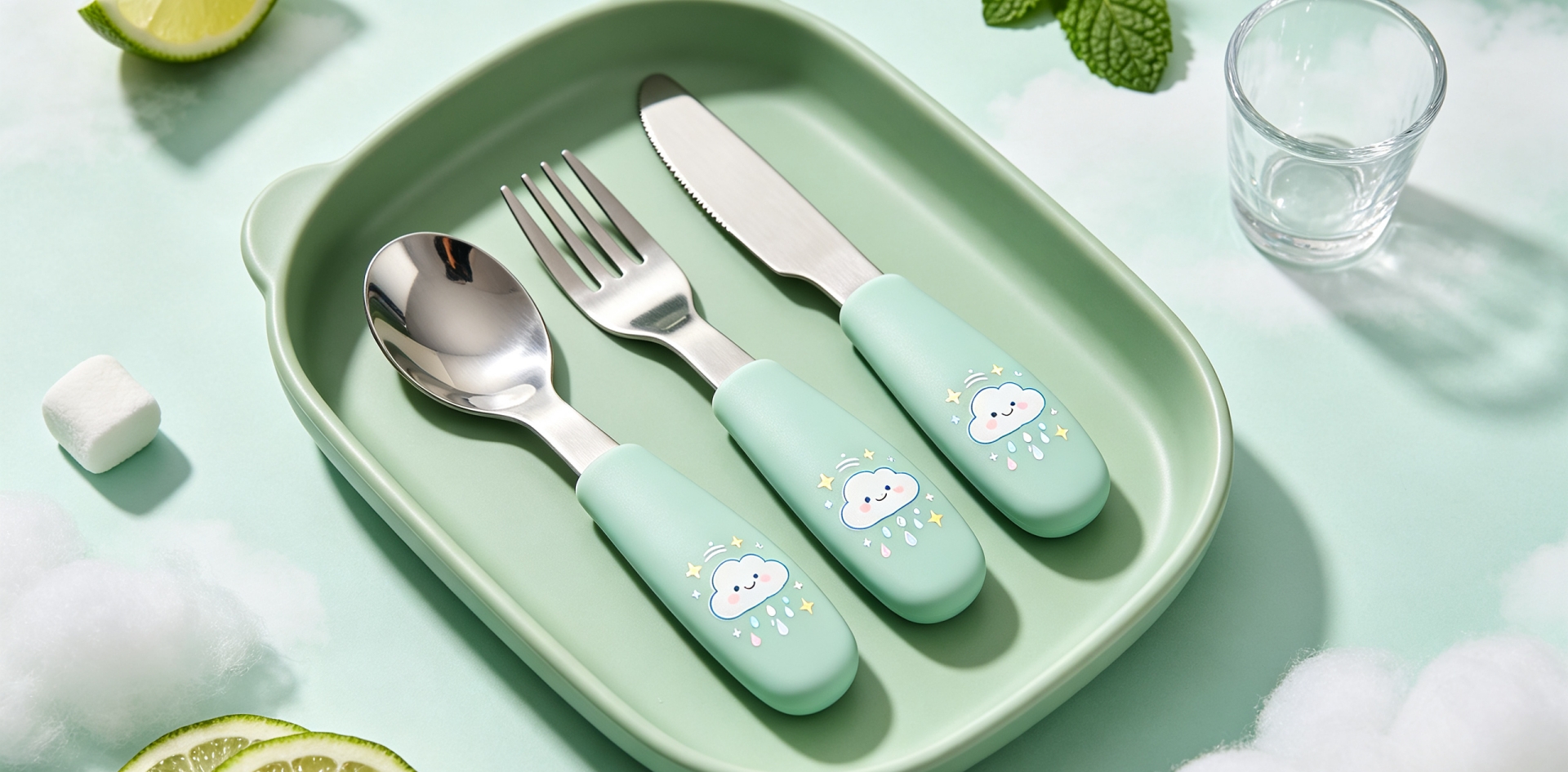
Stainless Steel Cutlery Flatness for B2B Production
When buyers evaluate stainless steel cutlery, they usually look at the design, material, finish, weight and dimensions first. Another important manufacturing detail is the flatness of the finished product.
Flatness describes how well a part maintains its intended plane or shape without unwanted bending, twisting or deformation.
For stainless steel knives, forks and other flatware components, controlling this characteristic can contribute to a cleaner appearance and more consistent production result. For B2B customers ordering large quantities, it can also make a difference when products are packed, displayed or placed together as part of a collection.
Flatness is therefore not simply a finishing detail. It is part of the overall dimensional quality of stainless steel cutlery.
Why Flatness Matters in Stainless Steel Cutlery
A stainless steel cutlery piece may have the correct length and width while still showing an unwanted deformation.
For example, a knife handle or another relatively flat section can appear slightly raised or twisted when viewed on a flat surface. On a fork, the head and handle need to maintain the intended relationship with each other. Similar considerations can apply to other flatware components.
When a large number of pieces are placed together, small differences can become more visible.
For B2B buyers, this is especially relevant when the products are displayed in retail packaging, organized into sets or supplied to professional customers.
A controlled shape gives the collection a more uniform appearance and helps the finished products stay closer to the approved sample.
Flatness and Stainless Steel Material
Stainless steel has useful mechanical properties for cutlery production, but the material can still respond to manufacturing operations.
Cutting, forming, pressing, grinding and finishing can all influence the final geometry of a product.
The exact behavior depends on the stainless steel grade, thickness, product structure and production method.
This is why flatness should be considered during the design and manufacturing stages rather than checked only after the products are finished.
For custom B2B projects, the factory can evaluate the proposed product structure and production process together to understand how the required shape can be maintained.
The objective is not simply to make one sample flat. The same result needs to be achievable throughout the production quantity.
How Forming Can Affect Flatness
Many stainless steel cutlery products require forming operations to create their final shape.
During forming, the material is intentionally changed from its original condition into the required product geometry. Different areas may experience different forces, which can influence the final shape.
A well-developed production process takes these characteristics into account.
For a custom project, the design should therefore be reviewed not only for appearance but also for manufacturability.
If a product contains a particularly large flat area, a narrow transition or a combination of different formed sections, these features may need to be considered during production planning.
This is one reason why communication between the buyer and manufacturer during product development is valuable.
Flatness Across Different Cutlery Pieces
Not every piece of cutlery requires the same type of flatness control.
A knife has its own structural characteristics because of the blade and handle. A fork contains a head with multiple tines. A spoon has a three-dimensional bowl rather than a simple flat surface.
The relevant geometry is therefore different for each product.
For a fork, attention may be given to the relationship between the head and handle and whether the overall product follows the intended profile.
For a knife, the blade and handle need to maintain the correct relationship without unwanted deformation.
For other flatware components, the manufacturer may focus on the specific surfaces and transitions defined by the design.
The principle remains the same: the finished shape should correspond closely to the approved specification.
Why Flatness Is Important for Custom Collections
For standard products, buyers may already know what to expect from an established design. For custom OEM or ODM products, the requirements are often more specific.
A brand may have developed a particular shape to match its packaging, display concept or existing product range.
In this situation, unwanted deformation can change the visual relationship between pieces.
For example, when knives, forks and spoons are placed next to each other, differences in their profiles can become noticeable.
Maintaining a stable shape helps preserve the original design concept.
This is particularly important for private label products, where the appearance of the finished collection represents the customer's own brand.
Flatness and Sample Approval
A physical sample gives B2B buyers an opportunity to evaluate the actual shape before bulk production begins.
The sample can be placed on a suitable reference surface and inspected from different angles. Buyers can also compare several pieces together to see whether the overall profile is consistent.
For a custom cutlery project, this provides useful information that may not be obvious from a two-dimensional drawing.
If a change is required, it can be discussed before the production quantity is released.
Once the sample has been approved, it becomes an important reference for the factory.
This helps connect the customer's design expectation with the manufacturing process.
Maintaining Shape During Bulk Production
The real challenge for a B2B factory is not producing one acceptable sample. It is maintaining the same standard across a large production quantity.
Bulk manufacturing requires stable processes and appropriate production controls.
The factory needs to consider the material, tooling, forming conditions and subsequent finishing operations as part of the complete manufacturing flow.
For repeat orders, maintaining the same reference is also important.
If a customer returns several months later with another order, the original specifications and approved sample can help the factory reproduce the product more consistently.
This becomes increasingly valuable for brands that keep the same cutlery collection in their catalog for an extended period.
Flatness and Packaging
The finished shape can also be relevant to packaging.
When cutlery is arranged inside a box, sleeve, tray or other customized package, the products need to fit the intended space.
Unwanted deformation may affect how individual pieces sit within the packaging.
For sets containing several knives, forks and spoons, a consistent profile can make packing more straightforward and create a cleaner presentation.
This is one reason why product development and packaging can benefit from being considered together.
Homefelt factory can support customers not only with stainless steel cutlery manufacturing but also with customized packaging and transportation arrangements, allowing these requirements to be coordinated within the same project.
A One-Stop Approach for B2B Cutlery Projects
Different B2B customers may need different levels of support.
Some buyers already have complete technical drawings and only need a reliable manufacturer for bulk production.
Others may have product references or initial ideas and need assistance developing them into production-ready samples.
For a private label brand, the project may also include packaging, product presentation and transportation.
Homefelt factory provides stainless steel knife, fork, spoon and flatware manufacturing services that can be adapted to these different situations.
The project can include OEM, ODM and private label production, together with customization, packaging and transportation support.
This integrated approach allows customers to discuss several parts of the project with one manufacturing partner instead of treating every requirement separately.
Preparing a Flatness Requirement
Buyers do not necessarily need to create a complicated specification to discuss flatness with a factory.
If a particular surface must remain especially stable, this can be identified in the drawing or communicated during product development.
A reference sample can also help explain the expected shape.
Other useful information includes the product dimensions, material, thickness, estimated order quantity, finishing requirements and intended packaging.
The more clearly the important surfaces are identified, the easier it becomes for the factory to understand which aspects of the product require particular attention.
For OEM and ODM projects, this early communication can help avoid unnecessary modifications after production has already started.
Flatness as Part of Overall Product Consistency
Flatness should not be considered separately from the rest of the cutlery specifications.
A successful stainless steel cutlery product combines material, dimensions, shape, finish, weight and manufacturing consistency.
When these elements work together, the finished product is more likely to match the approved sample and fit naturally into the customer's collection.
For B2B buyers, this matters because a commercial order involves much more than one individual piece. The same product needs to be delivered consistently across the entire quantity.
This is especially important for wholesale distributors and private label brands that may reorder the same product in the future.
Homefelt Factory for Custom Stainless Steel Cutlery
Homefelt factory supports B2B customers developing customized stainless steel knives, forks, spoons and complete flatware collections.
Customers can provide technical drawings, reference products, photographs or initial concepts. Based on the project requirements, the factory can discuss product design, sampling, manufacturing, finishing, packaging and transportation.
For large-volume orders, the focus can be placed on stable production and consistent reproduction of the approved design.
For developing brands, the service can also support the process from an early product idea toward a finished commercial collection.
The aim is to provide a practical one-stop service that can grow with the customer's product needs.
A well-controlled flatness profile is one of many small manufacturing details that contribute to the consistency of stainless steel cutlery. It may not be the first feature a buyer notices, but it can influence how the finished product looks, fits into packaging and compares with other pieces in the same collection.
For B2B projects, discussing these details before bulk production gives both the buyer and manufacturer a clearer production target.
Custom Stainless Steel Cutlery Manufacturing for B2B Buyers
OEM & ODM Stainless Steel Flatware Solutions
Private Label Stainless Steel Cutlery Factory
Stainless Steel Cutlery Symmetry for B2B Production
Stainless Steel Knife Handle Transition for B2B Brands
Related Article



