
Stainless Steel Cutlery Functional Length: A Practical Detail for Custom B2B Designs
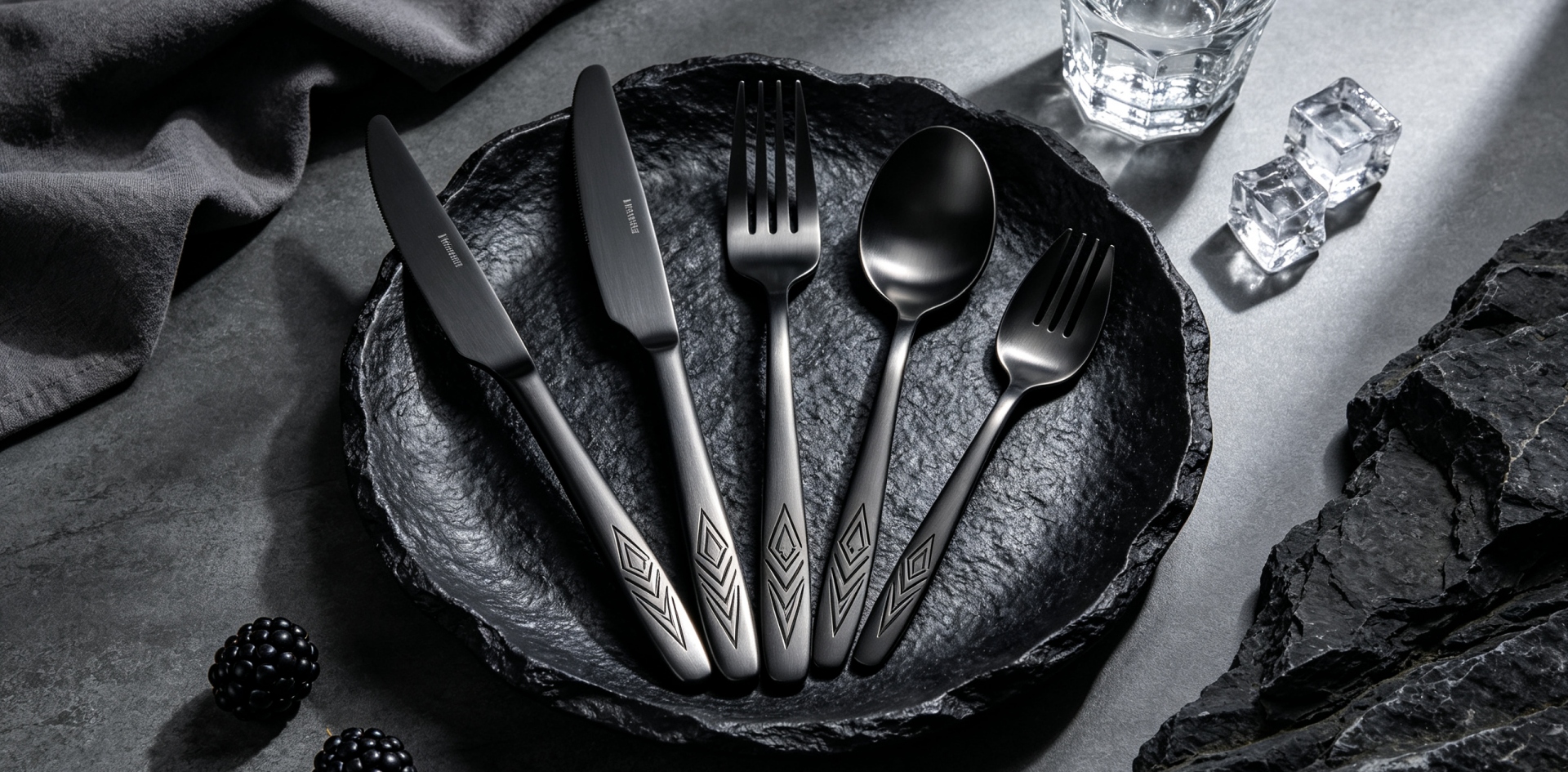
Stainless Steel Cutlery Functional Length: A Practical Detail for Custom B2B Designs
When a company develops custom stainless steel cutlery, overall length is usually one of the first specifications to be discussed. However, total length alone does not tell the complete story.
A knife, fork, or spoon can have the same overall length as another model while looking completely different because the length is distributed differently between the functional section and the handle.
This relationship is particularly important in OEM and private label projects. The functional section needs to have an appropriate presence, while the handle needs enough length and visual weight to create a balanced product.
For B2B buyers developing a new collection, understanding this relationship can make product discussions with a stainless steel cutlery manufacturer much more precise.
What Is Functional Length?
Functional length refers to the portion of a cutlery piece intended primarily for its practical function.
On a spoon, this relates mainly to the bowl area. On a fork, it concerns the fork head and the area directly associated with its use. On a table knife, it is largely connected with the blade.
The remaining portion forms the handle and transition areas.
These sections work together, so changing one can affect the appearance of the entire piece.
For example, two spoons with the same total length can have noticeably different visual proportions if one has a longer handle and the other has a longer bowl.
The same principle applies to forks and knives.
Why Functional Length Matters for B2B Buyers
For a consumer, the difference may simply be perceived as the spoon or knife “looking different.” For a professional buyer, however, this relationship can influence the design identity of an entire product range.
Functional length can affect:
-
the overall silhouette;
-
the visual balance between handle and working section;
-
the proportions of a cutlery collection;
-
the relationship between matching pieces;
-
packaging presentation;
-
product differentiation;
-
manufacturing specifications.
For a custom collection, the objective is not necessarily to maximize or minimize the functional section.
Instead, the manufacturer and buyer need to establish proportions that fit the intended product concept.
Total Length Does Not Define the Whole Product
A common mistake during product development is to specify only the total length.
For example, a buyer may request a spoon with a particular overall length but leave the relationship between the bowl and handle completely open.
This gives the manufacturer less information about the intended design.
A better approach is to consider the product as several connected sections.
For a spoon, the buyer may need to consider bowl length, handle length, and the transition between them.
For a fork, the head length and handle relationship can influence the visual character.
For a knife, the blade length and handle relationship can create a completely different silhouette even when the total product length remains unchanged.
This is why a technical drawing or reference sample can be extremely useful during custom development.
Functional Length and Collection Design
B2B brands often develop more than one cutlery item at the same time.
A collection may contain knives, forks, and several spoon models. Each product has its own functional requirements, but the pieces should still appear related.
This does not mean every functional section should have exactly the same proportion.
Instead, the designer can establish a common visual principle.
For example, a collection may use relatively substantial functional sections combined with moderate handles. Another collection may emphasize longer handles and more streamlined working areas.
Once the principle is established, it can be adapted to each SKU.
This allows the brand to create a recognizable range without forcing every product into identical proportions.
The Relationship Between Functional Length and Handle Design
The functional section cannot be considered separately from the handle.
If the handle becomes longer, the functional section may appear relatively smaller even when its actual dimensions have not changed.
Conversely, extending the working section can make the handle appear visually shorter.
This is particularly noticeable on simple stainless steel cutlery where there are few decorative elements to interrupt the silhouette.
For a private label collection, the relationship can therefore become an important part of the design language.
A manufacturer should understand the complete proportion rather than simply adjusting one dimension according to a standard model.
Functional Length in Stainless Steel Spoons
Spoons provide a clear example of how functional length affects appearance.
The bowl needs enough space to create the intended product shape, while the handle needs to maintain a comfortable and visually appropriate proportion.
A longer bowl can make the spoon look more functional or elongated. A shorter bowl combined with a longer handle can produce a different appearance.
The bowl depth, width, curvature, and handle profile also influence the final impression.
For this reason, a custom stainless steel spoon should be developed as a complete three-dimensional product.
When a buyer provides a reference sample, the manufacturer can evaluate these relationships more easily and determine how to reproduce the desired proportions.
Functional Length in Stainless Steel Forks
Forks also require a balanced relationship between the head and handle.
The fork head contains the tines and surrounding material, while the handle provides the main gripping area.
If the head becomes visually dominant, the product can take on a different character. If the handle becomes relatively long, the fork may appear more elongated.
The appropriate relationship depends on the intended collection.
A foodservice range may have a different visual approach from a retail private label collection, even when both are made from stainless steel.
For OEM development, the manufacturer can use the buyer's reference and technical requirements to determine the appropriate production dimensions.
Functional Length in Stainless Steel Knives
Knives present another interesting relationship because the blade has a strong directional presence.
A longer blade can create a more elongated appearance, while a shorter blade combined with a more substantial handle can make the product feel visually different.
The blade profile, handle proportions, and overall length need to work together.
For a custom table knife, the buyer may therefore need to consider the complete side silhouette rather than simply specifying blade length.
A reference drawing can show how the blade and handle are expected to relate to each other.
This information is especially useful when the knife is intended to match a custom fork and spoon.
Designing for a Complete B2B Range
A major advantage of working with an experienced cutlery manufacturer is the ability to develop several related products under one design concept.
Instead of treating each SKU as a separate project, the buyer can establish a common design direction.
Functional length can then be adapted to each product.
For example, the same overall visual philosophy can be applied to a table knife, dinner fork, and table spoon while respecting the different functions of each item.
This creates a stronger relationship across the range.
For retailers and distributors, this can also make the collection easier to present as a complete product family.
The Importance of the Side View
Functional length is particularly easy to evaluate from a side view.
A top view shows the outline and width, but the side view helps reveal how the working section and handle relate along the length of the product.
For custom cutlery, this can be important when the design contains changes in direction, raised or lowered areas, or a distinctive transition.
A technical drawing with clear side and top views gives the manufacturer more information than a single dimension.
If the buyer does not have a formal engineering drawing, a simple annotated sketch can still provide useful guidance.
Reference Samples Can Show the Intended Proportion
A physical sample can communicate proportions that are difficult to describe in words.
A buyer may have an existing cutlery piece that has exactly the type of balance they want, even if the new product needs different dimensions.
The sample can help the manufacturer understand:
-
the relative length of the functional section;
-
the handle proportion;
-
the overall silhouette;
-
the relationship between different areas;
-
the visual character of the collection.
The manufacturer can then discuss which dimensions need to change for the new project.
This approach can be particularly useful for brands that have an established product style but want to create a new stainless steel cutlery range.
Manufacturing Considerations
Functional length is also connected to production.
The shape and size of the working section influence the forming process, while the relationship between sections needs to remain stable during production.
A design may look simple, but producing thousands of pieces with the same proportions requires controlled manufacturing.
For OEM projects, the factory therefore needs to understand the approved product definition before bulk production begins.
The goal is to make the design repeatable.
A successful sample is useful, but a successful production program requires the same characteristics to remain consistent throughout the order.
From Prototype to Repeat Order
Once the functional proportions have been approved, they can become part of the product's technical reference.
This is especially important for private label brands.
A product may be ordered several times over its commercial life. If the original design is not clearly documented, future production can become more difficult to manage.
Clear drawings, approved samples, and defined dimensions provide a stronger reference for repeat orders.
They also help when the brand decides to develop additional products that follow the same design language.
Functional Length and Product Differentiation
Stainless steel cutlery is a mature product category, and many standard models share similar dimensions.
For brands looking for differentiation, the answer does not always have to be an unusual decoration.
Proportion itself can create a recognizable appearance.
A slightly longer functional section, a more compact working area, or a particular relationship between the handle and functional section can make a product look different from standard wholesale models.
When several such decisions are combined, the result can become a distinctive collection.
This is one reason custom product development can offer more flexibility than simply selecting an existing catalogue model.
Preparing a B2B Cutlery RFQ
When requesting a quotation for custom stainless steel cutlery, buyers can make the process easier by providing the available product information.
Useful details may include:
-
product type;
-
total length;
-
functional section dimensions;
-
handle dimensions;
-
material;
-
finish;
-
estimated quantity;
-
packaging requirements;
-
target market;
-
reference sample or drawing;
-
OEM or private label requirements.
Not every project will have all of these details finalized at the beginning.
A manufacturer can review the available information and identify what needs to be confirmed before sampling.
This allows the project to move forward without requiring the buyer to prepare a complete technical package before making the first inquiry.
Why Proportion Should Be Discussed Early
Once tooling and bulk production are underway, fundamental changes to the product can become more complicated.
If the buyer later decides that the functional section should be significantly longer or shorter, the factory may need to review tooling and production arrangements.
Discussing these proportions during the design stage gives both sides more flexibility.
The sample can then be used to confirm whether the intended balance has been achieved.
For B2B projects, this is a practical way to reduce unnecessary changes after production has already started.
A Manufacturer Can Help Translate the Design
Many buyers know the appearance they want without knowing the exact manufacturing terminology.
That is normal in custom product development.
A brand may simply say that it wants a spoon with a longer working section, a fork with a more compact head, or a knife with a more elongated blade appearance.
These descriptions can provide a starting point.
An experienced stainless steel cutlery manufacturer can then discuss the relevant dimensions, prepare a drawing or sample, and help translate the visual concept into a manufacturable specification.
This collaborative process is particularly useful for OEM and ODM projects.
Turning Proportions Into a Commercial Product
The purpose of defining functional length is not simply to create an attractive drawing.
The final goal is a product that can be manufactured consistently, packaged efficiently, sold commercially, and reordered when necessary.
That requires the proportions to work together with material, finish, tooling, production method, and the wider product range.
For wholesalers and private label brands, this complete approach can make the development process more predictable.
A clear product definition also gives the manufacturer a stronger basis for preparing a quotation and planning the next steps.
Start With Your Existing Reference
If you are planning a new stainless steel cutlery project, you may already have a product reference, drawing, or simple concept.
That is enough to begin a discussion.
You can share the approximate dimensions, desired style, material, finish, quantity, and any existing sample. The manufacturer can then review the relationship between the functional section and handle and discuss how the design can be developed for production.
For brands building a new OEM or private label collection, paying attention to this proportion early can help create a more coherent product range.
A well-designed cutlery piece is the result of many connected decisions. Functional length is one of the details that helps those decisions work together.
Request a Custom Stainless Steel Cutlery Quote
Discuss Your OEM Flatware Project
Get a Wholesale Stainless Steel Flatware Solution
Ask About Private Label Cutlery Manufacturing
Send Your Cutlery Design for Review
Edelstahlbesteck mit Oberflächenkombinationen für individuelle B2B-Kollektionen
Stainless Steel Spoon Handle Angle: A Practical Detail for Custom B2B Designs
Related Article



