
Stainless Steel Cutlery Gift Set Customization for Wholesale Buyers
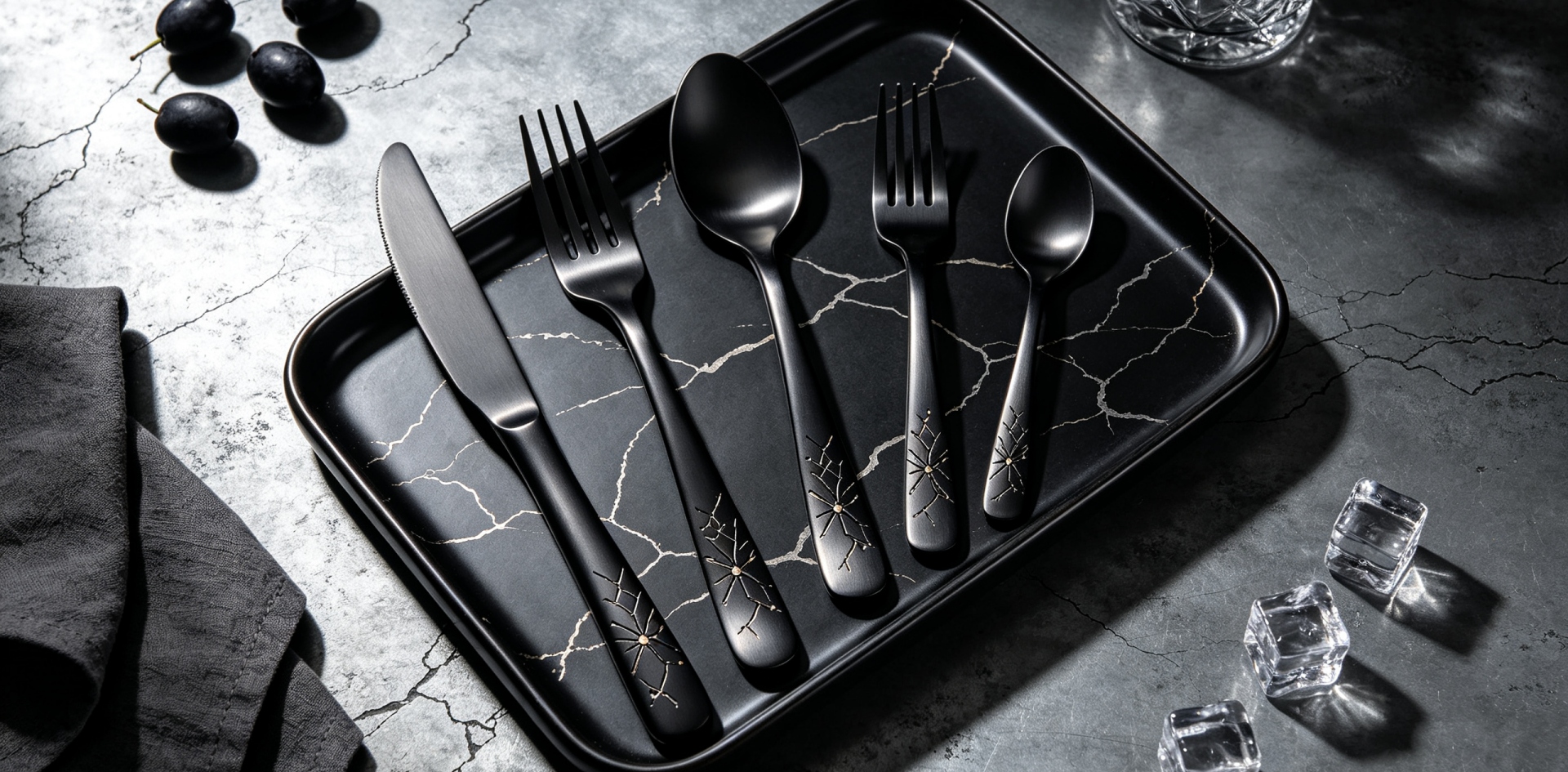
Stainless Steel Cutlery Gift Set Customization for Wholesale Buyers
Customized stainless steel cutlery gift sets can help retailers, promotional product distributors, corporate gift suppliers and private label brands create products suited to specific occasions and customer groups. A successful set requires more than placing several spoons, forks and knives in an attractive box. The product selection, finish, branding, packaging dimensions and order specifications must work together as one coordinated offering.
For B2B buyers, planning these details before production helps reduce unnecessary revisions and makes it easier to evaluate costs, minimum order quantities and delivery requirements. Homefelt factory supports stainless steel cutlery customization, OEM, ODM, private label and wholesale production for customers developing branded gift sets and other commercial flatware collections.
Define the Purpose of the Gift Set First
The intended recipient and sales channel should guide the design of the set. A retail gift collection, a corporate promotional item and a premium housewarming gift may require different product combinations, visual styles and packaging formats.
Before requesting a quotation, buyers should define the intended use, target price range, expected quantity and preferred presentation. They should also decide whether the product will be sold as a complete gift set or offered as part of a broader cutlery collection.
For example, a compact gift set may contain four coordinated pieces for an individual user, while a larger household set may include multiple place settings. A corporate gift program may prioritize a consistent brand identity and practical packaging, while a retail collection may require stronger shelf presentation and a more distinctive finish.
These decisions influence the number of pieces, box dimensions, product weight and overall manufacturing requirements. A clear brief helps the supplier recommend a practical configuration rather than quoting an incomplete concept.
Select a Piece Combination That Fits the Customer
The piece combination is one of the most important decisions in gift set development. Buyers should choose items that make sense together and suit the intended recipient.
Possible configurations include coordinated dinner spoons, forks and table knives, smaller combinations for individual use, or a broader selection of stainless steel cutlery pieces. The final combination should reflect the target market and intended use rather than simply maximizing the number of items in the box.
When planning a set, specify the quantity of each piece clearly. For example, a set containing four dinner forks, four dinner spoons and four table knives should be described explicitly in the product specification and packaging plan.
Buyers should also consider whether the pieces are drawn from an existing collection or require a new design. Using established models may simplify development, while a fully customized collection may offer more distinctive branding opportunities and require additional technical review.
Choose Materials and Finishes With a Clear Specification
Material and finish requirements should be defined before sample approval. Stainless steel grade, product dimensions, thickness, unit weight and surface treatment may affect the finished product's appearance, cost and suitability for the intended market.
For a gift set, visual coordination is especially important because several pieces are displayed together. The dinner fork, spoon and knife should have a consistent design language, with compatible handle proportions and finishes.
Buyers should state the required stainless steel grade rather than relying on general descriptions such as “high quality steel.” Where specific product parameters matter, they should be included in the specification with suitable measurement methods and acceptance tolerances.
Surface finishes may include mirror polish, satin finish or specified decorative treatments. If a colored finish is requested, the buyer should confirm the desired appearance using an approved reference and discuss any relevant process limitations with the manufacturer.
The final specification should identify which attributes are essential and which can be adjusted during development. This gives the manufacturing team a clear basis for evaluating samples and preparing bulk production.
Develop Branding That Complements the Cutlery
Branding can help transform a standard flatware combination into a recognizable gift product. Depending on the design and material, customization may involve laser marking, engraving or other agreed decoration methods.
Before production, buyers should confirm the logo artwork, placement, size and intended appearance. They should also specify which pieces need branding and whether the same treatment should be used throughout the set.
A small logo on a handle may suit a restrained premium design, while a promotional set may require a more visible brand presentation. The best approach depends on the customer's brand guidelines and the physical space available on each item.
Buyers should review the logo on a physical sample or an agreed production reference. Artwork approval should be recorded clearly so that the manufacturer does not rely on a low-resolution image or an outdated design file.
If branding is required on both the cutlery and the retail box, each application should have its own clear approval reference.
Plan Gift Packaging Around the Actual Products
Packaging affects both the presentation and practical handling of a cutlery gift set. A box that looks attractive in a design mockup may not provide sufficient space for the finished pieces, inserts or protective materials.
Buyers should determine the packaging format early. Options may include a printed gift box, a presentation case or another agreed retail-ready package. The choice depends on the target price point, intended recipient and sales channel.
The packaging design should account for the actual dimensions of the cutlery, the arrangement of individual pieces and the thickness of any insert. Each piece should fit securely without unnecessary movement, while the overall package should remain practical to handle and store.
For bulk orders, the buyer should also confirm the master carton configuration and the quantity packed in each carton. Packaging artwork, product descriptions, barcodes and customer-specific labels should be checked against the final product configuration.
A one-stop manufacturing arrangement can help coordinate cutlery design and packaging development together, reducing the risk of approving a box that does not match the finished product.
Evaluate Samples Before Confirming the Bulk Order
Sample review allows buyers to assess the complete gift set rather than judging the cutlery and packaging separately.
The review should cover the product's dimensions, material specification where documented, surface finish, logo execution, piece count and overall appearance. The buyer should also check whether the pieces fit correctly into the proposed packaging and whether the set looks coordinated when presented together.
If adjustments are required, feedback should identify the specific item and detail involved. For example, a buyer may request a change to the insert layout, a revised logo position or a different handle finish.
The approved sample and supporting documents should be identified by product reference and revision. This creates a clear benchmark for subsequent production and reduces the risk of different teams using different versions of the design.
For customized sets, it is useful to confirm that both the product sample and packaging sample have been approved before treating the project as ready for full production.
Calculate the Commercial Requirements Before Launch
A customized gift set may contain several cost elements beyond the cutlery itself. Buyers should evaluate the complete configuration when comparing quotations, including product customization, branding, inserts, retail packaging and outer cartons where applicable.
Minimum order quantities can vary depending on the product design, selected finish, packaging method and need for new tooling. Buyers should ask which elements can be customized within the planned quantity and which may require a larger production commitment.
It is also important to distinguish between the quantity of complete sets and the quantity of individual pieces. A set containing several components has a different material and packing requirement from an order of individual replacement pieces.
Before confirming the purchase order, buyers should align the final set composition, packaging version, unit price, quantity and delivery expectations. A complete quotation scope makes it easier to compare suppliers on equivalent requirements.
A Practical Example: Creating a Branded Corporate Gift
Consider a company planning a branded stainless steel cutlery gift set for a customer appreciation program. The purchasing team wants a coordinated fork, spoon and knife combination, a subtle logo and a presentation box carrying the company's brand identity.
The team begins by defining the target quantity, intended recipients and budget range. It then confirms the piece configuration, product finish, logo requirements and packaging concept with the manufacturer.
A sample set is reviewed for appearance, piece count, branding and fit inside the box. The packaging artwork is checked separately, and any changes are recorded before the final approval. The buyer then confirms the complete specification and order details for bulk production.
This process helps the company maintain a consistent presentation across the order and gives the manufacturer a clear reference for product preparation and packaging.
Work With a Factory That Can Coordinate the Whole Project
Gift set projects involve connected decisions about product design, customization, packaging and delivery. Working with a stainless steel cutlery manufacturer that understands these requirements can help buyers coordinate the project from the initial brief through bulk fulfillment.
Homefelt factory supports OEM, ODM, wholesale and private label cutlery projects. Its business credentials include BSCI, SEDEX 4P, BRC and ISO 9001 audit or certification experience, as well as Disney audit experience. FAMA and FSC certificates are available for applicable projects; buyers should confirm the specific documentation relevant to their requirements.
Homefelt can coordinate product design, customized packaging and transportation arrangements according to the agreed project scope. Buyers should share their preferred set configuration, branding files, target quantity and packaging expectations when requesting a quotation.
You May Be Interested In
Stainless Steel Cutlery Order Change Impact Assessment for Bulk Buyers
Exclusive Stainless Steel Cutlery Design Development for B2B Brands
Related Article



